
Pre-eminent, supreme among the helps to secret prayer I place, of course, the secret study of the holy written Word of God. Read it on your knees, at least on the knees of your spirit. Read it to reassure, to feed, to regulate, to kindle, to give to your secret prayer at once body and soul. Read it that you may hold faster your certainty of being heard. Read it that you may know with blessed definiteness whom you have believed, and what you have in Him, and how He is able to keep your deposit safe. Read it in the attitude of mind in which the apostles read it, in which the Lord read it. Read it, not seldom, to turn it at once into prayer.
H. C. G. Moule
All Posts
All Posts On The Ranch
C. H. Spurgeon — To live by faith…
To live by faith is a far surer and happier thing than to live by feelings or by works.
C. H. Spurgeon
Unknown — Oh teach me, Lord…
Oh teach me, Lord, to treasure much
The simple things of life- the touch
Of wind and snow, of rain and sun;
And when the hours of work are done,
The quietness of rest, the fair
And healing sustenance of prayer.
And, Lord of living, help me keep
A shining, singing gladness deep
Within for blessings yet to be
Through all eternity.
Unknown
John Blanchard — It is impossible to be too preoccupied…
It is impossible to be too preoccupied with God, and it is only as we fill our hearts and minds with him that we become melted out of our likeness and moulded into his.
John Blanchard
Charles H. Spurgeon — Jesus has made the life of his people…
Jesus has made the life of his people as eternal as his own.
Charles H. Spurgeon
Jack Riemer — He who would live a life without pain…
He who would live a life without pain has come to the wrong world. There is no such choice here on this earth. But we can choose, at least to some extent, the kind of pain we want to have. We can choose between creative pain and pointless pain, between holy pain and petty pain, between pain for a purpose and pain that has no purpose.
Jack Riemer
Thomas Watson — The wheels of death’s chariot…
The wheels of death’s chariot may rattle and make a noise, but they are to carry a believer to Christ.
Thomas Watson
Thomas Carlyle — He who has no vision of eternity…
He who has no vision of eternity will never get a true hold of time.
Thomas Carlyle
Mother Teresa — We may wonder whom can I love and serve…
We may wonder whom can I love and serve? Where is the face of God to whom I can pray? The answer is simple. That naked one. That lonely one. That unwanted one is my brother and my sister. If we have no peace, it is because we have forgotten that we belong to each other.
Mother Teresa
Charles Lamb — Not many sounds in life…
Not many sounds in life, and I include all urban and all rural sounds, exceed in interest a knock at the door.
Charles Lamb
John Calvin — Almost all men are affected…
Almost all men are affected with the disease of desiring to obtain useless knowledge.
John Calvin
Leonard Ravenhill — No man is greater than his prayer life…
No man is greater than his prayer life. The pastor who is not praying is playing; the people who are not praying are straying. We have many organizers, but few agonizers; many players and payers, few pray-ers; many singers, few clingers; lots of pastors, few wrestlers; many fears, few tears; much fashion, little passion; many interferers, few intercessors; many writers, but few fighters. Failing here, we fail everywhere.
Leonard Ravenhill
Joshua Haberman — Hope is not wishful thinking…
Hope is not wishful thinking, nor fanciful imagination. Hope is the realism of the man of faith who knows that there is a line of meaningful development from the past, through the present, into the future. Hopelessness is the true condition of hell.
Joshua Haberman
Walter Hunt — The sun is just rising on the morning of another day…
The sun is just rising on the morning of another day. What can I wish that this day may bring me? Nothing shall make the world or others poorer, nothing at the expense of other men; but just those few things which in their coming do not stop with me but touch me, rather, as they pass and gather strength. A few friends, who understand me, and yet remain my friends. A work to do which has real value, without which the world would feel the poorer. A return for such work small enough not to tax anyone who pays. A mind unafraid to travel, even through the trail be not blazed. An understanding heart. A sight of the eternal hills, and the unresting sea, and of something beautiful which the hand of man has made. A sense of humor, and the power to laugh. A little leisure with nothing to do. A few moments of quiet, silent meditation. The sense of the presence of God. And the patience to wait for the coming of these things, with the wisdom to know them when they come, and the wit not to change this morning wish of mine.
Walter Hunt
Ralph Sockman — The service of the Holy Spirit…
The service of the Holy Spirit is that He helps us to distinguish pleasure from happiness and develop real joy. There are many experiences which give us temporary pleasure but do not add up to abiding satisfaction. Their thrills pass quickly, and sometimes leave a trail of regret and remorse. Some of our sense pleasures are like lightning flashes, while true joy is like the sunlight.
Ralph Sockman
Socrates — Contentment is natural wealth…
Contentment is natural wealth; luxury is artificial poverty.
Socrates
Billy Sunday — They tell me I rub the fur the wrong way…
They tell me I rub the fur the wrong way. I don’t. Let the cat turn around!
Billy Sunday
Albert Silverman — I need the opportunity to free my mind of sorrow…
I need the opportunity to free my mind of sorrow, personal concerns; to see my world through the mirrored reflection of holiness. I need a time of prayer to leap beyond what is limiting in me as a person, to rediscover what is important and what is trivial, to take counsel with what my tradition stresses as the living faith. I need prayer.
Albert Silverman
Robert M’Cheyne — Live near to God…
Live near to God and all things will appear little to you in comparison with eternal realities.
Robert M’Cheyne
Philip Lipis — The central fact in the lives of the great believers…
The central fact in the lives of the great believers is that they went from faith to doubt. Then they began to doubt their doubts.
Philip Lipis
Carole Sanderson Streeter — Your home can be a place…
Your home can be a place for dying or living, for wilting or blooming, for anxiety or peace, for discouragement or affirmation, for criticism or approval, for profane disregard or reverence, for suspicion or trust, for blame or forgiveness, for alienation or closeness, for violation or respect, for carelessness or caring. By your daily choices, you will make your home what you want it to be.
Carole Sanderson Streeter
Lucy Maud Montgomery — On my way back I met a little girl…
On my way back I met a little girl with a pitcher in her hand. We both stopped, and with the instinctive, unconventional camaraderie of childhood plunged into an intimate, confidential conversation. She was a jolly little soul, with black eyes and two long braids of black hair. We told each other how old we were, and how many dolls we had, and almost everything else there was to tell except our names which neither of us thought about. When we parted, I felt as though I were leaving a life long friend. We never met again.
Lucy Maud Montgomery
John Calvin — If we look around us…
If we look around us, a moment can seem a long time, but when we lift up our hearts heavenwards, a thousand years begin to be like a moment.
John Calvin
Ruth Bell Graham — I think it’s important to teach our children…
I think it’s important to teach our children- as the Bible says- line upon line, precept upon precept, here a little, there a little. If you try to teach a child too rapidly, much will be lost. But the time for teaching and training is preteen. When they reach the teenage years, it’s time to shut up and start listening.
Ruth Bell Graham
Mother Teresa — If you are humble…
If you are humble, nothing will touch you, neither praise nor disgrace, because you know what you are.
Mother Teresa
Jill Briscoe — If only God would lean out of heaven…
If only God would lean out of heaven and tell me [my children] are going to make it, I could relax. But God doesn’t do that. He tells us to be the parents he has called us to be in his strength and promises to do his part. Driven to prayer (after discovering that manipulation didn’t work), I began to realize I was only truly positive and confident when I’d been flat on my face before the Lord.
Jill Briscoe
Thomas Manton — A man should look after a happiness…
A man should look after a happiness that will last as long as his soul lasts.
Thomas Manton
Annie Dillard — Beauty and grace are performed…
Beauty and grace are performed whether or not we will or sense them. The least we can do is try to be there.
Annie Dillard
Madeleine L’Engle — We grasp for truth…
We grasp for truth and lose it till it comes to us by love.
Madeleine L’Engle
Hannah More — The soul on earth is an immortal guest…
The soul on earth is an immortal guest,
compelled to starve at an unreal feast;
a pilgrim panting for the rest to come;
an exile, anxious for his native home.
Hannah More
Dale Evans Rogers — The battle…
The battle- our battle- against every temptation that can ever try to take us on has already been won on that first Easter morning. All we’re involved in is a mopping up operation.
Dale Evans Rogers
Margaret Fell Fox — He is not a God far off…
He is not a God far off, but one who may be witnessed and possessed.
Margaret Fell Fox
Brother Lawrence — I wish you could convince yourself…
I wish you could convince yourself that God is often nearer to us, and more effectually present with us, in sickness than in health.
Brother Lawrence
Simone Weil — One can never wrestle with God…
One can never wrestle enough with God if one does so out of pure regard for the truth. Christ likes us to prefer truth to him because, before being Christ, he is truth. If one turns aside from him to go toward the truth, one will not go far before falling into his arms.
Simone Weil
F. W. Robertson — Shut out suffering…
Shut out suffering, and you see only one side of this strange and fearful thing, the life of man. Brightness and happiness and rest- that is not life. It is only one side of life. Christ saw both sides.
F. W. Robertson
Marilyn Quayle — As a Christian…
As a Christian, I hope I can lead the kind of life that makes others look at me and say, “What’s missing in my life that she has?” That’s a greater testimony than anything I can say.
Marilyn Quayle
N. A. Prichard — Perhaps those who say…
Perhaps those who say they didn’t get a thing out of the sermon didn’t bring anything in which to take it home.
N. A. Prichard
Dietrich Bonhoeffer — In Jesus the service of God…
In Jesus the service of God and the service of the least of the brethren were one.
Dietrich Bonhoeffer
John Lincoln — The Devil is a gentleman…
The Devil is a gentleman who never goes where he is not welcome.
John Lincoln
Martha Reapsome — God doesn’t build a fence around his children…
God doesn’t build a fence around his children to protect us from the suffering common to all humanity. It is clear from the Bible and from the lives of Christians in every generation that God uses suffering in some form in the life of every believer.
Martha Reapsome
A. P. Gouthey — Joy is a deep spiritual union…
Joy is a deep spiritual union with the unchanging God. A man’s life, said Jesus Christ, is not fulfilled, nor is it filled full of, nor by, the abundance of things which he possesses. Here is one of the most important statements ever given to a bewildered, heart-hungry world. Joy, then, is a living spring hidden deep in the inner life that is no more dependent upon things than the sunrise is dependent upon a cock’s crowing.
A. P. Gouthey
Charlotte Elliott — The Bible is my church…
The Bible is my church. It is always open, and there is my High Priest ever waiting to receive me. There I have my confessional, my thanksgiving, my psalm of praise…and a congregation of whom the world is not worthy- prophets and apostles, and martyrs and confessors- in short, all I can want, there I find.
Charlotte Elliott
C. S. Lewis — Relying on God…
Relying on God has to begin all over again every day as if nothing had yet been done.
C. S. Lewis
St. Patrick Breastplate — May the strength of God…
May the strength of God pilot us.
May the power of God preserve us.
May the wisdom of God instruct us.
May the hand of God protect us.
May the way of God direct us.
May the shield of God defend us.
May the host of God guard us against the snares of evil and the temptations of the world.
May Christ be with us.
Christ before us.
Christ in us.
Christ over us.
May Thy salvation, O Lord, be always ours this day and forever more.
St. Patrick Breastplate
D. T. Niles — The resurrection that awaits us…
The resurrection that awaits us beyond physical death will be but the glorious consummation of the risen life which already we have in Christ.
D. T. Niles
D. L. Munby — The evils of riches…
The evils of riches, to the Christian, are the evils of distraction (the distraction that keeps men from thinking about God), the evils of a false dependence on the created order, and a would-be security that fails to take account o the inevitable fragility of human destiny on this earth.
D. L. Munby
Unknown — Don’t tell me that worry doesn’t do any good…
Don’t tell me that worry doesn’t do any good. I know better. The things I worry about don’t happen.
Unknown
John Blanchard — How often do we need to see God’s face…
How often do we need to see God’s face, hear His voice, feel His touch, know His power? The answer to all these questions is the same: Every day!
John Blanchard
Victor Hugo — Winter is on my head…
Winter is on my head but eternal spring is in my heart. The nearer I approach the end, the plainer I hear around me the immortal symphonies of the world to come. For half a century I have been writing my thoughts in prose and verse; but I feel that I have not said one-thousandth part of what is in me. When I have gone down to the grave I shall have ended my life’s work; but another day will begin the next morning. Life closes in the twilight but opens with the dawn.
Victor Hugo
Unknown — Life is a voyage…
Life is a voyage in which we choose neither vessel nor weather, but much can be done in the management of the sails and the guidance of the helm.
Unknown
Leo Tolstoy — A person who lives a spiritual life…
A person who lives a spiritual life cannot help but see that suffering brings him closer to God. Seen in this light, suffering loses its bitter side and becomes bliss.
Leo Tolstoy
Unknown — To see God in everything…
To see God in everything makes life the greatest adventure there is.
Unknown
John Ayscough — Death is but a sharp corner…
Death is but a sharp corner near the beginning of life’s procession down eternity.
John Ayscough
Arthur C. Custance — Progress towards maturity…
Progress towards maturity is not to be measured by victory over the sins we are aware of, but by hatred of the sins which we had overlooked and which we now see all too clearly.
Arthur C. Custance
Russian proverb — Every day…
Every day is a messenger of God.
Russian proverb
Evan Hopkins — While faith makes all things possible…
While faith makes all things possible, it is love that makes all things easy.
Evan Hopkins
B. H. Streeter — If Christ Himself needed to retire…
If Christ Himself needed to retire from time to time to the mountain-top to pray, lesser men need not be ashamed to acknowledge that necessity.
B. H. Streeter
William Romaine — Gratitude to God…
Gratitude to God makes even a temporal blessing a taste of heaven.
William Romaine
Dwight L. Moody — A man can no more take in a supply of grace…
A man can no more take in a supply of grace for the future than he can eat enough for the next six months or take sufficient air into his lungs at one time to sustain life for a week. We must draw upon God’s boundless store of grace from day to day as we need it.
Dwight L. Moody
William Fenner — Grace comes not to take away a man’s affections…
Grace comes not to take away a man’s affections, but to take them up.
William Fenner
J. C. Ryle — Christ would have lived…
Christ would have lived, and taught, and preached, and prophesied, and wrought miracles in vain, if he had not crowned all by dying for our sins as our substitute! His death was our life. His death was the payment of our debt to God. Without his death we should have been of all creatures most miserable.
J. C. Ryle
John of the Cross — In sorrow and suffering…
In sorrow and suffering, go straight to God with confidence, and you will be strengthened, enlightened and instructed.
John of the Cross
Charles Haddon Spurgeon — Economy is half the battle of life…
Economy is half the battle of life; it is not so hard to earn money as to spend it well.
Charles Haddon Spurgeon
Robin Roberts — The best part of life…
The best part of life is when your family become your friends and your friends become your family.
Robin Roberts
Psalm 52:2 The New International Version — Your tongue plots destruction…
Your tongue plots destruction; it is like a sharpened razor, you who practice deceit.
Psalm 52:2 The New International Version
Harold Kushner — We do ourselves and others a disservice…
We do ourselves and others a disservice when we make old age something to be feared. Life is not a resource to be used up, so that the older we get, the less life we have left. Life is the accumulation of wisdom, love and experience of people encountered and obstacles overcome. The longer we live, the more life we possess.
Harold Kushner
George Lichtenberg — Never undertake anything…
Never undertake anything for which you wouldn’t have the courage to ask the blessings of heaven.
George Lichtenberg
G. K. Chesterton — No man can break any of the Ten Commandments…
No man can break any of the Ten Commandments. He can only break himself against them.
G. K. Chesterton
Nikolai Berdyaev — The question of bread for myself…
The question of bread for myself is a material question; but the question of bread for my neighbour, for everybody, is a spiritual and a religious question.
Nikolai Berdyaev
Graham Greene — Perhaps with charity…
Perhaps with charity one shouldn’t think. Charity like love should be blind.
Graham Greene
Billy Graham — Being a Christian…
Being a Christian is more than just an instantaneous conversion- it is a daily process whereby you grow to be more and more like Christ.
Billy Graham
Reinhold Niebuhr — All men who live with any degree of serenity…
All men who live with any degree of serenity live by some assurance of grace.
Reinhold Niebuhr
G. A. Studdert Kennedy — Noboy worries about Christ…
Nobody worries about Christ as long as he can be kept shut up in churches. He is quite safe inside. But there is always trouble if you try and let him out.
G. A. Studdert Kennedy
Woodrow Wilson — When you have read the Bible…
When you have read the Bible, you will know it is the word of God, because you will have found it the key to our own heart, your own happiness and your own duty.
Woodrow Wilson
John Henry Newman — The attributes of God…
The attributes of God, though intelligible to us on their surface yet, for the very reason that they are infinite, transcend our comprehension, when they are dwelt upon, when they are followed out, and can only be received by faith.
John Henry Newman
P. T. Forsyth — The greatest element in life…
The greatest element in life is not what occupies most of its time, else sleep would stand high in the scale. Nor is it what engrosses most of its thought, else money would be very high. The two or three hours of worship and preaching weekly has perhaps been the greatest signal influence on English life. Half an hour of prayer, morning or evening, every day, may be a greater element in shaping our course than all our conduct and all our thought.
P. T. Forsyth
Unknown — There is a story about an old woman…
There is a story about an old woman who was in distress because she had lost her sense of God. A friend who was with her one day said, “Pray to God. Ask Him to touch you. He will put His hand on you.” The old woman began to pray and suddenly felt a hand touching her. She cried out in joy, “He has touched me!” Then she added, “But do you know, it felt just like your hand!” Her friend said, “Sure, what do you think God would be doing? Did you think He’d reach a long arm out of heaven to touch you? He just took the hand that was nearest and used that.”
Unknown
William Temple — God is perfect love and perfect wisdom…
God is perfect love and perfect wisdom. We do not pray in order to change His Will, but to bring our wills into harmony with His.
William Temple
Evelyn Underhill — This is the secret of joy…
This is the secret of joy. We shall no longer strive for our own way; but commit ourselves, easily and simply, to God’s way, acquiesce in his will and in so doing find our peace.
Evelyn Underhill
Thomas Henry Huxley — A deep plunge into the waters of sorrow…
A deep plunge into the waters of sorrow is the hopefullest way of getting through them on one’s daily road of life again. No one can help another very much in these crises of life; but love and sympathy count for something.
Thomas Henry Huxley
Charles Morgan — There is no surprise more magical…
There is no surprise more magical than the surprise of being loved. It is the finger of God on a man’s shoulder.
Charles Morgan
Augustine of Hippo — If you believe in the Gospel what you like…
If you believe in the Gospel what you like, and reject what you don’t like, it is not the Gospel you believe, but yourself.
Augustine of Hippo
Unknown — In order to be a realist…
In order to be a realist you must believe in miracles.
Unknown
Donald Grey Barnhouse — The angel rolled away the stone…
The angel rolled away the stone from Jesus’ tomb, not to let the living Lord out, but to let unconvinced outsiders in.
Donald Grey Barnhouse
Unknown — Death died…
Death died when Christ rose.
Unknown
David Winter — This is our destiny in heaven…
This is our destiny in heaven- to be like Christ: not Christ limited, as he was on earth, to the confines of time and flesh, but Christ risen, the great, free, timeless Christ of the Easter morning.
David Winter
Jean Lacordaire — A God on the cross…
A God on the cross! That is all my theology.
Jean Lacordaire
Lesslie Newbigin — It has never at any time been possible…
It has never at any time been possible to fit the resurrection of Jesus into any world view except a world view of which it is the basis.
Lesslie Newbigin
Frank Getty — The message of Easter…
The message of Easter cannot be written in the past tense. It is a message for today and the days to come. It is God’s message which must reecho through your lives.
Frank Getty
Robert Louis Stevenson — The man who forgets to be thankful…
The man who forgets to be thankful has fallen asleep in life.
Robert Louis Stevenson
Unknown — Life has but two ends…
Life has but two ends, and one end has been used. Take care of the other end.
Unknown
Thomas Kempis — My son, now will I teach thee…
My son, now will I teach thee the way of peace and inward liberty. Be desirous to do the will of another rather than thine own. Choose always to have less rather than more. Seek always the lowest place, and to be inferior to everyone. Wish always, and pray, that the will of God may be wholly fulfilled in thee.
Thomas Kempis
Basil the Great — Be aware of God’s compassion…
Be aware of God’s compassion, that it heals with oil and wine. Do not lose hope of salvation. Remember what is written- the one who falls shall rise again, and the one who turns away shall turn again; the wounded is healed; the one caught by wild beasts escapes; the one who confesses is not rejected. For the Lord does not want the sinner to die, but to return and live. There is still time for endurance, time for patience, time for healing, time for change. Have you fallen? Rise up, Have you sinned? Cease. Do not stand among sinners, but keep away from them. For when you turn back and weep, then you will be saved.
Basil the Great, in a letter to a monk who had sinned
Alfred Noyes — If ever I had any doubts…
If ever I had any doubts about the fundamental realities of religion, they could always be dispelled by one memory- the light upon my father’s face as he came back from early communion.
Alfred Noyes
J. Oswald Sanders — God can never be outmaneuvered…
God can never be outmaneuvered, taken by surprise, or caught at a disadvantage. He is a God who knows no crisis…Before an emergency arises, God in his providence has made adequately and perfectly timed provision to meet it.
J. Oswald Sanders
E. S. Waterhouse — An enemy is a danger…
An enemy is a danger, but the danger is not what he can do to you. It is what he makes you do. If he fills you with envy, malice, hatred and all uncharitableness, he has done you real harm. But you can prevent that. Pray for him. If you say you cannot trust him, then watch and pray. But you cannot hate a man you pray for.
E. S. Waterhouse
Patience Strong — The Best Things In Life…
THE BEST THINGS IN LIFE
The best and sweetest things in life are things you cannot buy;
The music of the birds at dawn, the rainbow in the sky.
The dazzling magic of the stars, the miracle of light.
The precious gifts of health and strength, of hearing, speech and sight.
The peace of mind that crowns a busy life of work well done.
A faith in God that deepens as you face the setting sun,
The boon of love, the joy of friendship. As years go by,
You find the greatest blessings are the things you cannot buy.
Patience Strong
J. H. Jowett — God does not comfort us…
God does not comfort us to make us comfortable, but to make us comforters.
J. H. Jowett
Leo Tolstoy — The only real life is one lived close to God…
The only real life is one lived close to God. This does not happen by itself; you must make an effort to make this happen, and this effort will bring you joy.
Leo Tolstoy
Dietrich Bonhoeffer — A God who let us prove his existence…
A God who let us prove his existence would be an idol.
Dietrich Bonhoeffer
Mother Teresa — Being happy with God now means…
Being happy with God now means:
Loving as he loves,
Helping as he helps,
Giving as he gives,
Serving as he serves,
Rescuing as he rescues,
Being with him twenty-four hours,
Touching him in his distressing disguise.
Mother Teresa
William Ward — Man, like the bridge, was designed to carry…
Man, like the bridge, was designed to carry the load of the moment, not the combined weight of a year at once.
William Ward
Martin Luther — Too many Christians envy…
Too many Christians envy the sinners their pleasure and the saints their joy, because they don’t have either one.
Martin Luther
Unknown — Monthly Statement (If God Should Bill Us)…
MONTHLY STATEMENT (If God Should Bill Us)
Due to God, your Father in Heaven and Round About- For Services rendered during one month.
30 days of care and supervision, air, light, sunshine, and rain.
240 hours of restful recreative sleep.
720 hours of physical upkeep of heart, lungs, senses, digestion, locomotion.
90 very satisfying meals.
1 competent mind to analyze and judge, a memory to retain, a will to act.
A family that loves you, rejoices and sorrows with you.
A host of friends who believe in you and overlook your oddities and mistakes.
Neighbors, near and far, who band together to build a better community.
Skies and seasons that bring beauty and grandeur, parks and gardens.
A church that is free and strong, affording you worship, guidance, solace and fellowship.
Love from a God of justice, compassion and forgiveness, whose plans and purposes were spelled out by His Son, and whose Spirit abides with you.
Unknown
Unknown — Each day is a storehouse give you…
Each day is a storehouse given you
Fresh every morn from God’s hand;
Do you stop to think of this
When at its door you stand?
Twenty-four empty, waiting hours,
All ready for you to fill with
Worthwhile thoughts and worthwhile deeds
And service, if you will.
You’re given a chance to store
Away treasures of love and joy,
And satisfaction of work well done
That time cannot destroy.
So put your best into all your day
With eyes opened wide to see, and
Eager hands stretched out to grasp
Each opportunity.
Unknown
Brother Lawrence — The time of business does not differ…
The time of business does not differ from the time of prayer; and in the noise and clutter of my kitchen, while several persons are at the same time calling for different things, I possess God in as great tranquility as if I were upon my knees at the Blessed Sacrament.
Brother Lawrence
J. N. D. Anderson — This is the unique element in the gospel…
This is the unique element in the gospel, which tells us that what we could never do, God has done. We cannot climb up to heaven to discover God, but God has come down to earth, in the person of his Son, to reveal himself to us in the only way we could really understand: in terms of a human life.
J. N. D. Anderson
William Ward — Faith is knowing…
Faith is knowing there is an ocean because you have seen a brook.
William Ward
Leo Tolstoy — Knowledge is limitless…
Knowledge is limitless. Therefore, there is a minuscule difference between those who know a lot and those who know very little.
Leo Tolstoy
Robert Short — The church…
The church is the great lost and found department.
Robert Short
John Herschel — All human discoveries…
All human discoveries seem to be made only for the purpose of confirming more and more strongly the truths contained in the Holy Scriptures.
John Herschel
Unknown — Let Christ stay throughout the meal…
Let Christ stay throughout the meal. Don’t dismiss Him with the blessing.
Unknown
Unknown — Are all the children in…
ARE ALL THE CHILDREN IN?
I think oftimes as the night draws nigh
Of an old house on the hill,
Of a yard all wide and blossom starred
Where the children played at will.
And when the night at last came down,
Hushing the merry din,
Mother would look around and ask,
“Are all the children in?”
Tis many and many a year since then,
And the old house on the hill
No longer echoes to childish feet,
And the yard is still, so still.
But I see it all, as the shadows creep
And though many the years have been
Since then, I can hear my mother ask
“Are all the children in?”
I wonder if when the shadows fall
On the last short earthly day,
When we say good-bye to world outside,
All tired with our childish play.
When we step out into that Other Land
Where mother so long has been,
Will we hear her ask, just as of old,
“Are all the children in?”
Unknown
Mrs. Roy F. Carter — Our five-year-old Jeanie took to rising…
Our five-year-old Jeanie took to rising at 5:30 each morning and puttering around just long enough to wake the rest of us before climbing back into bed. Her reason was always the same- she had to see if there was a surprise. Finally we told her firmly that she must stop and that there wouldn’t be any surprises until Christmas, which was months away. “I wasn’t talking about living-room surprises,” she said through her tears. “I was talking about like yesterday morning it was raining, and this morning real summer’s here, and tomorrow morning I’ll probably find some pink in the rosebuds.” Jeanie still gets up each morning at 5:30.
Mrs. Roy F. Carter
Unknown — One Sunday I was entertained in a farm home…
One Sunday I was entertained in a farm home of a member of a rural church. I was impressed by the intelligence and unusually good behavior of the only child in the home, a little four-year-old boy. Then I discovered one reason for the child’s charm. The mother was at the kitchen sink, washing the intricate parts of the cream separator when the little fellow came to her with a magazine. “Mother,” he asked, “what is this man in the picture doing?” To my surprise she dried her hands, sat down on a chair and taking the boy in her lap she spent ten minutes answering his questions. After the child had left I commented on her having interrupted her chores to answer the boy’s questions, saying, “Most mothers wouldn’t have bothered.” “I expect to be washing cream separators for the rest of my life,” she told me, “But never again will my son ask me that question!”
Unknown
C. H. Spurgeon — Be much with the solid teachings of God’s word…
Be much with the solid teachings of God’s word, and you will become solid and substantial men and women: drink them in, and feed upon them, and they shall produce in you a Christ-likeness, at which the world shall stand astonished.
C. H. Spurgeon
Leo Tolstoy — There is not a single believer…
There is not a single believer who from time to time has not had some hesitations about the existence of God. But these moments of hesitation are not harmful. On the contrary, they lead us to a better understanding of God.
Leo Tolstoy
Steve Kumar — The founders of the world’s religions say…
The founders of the world’s religions say, “Do! Do! Do!” but Christ says, “Done! It is finished!”
Steve Kumar
Henri De Tourville — Say to yourself…
Say to yourself, “I am loved by God more than I can either conceive or understand.” Let this fill all your soul and all your prayers and never leave you. You will soon see that this is the way to find God.
Henri De Tourville
James Duff — A layman visited a great city church…
A layman visited a great city church during a business trip. After the service, he congratulated the minister on his service and sermon. “But,” said the manufacturer, “if you were my salesman, I’d discharge you. You got my attention by your appearance, voice and manner; your prayer, reading and logical discourse aroused my interest; you warmed my heart with a desire for what you preached; and then- and then you stopped without asking me to do something about it. In business the important thing is to get them to sign on the dotted line.”
James Duff
Charles Haddon Spurgeon — Many men owe the grandeur of their lives…
Many men owe the grandeur of their lives to their tremendous difficulties.
Charles Haddon Spurgeon
Thomas Kempis — Realize that you must lead a dying life…
Realize that you must lead a dying life; the more a man dies to himself, the more he begins to live unto God.
Thomas Kempis
Augustine of Hippo — To live well is nothing other than…
To live well is nothing other than to love God with all one’s heart, with all one’s soul and with all one’s efforts; from this it comes about that love is kept whole and uncorrupted. No misfortune can disturb it. It obeys only [God] and is careful in discerning things, so as not to be surprised by deceit or trickery.
Augustine of Hippo
Unknown — It is not in life’s chances…
It is not in life’s chances but in its choices that happiness comes to the heart of the individual.
Unknown
The Elim Evangel — A story is told of old Thomas K. Beecher…
A story is told of old Thomas K. Beecher, who could not bear deceit in any form. Finding that a clock in his church was habitually too fast or too slow he hung a placard on the wall above it, reading in large letters: ”DON’T BLAME MY HANDS- THE TROUBLE LIES DEEPER.” That is where the trouble lies with us when our hands do wrong, or our feet, or our lips, or even our thoughts. The trouble lies so deep that only God’s miracle power can deal with it. Sin indeed goes deep, but Christ goes deeper.
The Elim Evangel
A. W. Tozer — We are called…
We are called to an everlasting preoccupation with God.
A. W. Tozer
Unknown — To really know a man…
To really know a man, observe his behavior with a woman, a flat tire and a child.
Unknown
Unknown — When you feel unlovable…
When you feel unlovable, unworthy and unclean, when you think that no one can heal you:
Remember, Friend,
God Can.
When you think that you are unforgivable for your guilt and your shame:
Remember, Friend,
God Can.
When you think that all is hidden and no one can see within:
Remember, Friend,
God Can.
And when you have reached the bottom and you think that no one can hear:
Remember, my dear Friend,
God Can.
And when you think that no one can love the real person deep inside of you:
Remember, my dear Friend,
God Does.
Unknown
R. C. Sproul — We do not segment our lives…
We do not segment our lives, giving some time to God, some to our business or schooling, while keeping parts to ourselves. The idea is to live all of our lives in the presence of God, under the authority of God, and for the honor and glory of God. That is what the Christian life is all about.
R. C. Sproul
Meister Eckhart — The eye with which I see God…
The eye with which I see God is the same with which God sees me.
Meister Eckhart
Dante Alighieri — I presumed to fix my look…
I presumed to fix my look on the eternal light so long that I consumed my sight thereon.
Dante Alighieri
William Penn — He that lives to live forever…
He that lives to live forever, never fears dying.
William Penn
Unknown — To profit from good advice…
To profit from good advice requires more wisdom than to give it.
Unknown
Unknown — Prayer of a soldier…
Prayer of a soldier; “Oh, Lord, don’t let nothin’ get hold of me that you and me can’t handle!”
Unknown
News From The Ranch – February 2007
The Newsletter of Eric Elder Ministries
A missions trip to the UK, “What God Says About Sex” now in paperback, more worship possibly coming to The Ranch website.

The Elder family dressed up for our church’s annual Christmas production, “Bethlehem Walk,” in December 2006. The back four, from left to right are: Karis, Lucas, Lana, Eric. The front row includes: Kaleo, Bo, Makari and Josiah. Click the picture if you’d like to print it to use as a prayer reminder for us. Thanks!
Dear Friends,

February 9th marks my 20th anniversary of when I put my faith in Christ. I knew on that day that this was going to be a significant decision, probably the most important decision I would ever make in my life. How true that has turned out to be!
I’ve thought several times over the years of what a difference it has made in my life to put my faith in Christ. Not just in giving me assurance that I knew I would be with God in heaven when I died, but also in giving me direction for my life here on earth. Although I woke up and went to work in much the same way the day after I put my faith in Christ as the day before, on the inside, everything had been rearranged. I felt like I was on a whole new course for my life. My goals were different, my worldview was different, and my heart was set in a new direction.
Over time, those changes in my goals, my worldview, and my heart played out in my external life as well as my internal life. I’ve since gotten married, had six kids, and gone into full-time ministry. Those things didn’t all happen in a day, but the stage was set for those things to happen from the first day I put my faith in Christ.
I’ve come to love the Christian life, and Christianity itself, so much that even if only for the practical advantages of this kind of life, let alone the spiritual ones, I would encourage others to follow the way of Christ. But I am also convinced that it is our faith, our complete trust in God in all things, that breathes life into Christianity. It is our faith in God that pleases Him more than anything. In fact, the Bible says that without faith it is impossible to please God:
“And without faith it is impossible to please God, because anyone who comes to Him must believe that He exists and that He rewards those who earnestly seek Him” (Hebrews 11:6).
I know that faith isn’t easy to come by some days. I know that life gets in the way of our faith sometimes. I know that it’s hard to trust Him completely when so much is riding on the outcome of our daily decisions. But it is our faith that will see us through. It is our faith that will carry us along. It is our faith that will bring a smile to the face of God, a faith that believes that He exists, a faith that He rewards those who earnestly seek Him.
If you’ve never put your faith in Christ, I want to encourage you to put your faith in Him today. If you’ve already put your faith in Christ, I want to encourage you to put your faith in Him again today for everything in your life…everything. He is trustworthy. He loves you. He cares for you. And He is so pleased, so totally pleased, when you put your faith in Him.
“Now to Him who is able to do immeasurably more than all we ask or imagine, according to His power that is at work within us, to Him be glory in the church and in Christ Jesus throughout all generations, for ever and ever! Amen” (Ephesians 3:20-21).
I also have a number of updates I’d like to share with you, including offering you a new paperback version of my book on sex, asking for your prayers for a missions trip to England, and an update on on our funding requests from last time.
Now In Paperback!
 If you’ve wondered what God has to say about sex, or if you know someone who could use a godly perspective on sex, I hope you’ll get a copy (or two or three or ten!) of my new book: “What God Says About Sex.” While I’m still working on finding a publisher for the book, I’ve had a number of requests for it in paperback, so I’ve gone ahead and printed up 200 copies of the book for those who would like copies of the book now.
Jill Savage, Founder and Executive Director of an organization for moms called “Hearts at Home,” is one of the people who read a preview copy of the book and has asked if she could carry it on her personal book table as she goes around the country speaking to moms and other groups. She’ll be speaking at a purity conference this month, and I’m praying that many will pick up a copy at the conference and that it will make a real and lifelong difference in the way they look at, and engage in, sex.
Jill has also agreed to personally endorse the book! In her endorsement, she writes:
“Eric Elder has the ability to take a complicated subject and simplify it for the everyday reader. He talks about truth in such a way that the reader can’t help but to be drawn in.”
I’d love to get a copy of the book to you, too. You can order it from the Giftshop at The Ranch in a variety of affordable formats and gift-packs:
- – an electronic version, emailed to you ($5 suggested donation)
- – a paperback version ($10 suggested donation, shipping included)
- – a set of 3 paperbacks to share ($25 suggested donation, shipping included)
- – a set of 5 paperbacks to share ($40 suggested donation, shipping included)
- – a set of 10 paperbacks to share ($75 suggested donation, shipping included)
- – a signed copy of the book ($100 suggested donation…well, OK, I’ll sign it for free, but the $100 would really help us to print more books for others in the future!)
To order, just click this link to visit The Ranch Giftshop.
Headed to England!
 Last year on our missions trip to Africa, we stopped in England and visited a church that our church here in Illinois has helped to support over the years. As we toured the church, Lana noticed a number of repair projects that needed to be done that she thought of several people back home who would be great at doing them. So when we returned from Africa, we began to make plans for a return trip to England some day. That day has come!
We’ll be heading out to Tunbridge Wells, England, with a team of 8 people from our church, including Lana, Karis, and me, on Friday, February 9th, for 11 days. Our team will be doing a variety of projects, from plumbing and painting, to cleaning and laying carpet. We’re excited about being able to help out in this way, as attendance at churches in England has become quite low over the years, with only about 8% of the population attending regularly. We’re proud of the work this church in Tunbridge Wells is doing for their community, and we’re glad to come alongside and lend a hand.
We’d appreciate your prayers for this trip, that our efforts would be fruitful in many ways, for our team, for this church, and for the work God is doing in England.
UPDATE MARCH 3, 2007: We had a great trip to England, accomplishing all we set out to do and more. It was a face-lift for the church, and faith-lift for all of us involved.
FUNDING UPDATE
 In my last newsletter, I laid out our funding goals for the new year and wanted to give you an update. We’ve had 15 families and individuals either increase their monthly donations or join us for the first time making monthly donations, for a total increase of $480 per month.
This has already helped us as we begin the new year, taking us from 44% of the way towards our monthly goal, to 51%. Our goal is to raise $6,310 in monthly commitments by the end of the year, so we’re just over half way there. We also had another 7 families and individuals contribute a total of $3,000 in one-time gifts. So thank you for all who have contributed so far. This is our most pressing need, so if you would like to partner with us in this ministry with a monthly gift, you can sign up easily online by clicking this link.
Click here to watch a short 5-minute video about our ministry and how you can get involved.
Thanks to all of you who have given and prayed for our ministry. I get comments regularly from people who are touched and thankful for the Word of God that they’ve read or heard or seen on The Ranch website, like this one from Kevin in California:
“My first visit here was an emotional and heartfelt experience. The peace, tranquility and serenity of this site is overwhelming. Thank you and I pray for you a Blessed New Year.”
And this one from Esther in Kenya:
“I wish to start my day by reading inspiring messages and sermons from you. God has bless you with wisdom and its good you are an inspiration to others. When we get to heaven God will ask each and every one us what did you do with the talents I gave you. Continue and know that your crown will be more beautiful for the good work you do. God do you good.”
CLOSING PRAYER
Your prayers really do help us to touch people. I’d appreciate if you’d pray with us again right now…
Father,
- Thank You for giving us the chance to keep putting our faith in Jesus for everything in our lives,
- Thank You for helping us put together a team of people to go to England to help those who are bringing the gospel to their community,
- And thank You for the monthly and one-time donations that have come in to help us reach more people around the world with the message of Christ.
Father,
- We now pray that You would use this trip to England as a blessing to many, both now and in the future,
- We pray that You would use this book on sex to help many people make commitments to following Your ways regarding their sexual lives,
- And we pray that still more people to find their way to The Ranch so they can find their way to You.
We pray this all in Jesus’ name, Amen.
Thanks for your prayers!
Sincerely,
Eric Elder
Click here to order “What God Says About Sex”
Click here to sign up for monthly donations to The Ranch website
The Ranch Fellowship is a non-profit 501(c)(3) religious organization whose purpose is to share the message of Jesus Christ throughout the world. Click here to read more about our ministry.
To give a gift to The Ranch and to yourself, please visit The Ranch Giftshop.
To make a donation without ordering, just click Make A Donation.
News From The Ranch – December 2006
The Newsletter of Eric Elder Ministries
Our three most pressing needs; Major Accomplishments from 2006; and Notes of Thanks
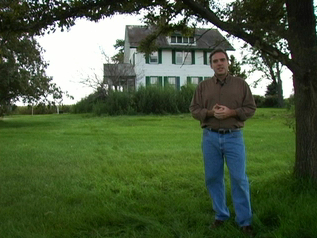
One of the highlights of our year: our purchase of Clover Ranch as a spiritual retreat center for individuals, families and small groups who want to get closer to God.
Dear Friends,
It’s been a great year here at The Ranch! We’ve been able to accomplish a lot this year, thanks to your gifts, prayers and notes of encouragement.
But we also need your help to go forward. I had a dream last weekend that Lana and I were talking with a rich couple who had decided to give away everything that they had…and they had a lot! Then they looked at us and said, “Now you guys are rich, too, right? You don’t need anything, do you?”
I woke up from my dream in a stupor — I couldn’t believe they had just given away everything they had, and that they didn’t realize how much we could have really used their help! Back to reality, the very next day Lana was talking to one of our friends who said, “I had no idea you guys needed more monthly support.” I realized then that I needed to put this appeal at the top of my newsletter, not at the end!
Three Ways You Can Help
Here are three ways you can help…
First, our most pressing need is for ongoing, monthly support.
Our donations during 2006 have averaged $2,765 per month, from which we pay all of our ministry expenses, travel expenses, Internet costs, computer costs, office supplies and our salary. These monthly donations help us continue to devote our full time efforts to ministering to the 5,000 – 10,000 visitors who come to the website each month. While our ministry has expanded dramatically over the past 10 years, our monthly donations haven’t kept pace. Our goal is to raise our monthly commitments to $6,310 by the end of 2007.
Would you consider making a monthly donation to our ministry to help us reach our monthly goal? Our current monthly donors give anywhere from $10 a month to $350 a month. We’d love for you to join us with whatever monthly amount you would be willing and able to give.
We could also use some immediate, one-time donations as our summer giving dipped below $2,500 several months, and even under $2,000 one month. While this is normal for many ministries in the summertime, it has made things especially tight as we head into the fall and winter.
Second, we need to put a new roof on Clover Ranch.
We’ve purchased this property earlier this year to serve as a real, physical “Ranch” where we can invite guests to spend time getting closer to God in a personal or family retreat setting. We’re in the process of renovating the property at a cost of nearly $20,000 during the coming year. This renovation includes a number of projects, but our first priority is to put on a new roof at a cost of approximately $7,000 so we can then begin the interior renovations.
I know that people sometimes like to give special one-time gifts to capital campaigns such as this, so I wanted to ask: Would you consider a capital gift of $100, $500, or $1,000…or maybe $2,500, $5,000, or $7,000 towards this project? This will help us to begin the needed renovations as soon as possible so we can start inviting people to Clover Ranch, helping them get closer to God.
I’ve created two 5-minute video clips that describe a little more about our Current Monthly Needs and our project at Clover Ranch. You can watch these clips online at these links:
Invest in The Ranch Website
Invest in Clover Ranch
(My thanks to Russell Pond of Top Pup Media for helping with these videos. Look for his new movie coming out next summer, called Fissure!)
Also, if you haven’t yet seen our 5-minute video from our trip to Swaziland earlier this year, you can still watch it at this link:
Planting Hope In Swaziland
I’ve put all three of these videos on a DVD, and would be glad to send you a copy at no cost to you, just in case you can’t see them online, or in case you want to share them with others, which brings me to the third way you can help…
Third, do you know of others who might be interested in hearing about, and possibly supporting, our ministry?
If so, would you be willing to recommend our ministry to them, letting them know how you’ve been involved with it, or touched by it, and asking if they would consider supporting it, too? In addition to individuals and families, our Internet outreach might also be of interest to your church Missions Committee, a Sunday School class, or a small group in which you participate. Feel free to forward this email to them, or request a DVD and info packet, and we can mail you one to give to them personally. Any of these contacts would really help us tremendously!
And if you know of some rich couples who are thinking of giving away everything they’ve got, please let them know about us before it’s all gone! :)
Major Accomplishments in 2006!
 In addition to our daily work on the website, which is now reaching between 5,000 and 10,000 people each month, from 150 countries, here are a few of the other things we’ve been able to accomplish so far this year, thanks to your help…
– Lana, Karis, Lucas and I traveled to Swaziland, South Africa with a team of 80 people from around the U.S. to plant and distribute over 8,000 backyard vegetable gardens for the beautiful Swazi people.
– I finished writing a new, inspirational book called “What God Says About Sex,” to help people discover and put into practice what God says about sex. I just got a note last week from an 18 year old guy who started reading the book and wrote:
“Eric! I’m so glad I started reading your book today! I rarely get very emotional over much of anything but while reading your book, at various points, I found myself filled with intrigue, sadness, regret, but especially joy! Thank you so much for listening to God and writing this book, it’s wonderful! While reading the sections about your proposal story and how you followed the Lord in that, and also the part about God healing you of whatever physical ailments you might have had from your sins, I felt so happy and very inspired! That’s the first time in a long time I have cried about anything. =) now I am laughing again! With joy that is. I’ve read only half of your book and I am feeling all of this! Wow! Thanks again Eric. I really needed to read this book. Well, I am going to get back to reading, I just really felt I should e-mail you.”
– If you’d like to order a copy of this downloadable e-book, please visit The Ranch Giftshop.
 – I presented a workshop on this book in June at the Annual Conference for Exodus International, the largest network of ministries for helping people overcome homosexuality.
– Karis, Lucas and I were able to briefly meet James Dobson (Focus on the Family – pictured here), Don Wildmon (American Family Association), and Tony Perkins (Family Research Council) at a conference in Washington, DC in September.
– We finalized the purchase of Clover Ranch, a house on 2.5 acres here in Central Illinois that we are starting to renovate and convert into a spiritual retreat center for individuals, families and small groups.
– I spoke at the National Missionary Convention in Indianapolis, Indiana in November to encourage people to look for creative ways to use their natural and God-given gifts to share Christ with others.
 – And just a few weeks ago, I finished writing a second book called “Exodus: Lessons in Freedom,” based on the 50-week video series we’ve been filming and uploading to The Ranch website for the past year. This new, faith-building book contains some of my favorite personal stories of how God has spoken into my life. If you’re looking for a devotional book for the new year, for yourself or for a friend, this has great, short entries to read each day, and will take you through one of the most powerful and dramatic books of the Bible, the book of Exodus. This book is available as a downloadable e-book from The Ranch Giftshop.
My sincere thanks for all you’ve helped us to accomplish so far this year!
Notes of Thanks
I thought I would end this letter with some thank you notes from people who have visited The Ranch website in the past few months. Everytime I get notes like these, I want to pass them on to you as a thank you to you for all you’ve done to help with our ministry, in your prayers, gifts and thoughts.
“Found your site a month ago…you are a great source of encouragement which I can access anytime. May God continue to bless your work.” – Peter, CHEMSFORD, UK
“Wow — I found your website after reading your weekly sermon on “This Day’s Thought.” What a true message that touched my heart! God Bless You!!” – Barbara, IOWA CITY, IOWA, USA
“I LOVE YOUR WEBSITE, It is AWESOME!!!” – Joey, DEER PARK, NY, USA
“This is a really helpful website. A friend introduced me and I have been uplifted spiritually and would like to keep in touch with you. God bless you so much.” – Nyaradzo, HARARE, ZIMBABWE
“I just found your website. It’s inspiring and a real sanctuary to go to…Thank you” – Kelly, Issaquah, WA, USA
“God Bless you. I know God has led me to your site.” – Yvonne, SMYRNA, DE, USA
“Wow, I’m so glad I found you! I feel like I’ve really been to “the ranch.” God bless your ministry!” Rebecca, HIGHLANDS RANCH, CO, USA
“I loved paging through the website…it was very interesting. Would love to hear from you soon.” – Monique, CAPE TOWN, SOUTH AFRICA
“God is good, for having this kind of website which gives us encouragement in our daily life.” – Lory, LAGUNA, PHILIPPINES
“I like your website so much that I made it my homepage!” Johnny, CHARLES TOWN, WV, USA
“Your Lesson 44 – “Our Role and God’s Role” was meant exactly for me, and most timely. Thank you, Praise God” – Jerry, JOHOR, MALAYSIA
“I love this website thanks so much for helping me. It’s so awesome.” Jen, FLUSHING, MI, USA
“First and foremost I think The Ranch is an excellent site and that you guys are doing an excellent job. I have been going through the Exodus series and am growing through it.” – Noel, UK
“Thank you so much for the message that you sent me from The Ranch. I am so grateful to God for that. It makes me feel happy and blessed when brethren like you are able to share with others about Christ.” Asiimwe, UGANDA
And I don’t have space to list all the prayers that people post on The Ranch for us to agree in prayer with them, but thought you might like to read this one…
“Dear GOD, forgive me for all the sins I’ve committed. Ever since my friend Susan told me about you, I’ve been putting my faith on you. I’ve started praying, too. God, you know I’m not a Christian. My parents follow Hinduism and are strong believer of Sai Baba. I, too, used to pray to SaiBaba. But now hearing all your stories, going to church, reading bible….I can feel my faith towards you. Deep within me there’s some kind of strong belief on you. GOD!!! I want to be your child, PLEASE show me the right path…” – S.
(S.’s prayer continued on for several more paragraphs, then she concluded by checking the box on the prayer page that says this: “I am putting my faith in Christ for the first time to forgive me of my sins and to be my Lord.” Praise God and thank you for helping her find Christ!)
I really appreciate you taking the time to read this update, and especially for helping us so much up to this point as we work together to share Christ with others. Thanks for considering these special requests, too.
Sincerely,
Eric Elder
http://www.theranch.org
P.S. Again, our most pressing need is for ongoing, monthly support. To sign up to make a monthly donation, or to make a one-time donation to our ministry or to Clover Ranch, please visit:
Make A Donation
To order the new e-books What God Says About Sex or Exodus: Lessons in Freedom, please visit:
The Ranch Giftshop
To watch any of our three 5-minute videos, please click these links:
Invest in The Ranch Website
Invest in Clover Ranch
Planting Hope In Swaziland
The Ranch Fellowship is a non-profit 501(c)(3) religious organization whose purpose is to share the message of Jesus Christ throughout the world. Click here to read more about our ministry.
To give a gift to The Ranch and to yourself, please visit The Ranch Giftshop.
To make a donation without ordering, just click Make A Donation.
Small Group Study Guide for Exodus: Lessons In Freedom
You’re reading EXODUS: LESSONS IN FREEDOM, by Eric Elder, featuring fifty inspiring devotionals based on one of the most dramatic, yet practical books in the Bible.
I’m excited to offer this study guide for groups who want to study this material together! While studying God’s Word on your own can be extremely rewarding, studying it with others can be even more so. I’ve learned from my own experience that the words of Solomon are true: “As iron sharpens iron, so one man sharpens another” (Proverbs 27:17).
This study is divided into fifty lessons, and the questions that follow can be used for personal reflection, group discussion, or a combination of both.
If your group wants to read and discuss each lesson together, they could meet once a week and complete this study in fifty weeks. If your group wants to cover the material more quickly, group members could study several lessons on their own during the week, then discuss those lessons together with the group covering five lessons per week for a period of ten weeks. A set of “summary questions” is also included for this approach.
However you choose to do it, I pray that God will speak to you through it!
Lesson 1
The Israelites may have felt weak since they were slaves in Egypt. But the reason they were enslaved was because Pharaoh could see they would one day become incredibly strong, so he decided to suppress them before they could overpower him.
1. Is there an area of your life that God may want you to be strong, but because of circumstances or other situations, you feel weak in that area?
2. Could it be that God wants you to use that weakness for His glory somehow?
3. What are some ways He might be able to use it?
4. What are some steps you can take to start moving into what God may have in mind for you in this area?
Lesson 2
While the Israelite midwives faced threats from Pharaoh unless they killed all of the newborn Israelites boys, the midwives feared God more than they feared Pharaoh and decided to do what was right. They let the boys live, and God blessed not only the Israelites, but the midwives, too.
1. Is there an area of your life where the “fear of man” is keeping you from fulfilling something that God might want you to do instead?
2. What’s the worst that could happen if you stepped forward in what you feel called to do?
3. What’s the worst that could happen if you don’t step forward in what you feel called to do?
4. How might God bless you, and those around you, if you do step forward in what you feel called to do?
Lesson 3
When God was looking for someone to lead His people into freedom, He found someone in Moses whose heart was already committed to that end. Even though Moses’ plans to set people free seemed to backfire from time to time, God eventually called Moses to set people free in a big way.
1. Is there something on your heart that you feel called to do, and may have tried to do in the past, but hasn’t yet been fulfilled?
2. If God were looking for someone to do what you feel called to do, what things in your past might show Him that you’re committed to that end, too?
3. What are some things you might do right now to demonstrate that commitment?
4. In what ways could you use some strengthening from God right now to help you carry out what He’s put on your heart to do?
Lesson 4
God came up with a plan to set the Israelites free: He saw their misery, He heard their prayers, He was concerned about their suffering, and He wanted to rescue them. But part of His plan also included using Moses, if He was willing, to be His human instrument to bring about that freedom.
1. Why would God want to involve His people in His plans, instead of doing it all Himself?
2. Are there some things going on in the world that make you want to ask why God isn’t doing something about them?
3. If so, is it possible that He might be wanting to ask you the same question?
4. If God were to invite you to take part in His plan, would you want to?
Lesson 5
When God invited Moses to take part in His plan of rescuing the Israelites, Moses protested: he gave God many good reasons why he wasn’t the best choice for the job. But God countered all of Moses’ reasons with just one reason of His own: “I will be with you.”
1. What difference do you think it made to Moses to know that God would be with Him?
2. What difference do you think it would make to you if you knew that God would be with you in what He’s calling you to do?
3. What do you think about the statement, “It’s not a matter of whether you can or can’t, but whether you will or won’t”?
4. What are some things you could do to help you clarify whether God is calling you to do something or not, and whether or not He will be with you or not?
Summary Questions – Lessons 1-5
The book of Exodus is one of the most dramatic books in the Bible. You may already be familiar with some of the stories contained within it, either from reading it before, or from famous movies based on various aspects of the story.
1. Flip through the pages of the book of Exodus, looking at just the headings of each section if you’d like, and share with the group a topic or two that you find. (For instance, “the parting of the Red Sea,” or “baby Moses gets put in a basket.”)
2. The word Exodus means to flee or to “exit,” and the book of Exodus describes how God helped the Israelites escape from their bondage in Egypt. What are some other bondages from which God might want to help His people escape?
3. In what ways did the “fear of man” enslave the Israelites, and in what ways can the “fear of man” enslave us today?
4. In what ways did the “fear of God” help the Israelites step into their divine destiny, and in what ways can the “fear of God” help us today to do the same?
5. What are some things that you see in the world around you that you hope God would do something about–and that He might be hoping you would get involved in doing something about, too?
6. Although it seems like God could have rescued the Israelites all by Himself, He chose to use Moses as His human instrument to accomplish His plan. Share why you think God would rather work through His people than doing everything Himself?
7. Although Moses and God were on the same page regarding what they hoped would happen, what seemed to hinder Moses in jumping into God’s plan, and what seemed to help him finally agree to do it?
8. Look through the rest of the questions and your answers for Lessons 1-5, and share with the group one or two that might be particularly significant to what you’re going through in life right now.
9. Read 2 Chronicles 16:9a again, and share in what ways you might hope that God would strengthen you in the days ahead?
10. Close in prayer for each other, remembering that if God has called you to do something, He will be with you to help you do it.
Lesson 6
When Moses first approached Pharaoh about letting the Israelites go free, Pharaoh did just the opposite and increased the workload on the Israelites. Moses could have been discouraged and even wondered if this was God’s plan at all, until he stopped to ask God again about the situation.
1. What does a home-improvement project usually look like when the remodeling begins?
2. How can knowing beforehand that things might get messy help you to keep your faith when you step out to do what God has called you to do?
3. When Moses saw the workload increase for his people, instead of setting them free, what did he do to make sure he was still on track?
4. Why is it important to win the battle of faith first, before even attempting the battle in the flesh?
Lesson 7
When Moses returned to God to make sure he was still on the right track, God assured him that he was. God continued to promise Moses that it would be “because of my mighty hand” that Pharaoh eventually let the people go.
1. Have you ever had something in your life backfire, even when you were pretty sure it was God’s plan prior to that point?
2. What did God say to Moses to reassure him that Moses was still on track (see verses 2-8)?
3. If God has spoken to you about something you’re to do in life, is there something tangible that you could use as a visible reminder of what he’s called you to do, to help you through those “hump days” in your life?
4. There’s a phrase in the military that standing orders are good orders, meaning that if no new direction has been given, to continue doing the last thing you were told to do. How might this apply right now to anything you’re going through in your own walk with God?
Lesson 8
In the process of setting the Israelites free, God sent plague after plague against the Egyptians who were holding them in bondage. Although He might have been able to set them free instantly, He chose instead to use this lengthier, and more difficult process.
1. Which of the plagues do you think would be hardest on you personally, if you were an Egyptian living in Egypt in those days (not counting the final plague on the firstborn)?
2. Why does the Bible say God used this particular process to set the Israelites free?
3. How can this story, and the stories of Daniel and David and Jonah, be an encouragement to those going through difficult trials in their lives?
4. If God had the choice to set you free in an instant, but you were the only one who would praise God in the end, or He could set you free in another way that might even painful to you, but many would praise God in the end, which would you want Him to do?
Lesson 9
Of all the plagues to strike the Egyptians, none struck as hard, it seems, as the one that took the life of every firstborn male in the land. Even the Israelites had to make a sacrifice before getting their freedom.
1. Why do you think Moses didn’t take Pharaoh up on his initial offers to let the people go out in the wilderness and worship God for a few days, but leave the women and children, or animals behind?
2. Why do you think God required the sacrifice of the firstborn on the part of the Egyptians, and the sacrifice of an animal on the part of the Israelites, too?
3. How do you react to the idea of “plunging your will into the depths of God’s will, there to be lost forever”?
4. How does the sacrifice in this story correspond to the sacrifice of Christ on the cross?
Lesson 10
When the Israelites celebrated their first “Passover,” it was a night marked by weeping and wailing in the Egyptian streets, as God’s Spirit passed over the houses that were marked by the blood of a lamb. It was such a memorable event that even today, 3,500 years later, people still celebrate it.
1. Have you ever been through something that has been so difficult, that when you finally came through it, you’ve remembered it ever since?
2. What thoughts do you think were going through the Israelites minds during the night of that final plague in Egypt?
3. What thoughts do you think were going through the Egyptians minds during that night?
4. If you’re going through something difficult in your life right now, what hope might you take from this story?
Summary Questions – Lessons 6-10
The process of coming out of bondage in Egypt was a painful one, both for those who were in bondage and for those who were keeping them in bondage. But in the end, there was something about the process that focused everyone’s attention on the One who was setting them free, making it a memorable event still for people today.
1. Flip through the pages of Exodus chapters 6-12 and have each person in the group mention one or two things that either the Israelites or the Egyptians had to go through that made their lives harder once Moses showed up, rather than easier.
2. How did Moses handle each of these seeming setbacks to God’s plan: with superhuman faith, or with something more like what each of us might have felt, or some combination of the two?
3. Why is it important to gear up for two battles when doing God’s will: the battle of faith (believing God will do what He says He will do), and the battle of flesh (doing the hard work itself).
4. Is there something you do, or something you have done in the past, to help you through the “hump days” of your life?
5. What did you think of excerpts from the stories about Moses, Daniel, David, and Jonah that indicated why God sometimes sets people free in the way that He does (so that all will come to know Him)?
6. What do you think of the idea of plunging your will into the depths of God’s will, there to be lost forever? Is it an appealing, a frightening, or some combination of the two, and why?
7. The freedom the Israelites received was nothing short of remarkable. The entire nation of slaves was set free on a single day, with the full permission of everyone in Egypt. How did God bring such a remarkable event to pass?
8. Look through the rest of the questions and your answers for Lessons 6-10, and share with the group one or two that might be particularly significant to what you’re going through in life right now.
9. Read 1 Corinthians 11:24-25 again, and share in what ways communion, for the Christian, is in some ways related to the Passover Feast for the Jews.
10. Close in prayer for each other, remembering that God often sets people free in a way that all will know that He is the Lord.
Lesson 11
God asked Moses and the Israelites to mark the date that they came out of Egypt in a way that they could remember, and their descendants could remember, the event forever. The Passover is still celebrated annually all of these generations later, reminding them of the freedom they attained on that remarkable day.
1. What are some memorable dates in your life, dates that you would hope to remember for the rest of your life?
2. What value is there to you, and those around you, of remembering and even celebrating such dates?
3. And in particular, how might commemorating a date you were set free from something be helpful to you, or those around you?
4. In what ways might you want to commemorate for yourself, or share with others, an important date in your life?
Lesson 12
When God brought the Israelites out of Egypt, He put them on an indirect path to the Promised Land, rather than a direct path that led straight to it. God said that this wasn’t a mistake, but that He did this on purpose, for their benefit.
1. What reason did God give for taking the Israelites the long way around to the Promised Land (verses 17-18a)?
2. Why do you think it’s sometimes true that “the shortest route in the long run is the longest route in the short run.” Why or why not?
3. Is there anything going on in your life right now that God might be taking you on the longer route to get there so that the outcome in the end will be far better than taking you on a more direct route?
4. What did the Apostle Paul do, as he recorded in Philippians 3:13b-14–that you might do to–to help him keep moving forward on the path God had placed Him?
Lesson 13
After fleeing from Egypt, Moses and the Israelites came up against a wall of sorts: the Red Sea was in front of them, and the Egyptian army was pursuing them from behind, as Pharaoh had once again changed his mind about letting them go free. When God told Moses to “Stand firm,” he did, even though there seemed to be no possible way of escape.
1. Why is “standing firm” so hard to do sometimes?
2. What was the people’s reaction when they found themselves trapped in this fretful situation?
3. What did God say in response to their fears?
4. How can this story encourage you when you’re facing something in life where the odds seem insurmountably against you?
Lesson 14
After standing firm for just the right length of time, God told Moses to raise His staff and stretch out his hand over the sea. Although it may have seemed pointless to Moses, he did it, and the sea parted in front of him, and the Israelites crossed over on dry ground with a wall of water on each side of them.
1. Why do you think God asked Moses to raise his staff and stretch out his hand over the sea, when the text says that it was God who drove back the sea with a strong wind?
2. While God certainly encourages us to pray about the situations in our lives, why is it that prayer alone may not always accomplish what God wants to accomplish?
3. Can you think of some other stories in the Bible where people put their faith in action and saw remarkable results, even though it was clear that it was God who was doing that which was remarkable?
4. Are there situations in your life where God might be calling you to “raise your staff and stretch out your hand over the sea,” even though doing so might seem unlikely to accomplish much of anything unless God intervenes?
Lesson 15
When the Israelites came through the Red Sea, having seen the waves part before them, then close in behind them on the encroaching Egyptian army, they sang a song to the Lord. The song helped them express their love for their God, and has been sung and remembered for generations so others can express their love to God as well.
1. Have you ever written a poem or a song in honor of someone special, and if so, what was their reaction?
2. How might God react to such a song or poem, whether or not you wrote it yourself or sang one that someone else had written?
3. How might remembering what God has done for you in a song or poem help to solidify the event in your mind, as well as to others in the future?
4. Why not take some time right now to right down a few words or phrases of something you’d like to express to God about what He’s done for you in your life, then keep writing until they come together in a poem or song?
Summary Questions – Lessons 11-15
When God brought the Israelites out of Egypt, He did some specific things to help them to stay free, such as putting them on the longer path to the Promised Land, and to ask them to commemorate the event with an annual feast. He also gave them some additional signs of His power among them by having them stand firm when things seemed to be caving in, and parting the sea in front of them when Moses raised his staff.
1. If you’ve seen the movies “The Ten Commandments” or “The Prince of Egypt,” share with the group your thoughts on how faithful those movies were to the story you read in the Bible about the parting of the Red Sea.
2. Look again at the story of the parting of the Red Sea in the Bible, and share what aspects of the story make you think this was not just a little creek or river they crossed, nor that the water simply receded on its own for a short period of time, like a tide that goes in and out with the phases of the moon.
3. What are some reasons that God wanted the Israelites to commemorate their coming out of Egypt year after year?
4. Why did God want to take the Israelites to the Promised Land on an indirect path, and why might God sometimes put us on indirect path in life as well?
5. What feelings might you go through if God set you free from something, only to find yourself backed up against a seemingly impassible wall–and then He told you to just “stand firm”?
6. When God is clearly the one who does some of the miracles in our lives, why is it that He still wants us to take some step of action toward bringing it about?
7. If you’ve written a poem or song about something God has done in your life, maybe you’d want to share it with the group at this point, so they can rejoice and be encouraged along with you!
8. Look through the rest of the questions and your answers for Lessons 11-15, and share with the group one or two that might be particularly significant to what you’re going through in life right now.
9. Read Proverbs 3:5-6 again, and share where you feel you are, on a scale of 1-10 (ten being the highest), in trusting the Lord with all your heart for the situations you’re facing in life.
10. Close in prayer for each other, remembering that when we trust in the Lord with all our heart, He will make our paths straight.
Lesson 16
Three days after their dramatic flight through the Red Sea, the people were desperate for God again: they grumbled against Moses for they had not found water in the desert for three days, and when they did it was undrinkable. So Moses cried out to the Lord, and the Lord answered his prayer, showing him how to make the bitter water sweet.
1. What kinds of things cause people to go from praising God for one deliverance to grumbling against Him again in such a short time?
2. How would you describe the difference between “grumbling” and “crying out to God,” if there is any difference?
3. How, specifically, did God answer Moses’ cry?
4. If you were to cry out to God today with a specific prayer request, how confident are you that He might give you a specific answer to your prayer?
Lesson 17
Having discovered water and manna in the desert, the Israelites began to tire of the daily provision God had given them and they cried out for more. God heard their cries, and in an effort to remind them that He was still the Lord their God, their provider, He told them to expect meat to eat every night and every morning.
1. God is our provider, yet sometimes we don’t connect our prayers with His provisions. Have you ever taken time to write down your prayer requests, then gone back later to see how God answered them?
2. If so, share your experience. (If not, you might consider trying it!) Have you ever had God answer your prayers in a way that you know that He’s the Lord, that He’s the only one who could have orchestrated the answer you received?
3. Even though God answered the Israelites prayers in this story, what is it about their request and God’s answer that seems to fall short of the beautiful relationship God wished to have with them?
4. What might we do in our prayer time that would both honor God for who He is, yet also express our practical needs to Him?
Lesson 18
When the Israelites ran out of water again, they took out their anger on Moses. But instead of taking it personally, Moses took it to the Lord, and the Lord reminded them all that He was indeed still with them.
1. Have you noticed that people can be fickle at times, swaying from fully supporting something to fully opposing it on what seems like a moment’s notice?
2. When people oppose you, how well do you do, on a scale of 1-10 (with 10 being you do great) at taking it to the Lord instead of taking it personally?
3. What effect might if have on your heart and attitude if you knew that the Lord was with you in situations like this? (Not that He is necessarily “siding” with you, but that He is indeed with you, nonetheless).
4. How did God answer Moses when Moses came to Him, and how might God answer you when you come to him?
Lesson 19
When the Israelites went into battle, Moses told Joshua to choose some men and go fight the battle, while Moses went with Aaron and Hur to the top of a hill. Each man had to take his position and maintain his position in order to see the victory.
1. Why might Moses have sent Joshua into the battle, while Moses himself went up to the top of the hill with the staff of God in his hands?
2. What benefit did it seem to give Joshua and his men for Moses to hold his staff high in the air during the fight? (and why might they have faltered when Moses lowered the staff?)
3. Are there some ways in which this statement applies to you, too? “It’s not a matter of whether or not you want to be a role model. You are a role model. The question is whether you’re going to be a good role model or a bad one.”
4. If you’re currently facing any battles in your life, what position has God called you to take, and how can you better take your position and maintain your position?
Lesson 20
In many ways, Moses has been almost totally alone in his efforts to set the Israelites free. But in chapter 17, God begins setting the stage for others to join him in his efforts, when God tells Moses to take the elders with him as he takes his next step of faith.
1. What are some of the pros and cons of taking your steps of faith in public, versus taking them in private?
2. How is the challenge Moses faces in this chapter the same as some of the challenges he’s faced earlier?
3. What level of confidence do you think Moses felt in going and doing what God had called him to do, at least compared to the Israelites needed help with their water supply?
4. If God were to call you to take a few others with you on your next step of faith, who might you take, and how might they benefit from being with you?
Summary Questions – Lessons 16-20
Even after helping to set the Israelites free, Moses faced several battles in the desert: battles of faith, battles within the camp, and battles outside the camp. But whenever Moses cried out to God, God answered his prayers with miraculous provision and practical steps that Moses could take to meet the needs around him.
1. As much as the Israelites wanted to be free from their bondage, there were times when they seemed to wonder if it would have been better to have stayed in Egypt. Why is that, and have you ever felt that way?
2. Having read about the Israelites fickleness about going back and forth in their view of their situation, what would you say is one of the keys to remaining firmly on course?
3. While we are always dependent on God for every breath we take, what happens that makes us feel like we can sometimes live without Him? And what usually happens to make us realize our utter dependence upon Him once again?
4. Is it possible to express our practical needs to God in a way that still honors Him and expresses our trust in Him, rather than our frustration in Him? If so, how?
5. How was Moses able to not take it personally when the people grumbled against him, and how can we not take it personally when people grumble against us?
6. In what areas of your life do you feel like your life is on display? And how does what you display affect those around you?
7. Are most of your steps of faith ones that you’ve taken privately, or have you ever had to take steps of faith in public, in one way or another? If so, what has been the effect of taking a public step of faith?
8. Look through the rest of the questions and your answers for Lessons 16-20, and share with the group one or two that might be particularly significant to what you’re going through in life right now.
9. Read Matthew 28:20b again, and share what difference it would make in your life if you believed Jesus’ statement and took it to heart, 24 hours a day, 7 days a week.
10. Close in prayer for each other, remembering that Jesus is with you always, to the very end of the age.
Lesson 21
After some time in the desert, Moses began to feel the strain of Moses being the sole judge over the people’s disputes. On the verge of wearing himself out, as well as the people, Moses’ father-in-law urged him to get help in the form of putting a system in place of additional leaders who could help Moses judge the people’s disputes.
1. How well can you relate with these words of Mother Teresa, who said, “I know God will not give me anything I can’t handle. I just wish He didn’t trust me so much.”
2. What do you think about the question, “Why would God give you more to do than one person to do?”
3. If you’re feeling overwhelmed by all you have to do, what do you think of these two options: 1) either God hasn’t give you all of those things to do and you might need to back out of some of them, or 2) God has given you all those things to do and you might need to find a new way to do them?
4. What kind of solutions might God be showing you right now about how to accomplish all that He’s given you to do?
Lesson 22
When the Israelites reached the mountain to which God told them to go, God also told Moses that He would allow the people to hear Him speaking to Moses, so that they would always put their trust in him. God wanted to establish Moses in the eyes of the people, so that they would listen to and follow his lead for the rest of their time together.
1. Have you ever stepped out in faith for yourself, only to realize later that your step of faith encouraged others to step out in faith as well? Consider some of the people who are in your “sphere of influence,” the people you encounter in a typical week (such as family, friends and co-workers, as well as others you come in contact with: bank tellers, postal workers, doctors, nurses, people on the Internet, etc.)
2. How might they be affected by your thoughts, words and actions this week?
3. What are some ways that God may have already “established” you in their eyes, as an ambassador for Him?
4. How might God use your faith in God this week to help others grow in their faith in Him?
Lesson 23
God gave Moses and the people a set of rules to follow, the Ten Commandments. Those rules weren’t meant to put limits on the people to keep them in a new type of bondage, but to allow them to live as freely as possible and still stay in harmony with one another.
1. What’s your feeling about the Ten Commandments in general? Do you see them more as unnecessary restrictions on your life and putting you back under a new kind of bondage, or as words of wisdom to help you live more freely?
2. We often think of the Ten Commandments in terms of how they apply to us personally. But how do you think the Ten Commandments helped Moses as he began to include other leaders in helping him judge the people’s disputes?
3. In your own leadership of those around you, whether at home or work or other activities, how can rules help everything and everyone work more smoothly?
4. Are there any rules you might need to, or want to, put into place in the days ahead to help things run smoother in your life?
Lesson 24
The Ten Commandments are followed by over 600 more rules for living that God gave to Moses and the people in the desert. The rules would allow Moses and the people to know and understand how they could best live together in the coming years, and also to help the new set of leaders decide any disputes that arose among the people.
1. Do you think the Ten Commandments and the 600 rules that followed were altogether “new” rules that God wanted to give the people, or more likely a “codification” of the rules that God had already been using to help the people live together in harmony, or some combination of the two?
2. If God has given you wisdom in certain areas of your life, how might sharing that wisdom with others help them in their lives?
3. Consider some of the questions asked in today’s message and write down your answers: What topics in life has God spoken to you about the most? Or the most often? Or the most clearly? What questions have you struggled with, wrestled through, and found God’s answers?
4. What are some ways you might be able to share what you’ve learned from God with others?
Lesson 25
God promised the Israelites that He would bring them into a “promised land,” but He also knew that they weren’t yet able to occupy the entire land, that it would become desolate and the wild animals would overrun it. So God told them He would give it to them little by little, until they had increased enough to take possession of all of it.
1. What are some things you’re praying about right now where it seems God is delaying the answer?
2. How might this passage help you in seeing God’s perspective on those situations?
3. While you may feel like you’re ready for God’s full answer to your prayers, in what ways might He still want to “increase you” so that when the answer comes, you’ll be ready for it?
4. Read Ephesians 3:20, and consider what it might look like if God really answered your prayers in a way that was immeasurably more than all you could ask or imagine. How willing would you be to wait for an answer like that?
Summary Questions – Lessons 21-25
After setting the Israelites free from Egypt, God began to expand Moses’ ability to lead them through the desert by raising up more leaders to help him. God gave Moses and the people the Ten Commandments and over 600 other rules to help them live in freedom with each other, and by which the leader’s could judge the people’s disputes.
1. Look through the list of rules God gave the people in Exodus 20-23. Share with each one or two of the rules that stand out as particularly interesting or unusual to you.
2. Why do you think the laws of many nations around the world are still based on the rules God gave to the Israelites in the desert so many years ago? And what is it about the Top 10 that make them stand out from all the rest?
3. With all the wisdom Moses already had, why was it that Jethro was able to see a way for Moses to lead the people even better, a way that Moses either never considered before, or at least never implemented?
4. How might it affect you–in terms of what you say and do in your life–to know that others are watching your walk with God and could be directly influenced by it in one way or another?
5. What do you think of the idea of rules being like the tracks that enable a train to go as fast as it does, or a kite string that enables a kite to fly as high as it does?
6. What is one topic that you feel God has taught you the most about in life–or about which you have wrestled with the most and found some of God’s answers?
7. What reason did God give the Israelites for why He wasn’t going to give them the promised land all at once (see Exodus 23:29-30)? And how might that apply to any situations you’re facing in your life today?
8. Look through the rest of the questions and your answers for Lessons 20-25, and share with the group one or two that might be particularly significant to what you’re going through in life right now.
9. Read Exodus 20:1-3 again and share why you think God put this first commandment ahead of all the rest.
10. Close in prayer for each other, remembering the One True God you serve, and how very much He loves you.
Lesson 26
From the very beginning, God told Moses why He wanted to free the Israelites: so they could worship Him freely. And in chapter 24, Moses and several of his leaders finally got to go up to the mountain God had called them to, and they ate and drank in the presence of God.
1. Why does God seem to love it so much when we worship Him? What does it do for Him? And what does it do for us?
2. Even though there are more times of worship coming up for the Israelites, where everyone will be involved, what might have made this time of worship so special to God, to Moses, and to the elders that came with Him?
3. How do you best like to worship? With words? Your music? In your heart? In other ways?
4. Why not take some time right now to worship the Lord, whether it’s in your favorite way, or just in your heart, right where you are (which might be your favorite way!)
Lesson 27
God told Moses to have the people make a sanctuary for Him, a place where He would dwell among them. Just as God had spoken to Noah about the specific details of how to build the ark for the animals, God now gave Moses very specific instructions for how to build this place of worship.
1. What would you say to someone who says that God only speaks in generalities, such as “Love one another”?
2. Why might God want to speak so specifically to His people at times?
3. Do you believe that God could still speak so specifically to you about the situations you’re facing in your life? Why or why not?
4. Is there something you’d like to ask God for wisdom about? Take a few minutes to ask Him now, and listen for His answer.
Lesson 28
God told Moses make sacred garments for his brother Aaron to give him dignity and honor as he served as the high priest. God wanted to consecrate him in a special way for this special work of service.
1. Why do you think God may have wanted to set Aaron apart with special garments for his duties as a priest?
2. As you read through Exodus 28:1-40, what other reasons did God have for creating Aaron’s ephod and breastpiece the way He did, and who else would He be honoring through the specific symbols and engravings that He used?
3. Can you think of some people in your life who might benefit from being honored for the work they’re doing?
4. If so, are there some specific ways you might be able to give them such dignity and honor?
Lesson 29
God called Moses to anoint, ordain and consecrate Aaron and his sons for the work of service God had called them to do. Moses was to anoint them with a special mixture of oil and spices, blended specifically for this purpose of consecrating them for this work.
1. Can you think of other people in the Bible whom God anointed for the work they were to do? (see 1 Samuel 10:1, 1 Samuel 16, 1 Kings 1:39, for examples)
2. What purpose does anointing people with oil seem to serve?
3. What purpose might anointing people with oil serve today?
4. In Luke 4:18, Jesus quoted the words of Isaiah the prophet and said that God had anointed Him for a specific purpose. What was that purpose, and how might God want you to serve others with that same purpose?
Lesson 30
Moses was able to accomplish all the work that God had for him to do because he was able to put a system in place, a system that involved other people in the work. Thankfully, he didn’t have to do it all alone, and God showed him specific steps he could take to make it happen all along the way.
1. Consider what might have happened to Moses had he not gotten others involved in the work? What would his life have been like, and what would the people’s lives have been like that he served?
2. By involving others in the work, how was he able to expand the work that God had called him to do?
3. What are some barriers that might keep you from involving others in the work that God has called you to do? And what are some of the benefits of involving them in the work?
4. When you weigh the barriers against the benefits, are there some things you might do differently in your own life having seen the example of Moses in this study?
Summary Questions – Lessons 26-30
God called Moses and the Israelites out of Egypt so they could worship Him freely. Once in the desert, God gave the Israelites specific instructions for creating a place of worship that was beautiful and enthralling, setting apart various people for various purposes.
1. Read through some of the verses about why God wanted to set the people free from their bondage: Exodus 3:12, 4:23, 7:16, 8:1, 8:20, 9:1, 9:13, 10:3, 24:1. Why does bondage sometimes keep people from being able to worship?
2. Some people seem to be able to worship even while they’re being held captive by others. Are such people really in bondage or not?
3. What do you think of the statement: “The degree of freedom we have in our lives is directly proportional to the degree to which we’re able to worship God from our hearts.”
4. Some people think God only speaks in generalities, like “Love one another.” While that’s certainly true, can you give some examples from the Bible where God spoke to people very specifically?
5. Just as Moses was called to make sacred garments for the priests who served God alongside of him, are there some specific ways you can give “dignity and honor” to those whom God may have called to serve alongside you?
6. Can you think of some examples of when God anointed people for His work? In what ways can we anoint, consecrate, or dedicate people to God’s work today?
7. In what ways might involving others in the work God has called you to do help to expand that work exponentially?
8. Look through the rest of the questions and your answers for Lessons 26-30, and share with the group one or two that might be particularly significant to what you’re going through in life right now.
9. Read Matthew 11:28 again, and share what how worshiping God can help you ease your burdens and give you rest. Share also how it might do the same for God!
10. Close in prayer for each other, remembering that God has called you out of bondage so you can worship Him.
Lesson 31
God called the Israelites to make an offering to Him twice a day: once in the morning and once in the evening. As they did this, He told them that He would meet with them and speak with them there.
1. While there are benefits of talking to God throughout the day, what’s the benefit of setting aside time every morning and every evening to come to talk with Him?
2. Do you have a routine in place that helps you to spend time with God at least once or twice a day? If not, is it something you’d like to start?
3. What are some ways that using a devotional can enhance your quiet time with God, in addition to just reading the Bible itself?
4. Consider making a plan for spending quiet time with God twice a day. Write down what you might study during that time. If you don’t have anything in mind, consider looking for some devotionals or other tools that could help you make the most of your time with God.
Lesson 32
God asked Aaron to build an altar where he could burn incense every morning and at twilight. Having a special place and a special activity to do at the altar created a fragrant offering to the Lord.
1. Do you have a special “place” where you have quiet time before the Lord?
2. If you do have a special place, where is it? And if you don’t, what are some places that might lend themselves to quiet moments with Him?
3. How can spending quiet time with God be like a fragrant offering to Him?
4. If there’s something else you’d like to do in your quiet time with God that would make it special, write it here.
Lesson 33
God asked Moses to make a bronze basin where people could wash their hands and feet before entering the Tent of Meeting. Being washed clean first would keep them from dying.
1. While there’s value in coming to God “just as you are,” what value might there be in getting washed clean before coming into His presence?
2. What does unconfessed sin do to our intimacy with others?
3. How can unconfessed sin affect our relationship with God?
4. If you’re aware of any unconfessed sin in your life, read 1 John 1:19 again and be encouraged to bring those sins to God and receive His forgiveness and cleansing.
Lesson 34
After calling the people to make all kinds of beautiful things for their place of worship, God pointed out those whom He had given special skills to carry out that work. He says He also filled them with His Spirit to take on these special tasks.
1. God seems to have equipped the Israelites with special skills even while they were in bondage. How did He want them to use those skills now that they were free?
2. Even with the special skills God had given them, why did He also need to fill them with His Spirit?
3. What are some special skills God has given you that you, even skills that you may have acquired in a totally secular way, that you could now use for Him?
4. Ask God to fill you with His Spirit, to enable you to do those things He has called you to do.
Lesson 35
Even with all the work God called the Israelites to do, He also wanted to make sure they had a break one day out of every seven. This followed the example He Himself set for us by taking a Sabbath of rest after creating the world in six days.
1. Are you ever reluctant to “rest” on the Sabbath day?
2. Why do you think God was so serious about people taking a Sabbath day of rest, saying that anyone who didn’t rest was to be put to death?
3. The Sabbath is a day to recharge our batteries, just like sleep recharges us at night, except that on the Sabbath, we get to stay awake and enjoy the time of rest! What are some things you could do on the Sabbath, if you could do anything at all, that would bring “rest to your soul”?
4. Can you do any of those things on this coming Sabbath? If so, why not give it a try?
Summary Questions – Lessons 31-35
God wanted to meet with the people at the Tent of Meeting. He gave them several details for making the most of their meeting time with Him, from the timing and location, to the preparations they could make before and during their time together.
1. Why do you think God the Creator longs to meet with those whom He has created?
2. If you were in His place, why would you want to spend time with those you had created?
3. Why do you think God wanted the people to meet with and talk with Him every morning and at twilight?
4. If you have a regular place or time that you meet with God, where and when do you do it? If not, where might you do it?
5. How can confessing your sins to God help you in your relationship with Him?
6. What kinds of skills has God given you that God might be able to use for Him? And how would His filling you with His Spirit help you in using those gifts?
7. What would you do if you could do something on the next Sabbath day that would truly bring “rest to your soul”?
8. Look through the rest of the questions and your answers for Lessons 31-35, and share with the group one or two that might be particularly significant to what you’re going through in life right now.
9. Read Matthew 11:28-30 again and think through how having daily, and even twice daily quiet times with God can help bring rest to your soul. Share also how keeping the Sabbath free from work can also bring you God’s rest.
10. Close in prayer for each other, asking God to help you take time out of your days and weeks to get recharged with Him.
Lesson 36
People are wired to worship, and they’re going to worship something, whether it’s God or something else. God wants us to focus our worship on Him.
1. While God was telling Moses all the incredible things He wanted the people to do with their skills and resources, they created a golden calf worshiped it instead, as Moses had not yet come down from the mountain. How does this reinforce the fact that people are “wired” to worship?
2. Even though we’re wired to worship, does it make much difference what we worship?
3. Can the same thing be said for love…if we’re wired for love, does it make much difference with whom we choose to share that love?
4. Are you worshiping anything other than what God wants you to worship? If so, why not refocus your worship back on Him today?
Lesson 37
When the people turned away from God, God was ready to let them perish in their sinfulness. But Moses reminded God of what would happen if He did, that the other nations would look at God as if He were evil, and the promises God had made for their future would be thwarted.
1. Some people think that God appears to be mean in the Old Testament. But given all that He had done for the Israelites up to this point, do you think He was acting with evil intent?
2. Even though Moses might have been tempted to agree with God, that the people should be wiped out, why did He plead with God to spare them?
3. Do you ever encounter people, and their sins, whom seem to deserve any punishment God might dole out to them?
4. What might happen if you pleaded with God for mercy on them in their behalf?
Lesson 38
Moses pleaded with God for the lives of the Israelites, offering to have God’s wrath come upon him instead of upon them, even though they were the ones who have sinned. God responded by dealing with their sin, but also in showing great mercy.
1. What did Moses say that God could do to Him if He wasn’t willing to forgive the people’s sins (verse 32)? Why would Moses put himself on the line like that?
2. How does what Moses did compare to what Jesus did for us?
3. While we may have to deal with people who sin, how can we do it in a way that reflects the hearts of Moses and Jesus when people sinned around them?
4. How might someone act differently if they had a heart of hate for those who sin, instead of a heart of love?
Lesson 39
Moses was distressed that even though God wasn’t going to destroy the people for their sin of creating and worshiping the golden calf, that He wasn’t going to go with them on the rest of their journey either. Moses made it a point thereafter to regularly meet with God in the “tent of meeting,” to continue pleading with God on their behalf.
1. How did Moses speak with God when they met at the tent of meeting?
2. Joshua was a young aid to Moses at this time, and later was selected to lead the people into the promised land. How is Joshua’s heart for the Lord revealed in this passage (verse 11)?
3. What might you do to enhance your time with God, to be sure that you’ve truly met with Him during the day?
4. While Moses spoke with God face to face, how do we speak with God and hear from Him today (see John 16:13)?
Lesson 40
Just like Moses and Joshua stepped into the tent of meeting to meet with God, we, too can step into His presence at any moment, anywhere we are.
1. While some people wish they had a tent of meeting where they could visit with God, God has now given us His Holy Spirit, who dwells within us. In what ways is this even better than the tent of meeting that Moses and Joshua had?
2. How free do you think you have to be before you can step into the presence of the Lord?
3. What sometimes keeps you from stepping into God’s presence maybe more than you might like to do?
4. As today’s devotional suggests at the end, why not take a little time to just step into His presence today?
Summary Questions – Lessons 36-40
People are wired to worship, but sometimes they focus their attention on things other than God. When they do, God wants them to refocus on Him. Moses, like Jesus, pleaded with God to forgive others of their sins, even though they may have deserved any punishment that He would have given them. God wants us to have the same heart for others, pleading their cause even if they deserve otherwise.
1. When Moses saw the people sinning, after all the miracles they had seen, what could he have done instead of pleading for their forgiveness? And what might have been the result if God did what he had said?
2. How did Moses’ heart for God carry over into his heart for the people (see Exodus 32:8-14).
3. What evidence in life makes you think that we really are “wired” to worship, even if we don’t always worship the right thing.
4. What can we learn from Moses’ conversation with God on behalf of the people in terms of how we can stand in the gap for others as well?
5. How can we deal with sin, yet with a heart like Jesus?
6. While Moses got to meet with God and hear from Him in the tent of meeting, how has God enabled each of us to meet with Him and hear from Him today (see John 16:13)?
7. These lessons are a reminder that you can step into and out of God’s presence at any moment. How can this reminder help you face the week ahead?
8. Look through the rest of the questions and your answers for Lessons 36-40, and share with the group one or two that might be particularly significant to what you’re going through in life right now.
9. Read Exodus 33:11 again and consider what it must have been like to be a young aid in the presence of Moses, watching him converse with God as he did. Share how that experience may have prepared and equipped Joshua to eventually lead the people into the Promised Land.
10. Close in prayer for each other, asking God to remind you step into His presence at any moment in the week ahead.
Lesson 41
For as many conversations as Moses had with God throughout their time before, during and after the Exodus from Egypt, Moses still asks to see more of God, saying “Now show me your glory.” Moses continually longer for a more and more intimate relationship with God, asking God to reveal more and more of Himself to Moses.
1. For all that Moses and God had been through together, why might Moses have wanted to go deeper still in his relationship with God?
2. What does this say about our relationships with God, whether we’re new to that relationship or whether we’ve been in a relationship with Him for years?
3. How might you apply the biblical idea of “knowing” someone to your relationship with God?
4. What might happen if you were to ask God to show you His glory like Moses did? Why not ask and find out?
Lesson 42
Moses asked God to show him God’s glory. God responded by letting His name pass before Moses, a name that described in His essence, who He was, in detail.
1. What’s been your view of God in the Old Testament?
2. Does God’s description of Himself here in Exodus 34:1-7 match the view you’ve had, or not?
3. In what ways did Jesus exhibit similar traits in the New Testament?
4. In what ways has God shown His grace to you (read Romans 5:8 again for ideas), and in what ways can you show that grace to others?
Lesson 43
When God passed in front of Moses, Moses’ response was immediate: he bowed bowed down and worshiped, “at once.” God often passes by us during the days, too, because He’s not just in the big things or just the little things―He’s in all things.
1. Have you ever had an experience where you felt like God passed by you, even if it were for a fleeting moment?
2. If so, what was your reaction at the time?
3. Why was “worship” an appropriate response for Moses when God passed by? And why is it appropriate for us as well?
4. When you ask God to show you His glory, be prepared to respond the way Moses did―with worship!
Lesson 44
God had many things He wanted to do for the Israelites, and He had many things He called Moses to do to help Him. What resulted from their conversations in their quiet times together has impacted people for thousands of years.
1. If God can do all things, why does He need our help?
2. If He has so much He wants us to do, why do we need His help?
3. What’s the relationship between praying and doing the work God wants us to do?
4. Can you think of anything from your own quiet times with God that has changed the course of your life or the lives of others?
Lesson 45
After Moses had spent an extended time in God’s presence, he came out with his face shining so bright that he had to wear a veil in front of the people. Just like the moon reflects the brightness of the sun, bringing light in the darkness, so we too can reflect the glory of God, bringing light to those around us.
1. How did being in God’s presence change King David?
2. How did being in God’s presence change Moses?
3. How can being in God’s presence change you?
4. How can your being in God’s presence change those around you, even without that being your initial goal?
Summary Questions – Lessons 41-45
Moses asked God to show him God’s glory and God did it, by making His name pass in front of Moses. As a result, Moses got to know God more intimately than before, eventually even reflecting God’s glory to all those around him.
1. Why do you think one of God’s greatest gifts is to give us eternal life with Him? How long do you think it would take to get to know Him as intimately and as fully as possible?
2. Why do you think Moses would want to see more of God’s glory, even after all the miracles and amazing things Moses had seen already?
3. Why do we long for intimacy in our human relationships? And how does this translate to our relationship with God?
4. What are some things that would be on God’s nametag, according to Exodus 34:5-7?
5. What was Moses’ immediate response when God did allow His glory to pass before Him?
6. What’s the relationship between prayer and the things God wants to do through us?
7. How did spending time in God’s presence change Moses? And how can it change us (and even those around us)?
8. Look through the rest of the questions and your answers for Lessons 41-45, and share with the group one or two that might be particularly significant to what you’re going through in life right now.
9. Read Psalm 4 again and consider why David often goes into God’s presence in distress and comes out of God’s presence with peace. Share any similar experiences you may have had in your life.
10. Close in prayer for each other, asking God to change you as you come into His presence.
Lesson 46
When it came time to carry out the work that God had laid before Moses and the people, Moses made to the call to all who were willing and skilled. The response was so overwhelming that Moses had to restrain the people from bringing more.
1. Why is it so hard for us to sometimes ask for help?
2. Rather than demanding people to participate, Moses called on everyone who was “willing.” What difference do you think it made to the people for Moses to make his call the way he did?
3. What did Moses have to trust when he put out the call like he did?
4. If there’s something God has put on your heart to do for Him, and you don’t think you can possibly do it yourself, who might you call to help you out?
Lesson 47
After Moses made the call to all who were willing and skilled, the people set about doing the work that God had called them to do. They followed God’s plan in every detail, and produced a masterpiece in the end: a beautiful place to worship God.
1. Have you ever been so consumed by the planning for a project that when it came time to put the plan into practice, you felt like you were out of steam?
2. What from Moses’ story might encourage you to do the work, even keeping to all the details, that God has called you to do?
3. Is there anything you or others could do to help you through this time, to give you strength for the work ahead?
4. Let me encourage you to do as the Israelites did: Don’t give up. Don’t give in. Don’t stop pushing now. Dow the work! And get it done!
Lesson 48
Moses and the people found the strength to finally “finish the work,” just as God had commanded them to do. And as they did His reward for them was just around the corner.
1. Are there some projects in your life that might be at 211 degrees, just one degree short of that which would bring the fruit from all your labor?
2. What encouragement can you take from the examples in today’s devotional that could help you add that one final degree of heat to “finish the work.”
3. What does the Apostle Paul say will be the result of our work, if we don’t get weary along the way (see Galatians 6:9)?
4. Determine in your heart today to finish the work God has given you to do.
Lesson 49
When Moses and the people had finished the work God called them to do, God showed up in a powerful way. His glory so filled their place of worship that they couldn’t even get into it!
1. What did the glory of the Lord look like as it came down upon the work the people had finished?
2. How was this yet another specific answer to Moses’ prayer back in Exodus 33:18?
3. Who could see the glory of the Lord as it came down upon their work? And what effect did that have on the people?
4. As you finish the work God has given you to do, ask God again to once again show you His glory!
Lesson 50
God had a reason for setting the Israelites free: to worship Him. After setting them free, God gave them specific ways to stay free and to set others free, too–ways which often involved worshiping Him!
1. If worshiping God from your heart is the measure of truly being free, how free do you feel?
2. What was God’s plan for the Israelites from even before they were taken away into bondage (see Genesis 15:14)? And what happened?
3. What is God’s plan for your life from even before you were taken taken into bondage (see John 3:16)? And what’s going to happen?
4. Reread Mark 16:15. What can you do this week to join God in His plan?
Summary Questions – Lessons 46-50
After all the planning and praying about the work God had called the Israelites to do, the time finally came to do it. They did the work, and God’s glory covered their work in a way that everyone could see it.
1. What’s the most exciting part of a project for you? Getting the idea, starting the work, finishing the work, seeing the results of the work?
2. What can keep you motivated throughout the whole process?
3. When the time came for Moses to execute the plan God had given him to do, who did Moses call (see Exodus 35:4-10)?
4. Do you ever get tempted to give up on a project just when it’s time to finally do the work? What encouragement can you take from the Israelites story in Exodus 36:8-13?
5. What’s the “212 Principle,” and how can might it apply to any situations you’re facing right now in your life?
6. What happened when the people finally finished the work? What came down and covered it? And how did this answer Moses’ prayer in Exodus 33:18?
7. What was the goal of the Exodus from the very beginning, as found in Exodus 3:12?
8. Look through the rest of the questions and your answers for Lessons 46-50, and share with the group one or two that might be particularly significant to what you’re going through in life right now.
9. Read Genesis 15:14 again and consider God’s long term plan for them from the very beginning. Then take encouragement from God’s long term plan for you, as found in John 3:16!
10. Read John 4:23-24 and close in prayer for each other, asking God to help you to worship Him fully, in spirit and in truth.
Lesson 50: Free To Worship
You’re reading EXODUS: LESSONS IN FREEDOM, by Eric Elder, featuring fifty inspiring devotionals based on one of the most dramatic, yet practical books in the Bible. Also available in paperback and eBook formats in our bookstore for a donation of any size!
Scripture Reading: Exodus 3:12
Thanks for taking the time to go through this study of the book of Exodus with me. I’ve learned a lot from the story of how God set the Israelites free, and I hope you have, too.
As we close out our time together, I’d like to remind you of three key points from this study that apply directly to each of our lives.
1) God set the Israelites free so they could worship Him―and that’s the same reason He set you free, too.
This reason is stated throughout the book of Exodus, from the first time that God called to Moses from the burning bush: “When you have brought the people out of Egypt, you will worship God on this mountain’ ” (Exodus 3:12b).
To the words Moses spoke to Pharaoh: “Go to Pharaoh and say to him, ‘This is what the LORD says: Let my people go, so that they may worship me’ ” (Exodus 8:1b).
To the concluding scene of the entire book, when the glory of the Lord descended on the place the Israelites built to worship Him: “Then the cloud covered the Tent of Meeting, and the glory of the LORD filled the tabernacle” (Exodus 40:34).
To be truly free means to be able to worship God with your whole heart. If you can worship God with your whole heart, regardless of whatever else might be going on around you, you’re free! But if you can’t worship God in your heart, for whatever reason, you’re still in bondage, and God wants to set you free.
If that’s the case, you might want to review these lessons again to look for ideas to help you get fully free.
2) God helped the Israelites to stay free―and He wants to help you stay free, too.
God’s help included a system of rules to keep the Israelites, and each of us, from plunging back into bondage again. These rules are summarized in the Ten Commandments:
“You shall have no other gods before me…
You shall not make for yourself an idol…
You shall not misuse the name of the LORD your God…
Remember the Sabbath day by keeping it holy…
Honor your father and your mother…
You shall not murder.
You shall not commit adultery.
You shall not steal.
You shall not give false testimony against your neighbor.
You shall not covet…” (from Exodus 20:1-17).
Rather than restricting us, these rules free us to live the abundant life God has created us to live.
Again, if you’ve gotten free in the past, but are struggling to stay free now, you might want to review these lessons again for more insights on how to restore the freedom you once had.
3) God invited Moses to take part in His plan to set others free―just like God is inviting you to take part in it, too.
Hundreds of years before Moses was even born, God had a plan for setting the Israelites free. God told Abraham:
“Know for certain that your descendants will be strangers in a country not their own, and they will be enslaved and mistreated four hundred years. But I will punish the nation they serve as slaves, and afterward they will come out with great possessions” (Genesis 15:14).
And that’s exactly what happened. God had a plan in mind for setting His people free, and He called on Moses to help Him with that plan.
God has a plan for setting others free, too, and He’s called on you and me to help Him with that plan.
What’s His plan? God knew that our sins would enslave us―and eventually kill us. So God sent Jesus, His Son, to die for our sins so we could be free to live with Him forever:
“For God so loved the world that he gave his one and only Son, that whoever believes in him shall not perish but have eternal life” (John 3:16).
After dying for our freedom, and rising again from the dead, Jesus asked His followers to do one more thing:
“Go into all the world and preach the good news to all creation” (Mark 16:15).
He’s inviting you into His plan. Won’t you join Him?
Want to learn more? You can watch a podcast with more discussion about this topic below.
Lesson 49: The Glory Of The Lord Covers The Work
You’re reading EXODUS: LESSONS IN FREEDOM, by Eric Elder, featuring fifty inspiring devotionals based on one of the most dramatic, yet practical books in the Bible. Also available in paperback and eBook formats in our bookstore for a donation of any size!
Scripture Reading: Exodus 40:34-38
We’ve come to the last five verses, and the spectacular conclusion, of the book of Exodus. Take a look at what happens when Moses finishes the work:
“Then the cloud covered the Tent of Meeting, and the glory of the LORD filled the tabernacle. Moses could not enter the Tent of Meeting because the cloud had settled upon it, and the glory of the LORD filled the tabernacle. In all the travels of the Israelites, whenever the cloud lifted from above the tabernacle, they would set out; but if the cloud did not lift, they did not set out―until the day it lifted. So the cloud of the LORD was over the tabernacle by day, and fire was in the cloud by night, in the sight of all the house of Israel during all their travels” (Exodus 40:34-38).
What is it that Moses sees that so fills the tabernacle that he can’t even get into it? The glory of the Lord―the very thing that Moses had asked to see back in Exodus 33:18 when he said, “Now show me your glory.” But this time, Moses wasn’t the only one who got to see it―everyone got to see it!
There’s a lesson here for me, for you and for everyone who does their work as if working for the Lord: when you’ve finished the work, been obedient to the vision, and brought it to its conclusion, the glory of the Lord can finally come down on your work in a way that everyone can see it.
I’ve had some experiences in my life where I’ve sensed the presence of God in a way that I can only describe as “the glory of the Lord.” I’m not an expert in the glory of the Lord, but from what I’ve read in the Bible, from what I’ve learned from other Christians, and from what I’ve experienced in my own life, the glory of the Lord seems to be actual “stuff,” like the air we breathe. It’s real, physical and tangible. It can be seen, sensed and felt.
I’ve sensed it during worship, when one time I was just singing to God in what seemed to be a normal, enjoyable worship experience, and all of a sudden, the presence of the Lord was so real and tangible that I felt like I couldn’t move if I wanted to. And I didn’t want to! I wanted to stay in His presence as long as I possibly could!
I’ve sensed it during my quiet times, when once I was sitting back on my couch, writing in my journal, and suddenly felt like melted butter was being poured into my chest. Maybe it was the oil of the Holy Spirit, if that sounds more palatable, but whatever words I would use to describe it couldn’t do justice to what I felt during those precious minutes with the Lord.
I’d love to be able to finish a project and see the glory of the Lord come down and cover it in a way that everyone could see it, so that I couldn’t even stand up anymore! At that point, I wouldn’t care! If my purpose in doing all that I do is to worship the Lord, as was the case for the Israelites, then who cares if He bowls me over when it’s done, and I’m laid out flat on the floor in His presence? That’s right where I’d want to be anyway! I wouldn’t want to go anywhere else!
If the Lord picked up and moved, I’d want to pick up and move with Him, like the Israelites who followed Him. I wouldn’t want to stay back! I’d want to be with God!
My prayer for you as you work on your own projects for the Lord, and even as you come to the the end of this study with me, is that when you’ve finished the work, been obedient to the vision, and brought it to its conclusion, that the glory of the Lord would show up in such a way that you, and everyone else, can see it.
Now, may the Lord show you His glory!
Want to learn more? You can watch a podcast with more discussion about this topic below.
Lesson 48: Finish The Work
You’re reading EXODUS: LESSONS IN FREEDOM, by Eric Elder, featuring fifty inspiring devotionals based on one of the most dramatic, yet practical books in the Bible. Also available in paperback and eBook formats in our bookstore for a donation of any size!
Scripture Reading: Exodus 39:33-40:33
We’re just around the corner from the end of this study of the book of Exodus. Appropriately, then, this lesson is called, “Finish The Work.”
Today is “payday” for Moses and for all the people traveling with him. They’re about to reach the culmination of all that they’ve worked for, and all that they’ve been set free for: to worship God.
The details of their work, as listed in Exodus chapters 39 and 40, might seem trivial, dull and something to skip over to someone just skimming through the Bible. But if you’ve ever worked on a building project yourself, you know that when the end of the project starts coming into view, those days can be some of the most exciting and beautiful days of the entire project!
Can you imagine what the people who were building this place of worship must have thought as they saw it all finally coming together? They’ve just carved all these beautiful things, gilded them with gold, and decorated them with all kinds of precious stones. They’ve just crafted beautiful works of art that were conceived in the very mind of God Himself.
Then they started bringing them forward to Moses, letting him look over each item to see that it was finished exactly as God had described them to him on the mountain. They begin to put it all together, standing each piece up in its place. They light the lamps, burn the incense, and put the tablets of stone, the very words of God, into the ark of the covenant, and Wow! The work is finally complete!
The whole process concludes with these words:
“So all the work on the tabernacle, the Tent of Meeting, was completed. The Israelites did everything just as the LORD commanded Moses….And so Moses finished the work” (Exodus 39:32, 40:33b).
What a powerful moment! Have you ever heard about something called the “212 Principle,” popularized in a book by Mac Anderson and Sam Parker? At 211 degrees Fahrenheit, water is hot, but at 212 degrees, water boils. And when water boils, you get steam, and steam can power a locomotive. Although there’s only one degree of difference between 211 and 212, that extra degree can be enough to take all the previous effort over the top!
I don’t know what kind of project you might be working on right now. I don’t know if you’re at 211 degrees, or 150, or 98.6! But I do know that we all have a tendency to wear out when we’re working on a project, even a project that God has clearly called us to do. We can get to the point where we’re not sure if we can take one more step. We’re not sure that we can raise the temperature one more degree. But let me encourage you that if God’s called you to do it, keep on doing it!
The American inventor, Thomas Edison, worked non-stop for several years to perfect the light bulb. He tested over 6,000 materials to use for filaments―everything from bamboo to cedar to hickory. After thousands of tests and a pile of failed materials that stacked up outside his house high enough to reach his second floor window, Edison finally hit upon a material that burned long enough, and bright enough, for commercial success: carbonized cotton.
Edison’s perseverance paid off, not only for himself, but for all of us who have benefited from his perseverance. Edison said, “Many of life’s failures were men who did not realize how close they were to success when they gave up.”
The Apostle Paul, who knew how hard it was to persevere in the work of the Lord year after year, even in the face of endless persecution, hardship and personal suffering, still had enough confidence in the end result of that perseverance that he wrote to the people living in Galatia: “Let us not become weary in doing good, for at the proper time we will reap a harvest if we do not give up” (Galatians 6:9).
Don’t become weary in doing good! Finish the work! At the proper time, you will reap a harvest, if you do not give up.
Want to learn more? You can watch a podcast with more discussion about this topic below.
Lesson 47: Do The Work
You’re reading EXODUS: LESSONS IN FREEDOM, by Eric Elder, featuring fifty inspiring devotionals based on one of the most dramatic, yet practical books in the Bible. Also available in paperback and eBook formats in our bookstore for a donation of any size!
Scripture Reading: Exodus 36:8-39:32
I don’t know about you, but there are times when I’ve planned, prayed and gotten things ready to take on a huge project, but by the time it comes to do the work, I’m already exhausted! I feel like a woman who’s nine months pregnant, but when it comes time to push, I don’t have the strength.
When we feel like we can’t push any farther, that’s often when we need to push the most. That’s often the culmination of all that we’ve worked so hard to achieve up to that point. If we stop pushing at the moment of delivery, we’re going to shortchange, and possibly even abort, the whole plan.
We’ve come to that point in the book of Exodus, too. We’re on Lesson 47 out of 50. With just three lessons to go, the people are finally ready to do the work that God had given Moses such a detailed vision for back on the mountaintop. Take a look at just a few of the verses as the work begins:
“All the skilled men among the workmen made the tabernacle with ten curtains of finely twisted linen and blue, purple and scarlet yarn, with cherubim worked into them by a skilled craftsman. All the curtains were the same size―twenty-eight cubits long and four cubits wide. They joined five of the curtains together and did the same with the other five. Then they made loops of blue material along the edge of the end curtain in one set, and the same was done with the end curtain in the other set. They also made fifty loops on one curtain and fifty loops on the end curtain of the other set, with the loops opposite each other. Then they made fifty gold clasps and used them to fasten the two sets of curtains together so that the tabernacle was a unit” (Exodus 36:8-13).
The description of all the work continues in similar detail for another three chapters. Sometimes we can skip over these details in the Bible, but this is the foundation for what God called them to do. They came out of the desert to worship God, and now they’re building a place of worship to do it.
When I studied this passage initially, I heard about a songwriting contest. I had written a song about five years earlier that I really liked and had put a lot of time into, but never recorded it. The contest turned out to be just the thing I needed to finally spur me on to do the work and get it recorded. Although I didn’t exactly have the time to mess with this kind of thing, I felt like I needed to follow through on all the work I had previously done on the song.
So I stepped out of my comfort zone and sent an email to a woman in California. I loved her voice, but didn’t have any money to pay her for this project. I asked her if she’d still be willing to record the song for this contest, anyway. Amazingly, she said, “Yes,” and asked some of her friends to help her record it.
It turned out to be a beautiful recording, and although we didn’t win the contest, I was so thankful to have it recorded. When I called to thank her for her work on it, she said, “Oh, no, thank you! Thank you for asking and letting me do it!” She told me how the song had really ministered to her that week as she worked on it. Had I not “made the call” to get the work done, the song still wouldn’t be recorded, and those involved would have missed out on the blessing it turned out to be to them as well.
I know how hard it can be to “do the work” when the time finally comes to do it.
But for whatever project God’s given you, don’t lose heart. Don’t lose strength. This final push could be what finally delivers your “baby.” Many people will be blessed through your work, including those who work on it with you!
So don’t give up. Don’t give in. Don’t stop pushing now. Do the work! And get it done!
Want to learn more? You can watch a podcast with more discussion about this topic below.
Lesson 46: Make The Call To All Who Are Willing And Skilled
You’re reading EXODUS: LESSONS IN FREEDOM, by Eric Elder, featuring fifty inspiring devotionals based on one of the most dramatic, yet practical books in the Bible. Also available in paperback and eBook formats in our bookstore for a donation of any size!
Scripture Reading: Exodus 35:1-36:7
If God has put a vision on your heart to do something for Him, I want to encourage you today to take a step of faith: make the call to all who are willing and skilled to help you do what God wants done.
If you’re like me, asking for help is one of the hardest parts of carrying out God’s will. But I’m encouraged by what I read in Exodus chapter 35. Here we see that Moses has come down from the mountain with a detailed vision in mind for what God wanted him to do next: to build an incredible place of worship for God. Now, it’s time for Moses to ask the people for their help, to see if they will provide the resources and the labor to make it happen. How will he ask them? And how will they respond? Let’s take a look:
“Moses said to the whole Israelite community, ‘This is what the LORD has commanded: From what you have, take an offering for the LORD. Everyone who is willing is to bring to the LORD an offering of gold, silver and bronze; blue, purple and scarlet yarn and fine linen; goat hair; ram skins dyed red and hides of sea cows; acacia wood; olive oil for the light; spices for the anointing oil and for the fragrant incense; and onyx stones and other gems to be mounted on the ephod and breastpiece. All who are skilled among you are to come and make everything the LORD has commanded…’ ” (Exodus 35:4-10).
He calls on all who are willing and skilled to “give” to the work and to “get involved” in the work. Now let’s look at the response:
“Then the whole Israelite community withdrew from Moses’ presence, and everyone who was willing and whose heart moved him came and brought an offering to the LORD for the work on the Tent of Meeting, for all its service, and for the sacred garments. … All the Israelite men and women who were willing brought to the LORD freewill offerings for all the work the LORD through Moses had commanded them to do” (Exodus 35:21, 29).
In the end, God had stirred the hearts of so many people that they had to be restrained from giving any more!
“Then Moses gave an order and they sent this word throughout the camp: ‘No man or woman is to make anything else as an offering for the sanctuary.’ And so the people were restrained from bringing more, because what they already had was more than enough to do all the work” (Exodus 36:6-7).
When I first read this passage, I wondered what that must feel like, to see people give and get involved to such an extent that they had to be restrained from giving any more. But when I came back to this passage again to teach it to others, I was in the middle of raising funds for five of us to go on a missions trip to Africa. Up to that point, I had often questioned if we’d be able to raise enough for even one of us to go, let alone five.
I took encouragement from this passage, and kept pressing on. In the final weeks before our trip, I found myself having to tell people to not give any more to the trip, for we had already raised all that we needed for all five of us to go.
We can sometimes look at a passage like this, and even hear a story like I just told, and be either discouraged or encouraged, wondering why it’s not happening to us, or looking forward to when it will happen to us.
My encouragement to you is to make the call. Make the call to all who are willing to help you carry out the vision that God has put on your heart. As Christians, God has entrusted us with great visions, great plans and great ways to reach the world for Him. God wants us to step out in faith, make the call, and ask people to give and get involved in doing what God wants done. Make the call!
Want to learn more? You can watch a podcast with more discussion about this topic below.
Lesson 45: Spending Time In God’s Presence Changes Us
You’re reading EXODUS: LESSONS IN FREEDOM, by Eric Elder, featuring fifty inspiring devotionals based on one of the most dramatic, yet practical books in the Bible. Also available in paperback and eBook formats in our bookstore for a donation of any size!
Scripture Reading: Exodus 34:29-35
If you’ve ever read through the book of Psalms, you may have noticed that King David doesn’t always go into God’s presence with a really happy attitude, but he usually comes out with one.
Just flip through the Psalms and see how many times this happens. Psalm 4, for instance, starts with, “Answer me when I call to you, O my righteous God. Give me relief from my distress; be merciful to me and hear my prayer” (verse 1), but it ends with, “I will lie down in peace, for you alone, O LORD, make me dwell in safety” (verse 8).
Over and over the pattern repeats. David starts out pretty angry with God, and angry with the people around him, but he ends up by praising God and trusting Him completely. Why?
Because spending time in God’s presence changes us. Sometimes we don’t even notice the change, but others do. And when they notice the change in us, it changes them, too.
Take a look at the change that took place in Moses when he spent time in God’s presence. In Exodus chapter 34, the change was so visible, it was reflected in his face:
“When Moses came down from Mount Sinai with the two tablets of the Testimony in his hands, he was not aware that his face was radiant because he had spoken with the LORD. When Aaron and all the Israelites saw Moses, his face was radiant, and they were afraid to come near him. But Moses called to them; so Aaron and all the leaders of the community came back to him, and he spoke to them. Afterward all the Israelites came near him, and he gave them all the commands the LORD had given him on Mount Sinai. When Moses finished speaking to them, he put a veil over his face. But whenever he entered the LORD’s presence to speak with him, he removed the veil until he came out. And when he came out and told the Israelites what he had been commanded, they saw that his face was radiant. Then Moses would put the veil back over his face until he went in to speak with the LORD” (Exodus 34:29-35).
Here’s a man with a super-tan! Moses had just asked God in Exodus chapter 33: “Show me your glory.” Later, when Moses came down from the mountain, he had God’s glory all over him! He was so radiant, so physically changed, that he had to put a veil over his face when he talked to other people!
Spending time in God’s presence changes us. The more time we spend with God, the more we’re changed we’ll be―physically, emotionally, spiritually―in all kinds of ways. Whenever we ask to see God’s glory, we shouldn’t be surprised to find that His glory is reflected in us.
What causes the moon to shine so bright? It’s the reflection of the sun. There’s nothing inherent in the moon to make it light up the night. That’s what God wants to do through each one of us. He wants us to spend time with Him, absorbing His glory, so we can go out and reflect the light of His Son into the darkness of the world around us.
Moses wasn’t even aware how his time with God had changed him. But others were. The glory that covered Moses was certainly for Moses’ benefit, but it also overflowed to all of those around him.
If you’ll diligently spend time with God, you’ll start to see that the overflow from your time with Him will naturally touch other people. Although this may not be your main purpose for spending time with God, He can use the overflow of your experience to “prime the pump” for others.
Spending time in God’s presence changes us. Although you may come into His presence tired, angry, frustrated or broken, chances are good that a little time with the Creator of the universe, the One who gave you life and breath, will give you new life, too. He’ll restore you, encourage you, strengthen you and help you to put your trust in Him more and more.
Want to learn more? You can watch a podcast with more discussion about this topic below.
Lesson 44: Our Role And God’s Role
You’re reading EXODUS: LESSONS IN FREEDOM, by Eric Elder, featuring fifty inspiring devotionals based on one of the most dramatic, yet practical books in the Bible. Also available in paperback and eBook formats in our bookstore for a donation of any size!
Scripture Reading: Exodus 34:11-28
We’re going to look in this lesson at something that puzzles a lot of people, including me. Sometimes we wonder how much we have to do for God, and how much He’s going to do for us. It’s hard to find the balance. The truth is that we both have roles to play. God has things He wants us to do, and then there are things He says He’ll do.
A quick look at Exodus chapter 34, verses 10-28, when God made a covenant with the Israelites, shows these two roles. If you take a look at that passage, you’ll see that God says there are things He’s going to do, and then He says there are things He wants them to do.
Here are a few things that God says He’s going to do for them:
- He’ll do wonders never before done in any nation of the world (verse 10)
- He’ll drive out the nations ahead of them (verse 11)
- He’ll enlarge their territory (verse 24)
And here are a few things that God wants them to do:
- Obey what He commands (verse 11)
- Don’t make cast idols (verse 17) (I think this was just a reminder about the golden calf, “That was a bad move guys, don’t ever do that again, OK?”)
- Celebrate the feasts and make sure to rest every seventh day (verses 18 and 21)
I think this is helpful for our own understanding of how we interact with God.
Sometimes we might sit back and mistakenly say, “It’s all in Your hands God. I’m not going to do a thing. I’m leaving it all up to You.” There are times when it’s important to simply pray, and pray, and pray. But prayer is a conversation with God, and oftentimes during those conversations, God tells us things that He wants us to do. In those times, we’ve got to do our part.
Other times, we might mistakenly think that we’ve got to do everything. We think that if we don’t do it, it won’t get done. We act as if God’s not likely to do anything for us. We forget that God has a huge role to play in everything we do. In the case of the Israelites, God’s role was to do certain things, like performing wonders never before done in any nation of the world, driving out nations before them, and enlarging their territory―little things like that. :)
So there are often these two things going on at the same time: things God will do, and things He wants us to do. We need to trust God to do His part, and we need to do our part to the best of our ability.
There’s a final point in this passage that I don’t want you to miss. God ends His conversation with Moses with these words:
“Then the LORD said to Moses, ‘Write down these words, for in accordance with these words I have made a covenant with you and with Israel.’ Moses was there with the LORD forty days and forty nights without eating bread or drinking water. And he wrote on the tablets the words of the covenant―the Ten Commandments” (Exodus 34:27-28).
Moses had just finished two back-to-back 40-day fasts. He had totally emptied himself so he could be totally filled with God. The words that God spoke to Moses in those quiet times together turned out to be some of the longest lasting words in the history of the world: the Ten Commandments. Three thousand years later they are still some of the most talked-about and cherished words ever written.
Our quiet times with God have power. This Exodus study is proof of that to me. It was during my own 40-day fast, almost three years before writing this devotional, that I first took the notes from the book of Exodus that have resulted in this study. What we do in our quiet times with God can have an effect days, months and even years into the future.
God wants us to spend time with Him, and to act on what He tells us to do during that time. God will do His part. He just wants us to do ours.
Want to learn more? You can watch a podcast with more discussion about this topic below.
Lesson 43: Worship And Wonder
You’re reading EXODUS: LESSONS IN FREEDOM, by Eric Elder, featuring fifty inspiring devotionals based on one of the most dramatic, yet practical books in the Bible. Also available in paperback and eBook formats in our bookstore for a donation of any size!
Scripture Reading: Exodus 34:8-10
I’ve had moments in my life where something will happen and I’ll think, “Wow, that was the presence of God passing right in front of me.”
I don’t always sense His presence like this, but when I do, I’m usually taken aback by it, and I’m not quite sure how to react. It’s overwhelming, on one hand, to realize that God has just passed by. But it’s often such a small thing, on the other hand, that alerts me to His presence, that it makes me stop and think, “Was that really God?”
I love how Moses responds when the presence of God passed by Him in Exodus chapter 34:
“Moses bowed to the ground at once and worshiped. ‘O Lord, if I have found favor in your eyes,’ he said, ‘then let the Lord go with us. Although this is a stiff-necked people, forgive our wickedness and our sin, and take us as your inheritance.’ Then the LORD said: ‘I am making a covenant with you. Before all your people I will do wonders never before done in any nation in all the world. The people you live among will see how awesome is the work that I, the LORD, will do for you’ ” (Exodus 34:8-10).
Moses’ response was immediate: he bowed down and worshiped, “at once.”
The night before I wrote this lesson, I had one of those moments where I felt God’s presence passing by.
All week I had been thinking about an illustration of what grace looks like that I had read twenty years ago in Victor Hugo’s book, Les Miserables. In the book, a thief takes refuge in the home of a bishop, who was the first person who offered the thief a meal and lodging since his escape from prison. As they prepared for bed that night, the bishop handed the thief a silver candlestick to light his way to his bedroom for the night.
In the middle of the night, the thief’s heart became hard again and he took the opportunity to escape while he still could, stealing the silver utensils that they had used for dinner as he left the house. But early the next morning, the police caught the thief and brought him back to the bishop’s house. The bishop exclaimed, “Oh, you are back again! I am glad to see you. I gave you the candlesticks, too, which are silver also, and will bring forty francs. Why did you not take them?”
The thief was stunned, as were the police. The bishop added solemnly, “Never forget you have promised me you would use the money to become an honest man,” which is exactly what happened.
I remembered that picture of grace from Hugo’s book and wanted to share it with others, but didn’t know where in my house to find the book I had once read. The night before I was to write this lesson, my 8 year-old son and I were reading from another book, a large collection of short stories, when my son said, “I’d like to just flip through the pages and pick a story with my fingers.” He ran his fingers through the 832 page book and opened it. I stared in disbelief at the title of the story in front of my eyes. It was called, The Good Bishop, and it gave a short, 3-page summary of this very incident with the candlesticks from Victor Hugo’s book, Les Miserables.
I felt as if the presence of God had just passed by.
I wanted to bow down and worship. Not just because God had found the story for me that I had been looking for, in a place where I never would have looked for it, but because earlier in the day I was wondering why some of the “big” things I’ve been praying about have not yet been answered.
I was reminded that God is not just in the big things―and He’s not just in the little things. God is in every thing.
The next time God passes by, what will your response be? I’m praying that more and more, my response will be like that of Moses, to bow down at once, and worship.
Want to learn more? You can watch a podcast with more discussion about this topic below.
Lesson 42: Absorb The Name Of The Lord
You’re reading EXODUS: LESSONS IN FREEDOM, by Eric Elder, featuring fifty inspiring devotionals based on one of the most dramatic, yet practical books in the Bible. Also available in paperback and eBook formats in our bookstore for a donation of any size!
Scripture Reading: Exodus 34:1-7
If God wore a name tag, I think today’s scripture passage would be on it. A person’s name often reveals something about who they are. This was especially true in biblical days. The name “Moses,” for instance, meant “drawn out of the water,” which describes exactly how he was rescued from the Nile River by one of Pharaoh’s daughters.
God’s name reveals to us who He is, too. So when Moses says to God in Exodus 34, “show me Your glory,” God responds by saying that He would cause His “name” to pass in front of Moses, thus revealing to Moses more about who He is. Here’s what God says:
“Then the LORD came down in the cloud and stood there with him and proclaimed his name, the LORD. And he passed in front of Moses, proclaiming, ‘The LORD, the LORD, the compassionate and gracious God, slow to anger, abounding in love and faithfulness, maintaining love to thousands, and forgiving wickedness, rebellion and sin. Yet he does not leave the guilty unpunished; he punishes the children and their children for the sin of the fathers to the third and fourth generation’ ” (Exodus 34:5-7).
God’s name tag would read something like this: “Hello, my name is… Compassionate. Gracious. Slow to Anger. Abounding in Love and Faithfulness. Forgiving, Yet Just.”
To me, it’s an Old Testament description of what Christ came to demonstrate for us in the New Testament. The prophet Jeremiah later tells us that God is going to make a new covenant with the people, not one written on tablets of stone, but one that would be written on people’s hearts. Not a covenant where the children would have to pay for the sins of their fathers, but one where each person would be called to account for their own sins.
Some people think that God is portrayed in the Old Testament as being easily provoked to anger. But the way I read it, I see God as incredibly compassionate, gracious and slow to anger. If you read the Bible from beginning to end, you’ll see a repeating pattern of God drawing people to Himself, then people turning away. God draws them back, then they turn away. He draws them again, then they turn away again. At some point, if God is a “just” God, He must eventually punish sin.
But if God were merely “just,” He would have wiped out the entire planet long ago. In fact, way back in Genesis chapter 6, just six chapters into the history of man, God was tempted to do just that because of the wickedness of the people. But God relented, and gave mankind another chance. And another. And another. The fact that any of us are still alive today is a testimony to God’s compassion, grace, and ability to be slow to anger. The fact that God sent Jesus to die, so that anyone who would put their faith in Him would be saved from the punishment of death, shows that He is still willing to go to incredible lengths to be forgiving, yet just.
I’ve heard the difference between justice, mercy and grace described by the different possible reactions of a man who had caught a thief trying to steal a brand new Harley-Davidson motorcycle from his garage. If the owner grabbed a gun and shot the thief, or escorted him to jail, that would be justice. The thief was stealing his stuff, and stealing is wrong, so justice requires some kind of penalty.
But if the owner said, “I’m just going to let you go and walk out of here now. Even though what you’ve done is wrong, I’m not going to touch you, just go,” that would be mercy.
But if the owner turned around, went back into the house and got the keys to the Harley, came back and handed them to the thief, signed over the title to him, and handed him $100 to put gas in it, that would be grace.
And that’s what God has done for us through Christ:
“But God demonstrates his own love for us in this: While we were still sinners, Christ died for us” (Romans 5:8).
Take time to absorb the name of the Lord, realizing how incredibly loving and gracious He is. Then remember to extend that same love and grace to others.
Want to learn more? You can watch a podcast with more discussion about this topic below.
Lesson 41: Ask God To Show You His Glory
You’re reading EXODUS: LESSONS IN FREEDOM, by Eric Elder, featuring fifty inspiring devotionals based on one of the most dramatic, yet practical books in the Bible. Also available in paperback and eBook formats in our bookstore for a donation of any size!
Scripture Reading: Exodus 33:18-23
I’d like you to listen in to a conversation that took place several thousand years ago between God and Moses. In this conversation, you’ll learn something about what it’s like to have an intimate relationship with God, and what you can do to take that relationship even deeper.
The conversation takes place in chapter 33 of the book of Exodus. Moses has just been pleading with God to come with him on the next leg of his journey.
The LORD replied, “My Presence will go with you, and I will give you rest.” Then Moses said to him, “If your Presence does not go with us, do not send us up from here. How will anyone know that you are pleased with me and with your people unless you go with us? What else will distinguish me and your people from all the other people on the face of the earth?”
And the LORD said to Moses, “I will do the very thing you have asked, because I am pleased with you and I know you by name.”
Then Moses said, “Now show me your glory.”
And the LORD said, “I will cause all my goodness to pass in front of you, and I will proclaim my name, the LORD, in your presence” (Exodus 33:14-19a).
What’s amazing to me about this conversation is that throughout this whole journey called “the exodus” from Egypt, Moses has been walking with God, talking with God, and seeing God work in various ways. And yet, here in chapter 33, Moses is still asking to see more and more of God. He says to God, “Now show me your glory.”
One of the lessons I get out of this conversation is that no matter how close we are to God, or how close we have been in the past, we can always go deeper with Him. There’s always more to learn about Him. There’s always more that God wants to reveal to us about Himself, if we’re willing to ask.
Maybe this is one of the reasons God makes it possible for us to spend eternity in heaven with Him when we put our faith in Christ, because it will take that long to get to know Him as deeply as possible.
This idea of spending time with God so that we can get to know Him more is a huge part of what it means to experience His “glory.” If you look closely at the conversation, you’ll see that God says that He knows Moses by name. He knows who Moses is. He knows what makes Moses tick. He knows his name. So when Moses asks to see God’s glory, God replies, in essence, “All right, I’ll show you My name, too. I’ll show you more of who I am.” God knows Moses, and Moses wants to know God.
In the purest sense, this is at the heart of what it means to be intimate with someone else: to reveal more of yourself to them, and to invite them to reveal more of themselves to you.
In fact, the Hebrew word often used in the Bible to describe the conception of a child is “yada,” which means “to know.” When the Bible says that “Adam knew Eve,” it means that they were so intimate that they conceived a child! (see Genesis 4:1, NKJV) Interestingly, this same word “yada” is used to describe the intimacy that takes place when we worship God, an intimacy in which we reveal more of ourselves to Him, and He reveals more of Himself to us.
God invites us to be intimate with Him, to worship Him with our entire beings. He wants us to love Him with all of our heart, soul, mind and strength, not rushing through these moments of intimacy, but taking the time to reveal ourselves to each other.
No matter how close to, or far away from God you might feel, take some extra time today to ask Him to reveal more of Himself to you. Ask God to show you His glory.
Want to learn more? You can watch a podcast with more discussion about this topic below.
Lesson 40: We’re Set Free To Worship
You’re reading EXODUS: LESSONS IN FREEDOM, by Eric Elder, featuring fifty inspiring devotionals based on one of the most dramatic, yet practical books in the Bible. Also available in paperback and eBook formats in our bookstore for a donation of any size!
Scripture Reading: Exodus 33:11
We’ve reached lesson 40 of this 50 lesson study of the book of Exodus. Before we head into the final 10 lessons of this study, I’d like to remind you of the purpose of “the Exodus,” of getting free, in the first place.
God sets us free so we can worship Him. We don’t have to wait till we die and go to heaven to be in the presence of God. We don’t have to wait till we get to the end of some spiritual journey to be with Him. We don’t even have to wait one more minute.
We can worship God in our hearts right now. We can spend time in His presence, commune with Him, at any given moment.
There’s a little passage tucked in Exodus 33 that reminds me of this. The Bible says that when Moses would want to spend time with God, he would go to the “Tent of Meeting,” and God would meet with him there. But then the Bible adds these words:
“Then Moses would return to the camp, but his young aide Joshua son of Nun did not leave the tent” (Exodus 33:11b).
I try to picture what it would be like to be a young aide to Moses, the great deliverer of the people of Israel. What would it be like to walk beside him into the tent of meeting, and watch him as the Lord would, “speak to Moses face to face, as a man speaks to his friend” (Exodus 33:11a)?
I think it would be awesome! Apparently, so did Joshua. Since Moses was the leader of the nation, he had to then go back to the camp to deal with the issues of the day. But not Joshua. Joshua stayed. He wasn’t about to leave that tent. He was going to stay right there in the presence of God.
Although they hadn’t reached the promised land yet, they could still spend time in the presence of God. Although they hadn’t resolved all of the problems and struggles of life, they could still worship Him. Although they were still in the midst of one of the worst struggles of their nation, this didn’t deter Joshua from spending time in the “tent of meeting.” Rather than deterring the people, it probably drove them even deeper into the presence of the Living God.
Sometimes we think that we have to reach a certain place in our freedom before we can fully worship God. We think that we have to get free of a particular sin, or be fully restored from a broken relationship. Or we wonder if we might never really be able to worship God here on this earth, but will only get to truly enter His presence when we die.
But this passage in Exodus, as well as many others throughout the Bible, encourage me that we can, at any moment, step into the presence of God. Sure, it’s a lot easier to step into His presence when we’re not weighted down with sin and strife and struggle. That’s why God wants us so desperately to throw off anything that might entangle us.
And yet, sometimes, it’s the very act of coming into His presence that helps us to finally surrender our grip on those things that are holding us back, letting God Himself take the weights off of our shoulders. As Joshua would later find out, when Moses died and Joshua had to take over the leadership of the entire nation, those regular moments in the presence of God would prove invaluable to his own effectiveness as a leader.
Whether there’s peace all around you, or strife swirling out of control, I’d like to encourage you to step into God’s presence sometime today, even right now if you can. Like Joshua, maybe you can just stay there and linger awhile with God, like a honeymoon couple enjoying some intimate moments together.
Worshiping God is one of the most glorious, life-giving, and life producing acts in which we can engage. It’s the reason God set us free in the first place. Why not take a little time to just step into His presence today?
Want to learn more? You can watch a podcast with more discussion about this topic below.
Lesson 39: Meeting With God
You’re reading EXODUS: LESSONS IN FREEDOM, by Eric Elder, featuring fifty inspiring devotionals based on one of the most dramatic, yet practical books in the Bible. Also available in paperback and eBook formats in our bookstore for a donation of any size!
Scripture Reading: Exodus 33:1-17
For me, one of the most encouraging things to read about in the Bible is when people meet with God. It’s amazing to me that God not only met with people in the Bible, but that He also wants to meet with us.
One of those biblical meetings occurs in the middle of Exodus chapter 33, which describes how Moses would often meet with God.
“Now Moses used to take a tent and pitch it outside the camp some distance away, calling it the ‘tent of meeting.’ Anyone inquiring of the LORD would go to the tent of meeting outside the camp. And whenever Moses went out to the tent, all the people rose and stood at the entrances to their tents, watching Moses until he entered the tent. As Moses went into the tent, the pillar of cloud would come down and stay at the entrance, while the LORD spoke with Moses. Whenever the people saw the pillar of cloud standing at the entrance to the tent, they all stood and worshiped, each at the entrance to his tent. The LORD would speak to Moses face to face, as a man speaks with his friend. Then Moses would return to the camp, but his young aide Joshua son of Nun did not leave the tent” (Exodus 33:7-11).
This passage is tucked in the midst of a very difficult time in the life of the Israelites. God was really angry with them for what they had just done, by turning away from Him. After dealing with their sin, God told them to go ahead of Him into the promised land. Then God added, “But I will not go with you, because you are a stiff-necked people and I might destroy you on the way” (Exodus 33:3b).
The people were distressed to hear this. So Moses did again what was apparently something he had been doing already on a regular basis. He went out to meet with God in the “tent of meeting.”
I think many of us go through times when we feel like God is really close to us, then go through other times when we feel He is far from us. There are many reasons for this kind of ebb and flow in our relationship with God. But I know for me, if God seems distant, I want to make sure it isn’t because I have become “stiff-necked,” like God described had happened to the people in this passage. I want to make sure my neck is well-lubricated, and fully turned towards Him.
I remember an author who described a time in his own life when he was feeling empty in the things he was doing for God. He realized that he was using his own skills and abilities more and more to serve God, but relying on God less and less. In order to regain His full reliance on God to do what God had called him to do, he realized he needed to turn back to God again in a personal relationship that was real and vibrant.
As part of his personal renewal, he made a commitment to himself to write out his dialog with God daily, filling at least one page of a notebook per day. By intentionally carving out time to be with God again, he was able to recapture the joy and fullness of serving Him.
We don’t have to deliberately sin to feel like God is distant. But sometimes through our busy-ness, laziness, or plain neglect, we can find ourselves farther and farther from the one true relationship that matters most: our relationship with God.
God wants to meet with us. And when we put our faith in Christ, God promises to send His Holy Spirit to not only meet with us, but to live within us (see Romans 8:11), and to speak with us, too:
“But when he, the Spirit of truth, comes, he will guide you into all truth. He will not speak on his own; he will speak only what he hears, and he will tell you what is yet to come” (John 16:13).
God wants to meet with you, too. Take time to meet with Him today.
Want to learn more? You can watch a podcast with more discussion about this topic below.
Lesson 38: We Must Deal With Sin With A Heart Like Jesus
You’re reading EXODUS: LESSONS IN FREEDOM, by Eric Elder, featuring fifty inspiring devotionals based on one of the most dramatic, yet practical books in the Bible. Also available in paperback and eBook formats in our bookstore for a donation of any size!
Scripture Reading: Exodus 32:15-35
If we want to help set others free from sin, at some point we must deal with their sin. But the way we deal with it makes all the difference in the world.
We can learn a lesson from the way Moses dealt with the sin of his people when they created a golden calf and began to worship it.
Moses was hot with anger at their sin, and God called Moses to administer justice to the people. But even in Moses’ righteous anger, he only took things as far as God told him to―and no further. Even more important, he showed his true heart for God and for the people, by offering his own life as a willing sacrifice in their place.
Take a look at what Moses said the day after he had to administer God’s justice to the people:
“The next day Moses said to the people, ‘You have committed a great sin. But now I will go up to the LORD; perhaps I can make atonement for your sin.’ So Moses went back to the LORD and said, ‘Oh, what a great sin these people have committed! They have made themselves gods of gold. But now, please forgive their sin―but if not, then blot me out of the book you have written’ ” (Exodus 32:31-32).
Moses had done what God had told him to do, but his words reveal the heart from which he had done it. He admitted that the people had sinned, not glossing over it, not trying to minimize it, but acknowledging that it was great indeed. But he also called on God to forgive their sin, adding that if God wouldn’t forgive them, then to please blot his own name out of God’s book.
Moses was able to effectively execute justice because he was also willing to take the same punishment upon himself as what might have come to those who had sinned. He didn’t come against them as one who was merely outraged by their actions, even though he was outraged. He came to them as one who was also willing to stand in the gap for them.
Doesn’t that sound like someone else in the Bible? It sounds to me like Jesus.
It sounds exactly like what Jesus did for us when he willingly died on the cross. He hadn’t done anything wrong. In fact, He had done everything right. But because of His great love for us, He was willing to take upon Himself the punishment that we rightfully deserved for our sin.
This is the kind of heart that God wants us to have when He calls us to deal with other people’s sin: a heart full of love. I’ve been in situations where I haven’t had this kind of heart. But I’ve known that I’ve needed to do whatever it took to get this kind of heart before I would be able to effectively confront the sin in another person’s life.
Even though we can’t die in the place of others, as Jesus did, we can have hearts that are willing to do so. We can have the same kind of heart that Jesus had. We can walk with people through their struggles. We can talk with them as they try to find their way out. We can listen to them as they anguish over the very real, and sometimes very precious things they may need to leave behind in order to get free. We can ask God’s forgiveness for them, even when they repeatedly make mistakes on their road to recovery.
The Bible says that Jesus is the only one who can condemn any of us, but instead of condemning us, He’s sitting at the right hand of God, praying for us (see Romans 8:34).
That’s the kind of heart God wants us to have for others when we deal with their sin. A heart that can feel the pain that God feels when people sin, but a heart that is also willing to stand in the gap for them when they do. God wants us to deal with sin from a heart full of love―a heart just like Jesus.
Want to learn more? You can watch a podcast with more discussion about this topic below.
Lesson 37: We Can Turn People Back When They Turn Away
You’re reading EXODUS: LESSONS IN FREEDOM, by Eric Elder, featuring fifty inspiring devotionals based on one of the most dramatic, yet practical books in the Bible. Also available in paperback and eBook formats in our bookstore for a donation of any size!
Scripture Reading: Exodus 32:7-14
Have you ever tried to help someone out with their life, only to see them turn away from God? You wonder if they’ll ever turn back around? You think to yourself, “Man, I could really help that person if they would just let me.”
I want to encourage you that all is not lost when our friends, family, or co-workers turn away from God. Even though they may be quick to turn away from God, we can turn them back. We have the power of the Living God in our lives to help turn their lives around.
Take encouragement from what happened to Moses in Exodus chapter 32. When God and Moses finished talking on the mountain, God gave Moses a heads-up about what was going on back at camp. God said:
“Go down, because your people, whom you brought up out of Egypt, have become corrupt. They have been quick to turn away from what I commanded them and have made themselves an idol cast in the shape of a calf. They have bowed down to it and sacrificed to it and have said, ‘These are your gods, O Israel, who brought you up out of Egypt’ ” (Exodus 32:8-9).
If you’ve followed the story of these people up to this point, what do you think you would do with them now? They’ve just seen miracle after miracle after miracle of God working in their lives. They’ve just been set free from 400 years of bondage in slavery. Yet here they are, a short time later, and again, they’re turning their back on God.
Here’s what God thought of doing at this point:
“I have seen these people,” the LORD said to Moses, “and they are a stiff-necked people. Now leave me alone so that my anger may burn against them and that I may destroy them. Then I will make you into a great nation” (Exodus 32:10).
Moses may have felt the exact same thing. But when Moses heard what God was about to do, something clicked within Moses. He said, in effect, “No, God, don’t do it!”
Moses didn’t plead the innocence of the people, like we might try to do regarding our friends, saying, “It’s just a calf, they’ll turn back. Let ’em go, it’s no big deal.” Moses didn’t try to argue on the people’s behalf based on their merit, but based on God’s promises:
“O LORD,” he said, “why should your anger burn against your people, whom you brought out of Egypt with great power and a mighty hand? Why should the Egyptians say, ‘It was with evil intent that he brought them out, to kill them in the mountains and to wipe them off the face of the earth’? Turn from your fierce anger; relent and do not bring disaster on your people. Remember your servants Abraham, Isaac and Israel, to whom you swore by your own self: ‘I will make your descendants as numerous as the stars in the sky and I will give your descendants all this land I promised them, and it will be their inheritance forever.’ ” Then the LORD relented and did not bring on his people the disaster he had threatened (Exodus 32:8-14).
Something similar happened back in Genesis chapter 6 when God threatened to destroy the earth with a flood. But on account of Noah, God gave humanity another chance.
While it’s true that people can be quick to turn away from God, it’s also true that we can turn them back. We have the power of the Living God with us to help turn their lives around.
We can stand in the gap for them. We can pray for them. We can listen to them, speak the truth to them, and show love to them. Remember that God is “not wanting anyone to perish, but everyone to come to repentance” (2 Peter 3:9b).
Call out to God on their behalf, saying, “God, please spare my daughter from the bad decisions she’s made. Spare my son, my boss, my mother, my father, my brother, my friend. Have mercy on them Lord, not because of their goodness, but because of Yours. In Jesus’ name, Amen.”
Want to learn more? You can watch a podcast with more discussion about this topic below.
Lesson 36: People Will Worship, But What?
You’re reading EXODUS: LESSONS IN FREEDOM, by Eric Elder, featuring fifty inspiring devotionals based on one of the most dramatic, yet practical books in the Bible. Also available in paperback and eBook formats in our bookstore for a donation of any size!
Scripture Reading: Exodus 32:1-6
As human beings, we want to worship something. We desire to worship, we’re wired to worship, and we will worship. But what will we worship?
One of my missionary friends says that his definition of missions is to help people turn away from worshiping anything that was pulling them away from God, so that they could worship the One True God. It isn’t a matter of whether or not people will worship, but a matter of who or what they will worship.
Exodus 32 gives us one of the clearest pictures of this truth in the Bible.
While Moses was spending forty days and nights in the presence of God, getting the detailed plans for what God wanted them to do next, the Israelites were growing impatient down at the bottom of the mountain. They went to Moses’ right-hand man and brother, Aaron, saying,
“Come, make us gods who will go before us. As for this fellow Moses who brought us up out of Egypt, we don’t know what has happened to him” (Exodus 32:1b).
Now Aaron, having seen all the great signs and wonders that God had just finished doing for the people, should have naturally said something like this: “Didn’t you see that pillar of fire? That cloud of smoke? Those Egyptians smashed by the waves of the sea? What are you thinking?” But that’s not what Aaron said. He said:
“ ‘Take off the gold earrings that your wives, your sons and your daughters are wearing, and bring them to me.’ So all the people took off their earrings and brought them to Aaron. He took what they handed him and made it into an idol cast in the shape of a calf, fashioning it with a tool. Then they said, ‘These are your gods, O Israel, who brought you up out of Egypt.’ … Afterward they sat down to eat and drink and got up to indulge in revelry” (Exodus 32:2-4, 6b).
The people grew impatient waiting for what God had in mind for them. God knew it was in their hearts to shape and fashion things out of gold. He had a blueprint in mind for them that was about to blow them away with the magnificence and awe of it, and would inspire in their hearts for impassioned worship. But instead, they chose to put their God-given skills to use in ways that took them further from God, instead of drawing them closer to Him.
I had a friend who told me about her 32-year old daughter who had decided to pursue a lesbian relationship. My friend asked me how she could continue to show love and acceptance to her daughter, without approving of the relationship. She especially wondered how she could possibly ask her daughter to give up this relationship, when it seemed like this was the first time her daughter had been happy in her entire life. What could I say?
I told her: “Your daughter may be really happy for the first time in her life. It sounds like she’s found someone who loves and accepts her. There’s nothing wrong with a loving and accepting friendship―we all need those. But it’s the sexualization of that friendship that isn’t what God wants for her. If she thinks what she has now is good, imagine what God has in store for her! God says He can do immeasurably more than all we can ask or imagine.”
I know in my own life I was happy, having fun, and thought I was doing fine―until I put my faith in Christ. But when I started reading the Bible, I saw that God had more in store for me. What I was doing would never bring me to that point, and would probably destroy me, like it eventually destroyed the Israelites. Many of them died as a result.
Looking back on my life, the happiness I experienced then pales in comparison to what God has given me now. I was trying to meet my valid needs, but in invalid ways.
We’re all going to worship something. It’s a valid need we all have. But only by worshiping the One True God can we truly satisfy that need, for our benefit, and for His.
Want to learn more? You can watch a podcast with more discussion about this topic below.
Lesson 35: Observe The Sabbath
You’re reading EXODUS: LESSONS IN FREEDOM, by Eric Elder, featuring fifty inspiring devotionals based on one of the most dramatic, yet practical books in the Bible. Also available in paperback and eBook formats in our bookstore for a donation of any size!
Scripture Reading: Exodus 31:12-18
How would it feel if your boss came to you this week and said, “Why don’t you take a day off this week. It’s no problem. You’ve worked hard, just go home and get some rest.” I think that would feel great!
The truth is, that’s what God says to us every week.
Even when God gives us a huge task to do, He still wants us to be sure to take a break every seven days, just like He wanted Moses and the Israelites to take a break when they had a huge task before them.
In the chapters leading up to Exodus 31, God has laid out in detail all the work that the Israelites would need to do to build their house of worship. The work would take many months to complete. But at the end of everything God called them to do, God closed with these words:
“For six days, work is to be done, but the seventh day is a Sabbath of rest, holy to the LORD. Whoever does any work on the Sabbath day must be put to death. The Israelites are to observe the Sabbath, celebrating it for the generations to come as a lasting covenant. It will be a sign between me and the Israelites forever, for in six days the LORD made the heavens and the earth, and on the seventh day he abstained from work and rested” (Exodus 31:15-18).
God Himself took a break at the end of a long, hard week of creating the universe, and we’ve been on a seven-day calendar ever since. Like so many of God’s laws, the penalty of death wasn’t meant to be mean, but to emphasize just how critical this law would be to our own well-being. God knows how we’re wired. He’s the One who wired us! He knows that we need a rest every seven days, and He’s thrilled to give it to us.
I grew up on a farm in Illinois, and my Dad worked as hard as anyone I knew. But not on Sunday. It didn’t matter if there was still work to be done or not, or whether it was raining or sunny, Dad took off―and we did, too. It was great! (As a side note: the Sabbath for Jews is from sunset on Friday through sunset on Saturday, whereas the early Christians began to celebrate the Sabbath on Sunday, the “Lord’s Day,” which is the day Jesus rose from the dead.)
One Sunday night, my wife Lana began to make a big lasagna dinner for some guests we were having over for dinner on Monday night. I didn’t think it was a very good way for her to spend her “day off.” But when we were talking about it with a friend a few weeks later, our friend asked Lana if making the lasagna dinner brought “rest to her soul.” Lana said it really did, because she was able to enjoy the whole process of making the dinner while I watched the kids.
For Lana, making that lasagna dinner was truly relaxing and restful. I had to wonder if Jesus wasn’t smiling at me and my legalistic view of the Sabbath. The religious leaders of Jesus’ day looked at what He was doing as breaking the Sabbath rules, too, like healing others, or allowing His disciples to gather food from the fields (Matthew 12:1-14). But rather than breaking the law, Jesus was revealing the heart of the law, a law which was designed to bring true “rest to our souls,” a kind of rest which Jesus still offers to all who come to Him as well:
“Come to me, all you who are weary and burdened, and I will give you rest. Take my yoke upon you and learn from me, for I am gentle and humble in heart, and you will find rest for your souls. For my yoke is easy and my burden is light” (Matthew 11:28-30).
What about you? What would you do this week that would truly bring rest to your soul? God may be eagerly waiting and hoping you’ll do that very thing, too!
Want to learn more? You can watch a podcast with more discussion about this topic below.
Lesson 34: God Chooses And Equips People To Do His Work
You’re reading EXODUS: LESSONS IN FREEDOM, by Eric Elder, featuring fifty inspiring devotionals based on one of the most dramatic, yet practical books in the Bible. Also available in paperback and eBook formats in our bookstore for a donation of any size!
Scripture Reading: Exodus 31:1-11
If you feel like you’re not very gifted or skilled, or if you wonder if God’s going to use you in any special way, today’s lesson is for you. God does choose and equip people to do His work.
In the last few chapters of Exodus, God has gone into considerable detail telling Moses how to make all kinds of things for the place of worship: the tapestries, altar, utensils, incense and oils. Now God tells Moses how it would all get done: God had chosen and equipped people to do His work:
“Then the LORD said to Moses, ‘See, I have chosen Bezalel…and I have filled him with the Spirit of God, with skill, ability and knowledge in all kinds of crafts―to make artistic designs for work in gold, silver and bronze, to cut and set stones, to work in wood, and to engage in all kinds of craftsmanship. Moreover, I have appointed Oholiab…to help him. Also I have given skill to all the craftsmen to make everything I have commanded you’ ” (Exodus 31:1-6).
What was the very first thing with which God had filled Bezalel? The Spirit of God. It’s encouraging to me to know that when God calls us to do something, He will, first and foremost, fill us with His Spirit so we can do it.
I remember praying for a man on the night he gave his life to the Lord. As we talked, he told me he had really wanted to read his Bible, but in the 50+ years he had been alive, he had never been able to do it. So I prayed with him: “Lord, fill him with Your Spirit so that he can do the things he wants to do.”
I left my Bible with him and the next day he started reading it. Then he bought his own Bible and kept reading it. Within a few weeks, he had finished the New Testament, so he went back to the Old Testament and read it, too. Then he started reading the whole thing all over again, and began passing out Bibles to all his friends. Now he’s a pastor of a church!
If you feel like you’re not able to do what God’s called you to do, ask Him again: “Father, fill me with Your Spirit so I can do the things You want me to do.”
But God didn’t stop there with Bezalel. God also filled him with “skill, ability and knowledge in all kinds of crafts.” God also said He’d send yet another man, Oholiab, to help Bezelel, along with many other people to help them both. God equipped all of them with various skills, abilities and knowledge to do His work.
Asking God to equip you isn’t a “magical” prayer. I’ve anointed my hands with oil and prayed that God would help me to play the piano better. After washing off my hands, I sat down to play again―and it sounded just like it did before! But over time, God has answered that prayer by giving me more and more opportunities to play and lead worship and develop my skills.
Now this is just a guess on my part, but where do you think all those Israelites got their skills, abilities and knowledge to do all kinds of intricate work with gold, silver and bronze? Remember that they had just been slaves in Egypt, working for kings who were later buried in those incredible pyramids. Have you ever seen the coffins or other things they’ve brought out of Egypt, like King Tut’s headpiece, or the other intricate carvings found in his tomb? Who worked on all that stuff? It’s probably fair to say that a number of the slaves helped to carry out the details of that elaborate work.
I wonder if the Israelites might have felt that all those years were wasted, making images of someone else’s gods. But now, God was calling them to use their gifts and skills for Him, to make a place of worship that far surpassed anything they had ever done before.
Keep praying that God will fill you with His Spirit, giving you skills, abilities and knowledge that you can ultimately use for Him.
Want to learn more? You can watch a podcast with more discussion about this topic below.
Lesson 33: Cleanse And Consecrate Yourself For Worship
You’re reading EXODUS: LESSONS IN FREEDOM, by Eric Elder, featuring fifty inspiring devotionals based on one of the most dramatic, yet practical books in the Bible. Also available in paperback and eBook formats in our bookstore for a donation of any size!
Scripture Reading: Exodus 30:17-38
Today I’d like to talk about why we sometimes aren’t able to fully come into worship. We want to worship God, but we’re held back by something.
Exodus 30 gives us a clue about one of the things that can hold us back―and how to get past it. There was something that Aaron and his sons were to do every time they came into the place of worship, and something that would happen if they didn’t:
“Then the LORD said to Moses, ‘Make a bronze basin, with its bronze stand, for washing. Place it between the Tent of Meeting and the altar, and put water in it. Aaron and his sons are to wash their hands and feet with water from it. Whenever they enter the Tent of Meeting, they shall wash with water so that they will not die’ ” (Exodus 30:18-20a).
They were to wash their hands and feet in water from a bronze basin whenever they entered the place of worship. If they didn’t, they’d die! It seems like God was pretty serious about getting clean before coming into His presence!
Sometimes we get pretty lax about coming into the presence of God. I know I do. I love to be able to come to God Just As I Am, like the famous song that’s sung at Billy Graham crusades. But this passage is a reminder to me that if I’m ever finding it hard to fully enter into worship, it would be good to look and see if there’s anything in my life that might need cleansing―not physically with water, but inwardly in my heart or life.
I’ve had guys share with me that they’re struggling in a relationship with their wife. I’ll sometimes ask them if there’s anything they haven’t told their wife, anything that they might have done to sin against her. Oftentimes, they’ll say, “Yes.” It’s no surprise then that they find their relationship with their wife has cooled off. Who wants to be around someone else when they’ve sinned against them and haven’t confessed it?
One man told me he was struggling with intimacy with his wife. Then he also told me he was struggling with homosexual pornography. I asked him if he had ever talked to his wife about this struggle. “Of course not!” he answered, “it would hurt her too much if I told her.”
I told him, “Buddy, it’s hurting her too much now, every day, and it’s playing out in every part of your relationship with her. It’s not going to hurt her more by telling her, it’s going to finally help you, and her, start to get the healing you both need.” I’m fully aware that there are better and worse times for confessing these things, and there are better and worse ways to communicate the truth. But ultimately, it is the truth that will set us free.
It’s similar in our relationships with God. Sometimes we have sin in our lives, sins against Him, and we don’t really feel like spending time with Him. We don’t feel like worshiping Him. But if we would confess our sins to God, and come clean to Him, we’d be much more eager to come into His presence.
Confession is critical, especially to God. It shows God, or the other person, that you really do care about your relationship with them. Rather than driving them away, it usually draws them closer to you.
If there’s anything on your heart that you want to confess to God, maybe you’d like to take some time right now to get things right with Him again. It might only take 30 seconds after you finish reading this note to just talk to Him and say, “I’m sorry for what I’ve done. I pray that You’d forgive me.” It might take a few hours or days. But whatever it takes, do it. Come clean. The cleansing you’ll feel afterwards can make the worship you experience later all the more sweet.
And here’s an encouraging promise from God’s Word:
“If we confess our sins, he is faithful and just and will forgive us our sins and purify us from all unrighteousness” (1 John 1:19).
Want to learn more? You can watch a podcast with more discussion about this topic below.
Lesson 32: Make A Place To Meet With God Twice A Day
You’re reading EXODUS: LESSONS IN FREEDOM, by Eric Elder, featuring fifty inspiring devotionals based on one of the most dramatic, yet practical books in the Bible. Also available in paperback and eBook formats in our bookstore for a donation of any size!
Scripture Reading: Exodus 30:1-16
Last time we looked at making a time to meet with God twice a day. Today we’ll look at making a place to meet with God twice a day, a place where we can truly “worship” Him.
In Exodus 30, God asked Aaron to build an altar for burning incense. This was to be a fragrant offering to God, twice a day:
“Make an altar of acacia wood for burning incense. … Aaron must burn fragrant incense on the altar every morning when he tends the lamps. He must burn incense again when he lights the lamps at twilight so incense will burn regularly before the LORD for the generations to come” (Exodus 30:1,7-8).
I know I’m not Aaron, but as I read this passage, I was trying to think of a way that I could do something similar every morning and every evening as part of my own quiet time with God.
Although my piano’s not made of acacia wood, I decided that I could use it as an altar. This wasn’t to be a thing that I could worship, but a place where I could worship, a place where I could send up my own fragrant offering to the Lord. As Aaron tended the lamps every morning and every evening, I thought I could light a candle there by my piano, too. Then as I would play the piano, or sing a song, or put my Bible on the front of the piano and read some scripture from it, I would have a visual reminder that these moments were dedicated to God.
After doing this for several weeks, I found out that lighting the candle reminded me to focus on Him, making this a special time of personal worship. This wasn’t to be a time to ask God for things, but a time to make a fragrant offering of my life to Him, serving Him, pleasing Him and spending time with Him.
The lit candle reminded me that my quiet time isn’t just a time to be alone. It’s a time to be with God.
It’s amazing how that simple act of lighting the candle twice a day, and playing a song, let me know if I had truly spent time with God during the day. I would sometimes think, “Oh, yeah, I read my Bible this morning,” or “I thought about God as I got out of bed,” or “I prayed about something as I jumped in the car.” The candle helped me to focus not just on thinking “about” God, but being “with” God.
Do you have a place where you can go to worship God? A quiet spot in your house, or somewhere else, where you can meet with Him, twice a day? My wife, Lana, put a chair in a closet several years ago and goes in there from time to time when she needs an extra special time with God. Although there’s barely enough room for her feet in the closet, it’s enough room for her to cozy up with her Bible and journal and focus solely on Him.
Some of my friends have a special desk where they sit on a straight back chair to help keep them awake and focused. Others sit at their kitchen table, or on their front porch when the weather’s nice, or jump in their truck with the motor turned off. Some keep a Bible and notepad by their bed so they can spend time with God the first and last thing every day.
One of the best places I’ve found in my busy house is in the bathtub! With the bathroom fan running and the curtain pulled, this drowns out many of the other sounds and distractions in the house. I’ve accidentally baptized a couple of Bibles doing this. But the time with God is awesome!
If you don’t already have a place, consider finding one where you can spend time with God every morning and every evening. Try several places! This is not only to help you form a lifelong habit of a daily quiet time with God, but can also help you experience changes in your life, and your relationship with Him, as a result of the time you spend together each day.
Want to learn more? You can watch a podcast with more discussion about this topic below.
Lesson 31: God Wants To Meet With Us And Speak To Us
You’re reading EXODUS: LESSONS IN FREEDOM, by Eric Elder, featuring fifty inspiring devotionals based on one of the most dramatic, yet practical books in the Bible. Also available in paperback and eBook formats in our bookstore for a donation of any size!
Scripture Reading: Exodus 29:36-46
There’s nothing better than to be with someone you love, spending an extended period of time with them, day and night. Over the next ten lessons we’re going to focus on worshiping God, and what it feels to be in love with, and spend extended time with Him.
Since I first read about prayer and fasting in the Bible, I’ve tried it for various amounts of time. Why would I want to give up food to pray for a day, or five days, or ten, twenty or forty days? It’s not because I like giving up food. I don’t! But I love being with God. I’ve found that when I empty myself of the things of the world, it makes more room in my life to be filled with the things of God.
In Exodus 29:38-56, God told the Israelites to make a sacrifice to Him every day in the morning, and every day in the evening at the entrance to the Tent of Meeting. There He would meet with them, and speak to them.
“This is what you are to offer on the altar regularly each day: two lambs a year old. Offer one in the morning and the other at twilight….a pleasing aroma, an offering made to the LORD by fire. For the generations to come this burnt offering is to be made regularly at the entrance to the Tent of Meeting before the LORD. There I will meet you and speak to you; there also I will meet with the Israelites, and the place will be consecrated by my glory” (Exodus 29:38-39, 41b-43).
This is why God set the Israelites free, so He could meet with them and speak to them. It’s the same reason He set you and me free, so He could meet with us and speak to us.
Thankfully, we don’t have to wait till Sunday, or any special time of the year. We can meet with God every morning and every evening. And God wants to meet with us, live with us and speak to us.
When I first became a Christian, I began a habit of setting aside time every morning and every evening to spend time with God. I would wake up early, take my Bible and a journal, and spend time with God before I went to work. Then in the evenings, I would take time to read more from the Bible, or another Christian book―something that would focus my thoughts on Him again at night.
I’ve found that whenever I’ve regularly done this over the years, it has helped me to sandwich in my day, between waking up and going to bed. I’ll get my marching orders in the morning, then recap the day again in the evening. It can be hard to keep this schedule, and there are times when I haven’t kept it up. But reading this passage has reminded me again of the value setting aside time twice a day to intentionally be with God.
A number of godly men and women over the years have made this a regular practice in their lives. Saints of the past, and saints of today, have written daily devotionals for this purpose with titles like Charles Spurgeon’s Morning and Evening, or Joyce Meyers’ Starting Your Day Right: Devotions for Each Morning of the Year and Ending Your Day Right: Devotions for Every Evening of the Year. You can sign up at various websites on the Internet, like http://www.crosswalk.com, and receive a devotional twice a day by email.
It’s not always easy to carve out time to spend time with God. But it’s so worth it. Sacrificing this way for God is like a lucky honeymoon couple going to Hawaii for a week. They don’t get in the plane because they want to sit in a cramped seat for hours on end. They do it because when they get there, they’ll get to spend uninterrupted time with their beloved, day and night.
Take time today, and every day―even twice a day―to get away with your Beloved. He wants to meet with you and speak with you.
Want to learn more? You can watch a podcast with more discussion about this topic below.
Lesson 30: Multiply Freedom By Involving Others
You’re reading EXODUS: LESSONS IN FREEDOM, by Eric Elder, featuring fifty inspiring devotionals based on one of the most dramatic, yet practical books in the Bible. Also available in paperback and eBook formats in our bookstore for a donation of any size!
Scripture Reading: Exodus 18:17-19
What could you do to lighten the load of all that God wants you to do? As a summary of the last nine lessons, here’s a short list of some of the things God had Moses do to lighten his load. These things not only lightened his load, but they allowed God to accomplish through Moses all that God wanted to do. Maybe they could help you to accomplish more, too.
1) Delegate. Jethro helped Moses to see that Moses would only wear himself out unless he involved others in the work.
2) Write it down. God helped Moses to write down what he had already learned from God, and would need to know in the future, so that Moses could share this wisdom with others.
3) Trust God’s timing. God showed Moses a huge vision for what He wanted to do through Moses, but God also told him that it wouldn’t happen overnight, but rather, little by little.
4) Listen for God’s specific instructions. God spoke in specific detail about how God wanted the people to do the work―and Moses listened.
5) Give dignity and honor to those serving with you. God showed Moses not only specific ways to involve others, but also how to give them dignity and honor for their work.
By putting a system in place, Moses was able to multiply the number of people who could experience the freedom God had in mind for them, including us today who still benefit from those words. Moses still had meaningful work to do, but he was relieved from having to do it all himself.
As I wrote this lesson, I had just returned from a missions trip to Africa. My wife and I had been wanting to do something to help the people of Africa in some way, but we had no idea what to do. The problems facing that continent are overwhelming. But after voicing our desire to each other and to God, God showed us a way that we cold help. He invited us to join a missions trip to Swaziland to plant hundreds of small vegetable gardens in people’s backyards.
The project was simple enough in theory, but took a huge amount of planning and effort to make it work in practice. We certainly couldn’t have done it alone. Thankfully, we didn’t have to.
God raised up people to help in dozens of ways: donors who funded the trip, drivers who helped us get through the mountains, pastors who went ahead of us to prepare the people for what we were going to do, translators who helped us interact with the local people, administrators who handled the logistics for our team, and secretaries who arranged hundreds of details during the week.
If we had tried to do this alone, the five of us who went from Streator might have planted five or ten gardens the whole week. But, by involving others, God was able to use our team of 80 volunteers, working alongside the beautiful people of Swaziland, to plant and distribute over 8,000 of these small vegetable gardens. Over the past few years, thousands of volunteers, on dozens of similar trips, have been able to plant and distribute hundreds of thousands of these life-giving gardens.
I often think that I’m the one that has to accomplish the whole vision that God puts on my heart. While I’m willing to do the work, I get overwhelmed because there’s too much work to do. The truth is there is too much work to do―at least for one person. But by involving others, we can finish the work together.
If you feel overwhelmed by the visions that God has put on your heart, remember that Moses needed help, too. Remember Jethro’s words to Moses:
“What you are doing is not good. You and these people who come to you will only wear yourselves out. The work is too heavy for you; you cannot handle it alone. Listen now to me and I will give you some advice, and may God be with you…” (Exodus 18:17b-19a).
Moses took Jethro’s advice by involving others―and God was with him. May God be with you, too.
Want to learn more? You can watch a podcast with more discussion about this topic below.
Lesson 29: Anoint, Ordain, And Consecrate Those Serving
You’re reading EXODUS: LESSONS IN FREEDOM, by Eric Elder, featuring fifty inspiring devotionals based on one of the most dramatic, yet practical books in the Bible. Also available in paperback and eBook formats in our bookstore for a donation of any size!
Scripture Reading: Exodus 28:41-29:35
What can we do for the people who work with us to dedicate them―and their gifts and talents―to the Lord? One thing to consider is “anointing” them with oil.
It seems like an ancient practice, anointing people with oil. But one of the most dramatic experiences of my life was an ordination service where I truly felt God Himself was calling me into His service. He used the hands of a pastor to anoint my head with oil, ordaining and consecrating me for the work God had called me to do.
Throughout the Bible, God anointed some of His most powerful leaders with oil for their work of service to Him, like King David, King Saul, and in the passage we’re looking at today, the priest Aaron and his sons:
“After you put these clothes on your brother Aaron and his sons, anoint and ordain them. Consecrate them so they may serve me as priests” (Exodus 28:41).
I happened to be in Israel when I read some of these passages about anointing people with oil. It’s one thing to read these passages at home. It’s another thing entirely to be standing on the spots where these things took place. At one point, I was amazed to think that I was standing at the tomb of Samuel the prophet, the one who walked the very same hills I was walking on when he sought out young David to anoint him as king.
These were real people who had done these things, who lived in real places that still exist today. I wondered what it would be like if God were to send someone to anoint me, right there in Israel, for the work He had called me to do. I had recently quit my job to go into full-time ministry and wondered if God could consecrate me in this specific way, too. So I began to pray that God would send someone. I couldn’t believe He did it when it happened the very next day!
I ran into a tour group and began talking to a pastor and his wife. They kept asking me questions about how I had quit my job and gone into ministry. I really didn’t want to stand around and chit-chat―I was waiting for God to show up! But as we talked, the pastor asked if I had ever anointed people with oil when I prayed for the sick, as he had found that to be very effective.
I couldn’t believe it! I hadn’t told him anything about my prayer the day before that God would send someone to anoint me with oil. Yet here was a man standing in front of me who regularly anointed people with oil. I hesitantly asked him if he would pray for me, too, anointing me with oil for the work that God had called me to do. He said he would, and at the next stop on the tour, he’d pick up a bottle of oil at one of the local shops to do it.
So I walked with their group from the Temple Mount, down the Way of the Cross, where Jesus carried his cross to his crucifixion. The tour stopped at the church that now houses the crucifixion site. We bought a little bottle of oil, and went into the church to pray.
There, about 20 feet from the foot of the cross which marks the spot where Jesus is said to have died, this man and his wife prayed for me. They anointed me with oil for the work of service God had called me to do. Their prayers were accompanied―at 1:00 sharp―by the loud ringing of church bells overhead, the sounds of a tour group singing hymns, and as sights and smells of burning incense wafted through the room.
I was overwhelmed by the way God had answered my prayers. I’ll never look at an anointing service as just an ancient ritual again. It is a powerful means by which God can ordain and consecrate us for our work of service to Him.
God used an earthly man to anoint, ordain and consecrate me for my work, and has since used me to do the same for others. Perhaps God wants to touch those around you in a similar way, praying for them that they would use their gifts and talents to bear much fruit for Him.
Want to learn more? You can watch a podcast with more discussion about this topic below.
Lesson 28: Give Dignity And Honor To Those Serving With You
You’re reading EXODUS: LESSONS IN FREEDOM, by Eric Elder, featuring fifty inspiring devotionals based on one of the most dramatic, yet practical books in the Bible. Also available in paperback and eBook formats in our bookstore for a donation of any size!
Scripture Reading: Exodus 27:20-28:40
What can we do to give dignity and honor to those who serve with us? And what difference can it make when we do?
I once attended a church that was very formal. All the pastors wore black robes. At one point, one of the pastors wanted to start preaching in just his suit, without the robe. He wanted to be less formal so that the people he was trying to reach would feel he was more like them.
But some of the leaders of the church didn’t like that idea. It went against their particular view of church life. While the church eventually let him preach without his robe for the first of their three morning worship services, he had to put it on again for the other two services.
I thought the whole debate was somewhat unnecessary as he had a reasonable idea he wanted to implement. But when I read Exodus chapter 28, trying to read it from God’s perspective, I was able to see that there are times when it’s important to do things that will give people dignity and honor for the work they have been called to do.
Here’s what God asked Moses to do for his brother Aaron, and Aaron’s sons, all of whom God had called to become priests in the tabernacle that they were building:
“Make sacred garments for your brother Aaron to give him dignity and honor. Tell all the skilled men to whom I have given wisdom in such matters that they are to make garments for Aaron, for his consecration, so he may serve me as priest” (Exodus 28:2-3).
Then God described in great detail what the robes and turbans and undergarments should look like.
I don’t know what you might think about this idea today, whether or not pastors or priests should wear elaborate robes. But the passage indicates to me that there are times when God asks us to give dignity and honor to the people around us, sometimes in very specific ways, and that God wants us to listen to―and do―what He tells us to do.
I was reading this passage when I was getting ready to launch our newly redesigned website for The Ranch. As I tried to think what God might want me to do for those who helped me with the project, I felt He wanted me to have a special online prayer and dedication service for them. So I set a date and time, and invited about a dozen people to join me in the chat room.
We had someone from Latvia who had helped redesign the website. We had someone from Denmark who built the software on which the whole system runs. We had someone from Colorado who helps with our prayer ministry and answering emails. We had someone from North Carolina who serves on our board.
I had sent each of them a small bottle of oil, based on a passage we’re going to look at next week, but touched on in this passage, so that I could pray for them, anointing and consecrating them for their work of service to God.
I was very hesitant at first, because in some ways, it seemed―well―just very weird to do this over the Internet! I thought it would be hard to really give them dignity and honor like this. But I’ve also prayed for enough people over the Internet by now to know that prayer has no boundaries.
So as I prayed for each person, I asked them to put some oil on their finger and touch it to their forehead as I typed out my prayers on my keyboard. I later heard back from several of those who came who said that as we prayed together, they had completely broken down in tears, weeping at this special expression of appreciation for their work of service to God.
What about those who work with you? Is there a way that God might want you to give them dignity and honor? I believe that if you’ll ask God, He’ll answer you. He may not tell you to put a robe on them. But whatever He tells you, when you do it, God will touch people through it.
Want to learn more? You can watch a podcast with more discussion about this topic below.
Lesson 27: God Can Speak Specifically And Clearly
You’re reading EXODUS: LESSONS IN FREEDOM, by Eric Elder, featuring fifty inspiring devotionals based on one of the most dramatic, yet practical books in the Bible. Also available in paperback and eBook formats in our bookstore for a donation of any size!
Scripture Reading: Exodus 25:1-27:19
Do you ever wonder if God speaks to people? And if so, does He just speak in generalities, giving us good principles to live by, but leaving the details up to us?
I was in a Bible study with a friend who felt that God does speak to us, but only in terms of giving us the “big picture.” The specifics were for us to figure out. I understood what my friend was saying―and at times that is certainly true.
But as I’ve read through the Bible, I’ve also been struck by how often God speaks to people with very specific instructions―instructions that He wants to be followed precisely―even down to the last “cubit.”
Exodus chapters 25, 26, and 27 are prime examples of God speaking specifically and clearly. In the opening words of chapter 25, God tells Moses to collect some very specific items from the people: ram skins dyed red, acacia wood, onyx stones and more. God continues with these words:
“Then have them make a sanctuary for me, and I will dwell among them. Make this tabernacle and all its furnishings exactly like the pattern I will show you” (Exodus 25:8-9).
For the next 89 verses, God gave Moses a detailed description of exactly how to build this tabernacle, and all of the elements within it: the ark of the covenant, the tables, the lampstands, the altars, the oil, the shovels―even the meat forks.
Listen to some of this detail:
… “ Make a lampstand of pure gold and hammer it out, base and shaft; its cups, buds and blossoms shall be of one piece with it. Six branches are to extend from the sides of the lampstand―three on one side and three on the other. Three cups shaped like almond flowers with buds and blossoms are to be on one branch, three on the next branch, and the same for all six branches extending from the lampstand” (Exodus 25:31-33).
… “Make the tabernacle with ten curtains of finely twisted linen and blue, purple and scarlet yarn, with cherubim worked into them by a skilled craftsman. All the curtains are to be the same size―twenty-eight cubits long and four cubits wide” (Exodus 26:1-2).
… “Build an altar of acacia wood, three cubits high; it is to be square, five cubits long and five cubits wide…. Make a grating for it, a bronze network, and make a bronze ring at each of the four corners of the network. Put it under the ledge of the altar so that it is halfway up the altar” (Exodus 27:1,4-5).
The detail reminds me of when God told Noah precisely how to build the ark for the animals, describing its dimensions cubit by cubit (a length of about 18 inches).
Why was God so specific? Maybe it was because there had never been a need for a boat like that before. How could Noah have known how many animals would show up? It was better for Noah to follow God’s specific instructions up front on how to build the ark, than to try to build it his own way and then have the elephants and hippos and rhinos and giraffes show up!
When we need wisdom, we can ask God for it. He’s the Creator of the universe. He knows how every molecule is put together. He knows what needs to be done and how to do it. And He’s glad to pour out that wisdom into us.
The Bible says: “If any of you lacks wisdom, he should ask God, who gives generously to all without finding fault, and it will be given to him” (James 1:5).
God can speak specifically and clearly. There’s no doubt about it scripturally, as in this case from Exodus. Someone might wonder, based on their experience (or lack thereof), if God speaks specifically. But based on Scripture, there’s no doubt that He does!
Whatever you’re working on right now―a project for work, a new type of ministry, a relationship with a spouse, child or friend―ask God for wisdom on how to proceed. Then listen, and do, what He says.
Want to learn more? You can watch a podcast with more discussion about this topic below.
Lesson 26: Come Up To The Lord And Worship
You’re reading EXODUS: LESSONS IN FREEDOM, by Eric Elder, featuring fifty inspiring devotionals based on one of the most dramatic, yet practical books in the Bible. Also available in paperback and eBook formats in our bookstore for a donation of any size!
Scripture Reading: Exodus 24
What’s the ultimate goal of being set free? What does freedom finally allow us to do, without hindrance?
The answer I’ve read over and over in Scripture is this: we’re set free so we can worship God.
If a person can’t worship God, fully from their heart, then they’re still in bondage. They may live in a free country, but if they can’t worship God, they’re not really free at all. On the other hand, they may live in a prison cell, but if they can worship God, they are truly free. The degree of freedom we have in our lives is directly proportional to the degree to which we’re able to worship God from our hearts.
This was God’s ultimate goal for setting the Israelites free from Egypt. He told Moses to bring the people out into the desert so they could worship Him. He sets us free from sin, not only because it’s good and helpful for us, but also so that we can be released to worship Him with our whole hearts.
In Exodus 24, Moses and his people have finally made it out to the place where God told Moses to come. Now they can start doing what they came to do, starting with Moses and some of the other leaders. God calls them up to the mountain to worship. The rest of the people will get their chance soon. But for now, God calls Moses to lead the way:
“Then he said to Moses, ‘Come up to the LORD, you and Aaron, Nadab and Abihu, and seventy of the elders of Israel. You are to worship at a distance, but Moses alone is to approach the LORD; the others must not come near. And the people may not come up with him’ ” (Exodus 24:1-2).
Moses is about to become their “worship leader.”
And what a worship service it is! Take a look at what happens when they come up to the Lord:
“Moses and Aaron, Nadab and Abihu, and the seventy elders of Israel went up and saw the God of Israel. Under his feet was something like a pavement made of sapphire, clear as the sky itself. But God did not raise his hand against these leaders of the Israelites; they saw God, and they ate and drank.” (Exodus 24:9-10).
They saw God―and lived! Then they ate and drank in His presence there on the mountain. Wow! To come into the presence of God, to see Him, to eat and drink and have a party right there at His feet―that’s a true mountaintop experience!
The cool thing is, we can now do that any day of the week, no matter where we are or what’s going on in our lives. We can take a moment, even right now, today, to spend a few minutes in the presence of the Lord, worshiping Him in our hearts.
You may not be able to sing. You may not be able to play an instrument. You may not be able to speak well. But you can do one thing right now that no one can stop you from doing: you can worship God in your heart.
You might not think you can. You might think others are hindering you from it. You might think your circumstances are preventing it. But the truth is, nothing―and no one―can stop you from worshiping God. You can choose right now to worship Him!
Just say, “Father, I want to worship You. I want to be in Your presence. I want to eat and drink and enjoy a few moments with You, right now. I want to worship You!”
If sin is holding you back, confess it. If fear is getting you off track, let the Lord, Your shepherd, lead you beside His still waters. If life is weighing you down, let Jesus pick you up. He offered each of us this promise: “Come to me, all you who are weary and burdened, and I will give you rest” (Matthew 11:28).
Come up to the Lord and worship. This is why He set you free!
Want to learn more? You can watch a podcast with more discussion about this topic below.
Lesson 25: Little By Little
You’re reading EXODUS: LESSONS IN FREEDOM, by Eric Elder, featuring fifty inspiring devotionals based on one of the most dramatic, yet practical books in the Bible. Also available in paperback and eBook formats in our bookstore for a donation of any size!
Scripture Reading: Exodus 23:20-33
Praying for anything big to happen in your life? Waiting for God to bring it about? Wondering why it’s not coming about as fast as you’d like?
When I get frustrated that I’m not seeing the big, grand vision come together for something that I really think God is putting on my heart, I take comfort from a short passage in Exodus chapter 23. It reminds me that God is able “to do immeasurably more than all we can ask or imagine,” as the New Testament says in Ephesians 3:20, but that God doesn’t always do it all at once.
Why not? Here’s what God told the Israelites, and what He often tells me, too.
As the Israelites approached the “promised land,” a huge expanse of property that God promised to give them when they got out of Egypt, God told them that He would drive out the current occupants of the land because of their wickedness and rebellion against Him. But, He added:
“I will not drive them out in a single year, because the land would become desolate and the wild animals too numerous for you. Little by little I will drive them out before you, until you have increased enough to take possession of the land” (Exodus 23:29-30).
God was still going to give them their promised land, but little by little, for their own protection, and for the safekeeping of His vision for the land.
Even though there were over 600,000 Israelites at the time, the land was still bigger than they could effectively manage had they gotten it all at once. The land would have become desolate and overrun with wild animals. God, in His grace, was going to wait to drive out the current inhabitants until the Israelites increased enough to take possession of the land.
This is extremely encouraging to me! I don’t like to wait for God’s promises to be fulfilled―especially when I can see them so clearly, when they look like they’re within reach, yet when I can’t seem to take hold of them. These verses remind me that God will do what He says He will do, but in His timing, for our good and for the good of the vision He’s given us.
For many years now I’ve been praying for a real “ranch,” a place where I can invite people to spend time with God, away from the busy-ness of their lives. I’ve been to just such a ranch with my family―a beautiful private retreat on 240 acres of rolling hills in northern Illinois. Yet as I looked around at the expanse of the property, I couldn’t imagine all of the care and maintenance it would take just to put gravel on the back roads every few years, let alone take care of all the cattle, sheep, ducks, fencing and guest homes.
Even though this seems to be exactly what I’ve been praying for, and continue to pray for, I know that I’ve not “increased enough to take possession” of the fullness of this vision. That doesn’t stop me from asking, and it doesn’t stop me from believing that God will someday fulfill the fullness of what He’s put on my heart. But it does help me to be thankful―so thankful―that God holds back from giving me what I’m asking for before I can handle it.
Maybe you’ve been praying for some big things to happen in your life, or a friend’s life. Maybe you’ve wondered why things aren’t happening as fast as you’d like, or to the extent that you’d like. Maybe you’re getting discouraged and wondering why God is poking around, taking His time, when there are so many things you want to get done―and now!
Take heart from this little passage in Exodus 23. As God Himself says several times in this passage, He will do what He promised. There are still things He wants us to do in the mean time. But, for our benefit, and for the benefit of His unfolding vision, He often carries out His will “little by little”―so we won’t be overwhelmed by the answer when it does come.
Want to learn more? You can watch a podcast with more discussion about this topic below.
Lesson 24: Share What You’ve Learned With Others
You’re reading EXODUS: LESSONS IN FREEDOM, by Eric Elder, featuring fifty inspiring devotionals based on one of the most dramatic, yet practical books in the Bible. Also available in paperback and eBook formats in our bookstore for a donation of any size!
Scripture Reading: Exodus 20:22-23:19
What has God taught you that might be helpful to others? We’ve all learned things from Him over the years―things we’ve done wrong, things we’ve done right, things He’s spoken to us or through us.
I was in the midst of writing down some of the things God had spoken to me when I was reading Exodus chapters 20, 21, 22 and 23. When I read about God’s conversation with Moses on the mountain, and how God gave Moses the Ten Commandments and the 600+ rules that followed, I saw what God was doing in a new light.
Of course, we’re supposed to read what God spoke to Moses during those forty days, and of course, we’ll be blessed if we follow that wisdom. But I also saw a new lesson for my life when I stepped back and looked at what God was doing overall. God was pouring out His wisdom to Moses so that Moses could pour it out to others.
The lesson for me was that God has poured out wisdom into our lives, too, and He wants us to pour it out to others.
Up to this point in the story of how God set the Israelites free from Egypt, Moses was the sole judge over the entire nation. Everyone who had a dispute would bring it to Moses to be settled. God would give Moses the wisdom he needed to make a ruling, and Moses would make the decision.
This worked for a time, but eventually it began to wear Moses and the people out. So God, through the words of Jethro, prompted Moses to delegate the work of judging others to several of the other leaders of Israel. Moses would still be available to hear the most difficult cases, but the majority of cases could be decided by these others.
It was at this time―as Moses prepared to delegate these duties―that God called Moses up to the mountain and spoke to him the Ten Commandments and all the rules that followed. As I read through this list of commandments, I could almost picture how the conversation between God and Moses might have gone:
“Moses, do you remember when that bull gored a man to death―the bull that had never gored anyone before? And do you remember how I told you to rule in that situation―that the bull must be killed, but the owner of the bull would not be held responsible? Share that with others.
“And do you remember when another bull gored a man to death, but that bull had a habit of goring people? Do you remember how I told you to rule in that situation―that the bull must be killed as well as the owner, unless those hurt by the goring would accept payment from the owner instead? Share that, too.”
Although the actual conversation between God and Moses isn’t recorded, the result of what God spoke during those forty days is recorded. What should be done when a bull gores someone is clearly spelled out in Exodus 21:28-32.
Maybe God reminded Moses of things that happened in the past, as well as telling him about things that might come up in the future. God spoke to Moses about all kinds of topics one by one, from cases involving adultery, theft and murder, to love, lust and anger. Then God asked Moses to share them with others, which he did.
Now, thousands of years later, we can still read these words of wisdom that came from the mouth of God. They form the foundation of the laws that are currently on the books in country after country. They help us to understand our basic rights, how to get along with each other, and how to better love God and our neighbors.
Think with me for a minute how this lesson might apply to you.
God has spent a lifetime pouring out His wisdom into you. What topics in life has God spoken to you about the most? Or the most often? Or the most clearly? What questions have you struggled with, wrestled through, and found God’s answers?
Take time to share what you’ve learned with others. The answers you’ve found may set them free, too.
Want to learn more? You can watch a podcast with more discussion about this topic below.
Lesson 23: Rules Can Be Good!
You’re reading EXODUS: LESSONS IN FREEDOM, by Eric Elder, featuring fifty inspiring devotionals based on one of the most dramatic, yet practical books in the Bible. Also available in paperback and eBook formats in our bookstore for a donation of any size!
Scripture Reading: Exodus 20:1-21
How do you like rules? If you’re like most people, you probably love rules―for other people, anyway! Rules keep people from stealing our stuff, running into us when we go through intersections, and harming those we love.
But what about rules for ourselves? Many times, we balk at rules. They make us feel restricted and constrained. But the rules God has set into place are the best kind of rules. They’re helpful for us and for others. Instead of constricting us, they set us free to live the best life possible.
Without rules, I would be like a train without a track, or a kite without a string. If I were a train, I would think that the track was constraining me from going where I wanted to go. But in reality, the track would be the very thing that enabled me to go at all―and to go far and fast! If I were a kite, I would think that the string would be holding me back. But in reality, the tension of the string is the very thing that would help me to go higher and stay up longer than if I were to cut myself loose from it!
Exodus chapter 20 lists the most helpful and enduring set of rules ever given to anyone: The Ten Commandments. Thousands of years later, they still form the basis for many legal systems throughout the world.
“And God spoke all these words:
‘I am the LORD your God, who brought you out of Egypt, out of the land of slavery. You shall have no other gods before me.’
‘You shall not make for yourself an idol in the form of anything in heaven above or on the earth beneath or in the waters below. You shall not bow down to them or worship them; for I, the LORD your God, am a jealous God, punishing the children for the sin of the fathers to the third and fourth generation of those who hate me, but showing love to a thousand generations of those who love me and keep my commandments.’
‘You shall not misuse the name of the LORD your God, for the LORD will not hold anyone guiltless who misuses his name.’
‘Remember the Sabbath day by keeping it holy. Six days you shall labor and do all your work, but the seventh day is a Sabbath to the LORD your God. On it you shall not do any work, neither you, nor your son or daughter, nor your manservant or maidservant, nor your animals, nor the alien within your gates. For in six days the LORD made the heavens and the earth, the sea, and all that is in them, but he rested on the seventh day. Therefore the LORD blessed the Sabbath day and made it holy.’
‘Honor your father and your mother, so that you may live long in the land the LORD your God is giving you.’
‘You shall not murder.’
‘You shall not commit adultery.’
‘You shall not steal.’
‘You shall not give false testimony against your neighbor.’
‘You shall not covet your neighbor’s house. You shall not covet your neighbor’s wife, or his manservant or maidservant, his ox or donkey, or anything that belongs to your neighbor’ ” (Exodus 20:1-17).
Rather than restricting us, these rules free us to live the abundant life God created us to live.
Now step back a minute and look at these rules from God’s perspective. Why did He give these rules to Moses at this particular point in the journey out of Egypt? Based on Moses’ recent conversation with Jethro, I believe it was God’s way to teach everyone His decrees and laws, and to show them the way to live, as Jethro suggested in Exodus 18:20. At this critical point, God gave Moses a detailed set of rules to pass on to others so they could help him lead.
If you’re wondering how to lead others better, or if you’re wondering how you can live a more abundant life yourself, consider putting a good set of rules into place. A good set of rules, like a train track and a kite string, can often help us go farther and faster, and to fly longer and higher than ever before!
Want to learn more? You can watch a podcast with more discussion about this topic below.
Lesson 22: Let God Establish You In People’s Eyes
You’re reading EXODUS: LESSONS IN FREEDOM, by Eric Elder, featuring fifty inspiring devotionals based on one of the most dramatic, yet practical books in the Bible. Also available in paperback and eBook formats in our bookstore for a donation of any size!
Scripture Reading: Exodus 19
How many people will be affected by what you do this week? Chances are, it will be more people than any of us might realize.
We all have a “sphere of influence,” people with whom we have contact throughout the week, people who can be influenced by the way we live our lives. It may include people in our own family, people where we work, or people where we just hang out. It may include a bank teller, a postal worker, a doctor, a nurse or a receptionist. It may include people at church, people on the Internet, or people we don’t even know, who are watching what we do.
And what we do matters.
Take a look at what happened when Moses was obedient to God’s call on his life, taking steps of faith even when surrounded by doubt. When God spoke to Moses from the burning bush, and called him to set the Israelites free, Moses hesitated to believe it. But God assured Moses that he was the man. To confirm it, God told Moses He would give him a sign:
“I will be with you. And this will be the sign to you that it is I who have sent you: When you have brought the people out of Egypt, you will worship God on this mountain” (Exodus 3:2).
Now if I were Moses, I think I would have been a little bit frustrated that the sign would only come after I had taken this huge step of faith! Why would God wait until after the Israelites were free, and worshiping Him back at this same mountain, to give Moses “the sign”?
To see why, fast forward several months. In Exodus chapter 19, we see that the sign wasn’t just for Moses, but also for those in Moses’ new sphere of influence.
When Moses stepped out in faith, and the people came back to the mountain to worship God, that became a sign that anyone could read. As the people gathered there at the foot of the mountain, God told Moses to remind the people:
“You yourselves have seen what I [God] did to Egypt, and how I carried you on eagles’ wings and brought you to myself. Now if you obey me fully and keep my covenant, then out of all nations you will be my treasured possession.”
The people heard this and responded together, “We will do everything the LORD has said.”
Then God speaks these words to Moses:
“I am going to come to you in a dense cloud, so that the people will hear me speaking with you and will always put their trust in you’ ” (from Exodus 19:3-9).
God wasn’t done with Moses when they got to the mountain. God still had many years of work ahead for him, and God needed the people to always put their trust in Moses so that they would follow his lead.
Sometimes the signs God gives us are not just for us, but for others to read, too. When we step out in faith, being obedient to what God has called us to do, it releases others to step out in faith and obedience as well.
A few years ago, I felt God wanted me to head up a city-wide outreach here in town. With more than a little fear in my heart, I finally brought up the idea at our local ministers’ meeting. Within a year, we had over 200 people involved in planning and pulling off this event.
Looking back, I realized that my stepping out in faith, and doing what God had called me to do, was a catalyst for others to step out in faith, and do what God had called them to do.
People are affected by what we do.
What is God calling you to do? Remember that you may not be the only one who is affected by what you do or don’t do. None of us live in isolation. In fact, the sign that God gives you to show that He really is with you may just be the sign someone else needs to read! Then they’ll be able to see that God is with them, too!
Want to learn more? You can watch a podcast with more discussion about this topic below.
Lesson 21: Put A System In Place
You’re reading EXODUS: LESSONS IN FREEDOM, by Eric Elder, featuring fifty inspiring devotionals based on one of the most dramatic, yet practical books in the Bible. Also available in paperback and eBook formats in our bookstore for a donation of any size!
Scripture Reading: Exodus 18
Feeling overwhelmed with too much to do? Don’t despair. Help may be on the way! I was lamenting to a friend one day about all the things I felt God wanted me to do. She asked: “Why would God give you more to do than one person could do?” I knew the answer: He wouldn’t. He knows what I can handle and what I can’t.
So I knew there were only two options left: 1) Either God hadn’t given me everything I felt He wanted me to do, and I needed to back out of some of them; Or 2) God had given me all the things I felt He wanted me to do, and I needed to find a new way to do them.
It turned out to be some of both. For this lesson, though, I want to focus on the second option. There are times when God calls us to accomplish things for Him, that don’t require us to do them all by ourselves.
Moses found himself in this situation when leading over 600,000 men, not counting all the women and children, through a desert. Moses’ father-in-law, Jethro, saw all that Moses was doing and said:
“What is this you are doing for the people? Why do you alone sit as judge, while all these people stand around you from morning till evening?”
Moses answered him, “Because the people come to me to seek God’s will. Whenever they have a dispute, it is brought to me, and I decide between the parties and inform them of God’s decrees and laws.”
Moses’ father-in-law replied, “What you are doing is not good. You and these people who come to you will only wear yourselves out. The work is too heavy for you; you cannot handle it alone. Listen now to me and I will give you some advice, and may God be with you. You must be the people’s representative before God and bring their disputes to him. Teach them the decrees and laws, and show them the way to live and the duties they are to perform. But select capable men from all the people―men who fear God, trustworthy men who hate dishonest gain―and appoint them as officials over thousands, hundreds, fifties and tens. Have them serve as judges for the people at all times, but have them bring every difficult case to you; the simple cases they can decide themselves. That will make your load lighter, because they will share it with you. If you do this and God so commands, you will be able to stand the strain, and all these people will go home satisfied.”
Moses listened to his father-in-law and did everything he said. (Exodus 18:14-24)
Here was Moses, a man truly called by God to lead the people, yet becoming overwhelmed by taking care of every dispute by himself. Jethro saw that this would eventually wear Moses out―as well as all the people. So Jethro gave Moses some practical advice: “Get help!” Moses did, and he was able to fulfill the call of God on his life in a way that he was able to “stand the strain,” and all the people went home “satisfied.”
Was Moses called to lead the people? Absolutely. Did that mean he had to meet every need personally? Not at all. While he was still ultimately responsible for the people, he found that by putting a system into place and enlisting the help of others he was able to fulfill the call of God on his life.
If you’re feeling overwhelmed with too much to do, it’s worth an honest prayer to God: “Am I doing the things You want me to do? And if so, is there another way You want me to do them?” Then listen to His honest answers, which come at times through other people.
Even Moses, as close as He was to God, still allowed God to speak into His life through another human being. God’s goal was to meet the needs of the people. Moses’ goal was to see that it got done. Take a look at the goal, then look at your role. In the end, I believe God will help you to “stand the strain,” and all the people will go home “satisfied.”
Want to learn more? You can watch a podcast with more discussion about this topic below.
Lesson 20: Take The Elders With You
You’re reading EXODUS: LESSONS IN FREEDOM, by Eric Elder, featuring fifty inspiring devotionals based on one of the most dramatic, yet practical books in the Bible. Also available in paperback and eBook formats in our bookstore for a donation of any size!
Scripture Reading: Exodus 17:5-6
Has God ever called you to take a risky step of faith in front of other people? Why does He do that?
I know I’d rather take a risky step of faith when I’m all alone, in private, with no one watching. Sometimes we’re able to do that, but there are other times when God calls us to take steps of faith with others looking on.
With today’s lesson, we’re turning a corner in the book of Exodus. In the first ten lessons, we looked at how to “get free” from the bondages in our life. In lessons 11-20, we covered how to “stay free” once we’ve gotten free. In the next ten lessons, we’re going to look at how to “set others free,” a big part of which involves enlisting the help of others.
Take a look at how God begins to do this here in Exodus chapter 17:
“The LORD answered Moses, ‘Walk on ahead of the people. Take with you some of the elders of Israel and take in your hand the staff with which you struck the Nile, and go. I will stand there before you by the rock at Horeb. Strike the rock, and water will come out of it for the people to drink’ ” (Exodus 17:5-6).
Why did God tell Moses to take some of the elders of Israel with him on his way to strike the rock?
Although the text of this chapter doesn’t say specifically, we can get an idea of what might be going on by looking ahead at the next few chapters. Moses’ father-in-law is about to come onto the scene and tell Moses to divide up the work of leading the people, encouraging Moses to choose leaders over groups of tens, hundreds and thousands to help share the leadership load. The elders that go with Moses to the rock are likely to be some of the same elders who will take on these new roles.
While taking our steps of faith in private may be “safe,” taking those same steps in public may be significant in helping others take their own steps of faith down the road.
When I began my Internet ministry, I reached a point where I was overwhelmed with requests for prayer and advice. So I invited some people to help me respond to all the emails that were coming in. One of those who volunteered was a woman from Tennessee who had a heart, and a gift, for helping people. Over the years of helping us, her burden for helping others over the Internet continued to grow.
The week that I wrote this lesson, she launched an Internet ministry of her own at http://www.DayByDay7.org. Taking what she has learned about doing ministry over the Internet and combining it with her other God-given gifts and talents, she’s now poised to help many more people grow in their faith. Here’s part of a note I got from her that week:
“I just wanted to share with you that I got my first prayer request from someone in California. I don’t even know how they got my website. I can’t tell you how hard that hit me―it was so sudden and I didn’t expect to get any hits or prayer requests so soon. It was completely awesome. You should have seen me praising the Lord. All the hard work was worth it! At that moment, the poem on my website came to pass: if I can ease one pain, it will all be worth it!”
The closing of her note tied together this idea of the value of taking others with us while we step out in faith. She wrote: “Thank you for allowing me to volunteer with The Ranch and for encouraging me to reach out to others through your ministry and this one. I don’t know where God will take it, but I’m ready! You are my inspiration for DayByDay7.org.”
Why does God call us to sometimes take steps of faith with others watching? Perhaps one of the reasons is so that when we walk along with each other, we can encourage each other to keep taking more steps of faith, thus expanding the ministry of “setting others free.”
Want to learn more? You can watch a podcast with more discussion about this topic below.
Lesson 19: Take Your Position And Maintain Your Position
You’re reading EXODUS: LESSONS IN FREEDOM, by Eric Elder, featuring fifty inspiring devotionals based on one of the most dramatic, yet practical books in the Bible. Also available in paperback and eBook formats in our bookstore for a donation of any size!
Scripture Reading: Exodus 17:8-16
What difference can it make to those around you whether or not you can “stay up” in your faith? For some people, it may mean the difference between victory and defeat, between staying free and falling back into bondage.
When God calls us to take action, He wants us to take our position, and maintain our position, even when we begin to feel weak. He may even send others to help us so we can continue to stand strong.
In the case of Moses, God sent two men to help him when he was feeling weak. When Moses was wearing out, he lowered his arms, and his army began to lose. But when Aaron and Hur gave him a boost, Moses’ army got a boost at the same time. There’s a short description of this event in Exodus 17:
“The Amalekites came and attacked the Israelites at Rephidim. Moses said to Joshua, ‘Choose some of our men and go out to fight the Amalekites. Tomorrow I will stand on top of the hill with the staff of God in my hands.’
“So Joshua fought the Amalekites as Moses had ordered, and Moses, Aaron and Hur went to the top of the hill. As long as Moses held up his hands, the Israelites were winning, but whenever he lowered his hands, the Amalekites were winning. When Moses’ hands grew tired, they took a stone and put it under him and he sat on it. Aaron and Hur held his hands up―one on one side, one on the other―so that his hands remained steady till sunset. So Joshua overcame the Amalekite army with the sword” (Exodus 7:8-13).
It must have seemed odd for Moses to tell Joshua to go into battle while Moses himself went up on a hill, holding his staff in his hands. But they both had their roles to play. They both had to take their positions and maintain their positions for victory to come. Moses needed to keep his staff in the air, and Joshua needed to fight with all his might.
What’s the deal with Moses having to hold his arms up in the air? What good could that do? While I’m sure there were supernatural things that God did by having Moses raise his staff, (like turning water into blood and splitting the Red Sea in two), I also think there were some “natural” things that God did through this act, too.
As Joshua and the army looked up to the hill, they could see their leader, Moses, with his staff in his hands raised up to heaven. They could also see if Moses grew weary and lowered his arms. While one movement gave them strength and courage, the other movement led to weakness and discouragement.
Moses, Aaron and Hur all saw the effect this had on Joshua and the army. They knew what needed to be done. When Moses couldn’t do it by himself anymore, Aaron and Hur stepped in to lift his hands for him. As they watched Joshua and the army until sunset that day, they saw the result of what they were doing: the Israelites were finally able to overcome the Amalekites.
A famous Christian once told his friend that he didn’t want to be a role model for others. His friend said, “It’s not a matter of whether or not you want to be a role model. You are a role model. The question is whether you’re going to be a good role model or a bad one.”
There are times when we may not feel like taking the position God has called us to take. There are times when we may not feel like maintaining the position God has called us to take. We may wish we could go down to fight instead of standing on a hill. Or we may wish we could go stand on a hill instead of going down to fight! But if God has called us to our position, we just need to take it and maintain it.
What position has God called you to take? Take your position and maintain your position―then watch to see the difference it can make in your life, and in the lives of those around you.
Want to learn more? You can watch a podcast with more discussion about this topic below.
Lesson 18: Take It To The Lord
You’re reading EXODUS: LESSONS IN FREEDOM, by Eric Elder, featuring fifty inspiring devotionals based on one of the most dramatic, yet practical books in the Bible. Also available in paperback and eBook formats in our bookstore for a donation of any size!
Scripture Reading: Exodus 17:1-7
What can we do when people seem to love us one minute and hate us the next―when we haven’t even done anything differently? We can learn a lesson from Moses and do what he did: take it to the Lord.
I remember a man who had heard about some of the things I was doing in my walk of faith with God. He was so impressed that he came over to my house one day said to me: “you’re the closest thing to a disciple I’ve ever seen.” Within a month, that same man started to deride and question everything I did. I wasn’t doing anything differently, but somehow his perception of me had changed during that month.
People can be fickle―and sometimes with good reason. But we still need to know how to respond to them. Moses had to deal with people’s fickle reactions all the time. When things were going great in the camp, the people put their faith in Moses, following him wherever he led. But when circumstances changed, their opinions of Moses changed, even to the point where they wanted to stone him to death.
In Exodus 17, when the people found themselves without water again, they turned on Moses again:
“The whole Israelite community set out from the Desert of Sin, traveling from place to place as the LORD commanded. They camped at Rephidim, but there was no water for the people to drink. So they quarreled with Moses and said, ‘Give us water to drink.’
“Moses replied, ‘Why do you quarrel with me? Why do you put the LORD to the test?’ But the people were thirsty for water there, and they grumbled against Moses. They said, ‘Why did you bring us up out of Egypt to make us and our children and livestock die of thirst?’ ” (Exodus 17:1-3).
What could Moses do? Instead of taking it personally, he took it to the Lord―and the Lord answered him.
“Then Moses cried out to the LORD, ‘What am I to do with these people? They are almost ready to stone me.’
“The LORD answered Moses, ‘Walk on ahead of the people. Take with you some of the elders of Israel and take in your hand the staff with which you struck the Nile, and go. I will stand there before you by the rock at Horeb. Strike the rock, and water will come out of it for the people to drink.’ So Moses did this in the sight of the elders of Israel. And he called the place Massah and Meribah because the Israelites quarreled and because they tested the LORD saying, ‘Is the LORD among us or not?’ ” (Exodus 17:4-7).
This last question is the key question for all of us: “Is the Lord among us or not?” If we can answer that question, we can be dead to compliments and dead to criticism.
When God answered Moses, He clearly told Moses what to do: walk on ahead of the people, take some of the elders with him, along with his staff, with which God had already displayed his power. Then He told Moses: “I will stand there before you by the rock at Horeb.”
God said, in effect: “Moses, I am with you. Strike the rock and you’ll have water for all the people.”
Jesus said similar words to His disciples, words which still apply to all of us who call ourselves His disciples today: “And surely I am with you always, to the very end of the age” (Matthew 28:20b).
When we know that God is with us, we can properly respond to people’s comments, whether they are compliments or criticism. The key is not in ignoring people’s compliments or criticism, but in fully recognizing that God is with us in what we’re doing. When we know that He is with us, we will clearly defer people’s compliments and criticism to Him, knowing that it is God who is calling the shots, not us.
Whether people compliment you or criticize you, don’t take it personally. Take it to the Lord, letting Him reassure you that He’s still with you!
Want to learn more? You can watch a podcast with more discussion about this topic below.
Lesson 17: Trust God To Provide Showing He’s The Lord
You’re reading EXODUS: LESSONS IN FREEDOM, by Eric Elder, featuring fifty inspiring devotionals based on one of the most dramatic, yet practical books in the Bible. Also available in paperback and eBook formats in our bookstore for a donation of any size!
Scripture Reading: Exodus 16
Want to see the hand of God at work in your life this year? Try this: take time to write down each of your prayers in a journal or on a pad of paper. Then leave some space next to each prayer so that you can come back later to record when, and how, that prayer was answered.
Within just a few weeks, you’ll begin to see how many prayers God answers on a regular basis. You’ll also see how often He answers those prayers in a way that you’ll know it was the Lord who answered them. By connecting your prayers to God’s answers, you’ll both see and know that God’s hand is at work in your life.
This is how God said He would answer the prayers of the Israelites when they cried out for food in the desert in Exodus chapter 16:
The LORD said to Moses, “I have heard the grumbling of the Israelites. Tell them, ‘At twilight you will eat meat, and in the morning you will be filled with bread. Then you will know that I am the LORD your God’ ” (Exodus 16:11-12).
Starting the very next day, God gave them manna every morning and quail every night, not as the result of some natural desert phenomenon, but clearly as a result of God delivering on His promise exactly as He told them He would.
One day, God answered one of my prayers in a similarly specific way when I was praying about where God wanted me to live and minister.
I was living in Illinois at the time and had a map of the United States laying out on the table. Just out of curiosity, I closed my eyes and let my finger fall on the map. When I saw that it had landed on Dallas, Texas, I closed the map. I really wasn’t wanting to go back to Texas again, since I had just moved back to Illinois from from Texas just a few years earlier.
But later that night, as I told a friend on the phone what had happened regarding the map, my friend immediately described to me a picture that God had impressed on his mind when I said the word “Dallas.” He described a place called “The Ranch,” not the famous ranch from the old TV show “Dallas,” but a scene he had never seen before. He told me in detail about the location of the trees, the sunset, some obstacles, a dirt path, a fence, and a river by, next to which stood one solitary tree casting its shadow on the water.
My friend drew what he had seen on a piece of paper. He signed it, dated it and faxed me a copy. Vision or no vision, I still wasn’t interested in going to Texas! So I promptly forgot about it….until several months later when I got a phone call from a pastor in Dallas, Texas. He wanted to know if I would be interested in moving to Dallas to serve as the Associate Pastor at his church. I had to pull out my friend’s sketch and ask God if there was any connection between the call and my earlier prayer. It turns out there was! You can see the whole story on The Ranch website by watching the video for this lesson.
Suffice it to say we ended up moving to Dallas! Exactly one year later―to the day―I found myself standing on the bank of the river outside our new back yard, looking at a scene that had been detailed a year earlier in a drawing I now held in my hand and included the trees, the sunset, the obstacles, the dirt path, the fence, and even the solitary tree casting its shadow onto the water! To top it all off, just behind this scene was a brand new sports rehab center that happened to open that very month called, “The Ranch.” (This story was the inspiration for how I decided to call my website The Ranch!)
If you want to see the hand of God at work in your life, take time to write down your prayers―then leave room for His answers! When you make the connection between your prayers and God’s answers, you’ll begin to see clearly that the Lord really is “the LORD!”
Want to learn more? You can watch a podcast with more discussion about this topic below.
Lesson 16: Cry Out To The Lord
You’re reading EXODUS: LESSONS IN FREEDOM, by Eric Elder, featuring fifty inspiring devotionals based on one of the most dramatic, yet practical books in the Bible. Also available in paperback and eBook formats in our bookstore for a donation of any size!
Scripture Reading: Exodus 15:22-27
What makes Christmas so special for so many people? I think the answer can be summed up in one word: JESUS. That one word contains more power, more hope and more love than all the others words in the world combined.
Even the word “Jesus” has a significant meaning. It comes from the Greek form of the name Joshua, which means “the Lord saves.” So to say that “Jesus Saves” is like saying, in bold and underlined, “The Savior Saves!” It is the saving power of Jesus that makes Christmas so special to me and millions of others around the world.
It is that same Truth that God has been trying to get across to people for thousands of years.
Three thousand years ago there were over 600,000 men, women and children who were on the verge of death in the middle of a desert. They had just lived through some of the most fearful and awesome moments ever recorded in history, and yet they found themselves once again at the edge of calamity.
Having found no water in the desert for three days, they finally found water at a place called Marah―only to discover that the water was bitter and was undrinkable. This was the last straw. They grumbled to Moses, and Moses did the best thing any of us can do in such a situation―he cried out to the Lord:
“Then Moses cried out to the LORD, and the LORD showed him a piece of wood. He threw it into the water, and the water became sweet” (Exodus 15:25).
Once again, “the Lord saves.” There’s a big difference between grumbling to others and crying out to the Lord. “Grumbling to others” is giving in to defeat and failure. “Crying out to the Lord” is looking up with hope and anticipation. The people grumbled. Moses cried out to the Lord, and the Lord showed him exactly what to do.
A man here in the U.S., by the name of George Washington Carver, saw poverty and desperation all around him in his home state of Georgia. He cried out to the Lord, asking God to show him the secrets of the universe. God told George that this would be too much for him to handle! So George asked God to show him the secrets of the peanut, an unimportant plant at that time that grew in Georgia. In response to that cry, God showed George hundreds of uses for the peanut, including peanut butter, oils, lubricants, paints and more. George put his wisdom to use and turned the peanut into a $13 million industry for the state of Georgia.
Back to Jesus, I heard from a woman who had grown up as a Buddhist, and who one day she found herself in the blackest of holes. Her marriage, her family, and her life were a total mess. She didn’t know what to do. So she did the one thing she hadn’t tried before. She called out to Jesus, whom she had heard about on television. Standing in the middle of her living room, she looked up to heaven, with tears in her eyes, and called out to Jesus as loud as she could. With that cry, Jesus totally and completely transformed her life here on earth and gave her a future in heaven, too. You can read her whole story on The Ranch website by going to “Stories” and clicking on “Jesus Get Me Out Of Here!”
I don’t know where you are today or what you’re going through. But the Lord knows―the Lord who saves, the Lord who took a truly desperate situation and completely turned it around by showing Moses the simplest of solutions―to throw a stick into bitter water to make it sweet.
What do you need from the Lord today? Don’t grumble to others. Cry out to the Lord! Listen for His answer, no matter how simple. You might find that the solution is right under your nose. You just need the Lord to show it to you! You’ll find out again that the Lord is able to save you and those around you, perhaps even hundreds of thousands around you! Remember what “Jesus” means: “The Lord Saves!”
Want to learn more? You can watch a podcast with more discussion about this topic below.
Lesson 15: Take Time To Praise God
You’re reading EXODUS: LESSONS IN FREEDOM, by Eric Elder, featuring fifty inspiring devotionals based on one of the most dramatic, yet practical books in the Bible. Also available in paperback and eBook formats in our bookstore for a donation of any size!
Scripture Reading: Exodus 15:1-21
When you’ve broken free from something in your life, what’s a practical thing you can do to stay free?
One thing is to write down specifically what God has done for you―in a poem, in a song, or just in some words that don’t even rhyme. When you take the time to write it down, especially in a way that can be recited or sung later, those words can be a reminder of what God has done for you―and what He’s going to do in the future.
I don’t think of myself as a poet, but sometimes poems just come out! One came out when I was a senior in college when I was dating Lana. I was working at an office that had an Apple computer called the “Lisa.” “Lisa” was Apple’s forerunner to the Macintosh, and was the first of Apple’s computers to have a “graphical user interface,” years before Microsoft created “windows.”
That’s when I fell in love, not only with Lana, but also with Apple computers. I discovered that this computer allowed me to express myself in a poem by drawing pictures next to the text:
“I love your name Lana,
You don’t look like a (I drew a picture of a banana).
Your (I drew a picture of her hair) is so curly,
You never look (I drew a picture of a squirrel) -ly.”
I’ll spare you from having to read the rest of the poem! As goofy as it was, Lana has kept it to this day.
The fact that we take the time to write down something about someone special can have a significant impact on them―and on us.
For the Israelites, when they got free from the Egyptians and made it to the other side of the Red Sea, they seemed to almost spontaneously combust into a song about the experience:
“I will sing to the LORD,
for he is highly exalted.
The horse and its rider
he has hurled into the sea.”
(Exodus 15:1)
This goes on for 20 more verses. The song is specifically about their experience, recalling how the water piled up like a wall on each side of them, and then how God blew the water back into place again with His breath, plunging their enemies to the depths like a stone. The song then turns into a song of hope for what God promised to do for them in the future.
Their song was such a powerful reminder of God’s deliverance that we still sing some of its refrains today, such as, “And I shall prepare him my heart…” from the song Exodus XV.
Just as people love it when we take time to write about how much they mean to us, God loves it, too. One of the reasons is because it takes time to write down the words. In that time, when we recall what God has done for us and what He has promised to do for us in the future, we can find hope to go on. We can remember all that He’s done and all that He’s going to do. We remind ourselves that we don’t really want to go back to our own “Egypt” ever again.
As I wrote this lesson, we were about to celebrate Christmas all around the world. We were getting ready to sing songs about things that God has done throughout the ages, some of them thousands of years ago, and some just a few years ago. I wondered aloud if maybe it was time for a new song, too?
Has God done something in your life that you’d like to remember forever―something that you’d like to pass on to future generations? Or is there someone special in your life who could use a special gift this week? Not a gift from a store, but a gift from a storehouse of love. If so, let it flow! Write a poem to the awesome God we serve―or to someone that you love. If you like music, how about writing a tune, or just humming one that can go along with the poem?
Then give it to your Beloved as a special act of love. They’ll keep it forever. And it will help keep you free!
Want to learn more? You can watch a podcast with more discussion about this topic below.
Lesson 14: Take Action
You’re reading EXODUS: LESSONS IN FREEDOM, by Eric Elder, featuring fifty inspiring devotionals based on one of the most dramatic, yet practical books in the Bible. Also available in paperback and eBook formats in our bookstore for a donation of any size!
Scripture Reading: Exodus 14:15-31
In our last study, we took a look at “standing firm” when our back is up against the wall. In this study, we’ll look at what to do next, because God doesn’t want us to stand still forever. There comes a time when God calls us to take action.
To paraphrase a preacher in the early days of America, who had been praying about what God wanted him to do in regards to creating this new country: “There’s a time to pray and a time to act. Now’s the time to act!”
Prayer is not a one-way conversation, but is an invitation for God to speak. And when God speaks, we need to do what He says, no matter how trivial a thing He might tell us to do.
God spoke to Moses when Moses’ back was up against the wall of the Red Sea. The people had been crying out to Moses, complaining that he had brought them out into the desert to die at the hands of the Egyptians. As the Egyptian chariots quickly approached, Moses told the people to “stand firm,” and they would see the deliverance of the Lord.
But then God told Moses what to do next:
“Then the LORD said to Moses, ‘Why are you crying out to me? Tell the Israelites to move on. Raise your staff and stretch out your hand over the sea to divide the water so that the Israelites can go through the sea on dry ground. …’ Then Moses stretched out his hand over the sea, and all that night the LORD drove the sea back with a strong east wind and turned it into dry land. The waters were divided, and the Israelites went through the sea on dry ground, with a wall of water on their right and on their left” (Exodus 14:15-16, 21-22).
Moses may have thought: What? Just raise my staff and stretch out my hand over the sea? How could that help!?! But Moses did what God said to do, and the Lord blew back the waters with His very breath, delivering the Israelites to safety and destroying their captors.
I was farming with my Dad one day when the rain began to fall on our two tractors. I was driving ahead of my Dad, preparing the ground so he could plant the grain behind me. It was critical that we got the crops in the ground that day. We didn’t have time for a storm.
As the rain started hitting my face, I stood up on the open-air tractor, held my hand up above my head, and prayed that the rain would stop. Guess what happened? I got drenched! Totally soaked from head to toe! I said, “Okay, God, I don’t have control over the wind and rain.”
But as I thought about it some more, I said, “Even though I don’t have control, God, I believe that You do. I think this is just Satan trying to discourage me. God, I’m going to put my hand back up and keep on praying. I’m going to keep driving and praying until the rain stops, because we need to get Dad’s crops in today!”
Although the rain kept pelting me in the face, I held my hand up high. I was still getting soaked for a few more minutes, but by the time I got to the other end of the field and turned around to take another pass, the rain had completely stopped. For the rest of the day, we planted that field as the rain came down in sheets all around us. Even the cars that drove on the road bordering our field had their windshield wipers going all day long, but the rain didn’t touch the ground we were planting.
God doesn’t always answer our prayers so dramatically, and even when He doesn’t, we can be assured that He has something better in mind for us, because God is ultimately FOR us.
But when God does tell you to take action, take action! No matter how big or how small that action may be, make sure to get it done. Don’t let Satan get you down. Lift your hands to God and press on.
Want to learn more? You can watch a podcast with more discussion about this topic below.
Lesson 13: Stand Firm
You’re reading EXODUS: LESSONS IN FREEDOM, by Eric Elder, featuring fifty inspiring devotionals based on one of the most dramatic, yet practical books in the Bible. Also available in paperback and eBook formats in our bookstore for a donation of any size!
Scripture Reading: Exodus 14:1-14
What can you do when your back is up against the wall, when you can’t go forward, and when you feel like God doesn’t want you to go backward? Sometimes the best thing to do is the hardest thing to do: to “stand firm.”
A few years ago, my family was moving from Texas to Illinois. We had a very short timeframe to sell our house and make the move. As I prayed about it, I felt God wanted us to make the move between February 15th and February 28th, a two week window of time―that was less than two months away.
I was fighting for my faith on this one. I felt I was supposed to sell the house without a realtor, which can often take longer than with a realtor, and I didn’t have any time to lose. Then I got a letter from a realtor that almost totally undid my faith. It read:
“It’s now been a couple of weeks since you began trying to sell your house by yourself, and for your sake I do hope you will be successful―although the odds are not with you. I say this because currently in this area there are some 470 full-time real estate professionals who are working 7 days a week to sell homes like yours. Yet even with so many professionals on the job, it is still taking an average of 30-120 days to get a listed home sold. Now, if it takes 470 full-time professionals over 4 months to get a house sold, how long will it take you―working part-time by yourself?”
I wondered what to do. It was critical that we sell our house quickly. Then I was reminded of the Israelites in Exodus, chapter 14.
They had just been set free from Egypt when God led them right up to the edge of the Red Sea. Pharaoh had changed his mind again, wondering why he had let his slaves go free. He took his chariots and chased after the Israelites, threatening to put them into bondage again. The Israelites saw their captors coming and cried out to Moses:
“Was it because there were no graves in Egypt that you brought us to the desert to die? What have you done to us by bringing us out of Egypt? Didn’t we say to you in Egypt, ‘Leave us alone; let us serve the Egyptians’? It would have been better for us to serve the Egyptians than to die in the desert!” (Exodus 14:11-12).
Sometimes we wonder the same thing. We finally get free from something that has enslaved us, then it tries to force its way back into our lives to captivate us again. We panic. We wonder why we ever tried to get free in the first place. But Moses told his people something that helped them stay free, and it can help us stay free as well. Moses answered:
“Do not be afraid. Stand firm and you will see the deliverance the LORD will bring you today. The Egyptians you see today you will never see again. The LORD will fight for you; you need only to be still” (Exodus 14:13-14).
Even Moses couldn’t have guessed that God was going to part the Red Sea for them to cross, but he knew that God had brought them this far, and He could bring them home.
In my own small way, I felt like Moses with my back up against the Sea. I was about to panic when I got that realtor’s letter. But I decided to “stand firm.” As if in confirmation of my decision, I read another story in 1 Kings 18 where God answered the prayers of one man, Elijah, over the misguided prayers of 450 others. It was close enough to my situation up against the 470 realtors mentioned in the letter that it gave me goose bumps!
Three weeks later we had a buyer for the house. We finalized the sale on February 26th and pulled out of town on February 28th.
Standing orders are good orders. If God hasn’t directed a change in your plans, the best plan is to “stand firm” in the plan He’s already given you.
Don’t give in to fear. Stand firm in God!
Want to learn more? You can watch a podcast with more discussion about this topic below.
Lesson 12: God’s Route Takes Time For Our Sake
You’re reading EXODUS: LESSONS IN FREEDOM, by Eric Elder, featuring fifty inspiring devotionals based on one of the most dramatic, yet practical books in the Bible. Also available in paperback and eBook formats in our bookstore for a donation of any size!
Scripture Reading: Exodus 13:17-22
Have you ever been able to see exactly where you want to go, but it seems like it takes forever to get there? The more you walk towards it, the farther away it gets? That may not be an optical illusion. That may just be the hand of God at work.
I’ve been working on a project for several years. Every once in awhile I think I see the finish line just around the next turn. Then I realize that it wasn’t the finish line at all, but just another marker along the way. God urges me on, and seems to send me on another lap around the track.
Why does God do that? Isn’t He the One who called us to run this race in the first place and holds out the prize for us at the end? In Exodus chapter 13, God gives us at least one of the reasons He holds us back from reaching the finish line too soon.
When God promised the Israelites He would bring them into “the Promised Land,” He set them free from Egypt and sent them on their way. But instead of sending them on the straightest route, He deliberately sent them on a much longer route around the desert. He tells us why in Exodus 13:17-18a:
“When Pharaoh let the people go, God did not lead them on the road through the Philistine country, though that was shorter. For God said, ‘If they face war, they might change their minds and return to Egypt.’ So God led the people around by the desert road toward the Red Sea.”
The Israelites were so fresh out of Egypt that God knew that if they went straight to the Promised Land and had to do battle right away, they might have hightailed it right back to Egypt. God knew that Egypt was a much worse place for them to be and it wasn’t where He wanted them to be at all. For their own protection, God took them on the longer route.
Oftentimes we get frustrated when we have to take the longer route. We cry out, “God, why is it taking so long for me to get there? Why is it taking so long to restore my marriage that I know You want restored? To get the job that I know you want me to have? To bring back the child that I know You want to bring back? To finish the project that I know You called me to do?”
It might be that God is waiting until we’re ready to say with our whole heart: “OK, God, I’m ready to take on this battle no matter what. I’m going to fight for my marriage the way You want me to fight for it. I’m going to fight for my job, fight for my purpose, fight for my calling in life. I want to be able to stand firm in these things, God, so teach me everything I need to know before I get there, because if I get there too soon, I might hightail it back to Egypt.”
Proverbs 3:5-6 tells us how we can get this kind of attitude: “Trust in the LORD with all your heart and lean not on your own understanding; in all your ways acknowledge him, and he will make your paths straight.”
Sometimes the shortest route in the long run is the longest route in the short run.
Don’t be frustrated when God says to take another lap around the track. Don’t give up on what God’s called you to do. Don’t give in to the thinking that you’ll never make it. Follow the example of the Apostle Paul: “But one thing I do: Forgetting what is behind and straining toward what is ahead, I press on toward the goal to win the prize for which God has called me heavenward in Christ Jesus” (Philippians 3:13b-14).
Tell God: “Father, I’m ready when You are. Whether I reach my goal today or sometime down the road, I’m still going to trust You no matter what. You’ve brought me this far. I know You’ll bring me home.”
Want to learn more? You can watch a podcast with more discussion about this topic below.
Lesson 11: Mark The Date
You’re reading EXODUS: LESSONS IN FREEDOM, by Eric Elder, featuring fifty inspiring devotionals based on one of the most dramatic, yet practical books in the Bible. Also available in paperback and eBook formats in our bookstore for a donation of any size!
Scripture Reading: Exodus 13:1-16
If you could live any day of your life over again―because it was so memorable―which day would you re-live? For me, I’d pick November 19th, 1988, the day I asked my wife, Lana, to marry me. It was perfect in every way, even including the brief rain shower that fell on us while we rode paddle boats at the Houston Zoo.
Some dates are so memorable that we think we’ll never forget them. But as time passes, and life takes its unexpected turns, we can sometimes forget, or simply devalue, what God has done for us in the past. And when we forget, we tend to quickly lose ground on any freedom we had gained up to that point.
In the last ten lessons of this study, we looked at how the Israelites were finally able to get free from their bondage. In the next ten lessons, we’re going to look at how to stay free, which can be just as important as getting free in the first place.
The first lesson for staying free is this: mark the date. Make a point to deliberately remember, from year to year, just what God has done for you. And not only for you to remember, but as an opportunity to remind those around you what God has done for you, too.
Here’s what God told the Israelites to do in Exodus chapter 13:
“Then Moses said to the people, ‘Commemorate this day, the day you came out of Egypt, out of the land of slavery, because the LORD brought you out of it with a mighty hand … You must keep this ordinance at the appointed time year after year … In days to come, when your son asks you, ‘What does this mean?’ say to him, ‘With a mighty hand the LORD brought us out of Egypt, out of the land of slavery’ … and it will be like a sign on your hand and a symbol on your forehead that the LORD brought us out of Egypt with his mighty hand.”
God knew what the Israelites would be facing in the future. He knew that they may one day wonder if they had made the wrong decision, if maybe they should turn around and go back to Egypt, back into bondage. But if they could simply remember this night and the miraculous deliverance they experienced that could only be attributed to the hand of God, they would have the faith to keep moving forward – faith to endure any obstacle in the future.
Some people scoff at holidays, thinking they serve no purpose except to give people a day off of work. But to those who use these “holy” days well, they can be powerful reminders of what God has done, and provide “staying power” for those who have been set free.
Here in the United States, we celebrate a holiday called Thanksgiving, a day that was established when the first people who came to this land from overseas wanted to remember all that God had done for them. They had lost much in the process of coming to America, including many loved ones who didn’t survive the trip and their first few months here. But rather than despair over what they had lost, they gave thanks for what they had found.
The day before I wrote this lesson was November 19th. Throughout the day, I took time to remember what happened on the day I proposed to Lana. I told my kids about it. I told her brother about it. I told her Dad about it. I bought her flowers. I love to re-live that day in my mind for myself, and out loud for others, because I want to continually remember throughout my life what God has done for me.
Are you struggling to stay free? Wondering if it might be better to head back to Egypt? If so, try taking some time this week to remember some of the things God has done for you in the past. Mark those dates on your calendar. Celebrate them every year. Let them be “like a sign on your hand and a symbol on your forehead” of all that the Lord has done for you.
Want to learn more? You can watch a podcast with more discussion about this topic below.
Lesson 10: God Fulfills His Promises In Unforgettable Ways
You’re reading EXODUS: LESSONS IN FREEDOM, by Eric Elder, featuring fifty inspiring devotionals based on one of the most dramatic, yet practical books in the Bible. Also available in paperback and eBook formats in our bookstore for a donation of any size!
Scripture Reading: Exodus 12
Can you imagine an event so memorable that people would still celebrate it 3,500 years later? Not 35, or 350, but 3,500 years later!?! The Passover was just such an event: the night the Israelites were set free from their bondage in Egypt.
We’ve already looked at one of the reasons God does things the way He does: so that the whole world will know that He is God, so they will put their faith in Him, too. But in this lesson, we see yet another reason: sometimes God fulfills His promises in a way that is so unforgettable that people will remember it for years to come.
When God called me into full-time ministry, He used a verse about the Passover to confirm it. I was asking God to confirm some things He was telling me were going to happen that day.
Two verses of scripture came to my mind: Genesis 2:3 and Exodus 12:2. I didn’t know what the verses said, so I looked up Genesis 2:3. It was about the first Sabbath Day. Assuming I must have heard wrong on that one, I turned to Exodus 12:2, which was about the first Passover. I began to write in my journal, “God, I don’t get it,” but before I finished the sentence, I felt like God said: “Like the Sabbath and the Passover were markers of special days, so today will mark a special day for you, Eric.”
“What will it mark?” I asked.
“The beginning of your ministry,” He answered.
God did what He promised to do that day, and within 48 hours I had quit my job and launched out into full-time ministry.
As memorable as that event was for me, it was minuscule compared to what God did for the Israelites on that first Passover night:
“Each man is to take a lamb for his family…year-old males without defect, and…slaughter them at midnight….take some of the blood and put it on the sides and tops of the doorframes of the houses where they eat the lambs…On that same night I will pass through Egypt and strike down every firstborn – both men and animals – and I will bring judgment on all the gods of Egypt. I am the LORD. The blood will be a sign for you on the houses where you are; and when I see the blood, I will pass over you. No destructive plague will touch you when I strike Egypt. This is a day you are to commemorate; for the generations to come you shall celebrate it as a festival to the LORD – a lasting ordinance” (Exodus 12:3, 6, and 12-14).
And a lasting celebration it has become. When Jesus celebrated the Passover on the night before He died, the tradition was already 1,500 years old. You’ve probably celebrated it, even if you weren’t fully aware of it, if you’ve ever taken communion, or the Lord’s Supper. For it was during the Passover meal that Jesus took the bread and the cup and spoke these words:
“This is my body, which is for you; do this in remembrance of me…this cup is the new covenant in my blood. Do this whenever you drink it in remembrance of me” (1 Corinthians 11:24-25).
Just as the Old Covenant required a lamb to be sacrificed so the Israelites could go free, the New Covenant has the same requirement so that we can go free, except that Jesus is that lamb. The Bible says, “For Christ, our Passover lamb, has been sacrificed” (I Corinthians 5:7).
For all that the Israelites had to go through in Egypt―the hard labor, the waiting, the wailing all around them―their day of freedom was so memorable we still celebrate it 3,500 years later.
Are you waiting for God to do something in your life? Are you wondering why it has to take so long―why your labor might be getting harder not easier? It just might be that God is working things out in such a way that when He does fulfill His promises to you, He will do it in a way that is so unforgettable, that you―and everyone around you―will remember it for years.
Want to learn more? You can watch a podcast with more discussion about this topic below.
Lesson 9: Ultimate Victory Comes From Ultimate Sacrifice
You’re reading EXODUS: LESSONS IN FREEDOM, by Eric Elder, featuring fifty inspiring devotionals based on one of the most dramatic, yet practical books in the Bible. Also available in paperback and eBook formats in our bookstore for a donation of any size!
Scripture Reading: Exodus 11
How free do you want to be? If you want to get a little bit free, you only have to make a little bit of sacrifice. But if you want to get totally free, you have to make a total sacrifice.
I’ve ridden on a few swings with my kids before and there’s a bit of a thrill that comes with it. But one day I went on a 100 foot bungee swing with them and it was a totally different experience!
After my six year old son and I were pulled half-way up to the top, he asked “Are we there yet?” When we were pulled still higher and higher, he hung onto my arm tighter and tighter. When we got to the top, I counted to three before pulling the cord that would plunge us down the 100 foot drop:
One! Two! Three! Whewwwww! The sense of freedom that came in those next few seconds was overwhelming as we swung down and then back up again over the crowd below us.
Moses had the chance to get a little bit of freedom for the Israelite slaves in Egypt. Pharaoh offered Moses the chance to go into the desert for a few days with just the men. Moses said, “No.” Then Pharaoh said Moses could go with the women and children, too, but just leave the animals behind. Moses refused. Each time Pharaoh offered a compromise, Moses held out for total freedom, because that’s what God had promised him.
In Exodus chapter 11, God tells Moses that total freedom is just around the corner, but it wouldn’t come without cost.
So Moses said, “This is what the LORD says: ‘About midnight I will go throughout Egypt. Every firstborn son in Egypt will die, from the firstborn son of Pharaoh, who sits on the throne, to the firstborn son of the slave girl, who is at her hand mill, and all the firstborn of the cattle as well. There will be loud wailing throughout Egypt – worse than there has ever been or ever will be again. But among the Israelites not a dog will bark at any man or animal.’ Then you will know that the LORD makes a distinction between Egypt and Israel” (Exodus 11:4-7).
Ultimate victory comes only from ultimate sacrifice.
None of the Israelites’ sons would die in this way, but God called upon them to make a sacrifice, too―of a lamb. When they put the blood of the lamb on the doorframes of their homes, the Angel of the Lord would “pass over” them and not kill their sons, because their sacrifice had already been made.
There are times when something has to die so something else can live.
I heard a woman speak one night about dying to ourselves so that God could live through us. She quoted Madame Guyon, a Christian who lived in France in the 1600’s, who talked about this total surrender as “plunging your will into the depths of God’s will, there to be lost forever.”
I was enthralled by this vision. But a friend of mine, who had heard the same talk, was scared to death by it. He wasn’t sure if he could trust God or not, and wasn’t wanting to take the chance to find out.
I wasn’t sure I wanted to do the bungee swing, either, until I saw a sign on the ride that said, “100% safety.” That’s what I needed to know to enjoy the ride of my life. Maybe you’re not sure you want to totally surrender everything in your life to Christ. Let me assure you that based on my experience, the experience of others, and most importantly, the words of God Himself in the Bible, that God is trustworthy. He loves you, cares about you, and has already made the ultimate sacrifice for you. Jesus is “the Lamb of God, who takes away the sin of the world!” (John 1:29b).
If you want a little bit of freedom, trust Jesus a little bit. But if you want total freedom, put your faith in Christ for everything in your life. Everything! Then you’ll find out the truth of Jesus’ words: “if the Son sets you free, you will be free indeed! (John 8:36)
Want to learn more? You can watch a podcast with more discussion about this topic below.
Lesson 8: God Sets People Free So All Will Know
You’re reading EXODUS: LESSONS IN FREEDOM, by Eric Elder, featuring fifty inspiring devotionals based on one of the most dramatic, yet practical books in the Bible. Also available in paperback and eBook formats in our bookstore for a donation of any size!
Scripture Reading: Exodus 7-10
People sometimes wonder why God “hardens” Pharaoh’s heart in the process of setting the Israelites free from Egypt. Why does God have to do it this way? Doesn’t this override Pharaoh’s free will, if God is the one who makes Pharaoh’s heart hard?
Not at all! A friend of mine compares this to the different effects the sun has on two different objects: butter and clay. What happens when the sun shines on a lump of butter for a few hours? It gets soft. But what happens when the sun shines on a lump of clay for a few hours? It gets hard! The same sun that softens the butter, hardens the clay. The difference is not in the sun, but in the reaction of the objects to the sun.
When God pours out the plagues in Exodus chapters 7, 8, 9 and 10, Moses and Pharaoh have two different reactions. Moses’ heart gets softer to God’s purposes and Pharaoh’s just gets harder and harder.
But there’s still a deeper question in this story: Why does God have to bother with Moses, Pharaoh and the plagues at all? If God wants to set the people free, why doesn’t He just cut off their chains, open the gates of Egypt and walk the people out? Why, for that matter, does God free anyone the way He does?
Why wait until Daniel’s already in the lion’s den before saving him? Why wait for little David to come onto the scene before defeating Goliath? Why wait till Jonah’s near the bottom of the ocean before sending a whale out to save him?
God tells us the answer in every one of these stories.
He sets people free in a way that the world will know that He is the Lord, so that others will put their faith in Him and be set free, too.
We can read this over and over again in the story of the plagues:
“…and the Egyptians will know that I am the LORD…” (Exodus 7:5)
“…by this you will know that I am the LORD…” (Exodus 7:17)
“…so that you may know there is no one like the LORD…” (Exodus 8:10)
“…so that you will know that I, the LORD , am in this land.” (Exodus 8:22)
“…that my name might be proclaimed in all the earth.” (Exodus 9:16)
We can read this over and over again throughout the Bible.
When God sets Daniel free from the lion’s den, He does it in a way that so impresses the king of that land that the king “wrote a letter to all the peoples, nations and men of every language throughout the land…that in every part of my kingdom people must fear and reverence the God of Daniel” (from Daniel 6:25-27).
When God gave David the victory over Goliath, He did it in a way that “the whole world will know that there is a God in Israel” (from 1 Samuel 17:45-46).
When God rescued Jonah from the depths of the ocean, He was able to get His message out to the people of Nineveh so that even the king of that city issued a proclamation to all the people in his land: “Let everyone call urgently on God. Let them give up their evil ways and their violence. Who knows? God may yet relent and with compassion turn from his fierce anger so that we will not perish” (from Jonah 3:7-9).
If you wonder why God does things the way He does, pray that God would soften your heart to the things He’s trying to do. Pray that God would soften the hearts of your family and friends to the things He may be trying to do through you. Then trust Him that He really does want to set you and your family and friends free.
God may be waiting for just the right time, just the right place, and just the right circumstances so that others will know that He is the Lord, put their faith and trust in Him, and be set free, too.
Want to learn more? You can watch a podcast with more discussion about this topic below.
Lesson 7: God Helps Us With Both Battles
You’re reading EXODUS: LESSONS IN FREEDOM, by Eric Elder, featuring fifty inspiring devotionals based on one of the most dramatic, yet practical books in the Bible. Also available in paperback and eBook formats in our bookstore for a donation of any size!
Scripture Reading: Exodus 6
How well do you do on the “Wednesdays” of your life? The way you handle those “hump days” could very well determine what happens with the rest of your week―and the rest of your life!
Maybe it’s a marriage that you were really thrilled about jumping into at first, but then starts getting hard. Or maybe it’s a baby you’ve looked forward to having and then it finally comes―along with the dirty diapers, the crying and the sleepless nights. Or maybe it’s a Bible study you couldn’t wait to start, but then begins to lag and just isn’t “speaking to you” anymore. Whatever it is, a “Wednesday” is anything that makes you feel like you just want to throw in the towel and give in.
Moses was definitely having a “Wednesday” in Exodus chapter 6, and the lesson God gave him for how to get through it is a good one for us, too.
Moses had done exactly what God told him to do, asking Pharaoh to “Let my people go.” But Pharaoh said, “No,” and increased the people’s work.
Now Moses was fighting a battle in his flesh and a battle in his faith. We find out, in Exodus chapter 6, when Moses returns to the Lord, that God is still with him, ready and willing to help Moses fight both battles. Regarding the battle of the flesh, God says He will help Moses by using His “mighty hand”:
“Then the LORD said to Moses, ‘Now you will see what I will do to Pharaoh: Because of my mighty hand he will let them go; because of my mighty hand he will drive them out of his country’ ” (Exodus 6:1)
Regarding the battle of the faith, God tells Moses three things:
1) God reminds Moses that this was His idea, His plan, His covenant (verses 2-5);
2) God reminds Moses that He will be with Moses, that Moses isn’t fighting alone (verse 6);
3) God reminds Moses what the outcome will be, what the future holds (verses 7-8).
When you’re in the middle of your own battles, be sure to return to the Lord. Let Him speak to you, remind you, reassure you that you’re on the right path. If you’re not, He’ll let you know. But if you are, let Him reassure you that that this is His idea, that He is with you and that He has a plan for your future. These reminders can give you the faith you need to make another push in your flesh, to go another round, to keep moving forward till “Friday” comes.
I had a dream one night where God spoke clearly to me about preaching on the Internet. Even though I thought it would be financially impossible, I saw in the dream an envelope wrapped in a “net”―something that looked like one of those red woven sacks in which they sell grapefruit. There were a few dollars in the envelope and a note saying that the bill had already been paid. I wasn’t to worry about the money, but to just keep preaching on the “net.”
What did I do when I woke up? I worried about the money! Over time, whenever I “returned to the Lord,” He reminded me that this was His idea, that He was with me, and that He had a plan for my future.
Because I returned to Him so many times to get this reminder, I finally took a red mesh grapefruit bag and put it in my bill drawer. Every time I’d worry about the money, I’d open that drawer, see the “net” and immediately sense the peace of God. There was nothing magical about the bag―it was simply a visual reminder of the promises God had made to me―but it helped me get through more than a few of my own “Wednesdays.”
Don’t let “Wednesdays” get you down. Don’t let the rest of your week drop; don’t let the rest of your marriage or job or children drop; don’t let the rest of your life drop. Return to the Lord. He’ll help you fight both battles. Remember: Friday’s coming!
Want to learn more? You can watch a podcast with more discussion about this topic below.
Lesson 6: The Battle Of Faith And Flesh
You’re reading EXODUS: LESSONS IN FREEDOM, by Eric Elder, featuring fifty inspiring devotionals based on one of the most dramatic, yet practical books in the Bible. Also available in paperback and eBook formats in our bookstore for a donation of any size!
Scripture Reading: Exodus 5
What happens when you step out in faith, thinking you’re doing what God wants you to do, but then everything goes wrong?
Don’t give up on God too soon! You might find that you’re still in the center of God’s will―even when everything around you looks worse than ever before.
This happens all the time in the “natural” world. Last summer we hired some guys to fix the broken brick steps that lead up to our house. Within a few days we had a bigger mess than before! The yard was piled with broken bricks and concrete, mounds of sand, bags of cement and stacks of new bricks, not to mention the torn up grass from the backhoe and cement truck. It was a total mess, worse than the one we were trying to fix!
The same thing happened to Moses in Exodus 5, with much more devastating results. He did exactly what God told him to do, asking Pharaoh to let the Israelites go out into the desert for a worship service. The Israelites were thrilled! God had sent a deliverer. But instead of things getting better, things got worse―much worse!
Pharaoh said, “No way!” and ordered the Israelite slaves to continue making the same number of bricks as before, but he’d no longer give them any straw to make the bricks―they would have to find it themselves. The slaves took a beating and they took it out on Moses: “May the Lord look upon you and judge you! You have made us a stench to Pharaoh and his officials and have put a sword in their hand to kill us.”
Now Moses faced a battle on two fronts: a battle of faith and a battle of flesh. Although he probably wanted to fight the battle of the flesh first, saving his people from the physical attack coming against them, he knew which battle he had to fight first. He had to fight for his faith―to keep on believing what God had told him. Had he heard from God or not? Had he done something wrong or not? He knew he had to win the battle for his faith first if he was ever going to win the battle of the flesh.
So he did the best thing any of us can do: he returned to the Lord.
He cried out, “O Lord, why have you brought trouble upon this people? Is this why you sent me? Ever since I went to Pharaoh to speak in your name, he has brought trouble upon this people, and you have not rescued your people at all.” God answered him, telling him he was right on track and to keep moving forward in faith.
While we were in the middle of our own brick project, I faced another situation that was so frustrating that I wrote in my journal, “I’m pulling my hair out! I want to scream!” I was trying to redesign The Ranch website so I could expand it to minister to more people over the Internet. That meant I had to install some new software that I felt God wanted me to use, but I had no idea how to use it. Everything I tried made a bigger mess than before. Instead of making things better, I was making them worse―much worse!
I went outside and looked at the mess in our front yard. I knew that remodeling projects were always like this. When in the middle of it, the mess gets worse before it gets better. I thanked God for the reminder and went back to work.
The website ended up more beautiful and more functional than I could have imagined. Our front steps turned out better than before and the grass began to grow again. These were small victories compared to what Moses finally gained: he was able to set an entire nation free as God had promised.
Just because your steps of faith lead you into worse trouble than before, don’t automatically assume that you’re out of God’s will, or that you’ve done something wrong. Return to the Lord. Fight the battle of faith first, and the victory in the flesh will follow.
Want to learn more? You can watch a podcast with more discussion about this topic below.
Lesson 5: Let God’s Will Overcome Your Won’t
You’re reading EXODUS: LESSONS IN FREEDOM, by Eric Elder, featuring fifty inspiring devotionals based on one of the most dramatic, yet practical books in the Bible. Also available in paperback and eBook formats in our bookstore for a donation of any size!
Scripture Reading: Exodus 3:11-4:31
Have you ever faced a choice between God’s “will” and your “won’t”? A few years ago I felt God wanted me to go to Israel. I had just quit my job and had about $1,500 in the bank. It wasn’t exactly the best time to take a trip! But I couldn’t get it off my mind, so I called to find out how much a ticket would be. The answer: $1,498!
Two thoughts went through my head simultaneously, one was mine and one was God’s. I said, “God, I don’t have enough!” while God said, “Eric, you have just enough!” I knew I had a decision to make. Was I going to follow God’s “will,” or follow my “won’t”?
When God calls us to do something that we’re afraid to do, how can we overcome our doubts and fears so they don’t get in the way of God’s will? God gives us a clue in the story of Moses at the burning bush in Exodus, chapters 3 and 4.
When God spoke to Moses from within the burning bush, it was an experience most of us would envy, hearing God speak exactly what to do, personally and clearly. God said: “So now go, I am sending you to Pharaoh to bring my people the Israelites out of Egypt.”
But Moses protested. He had already tried to rescue just a few Israelites and that didn’t seem to go too well. So Moses said to God, “Who am I, that I should go to Pharaoh and bring the Israelites out of Egypt?”
He had a good question, one we often ask ourselves when God calls us to do something: “Who am I?”
But God had a good answer, the same answer He often gives to us, an answer that contains some of the most comforting words in the whole Bible: “I will be with you.” It’s worth repeating over and over. “I will be with you.” “I will be with you.” “I will be with you.”
Knowing that God will be with you can help you submit your won’t to God’s will. Maybe you’ve heard these classic lines by an unknown author, but they’re worth repeating over and over, too:
A basketball in my hands is worth about $19.
A basketball in Michael Jordan’s hands is worth about $33 million.
It depends on whose hands it’s in.
A sling shot in my hands is a kid’s toy.
A sling shot in David’s hand is a mighty weapon.
It depends on whose hands it’s in.
Two fish and 5 loaves of bread in my hands is a couple of fish sandwiches.
Two fish and 5 loaves of bread in Jesus’ hands will feed thousands.
It depends on whose hands it’s in.
Nails in my hands might produce a birdhouse.
Nails in Jesus Christ’s hands will produce salvation for the entire world.
It depends on whose hands it’s in.
As you see now, it depends on whose hands it’s in. So put your concerns, your worries, your fears, your hopes, your dreams, your families, and your relationships in God’s hands, because, “It depends on whose hands it’s in.”
When Moses was convinced that God would be with him, he finally submitted his won’t to God’s will. God went with Moses to Egypt and together they set the Israelites free. When I was convinced that God would be with me, I finally submitted my won’t to God’s will, too. God went with me to Israel and we were both tremendously blessed.
God called my wife, our two oldest kids and me to go on a missions trip to Africa. I looked at the cost and said, “God, I can’t do it!” To which God seemed to reply, “It’s not a matter of whether you can or can’t do it, but whether you will or won’t do it. Remember, I will be with you and you can do all things through Christ who gives you strength.” So we put a deposit down on the trip and prayed for God’s will to be done. It was!
Don’t let your won’t stand in the way of God’s will. Remember, God says, “I will be with you.”
Want to learn more? You can watch a podcast with more discussion about this topic below.
Lesson 4: God Rescues People Through People
You’re reading EXODUS: LESSONS IN FREEDOM, by Eric Elder, featuring fifty inspiring devotionals based on one of the most dramatic, yet practical books in the Bible. Also available in paperback and eBook formats in our bookstore for a donation of any size!
Scripture Reading: Exodus 3:1-10
Ever wonder why, when God wants something done, He calls on one of us to do it instead of just doing it Himself?
I knew a man who was burdened by the problem of pornography in our country and cried out to God: “Don’t You see what’s happening? How long are You going to let this go on? When are You going to do something about it?”
Then he heard God speaking those same words right back to him: “Don’t you see what’s happening? How long are you going to let this go on? When are you going to do something about it?”
The man was so convicted that he started an organization to combat the problem, served on a presidential task force to deal with it, and worked for years to try to set people free from this particular bondage.
As I read about Moses and the burning bush in Exodus, chapter 3, I put myself in Moses’ shoes for a minute (except that he had taken his off, of course, as God had told him that he was standing on “holy ground”). If I were Moses, I think I would have been fine with everything God was saying up until the last line. Sentence after sentence, God talked about everything He wanted to do for the Israelites, then the conversation took a sharp turn:
“I am the God of your fathers…”
“I have seen the misery of my people…”
“I have heard them crying out…”
“I am concerned about their suffering…”
“I have come down to rescue them…”
“So now go. I am sending you…to bring my people…out of Egypt”
What?!?! I was with You God up until that last line! If You’re God, if You see their misery, if You’ve heard them crying out, if You’re concerned about their suffering, if You’ve come down to rescue them, then why don’t You do it! You could do this way better than I could!
No doubt, God was certainly involved. There’s no way Moses could have caused the plagues, split the Red Sea, or made the Egyptians gladly give the Israelites all their gold and jewels on their way out of town. But for some reason, God called on Moses to be involved. He told Moses what He was planning to do, then invited Moses to “jump into the story.” It’s scary, but exciting, that God would let us take part in what He’s trying to do on the earth.
The lesson I get out of this is that God likes to rescue people through people. He wants us to be His hands, His feet, His eyes, His ears, His mouth.
A few friends asked me to come pray for a man who was dying of cancer. He was way too young to be on his death bed, and he let me know it. He had a lot of questions for God, saying, “God, what are You doing?” “Why are You doing this to me?” and “Where are You, God?”
I understood what He was saying, but I said, “If you want to know where God is, look around this room! You’ve got five people standing here by your bedside, praying for you, holding your hand, and talking to you. He’s all around your bed! God lives in us and works through each one of us by His Holy Spirit.”
Maybe you’re reading these words today and thinking, “That’s nice for that guy in his bed, but there’s no one talking to me. Where is God for me?” Well, I’m talking to you right now! As you read these words, I hope you’ll be able to hear the voice of God in them for you, too, because He wants to tell you something, too: “I love you, I care about you, and you know what? I want to use you, too!”
Why does God use people to rescue people? The Apostle Paul says it this way:
“We are therefore Christ’s ambassadors, as though God were making his appeal through us. We implore you on Christ’s behalf: Be reconciled to God.” (2 Corinthians 5:20).
Let God use you to do His will today.
Want to learn more? You can watch a podcast with more discussion about this topic below.
Lesson 3: A Burning Heart Precedes A Burning Bush
You’re reading EXODUS: LESSONS IN FREEDOM, by Eric Elder, featuring fifty inspiring devotionals based on one of the most dramatic, yet practical books in the Bible. Also available in paperback and eBook formats in our bookstore for a donation of any size!
Scripture Reading: Exodus 2
Do you ever wish God would just show up in a burning bush and tell you clearly what He wanted you to do?
Then I have some good news for you: I believe God wants to do that for you, too! Why? Because while we’re looking for a burning bush, God is looking for a burning heart―one that burns with the same desires for which His burns.
When I take a close look at the years leading up to Moses’ burning bush experience, I can’t help but think that God didn’t choose Moses at random. In chapter 2 of Exodus, we read that Moses’ heart was bent on rescuing people years before God called him to rescue an entire nation. Three times in the passage preceding the burning bush, we see a burning heart:
1) He tries to rescue a fellow Hebrew who was being beaten by an Egyptian;
2) He tries to rescue two fighting Hebrews from each other;
3) He tries to rescue Jethro’s daughters from the attacking shepherds.
Here’s a man whose heart was set on rescuing people. So when God was looking for a man to rescue the entire nation of Israel from slavery, to whom did He look? To Moses, a man whose heart was already burning to do the very things that God wanted done.
The lesson for me in this passage is that a burning heart precedes a burning bush. Sometimes we’re looking for a burning bush when God is looking for a burning heart. He’s looking to see if we’re eager to do the things that He wants done. And when He sees a burning heart, He often puts His finger on that person and says, “I choose you for this task because you have shown yourself eager to do the very things I want done.”
I remember hearing a pastor from Germany speak to a group of us in the United States, asking if any of us wanted to join him in doing missionary work in Germany. Several hands went up. Then he asked, “Okay, what things have you been doing here in the U.S. with Germanic people?” None of those in the audience had an answer for him. He continued, “When I see that you’re working with Germanic people here and that you truly have a heart for them, then let’s talk about coming over to Germany and helping me with my work. I want to know that your heart is really in it.”
I had some friends who had a heart for Chinese people. They wanted to go to China someday to live and laugh and learn and share with the Chinese. So they started by inviting Chinese people into their home while they lived in the United States. They did this for several years. When God was looking for someone to go to China, whom do you think God called? They eventually moved to China to live among their people God had put on their heart, and were able to change even more lives for Him.
When you look at the lives of people like Moses, the Apostle Paul and Joseph, you’ll see that while each of them had rather dramatic “burning bush” experiences, their ultimate calling was not radically different from what they had been doing all along: serving God with their whole hearts and doing His will all along the way.
There’s good news in all of this for you, too: know that while you’re looking for a burning bush, God is looking for a burning heart. In fact, He’s actively looking throughout the earth for people whose hearts are fully committed to Him. 2 Chronicles 16:9a says:
“For the eyes of the LORD range throughout the earth to strengthen those whose hearts are fully committed to him.”
God is continually looking at our hearts. Are they fully committed to Him? Are they burning to do the things that He wants done?
If so, know that God wants to strengthen you in the work you’re doing. If not, pray that God will set your heart on fire today for the things that fire Him up. Either way, be encouraged! Once your heart is burning for God, He’ll see it, and He may even speak to you in your own “burning bush.”
Want to learn more? You can watch a podcast with more discussion about this topic below.
Lesson 2: The Fear Of God Leads To Freedom
You’re reading EXODUS: LESSONS IN FREEDOM, by Eric Elder, featuring fifty inspiring devotionals based on one of the most dramatic, yet practical books in the Bible. Also available in paperback and eBook formats in our bookstore for a donation of any size!
Scripture Reading: Exodus 1:15-22
I love playing the piano, but I used to be so afraid of playing in front of others that I never wanted to play in public. At home, I could play for hours, loving every minute of it. But in front of others, my brain would check out, and my hands would shake.
Then one day I was reading Jesus’ parable about the talents and the three guys who were given different amounts of talents. Two of them made a return on their gifts, but one buried his talent in the ground because he was afraid.
I was convicted. I was letting the “fear of man” keep my talent hidden, when God had given it to me, not just for me but, like all gifts He gives, so that we can bless others.
I had a choice to make: I was going to be guided either by what men might think of me, or by what God might think of me.
The Hebrew midwives in Egypt had a choice to make, too. When the king of Egypt was afraid the Israelites were growing too numerous and might one day leave them, he put them in bondage and ordered the midwives to kill any baby boys as soon as they were born. What could the midwives do? Their hands were tied―or were they? The Bible says:
“The midwives, however, feared God and did not do what the king of Egypt had told them to do; they let the boys live.” (Exodus 1:17)
And the results?
“So God was kind to the midwives and the people increased and became even more numerous. And because the midwives feared God, he gave them families of their own” (Exodus 1:20-21).
Although the “fear of man” threatened to keep the midwives in bondage, the “fear of God” set them free. God honored the midwives’ healthy fear of Him by blessing them with families of their own and freeing who-knows-how-many children from the grip of death as well.
Instead of succumbing to their honest and understandable fears, God showed them a way around their fears to accomplish what He called them to do: deliver His children.
I found a way around my fear of playing the piano in front of people, too.
One day a friend came to my house and heard a few of the songs I had written. He seemed to be truly touched by the music and thought it would touch others, too. He was a professional musician and asked if he could bring some recording equipment over and record the songs. That was fine with me. I wasn’t afraid of making a mistake in front of a machine―just people!
When we finished recording a dozen songs, he gave me a copy of the music. I was amazed by what I heard! I had never heard my songs played before as a “listener.” I was always the “player,” and my concentration was intensely focused on getting the notes right. For the first time, I was able to truly relax and just listen to the music. And it touched my own heart, too.
I uploaded the songs on the Internet and people began to listen. And they were touched, too, setting them free from worries, tensions, fears and doubts that were keeping them in bondage.
Instead of succumbing to my honest and understandable fears, God showed me a way around my fears to accomplish what He called me to do: deliver His children. And the confidence that has given me has enabled me to play in front of people now, too, not caring so much about the notes I might get wrong, but caring more about the notes God’s given me to play.
Is the “fear of man” holding you back from doing some of the very things that God has called you to do, gifted you to do, and equipped you to do? You might want to take a cue from the Hebrew midwives who feared God more than man, and in the process set themselves―and who knows how many others―free.
Want to learn more? You can watch a podcast with more discussion about this topic below.
Lesson 1: The Fear Of Man Leads To Bondage
You’re reading EXODUS: LESSONS IN FREEDOM, by Eric Elder, featuring fifty inspiring devotionals based on one of the most dramatic, yet practical books in the Bible. Also available in paperback and eBook formats in our bookstore for a donation of any size!
Scripture Reading: Exodus 1:1-14
Could it be that your greatest weakness is actually your greatest strength?
A man came up to me after I spoke at a men’s breakfast and said, “Hi Eric, do you remember me?” I strained to put a name with his face, but couldn’t do it. When he told me his name, an image from high school immediately flashed across my mind.
We were both freshmen playing flag football in gym class when he got in the way of a senior. This senior knocked my friend to the ground and started pummeling him in the face with his fist. I watched my friend’s head bounce up and down on the ground with each pounding.
Why would someone pummel my friend like that? My friend was a big kid, but a nice kid. Even though he hadn’t done anything wrong, his sheer size made him appear to be a threat. The pummeling had its effect: my friend never got in this senior’s way again, and I made sure I didn’t either!
Unfortunately, my friend walked away feeling weak and beaten down when in reality, it was his sheer strength that drew the fire in the first place. When people are fearful of us, or we’re fearful of them, it often leads to bondage. Something similar happened to the Israelites. Back in the days of Moses, when the nation of Israel started to grow while they were living in Egypt, the king of Egypt saw their strength and got scared:
“Look,” he said to his people, “the Israelites have become much too numerous for us. Come, we must deal shrewdly with them or they will become even more numerous and, if war breaks out, will join our enemies, fight against us and leave the country” (Exodus 1:9-10).
The Israelites were immediately enslaved. For the next 400 years, they were treated as the lowest of the low in Egypt. I’m sure they felt worthless, worn-out and weak. But in reality, it was their great strength that caused the fearful king to put them into bondage. Although they may have felt like the weakest nation on earth, do you remember what God said about them? He called them His “chosen” people, His “treasured possession,” and promised that they would become “a great nation.” (Deuteronomy 7:6 and Genesis 12:2). This was their destiny. This was their calling. A destiny and calling that the king foresaw and tried to stop.
I got spiritually pummeled a few years ago after speaking as a guest at a local church. I thought the regular pastor would be thrilled when he came back to hear that half a dozen people had put their faith in Christ that day for the very first time. Instead, I got an extremely harsh letter from him a few weeks later saying that one of those people had started going to another church (she wanted to go to a Bible study and her church didn’t have one). He blamed me for her leaving and made it clear that he wanted nothing to do with me or my ministry ever again.
For the next few days, I felt like I’d gotten the wind knocked out of me. I felt like I never wanted to speak at another church again. This man was not only an influential pastor in the community, but he was also the president of the minister’s association in town. But then God reminded me of my calling, my purpose in life, and what He said about me. I was able to shake off the fear of man and stand tall again in the calling of God. That pastor eventually invited me to speak again at his church, and I eventually became president of the minister’s association! :)
But the fear of man almost derailed me from God’s plan for my life. I began to look at other areas of my life where I felt weak to see if those areas might really be strengths instead.
Do you feel weak, pummeled or beaten down in certain areas of your life? Could it be that some of those areas might actually be some of your greatest strengths?
Don’t let the fear of man keep you down. Ask God what He says about you, your gifts and your calling. Listen to what He says and He will set you free.
Want to learn more? You can watch a podcast with more discussion about this topic below.
Exodus: Lessons in Freedom
50 inspiring devotionals based on one of the most dramatic yet practical books of the Bible
by Eric Elder
Read it online below!

You’re reading EXODUS: LESSONS IN FREEDOM, by Eric Elder, featuring fifty inspiring devotionals based on one of the most dramatic, yet practical books in the Bible. Also available in paperback and eBook formats in our bookstore for a donation of any size!
PREFACE (Back to Table of Contents)
Exodus is one of the most dramatic books in the Bible. Feature films have told various stories from the book of Exodus, ranging from Cecil B. Demille’s epic, The Ten Commandments,to DreamWorks’ animated, The Prince of Egypt,to Stephen Spielberg’s classic, Raiders of the Lost Ark.
But what I like most about the book of Exodus is not how dramatic it is, but how practical it is.
I began this study at a time when I wanted to expand my own ministry. I wanted to learn how God used Moses to set hundreds of thousands of people free. I thought I might learn a few lessons for how God might use me to set others free, too.
I was right. But instead of finding one or two lessons, I found fifty!
I began applying these lessons to my own life and ministry and began to see results immediately. These are the lessons that I’ll be sharing with you throughout this book―lessons from stories that are over 3,000 years old, and lessons from from my own life today; lessons that include some of my favorite Bible stories, and lessons that include some of my favorite personal stories of my own walk with God.
God wants to set you free. He wants to keep you free. And He wants to use you to set others free. May God bless you―and many others―as you read and apply these lessons to your life.
Eric Elder
P.S. I’ve included a Scripture Reading with each devotional that I encourage you to read in your own Bible as well as reading my devotional. It’s a great way to hear directly from God about subjects in your life that I may not have touched upon in my devotional, and when you’ve read all of the Scripture Readings, you’ll have also read through the entire book of Exodus. (In this online version, I’ve also included a video discussion of each lesson with a group of guys that met weekly to talk about what we were reading. I hope you enjoy this extended look at some of these rich passages from one of the most dramatic, yet practical books in the Bible).
- Preface
- Lesson 1: The Fear Of Man Leads To Bondage
- Lesson 2: The Fear Of God Leads To Freedom
- Lesson 3: A Burning Heart Precedes A Burning Bush
- Lesson 4: God Rescues People Through People
- Lesson 5: Let God’s Will Overcome Your Won’t
- Lesson 6: The Battle Of Faith And Flesh
- Lesson 7: God Helps Us With Both Battles
- Lesson 8: God Sets People Free So All Will Know
- Lesson 9: Ultimate Victory Comes From Ultimate Sacrifice
- Lesson 10: God Fulfills His Promises In Unforgettable Ways
- Lesson 11: Mark The Date
- Lesson 12: God’s Route Takes Time For Our Sake
- Lesson 13: Stand Firm
- Lesson 14: Take Action
- Lesson 15: Take Time To Praise God
- Lesson 16: Cry Out To The Lord
- Lesson 17: Trust God To Provide Showing He’s The Lord
- Lesson 18: Take It To The Lord
- Lesson 19: Take Your Position And Maintain Your Position
- Lesson 20: Take The Elders With You
- Lesson 21: Put A System In Place
- Lesson 22: Let God Establish You In People’s Eyes
- Lesson 23: Rules Can Be Good!
- Lesson 24: Share What You’ve Learned With Others
- Lesson 25: Little By Little
- Lesson 26: Come Up To The Lord And Worship
- Lesson 27: God Can Speak Specifically And Clearly
- Lesson 28: Give Dignity And Honor To Those Serving With You
- Lesson 29: Anoint, Ordain, And Consecrate Those Serving
- Lesson 30: Multiply Freedom By Involving Others
- Lesson God Wants To Meet With Us And Speak To Us
- Lesson 32: Make A Place To Meet With God Twice A Day
- Lesson 33: Cleanse And Consecrate Yourself For Worship
- Lesson 34: God Chooses And Equips People To Do His Work
- Lesson 35: Observe The Sabbath
- Lesson 36: People Will Worship, But What?
- Lesson 37: We Can Turn People Back When They Turn Away
- Lesson 38: We Must Deal With Sin With A Heart Like Jesus
- Lesson 39: Meeting With God
- Lesson 40: We’re Set Free To Worship
- Lesson 41: Ask God To Show You His Glory
- Lesson 42: Absorb The Name Of The Lord
- Lesson 43: Worship And Wonder
- Lesson 44: Our Role And God’s Role
- Lesson 45: Spending Time In God’s Presence Changes Us
- Lesson 46: Make The Call To All Who Are Willing And Skilled
- Lesson 47: Do The Work
- Lesson 48: Finish The Work
- Lesson 49: The Glory Of The Lord Covers The Work
- Lesson 50: Free To Worship
- Small Group Study Guide for Exodus: Lessons In Freedom
LESSON 1: THE FEAR OF MAN LEADS TO BONDAGE (Back to Table of Contents)
You’re reading EXODUS: LESSONS IN FREEDOM, by Eric Elder, featuring fifty inspiring devotionals based on one of the most dramatic, yet practical books in the Bible. Also available in paperback and eBook formats in our bookstore for a donation of any size!
Scripture Reading: Exodus 1:1-14
Could it be that your greatest weakness is actually your greatest strength?
A man came up to me after I spoke at a men’s breakfast and said, “Hi Eric, do you remember me?” I strained to put a name with his face, but couldn’t do it. When he told me his name, an image from high school immediately flashed across my mind.
We were both freshmen playing flag football in gym class when he got in the way of a senior. This senior knocked my friend to the ground and started pummeling him in the face with his fist. I watched my friend’s head bounce up and down on the ground with each pounding.
Why would someone pummel my friend like that? My friend was a big kid, but a nice kid. Even though he hadn’t done anything wrong, his sheer size made him appear to be a threat. The pummeling had its effect: my friend never got in this senior’s way again, and I made sure I didn’t either!
Unfortunately, my friend walked away feeling weak and beaten down when in reality, it was his sheer strength that drew the fire in the first place. When people are fearful of us, or we’re fearful of them, it often leads to bondage. Something similar happened to the Israelites. Back in the days of Moses, when the nation of Israel started to grow while they were living in Egypt, the king of Egypt saw their strength and got scared:
“Look,” he said to his people, “the Israelites have become much too numerous for us. Come, we must deal shrewdly with them or they will become even more numerous and, if war breaks out, will join our enemies, fight against us and leave the country” (Exodus 1:9-10).
The Israelites were immediately enslaved. For the next 400 years, they were treated as the lowest of the low in Egypt. I’m sure they felt worthless, worn-out and weak. But in reality, it was their great strength that caused the fearful king to put them into bondage. Although they may have felt like the weakest nation on earth, do you remember what God said about them? He called them His “chosen” people, His “treasured possession,” and promised that they would become “a great nation.” (Deuteronomy 7:6 and Genesis 12:2). This was their destiny. This was their calling. A destiny and calling that the king foresaw and tried to stop.
I got spiritually pummeled a few years ago after speaking as a guest at a local church. I thought the regular pastor would be thrilled when he came back to hear that half a dozen people had put their faith in Christ that day for the very first time. Instead, I got an extremely harsh letter from him a few weeks later saying that one of those people had started going to another church (she wanted to go to a Bible study and her church didn’t have one). He blamed me for her leaving and made it clear that he wanted nothing to do with me or my ministry ever again.
For the next few days, I felt like I’d gotten the wind knocked out of me. I felt like I never wanted to speak at another church again. This man was not only an influential pastor in the community, but he was also the president of the minister’s association in town. But then God reminded me of my calling, my purpose in life, and what He said about me. I was able to shake off the fear of man and stand tall again in the calling of God. That pastor eventually invited me to speak again at his church, and I eventually became president of the minister’s association! :)
But the fear of man almost derailed me from God’s plan for my life. I began to look at other areas of my life where I felt weak to see if those areas might really be strengths instead.
Do you feel weak, pummeled or beaten down in certain areas of your life? Could it be that some of those areas might actually be some of your greatest strengths?
Don’t let the fear of man keep you down. Ask God what He says about you, your gifts and your calling. Listen to what He says and He will set you free.
Want to learn more? You can watch a podcast with more discussion about this topic below.
Watch “The Fear Of Man Leads To Bondage”
LESSON 2: THE FEAR OF GOD LEADS TO FREEDOM (Back to Table of Contents)
You’re reading EXODUS: LESSONS IN FREEDOM, by Eric Elder, featuring fifty inspiring devotionals based on one of the most dramatic, yet practical books in the Bible. Also available in paperback and eBook formats in our bookstore for a donation of any size!
Scripture Reading: Exodus 1:15-22
I love playing the piano, but I used to be so afraid of playing in front of others that I never wanted to play in public. At home, I could play for hours, loving every minute of it. But in front of others, my brain would check out, and my hands would shake.
Then one day I was reading Jesus’ parable about the talents and the three guys who were given different amounts of talents. Two of them made a return on their gifts, but one buried his talent in the ground because he was afraid.
I was convicted. I was letting the “fear of man” keep my talent hidden, when God had given it to me, not just for me but, like all gifts He gives, so that we can bless others.
I had a choice to make: I was going to be guided either by what men might think of me, or by what God might think of me.
The Hebrew midwives in Egypt had a choice to make, too. When the king of Egypt was afraid the Israelites were growing too numerous and might one day leave them, he put them in bondage and ordered the midwives to kill any baby boys as soon as they were born. What could the midwives do? Their hands were tied―or were they? The Bible says:
“The midwives, however, feared God and did not do what the king of Egypt had told them to do; they let the boys live.” (Exodus 1:17)
And the results?
“So God was kind to the midwives and the people increased and became even more numerous. And because the midwives feared God, he gave them families of their own” (Exodus 1:20-21).
Although the “fear of man” threatened to keep the midwives in bondage, the “fear of God” set them free. God honored the midwives’ healthy fear of Him by blessing them with families of their own and freeing who-knows-how-many children from the grip of death as well.
Instead of succumbing to their honest and understandable fears, God showed them a way around their fears to accomplish what He called them to do: deliver His children.
I found a way around my fear of playing the piano in front of people, too.
One day a friend came to my house and heard a few of the songs I had written. He seemed to be truly touched by the music and thought it would touch others, too. He was a professional musician and asked if he could bring some recording equipment over and record the songs. That was fine with me. I wasn’t afraid of making a mistake in front of a machine―just people!
When we finished recording a dozen songs, he gave me a copy of the music. I was amazed by what I heard! I had never heard my songs played before as a “listener.” I was always the “player,” and my concentration was intensely focused on getting the notes right. For the first time, I was able to truly relax and just listen to the music. And it touched my own heart, too.
I uploaded the songs on the Internet and people began to listen. And they were touched, too, setting them free from worries, tensions, fears and doubts that were keeping them in bondage.
Instead of succumbing to my honest and understandable fears, God showed me a way around my fears to accomplish what He called me to do: deliver His children. And the confidence that has given me has enabled me to play in front of people now, too, not caring so much about the notes I might get wrong, but caring more about the notes God’s given me to play.
Is the “fear of man” holding you back from doing some of the very things that God has called you to do, gifted you to do, and equipped you to do? You might want to take a cue from the Hebrew midwives who feared God more than man, and in the process set themselves―and who knows how many others―free.
Want to learn more? You can watch a podcast with more discussion about this topic below.
Watch “The Fear Of God Leads To Freedom”
LESSON 3: A BURNING HEART PRECEDES A BURNING BUSH (Back to Table of Contents)
You’re reading EXODUS: LESSONS IN FREEDOM, by Eric Elder, featuring fifty inspiring devotionals based on one of the most dramatic, yet practical books in the Bible. Also available in paperback and eBook formats in our bookstore for a donation of any size!
Scripture Reading: Exodus 2
Do you ever wish God would just show up in a burning bush and tell you clearly what He wanted you to do?
Then I have some good news for you: I believe God wants to do that for you, too! Why? Because while we’re looking for a burning bush, God is looking for a burning heart―one that burns with the same desires for which His burns.
When I take a close look at the years leading up to Moses’ burning bush experience, I can’t help but think that God didn’t choose Moses at random. In chapter 2 of Exodus, we read that Moses’ heart was bent on rescuing people years before God called him to rescue an entire nation. Three times in the passage preceding the burning bush, we see a burning heart:
1) He tries to rescue a fellow Hebrew who was being beaten by an Egyptian;
2) He tries to rescue two fighting Hebrews from each other;
3) He tries to rescue Jethro’s daughters from the attacking shepherds.
Here’s a man whose heart was set on rescuing people. So when God was looking for a man to rescue the entire nation of Israel from slavery, to whom did He look? To Moses, a man whose heart was already burning to do the very things that God wanted done.
The lesson for me in this passage is that a burning heart precedes a burning bush. Sometimes we’re looking for a burning bush when God is looking for a burning heart. He’s looking to see if we’re eager to do the things that He wants done. And when He sees a burning heart, He often puts His finger on that person and says, “I choose you for this task because you have shown yourself eager to do the very things I want done.”
I remember hearing a pastor from Germany speak to a group of us in the United States, asking if any of us wanted to join him in doing missionary work in Germany. Several hands went up. Then he asked, “Okay, what things have you been doing here in the U.S. with Germanic people?” None of those in the audience had an answer for him. He continued, “When I see that you’re working with Germanic people here and that you truly have a heart for them, then let’s talk about coming over to Germany and helping me with my work. I want to know that your heart is really in it.”
I had some friends who had a heart for Chinese people. They wanted to go to China someday to live and laugh and learn and share with the Chinese. So they started by inviting Chinese people into their home while they lived in the United States. They did this for several years. When God was looking for someone to go to China, whom do you think God called? They eventually moved to China to live among their people God had put on their heart, and were able to change even more lives for Him.
When you look at the lives of people like Moses, the Apostle Paul and Joseph, you’ll see that while each of them had rather dramatic “burning bush” experiences, their ultimate calling was not radically different from what they had been doing all along: serving God with their whole hearts and doing His will all along the way.
There’s good news in all of this for you, too: know that while you’re looking for a burning bush, God is looking for a burning heart. In fact, He’s actively looking throughout the earth for people whose hearts are fully committed to Him. 2 Chronicles 16:9a says:
“For the eyes of the LORD range throughout the earth to strengthen those whose hearts are fully committed to him.”
God is continually looking at our hearts. Are they fully committed to Him? Are they burning to do the things that He wants done?
If so, know that God wants to strengthen you in the work you’re doing. If not, pray that God will set your heart on fire today for the things that fire Him up. Either way, be encouraged! Once your heart is burning for God, He’ll see it, and He may even speak to you in your own “burning bush.”
Want to learn more? You can watch a podcast with more discussion about this topic below.
Watch “A Burning Heart Precedes A Burning Bush”
LESSON 4: GOD RESCUES PEOPLE THROUGH PEOPLE (Back to Table of Contents)
You’re reading EXODUS: LESSONS IN FREEDOM, by Eric Elder, featuring fifty inspiring devotionals based on one of the most dramatic, yet practical books in the Bible. Also available in paperback and eBook formats in our bookstore for a donation of any size!
Scripture Reading: Exodus 3:1-10
Ever wonder why, when God wants something done, He calls on one of us to do it instead of just doing it Himself?
I knew a man who was burdened by the problem of pornography in our country and cried out to God: “Don’t You see what’s happening? How long are You going to let this go on? When are You going to do something about it?”
Then he heard God speaking those same words right back to him: “Don’t you see what’s happening? How long are you going to let this go on? When are you going to do something about it?”
The man was so convicted that he started an organization to combat the problem, served on a presidential task force to deal with it, and worked for years to try to set people free from this particular bondage.
As I read about Moses and the burning bush in Exodus, chapter 3, I put myself in Moses’ shoes for a minute (except that he had taken his off, of course, as God had told him that he was standing on “holy ground”). If I were Moses, I think I would have been fine with everything God was saying up until the last line. Sentence after sentence, God talked about everything He wanted to do for the Israelites, then the conversation took a sharp turn:
“I am the God of your fathers…”
“I have seen the misery of my people…”
“I have heard them crying out…”
“I am concerned about their suffering…”
“I have come down to rescue them…”
“So now go. I am sending you…to bring my people…out of Egypt”
What?!?! I was with You God up until that last line! If You’re God, if You see their misery, if You’ve heard them crying out, if You’re concerned about their suffering, if You’ve come down to rescue them, then why don’t You do it! You could do this way better than I could!
No doubt, God was certainly involved. There’s no way Moses could have caused the plagues, split the Red Sea, or made the Egyptians gladly give the Israelites all their gold and jewels on their way out of town. But for some reason, God called on Moses to be involved. He told Moses what He was planning to do, then invited Moses to “jump into the story.” It’s scary, but exciting, that God would let us take part in what He’s trying to do on the earth.
The lesson I get out of this is that God likes to rescue people through people. He wants us to be His hands, His feet, His eyes, His ears, His mouth.
A few friends asked me to come pray for a man who was dying of cancer. He was way too young to be on his death bed, and he let me know it. He had a lot of questions for God, saying, “God, what are You doing?” “Why are You doing this to me?” and “Where are You, God?”
I understood what He was saying, but I said, “If you want to know where God is, look around this room! You’ve got five people standing here by your bedside, praying for you, holding your hand, and talking to you. He’s all around your bed! God lives in us and works through each one of us by His Holy Spirit.”
Maybe you’re reading these words today and thinking, “That’s nice for that guy in his bed, but there’s no one talking to me. Where is God for me?” Well, I’m talking to you right now! As you read these words, I hope you’ll be able to hear the voice of God in them for you, too, because He wants to tell you something, too: “I love you, I care about you, and you know what? I want to use you, too!”
Why does God use people to rescue people? The Apostle Paul says it this way:
“We are therefore Christ’s ambassadors, as though God were making his appeal through us. We implore you on Christ’s behalf: Be reconciled to God.” (2 Corinthians 5:20).
Let God use you to do His will today.
Want to learn more? You can watch a podcast with more discussion about this topic below.
Watch “God Rescues People Through People”
LESSON 5: LET GOD’S WILL OVERCOME YOUR WON’T (Back to Table of Contents)
You’re reading EXODUS: LESSONS IN FREEDOM, by Eric Elder, featuring fifty inspiring devotionals based on one of the most dramatic, yet practical books in the Bible. Also available in paperback and eBook formats in our bookstore for a donation of any size!
Scripture Reading: Exodus 3:11-4:31
Have you ever faced a choice between God’s “will” and your “won’t”? A few years ago I felt God wanted me to go to Israel. I had just quit my job and had about $1,500 in the bank. It wasn’t exactly the best time to take a trip! But I couldn’t get it off my mind, so I called to find out how much a ticket would be. The answer: $1,498!
Two thoughts went through my head simultaneously, one was mine and one was God’s. I said, “God, I don’t have enough!” while God said, “Eric, you have just enough!” I knew I had a decision to make. Was I going to follow God’s “will,” or follow my “won’t”?
When God calls us to do something that we’re afraid to do, how can we overcome our doubts and fears so they don’t get in the way of God’s will? God gives us a clue in the story of Moses at the burning bush in Exodus, chapters 3 and 4.
When God spoke to Moses from within the burning bush, it was an experience most of us would envy, hearing God speak exactly what to do, personally and clearly. God said: “So now go, I am sending you to Pharaoh to bring my people the Israelites out of Egypt.”
But Moses protested. He had already tried to rescue just a few Israelites and that didn’t seem to go too well. So Moses said to God, “Who am I, that I should go to Pharaoh and bring the Israelites out of Egypt?”
He had a good question, one we often ask ourselves when God calls us to do something: “Who am I?”
But God had a good answer, the same answer He often gives to us, an answer that contains some of the most comforting words in the whole Bible: “I will be with you.” It’s worth repeating over and over. “I will be with you.” “I will be with you.” “I will be with you.”
Knowing that God will be with you can help you submit your won’t to God’s will. Maybe you’ve heard these classic lines by an unknown author, but they’re worth repeating over and over, too:
A basketball in my hands is worth about $19.
A basketball in Michael Jordan’s hands is worth about $33 million.
It depends on whose hands it’s in.
A sling shot in my hands is a kid’s toy.
A sling shot in David’s hand is a mighty weapon.
It depends on whose hands it’s in.
Two fish and 5 loaves of bread in my hands is a couple of fish sandwiches.
Two fish and 5 loaves of bread in Jesus’ hands will feed thousands.
It depends on whose hands it’s in.
Nails in my hands might produce a birdhouse.
Nails in Jesus Christ’s hands will produce salvation for the entire world.
It depends on whose hands it’s in.
As you see now, it depends on whose hands it’s in. So put your concerns, your worries, your fears, your hopes, your dreams, your families, and your relationships in God’s hands, because, “It depends on whose hands it’s in.”
When Moses was convinced that God would be with him, he finally submitted his won’t to God’s will. God went with Moses to Egypt and together they set the Israelites free. When I was convinced that God would be with me, I finally submitted my won’t to God’s will, too. God went with me to Israel and we were both tremendously blessed.
God called my wife, our two oldest kids and me to go on a missions trip to Africa. I looked at the cost and said, “God, I can’t do it!” To which God seemed to reply, “It’s not a matter of whether you can or can’t do it, but whether you will or won’t do it. Remember, I will be with you and you can do all things through Christ who gives you strength.” So we put a deposit down on the trip and prayed for God’s will to be done. It was!
Don’t let your won’t stand in the way of God’s will. Remember, God says, “I will be with you.”
Want to learn more? You can watch a podcast with more discussion about this topic below.
Watch “Let God’s Will Overcome Your Won’t”
LESSON 6: THE BATTLE OF FAITH AND FLESH (Back to Table of Contents)
You’re reading EXODUS: LESSONS IN FREEDOM, by Eric Elder, featuring fifty inspiring devotionals based on one of the most dramatic, yet practical books in the Bible. Also available in paperback and eBook formats in our bookstore for a donation of any size!
Scripture Reading: Exodus 5
What happens when you step out in faith, thinking you’re doing what God wants you to do, but then everything goes wrong?
Don’t give up on God too soon! You might find that you’re still in the center of God’s will―even when everything around you looks worse than ever before.
This happens all the time in the “natural” world. Last summer we hired some guys to fix the broken brick steps that lead up to our house. Within a few days we had a bigger mess than before! The yard was piled with broken bricks and concrete, mounds of sand, bags of cement and stacks of new bricks, not to mention the torn up grass from the backhoe and cement truck. It was a total mess, worse than the one we were trying to fix!
The same thing happened to Moses in Exodus 5, with much more devastating results. He did exactly what God told him to do, asking Pharaoh to let the Israelites go out into the desert for a worship service. The Israelites were thrilled! God had sent a deliverer. But instead of things getting better, things got worse―much worse!
Pharaoh said, “No way!” and ordered the Israelite slaves to continue making the same number of bricks as before, but he’d no longer give them any straw to make the bricks―they would have to find it themselves. The slaves took a beating and they took it out on Moses: “May the Lord look upon you and judge you! You have made us a stench to Pharaoh and his officials and have put a sword in their hand to kill us.”
Now Moses faced a battle on two fronts: a battle of faith and a battle of flesh. Although he probably wanted to fight the battle of the flesh first, saving his people from the physical attack coming against them, he knew which battle he had to fight first. He had to fight for his faith―to keep on believing what God had told him. Had he heard from God or not? Had he done something wrong or not? He knew he had to win the battle for his faith first if he was ever going to win the battle of the flesh.
So he did the best thing any of us can do: he returned to the Lord.
He cried out, “O Lord, why have you brought trouble upon this people? Is this why you sent me? Ever since I went to Pharaoh to speak in your name, he has brought trouble upon this people, and you have not rescued your people at all.” God answered him, telling him he was right on track and to keep moving forward in faith.
While we were in the middle of our own brick project, I faced another situation that was so frustrating that I wrote in my journal, “I’m pulling my hair out! I want to scream!” I was trying to redesign The Ranch website so I could expand it to minister to more people over the Internet. That meant I had to install some new software that I felt God wanted me to use, but I had no idea how to use it. Everything I tried made a bigger mess than before. Instead of making things better, I was making them worse―much worse!
I went outside and looked at the mess in our front yard. I knew that remodeling projects were always like this. When in the middle of it, the mess gets worse before it gets better. I thanked God for the reminder and went back to work.
The website ended up more beautiful and more functional than I could have imagined. Our front steps turned out better than before and the grass began to grow again. These were small victories compared to what Moses finally gained: he was able to set an entire nation free as God had promised.
Just because your steps of faith lead you into worse trouble than before, don’t automatically assume that you’re out of God’s will, or that you’ve done something wrong. Return to the Lord. Fight the battle of faith first, and the victory in the flesh will follow.
Want to learn more? You can watch a podcast with more discussion about this topic below.
Watch “The Battle Of Faith And Flesh”
LESSON 7: GOD HELPS US WITH BOTH BATTLES (Back to Table of Contents)
You’re reading EXODUS: LESSONS IN FREEDOM, by Eric Elder, featuring fifty inspiring devotionals based on one of the most dramatic, yet practical books in the Bible. Also available in paperback and eBook formats in our bookstore for a donation of any size!
Scripture Reading: Exodus 6
How well do you do on the “Wednesdays” of your life? The way you handle those “hump days” could very well determine what happens with the rest of your week―and the rest of your life!
Maybe it’s a marriage that you were really thrilled about jumping into at first, but then starts getting hard. Or maybe it’s a baby you’ve looked forward to having and then it finally comes―along with the dirty diapers, the crying and the sleepless nights. Or maybe it’s a Bible study you couldn’t wait to start, but then begins to lag and just isn’t “speaking to you” anymore. Whatever it is, a “Wednesday” is anything that makes you feel like you just want to throw in the towel and give in.
Moses was definitely having a “Wednesday” in Exodus chapter 6, and the lesson God gave him for how to get through it is a good one for us, too.
Moses had done exactly what God told him to do, asking Pharaoh to “Let my people go.” But Pharaoh said, “No,” and increased the people’s work.
Now Moses was fighting a battle in his flesh and a battle in his faith. We find out, in Exodus chapter 6, when Moses returns to the Lord, that God is still with him, ready and willing to help Moses fight both battles. Regarding the battle of the flesh, God says He will help Moses by using His “mighty hand”:
“Then the LORD said to Moses, ‘Now you will see what I will do to Pharaoh: Because of my mighty hand he will let them go; because of my mighty hand he will drive them out of his country’ ” (Exodus 6:1)
Regarding the battle of the faith, God tells Moses three things:
1) God reminds Moses that this was His idea, His plan, His covenant (verses 2-5);
2) God reminds Moses that He will be with Moses, that Moses isn’t fighting alone (verse 6);
3) God reminds Moses what the outcome will be, what the future holds (verses 7-8).
When you’re in the middle of your own battles, be sure to return to the Lord. Let Him speak to you, remind you, reassure you that you’re on the right path. If you’re not, He’ll let you know. But if you are, let Him reassure you that that this is His idea, that He is with you and that He has a plan for your future. These reminders can give you the faith you need to make another push in your flesh, to go another round, to keep moving forward till “Friday” comes.
I had a dream one night where God spoke clearly to me about preaching on the Internet. Even though I thought it would be financially impossible, I saw in the dream an envelope wrapped in a “net”―something that looked like one of those red woven sacks in which they sell grapefruit. There were a few dollars in the envelope and a note saying that the bill had already been paid. I wasn’t to worry about the money, but to just keep preaching on the “net.”
What did I do when I woke up? I worried about the money! Over time, whenever I “returned to the Lord,” He reminded me that this was His idea, that He was with me, and that He had a plan for my future.
Because I returned to Him so many times to get this reminder, I finally took a red mesh grapefruit bag and put it in my bill drawer. Every time I’d worry about the money, I’d open that drawer, see the “net” and immediately sense the peace of God. There was nothing magical about the bag―it was simply a visual reminder of the promises God had made to me―but it helped me get through more than a few of my own “Wednesdays.”
Don’t let “Wednesdays” get you down. Don’t let the rest of your week drop; don’t let the rest of your marriage or job or children drop; don’t let the rest of your life drop. Return to the Lord. He’ll help you fight both battles. Remember: Friday’s coming!
Want to learn more? You can watch a podcast with more discussion about this topic below.
Watch “God Helps Us With Both Battles”
LESSON 8: GOD SETS PEOPLE FREE SO ALL WILL KNOW (Back to Table of Contents)
You’re reading EXODUS: LESSONS IN FREEDOM, by Eric Elder, featuring fifty inspiring devotionals based on one of the most dramatic, yet practical books in the Bible. Also available in paperback and eBook formats in our bookstore for a donation of any size!
Scripture Reading: Exodus 7-10
People sometimes wonder why God “hardens” Pharaoh’s heart in the process of setting the Israelites free from Egypt. Why does God have to do it this way? Doesn’t this override Pharaoh’s free will, if God is the one who makes Pharaoh’s heart hard?
Not at all! A friend of mine compares this to the different effects the sun has on two different objects: butter and clay. What happens when the sun shines on a lump of butter for a few hours? It gets soft. But what happens when the sun shines on a lump of clay for a few hours? It gets hard! The same sun that softens the butter, hardens the clay. The difference is not in the sun, but in the reaction of the objects to the sun.
When God pours out the plagues in Exodus chapters 7, 8, 9 and 10, Moses and Pharaoh have two different reactions. Moses’ heart gets softer to God’s purposes and Pharaoh’s just gets harder and harder.
But there’s still a deeper question in this story: Why does God have to bother with Moses, Pharaoh and the plagues at all? If God wants to set the people free, why doesn’t He just cut off their chains, open the gates of Egypt and walk the people out? Why, for that matter, does God free anyone the way He does?
Why wait until Daniel’s already in the lion’s den before saving him? Why wait for little David to come onto the scene before defeating Goliath? Why wait till Jonah’s near the bottom of the ocean before sending a whale out to save him?
God tells us the answer in every one of these stories.
He sets people free in a way that the world will know that He is the Lord, so that others will put their faith in Him and be set free, too.
We can read this over and over again in the story of the plagues:
“…and the Egyptians will know that I am the LORD…” (Exodus 7:5)
“…by this you will know that I am the LORD…” (Exodus 7:17)
“…so that you may know there is no one like the LORD…” (Exodus 8:10)
“…so that you will know that I, the LORD , am in this land.” (Exodus 8:22)
“…that my name might be proclaimed in all the earth.” (Exodus 9:16)
We can read this over and over again throughout the Bible.
When God sets Daniel free from the lion’s den, He does it in a way that so impresses the king of that land that the king “wrote a letter to all the peoples, nations and men of every language throughout the land…that in every part of my kingdom people must fear and reverence the God of Daniel” (from Daniel 6:25-27).
When God gave David the victory over Goliath, He did it in a way that “the whole world will know that there is a God in Israel” (from 1 Samuel 17:45-46).
When God rescued Jonah from the depths of the ocean, He was able to get His message out to the people of Nineveh so that even the king of that city issued a proclamation to all the people in his land: “Let everyone call urgently on God. Let them give up their evil ways and their violence. Who knows? God may yet relent and with compassion turn from his fierce anger so that we will not perish” (from Jonah 3:7-9).
If you wonder why God does things the way He does, pray that God would soften your heart to the things He’s trying to do. Pray that God would soften the hearts of your family and friends to the things He may be trying to do through you. Then trust Him that He really does want to set you and your family and friends free.
God may be waiting for just the right time, just the right place, and just the right circumstances so that others will know that He is the Lord, put their faith and trust in Him, and be set free, too.
Want to learn more? You can watch a podcast with more discussion about this topic below.
Watch “God Sets People Free So All Will Know”
LESSON 9: ULTIMATE VICTORY COMES FROM ULTIMATE SACRIFICE (Back to Table of Contents)
You’re reading EXODUS: LESSONS IN FREEDOM, by Eric Elder, featuring fifty inspiring devotionals based on one of the most dramatic, yet practical books in the Bible. Also available in paperback and eBook formats in our bookstore for a donation of any size!
Scripture Reading: Exodus 11
How free do you want to be? If you want to get a little bit free, you only have to make a little bit of sacrifice. But if you want to get totally free, you have to make a total sacrifice.
I’ve ridden on a few swings with my kids before and there’s a bit of a thrill that comes with it. But one day I went on a 100 foot bungee swing with them and it was a totally different experience!
After my six year old son and I were pulled half-way up to the top, he asked “Are we there yet?” When we were pulled still higher and higher, he hung onto my arm tighter and tighter. When we got to the top, I counted to three before pulling the cord that would plunge us down the 100 foot drop:
One! Two! Three! Whewwwww! The sense of freedom that came in those next few seconds was overwhelming as we swung down and then back up again over the crowd below us.
Moses had the chance to get a little bit of freedom for the Israelite slaves in Egypt. Pharaoh offered Moses the chance to go into the desert for a few days with just the men. Moses said, “No.” Then Pharaoh said Moses could go with the women and children, too, but just leave the animals behind. Moses refused. Each time Pharaoh offered a compromise, Moses held out for total freedom, because that’s what God had promised him.
In Exodus chapter 11, God tells Moses that total freedom is just around the corner, but it wouldn’t come without cost.
So Moses said, “This is what the LORD says: ‘About midnight I will go throughout Egypt. Every firstborn son in Egypt will die, from the firstborn son of Pharaoh, who sits on the throne, to the firstborn son of the slave girl, who is at her hand mill, and all the firstborn of the cattle as well. There will be loud wailing throughout Egypt – worse than there has ever been or ever will be again. But among the Israelites not a dog will bark at any man or animal.’ Then you will know that the LORD makes a distinction between Egypt and Israel” (Exodus 11:4-7).
Ultimate victory comes only from ultimate sacrifice.
None of the Israelites’ sons would die in this way, but God called upon them to make a sacrifice, too―of a lamb. When they put the blood of the lamb on the doorframes of their homes, the Angel of the Lord would “pass over” them and not kill their sons, because their sacrifice had already been made.
There are times when something has to die so something else can live.
I heard a woman speak one night about dying to ourselves so that God could live through us. She quoted Madame Guyon, a Christian who lived in France in the 1600’s, who talked about this total surrender as “plunging your will into the depths of God’s will, there to be lost forever.”
I was enthralled by this vision. But a friend of mine, who had heard the same talk, was scared to death by it. He wasn’t sure if he could trust God or not, and wasn’t wanting to take the chance to find out.
I wasn’t sure I wanted to do the bungee swing, either, until I saw a sign on the ride that said, “100% safety.” That’s what I needed to know to enjoy the ride of my life. Maybe you’re not sure you want to totally surrender everything in your life to Christ. Let me assure you that based on my experience, the experience of others, and most importantly, the words of God Himself in the Bible, that God is trustworthy. He loves you, cares about you, and has already made the ultimate sacrifice for you. Jesus is “the Lamb of God, who takes away the sin of the world!” (John 1:29b).
If you want a little bit of freedom, trust Jesus a little bit. But if you want total freedom, put your faith in Christ for everything in your life. Everything! Then you’ll find out the truth of Jesus’ words: “if the Son sets you free, you will be free indeed! (John 8:36)
Want to learn more? You can watch a podcast with more discussion about this topic below.
Watch “Ultimate Victory Comes From Ultimate Sacrifice”
LESSON 10: GOD FULFILLS HIS PROMISES IN UNFORGETTABLE WAYS (Back to Table of Contents)
You’re reading EXODUS: LESSONS IN FREEDOM, by Eric Elder, featuring fifty inspiring devotionals based on one of the most dramatic, yet practical books in the Bible. Also available in paperback and eBook formats in our bookstore for a donation of any size!
Scripture Reading: Exodus 12
Can you imagine an event so memorable that people would still celebrate it 3,500 years later? Not 35, or 350, but 3,500 years later!?! The Passover was just such an event: the night the Israelites were set free from their bondage in Egypt.
We’ve already looked at one of the reasons God does things the way He does: so that the whole world will know that He is God, so they will put their faith in Him, too. But in this lesson, we see yet another reason: sometimes God fulfills His promises in a way that is so unforgettable that people will remember it for years to come.
When God called me into full-time ministry, He used a verse about the Passover to confirm it. I was asking God to confirm some things He was telling me were going to happen that day.
Two verses of scripture came to my mind: Genesis 2:3 and Exodus 12:2. I didn’t know what the verses said, so I looked up Genesis 2:3. It was about the first Sabbath Day. Assuming I must have heard wrong on that one, I turned to Exodus 12:2, which was about the first Passover. I began to write in my journal, “God, I don’t get it,” but before I finished the sentence, I felt like God said: “Like the Sabbath and the Passover were markers of special days, so today will mark a special day for you, Eric.”
“What will it mark?” I asked.
“The beginning of your ministry,” He answered.
God did what He promised to do that day, and within 48 hours I had quit my job and launched out into full-time ministry.
As memorable as that event was for me, it was minuscule compared to what God did for the Israelites on that first Passover night:
“Each man is to take a lamb for his family…year-old males without defect, and…slaughter them at midnight….take some of the blood and put it on the sides and tops of the doorframes of the houses where they eat the lambs…On that same night I will pass through Egypt and strike down every firstborn – both men and animals – and I will bring judgment on all the gods of Egypt. I am the LORD. The blood will be a sign for you on the houses where you are; and when I see the blood, I will pass over you. No destructive plague will touch you when I strike Egypt. This is a day you are to commemorate; for the generations to come you shall celebrate it as a festival to the LORD – a lasting ordinance” (Exodus 12:3, 6, and 12-14).
And a lasting celebration it has become. When Jesus celebrated the Passover on the night before He died, the tradition was already 1,500 years old. You’ve probably celebrated it, even if you weren’t fully aware of it, if you’ve ever taken communion, or the Lord’s Supper. For it was during the Passover meal that Jesus took the bread and the cup and spoke these words:
“This is my body, which is for you; do this in remembrance of me…this cup is the new covenant in my blood. Do this whenever you drink it in remembrance of me” (1 Corinthians 11:24-25).
Just as the Old Covenant required a lamb to be sacrificed so the Israelites could go free, the New Covenant has the same requirement so that we can go free, except that Jesus is that lamb. The Bible says, “For Christ, our Passover lamb, has been sacrificed” (I Corinthians 5:7).
For all that the Israelites had to go through in Egypt―the hard labor, the waiting, the wailing all around them―their day of freedom was so memorable we still celebrate it 3,500 years later.
Are you waiting for God to do something in your life? Are you wondering why it has to take so long―why your labor might be getting harder not easier? It just might be that God is working things out in such a way that when He does fulfill His promises to you, He will do it in a way that is so unforgettable, that you―and everyone around you―will remember it for years.
Want to learn more? You can watch a podcast with more discussion about this topic below.
Watch “God Fulfills His Promises In Unforgettable Ways”
LESSON 11: MARK THE DATE (Back to Table of Contents)
You’re reading EXODUS: LESSONS IN FREEDOM, by Eric Elder, featuring fifty inspiring devotionals based on one of the most dramatic, yet practical books in the Bible. Also available in paperback and eBook formats in our bookstore for a donation of any size!
Scripture Reading: Exodus 13:1-16
If you could live any day of your life over again―because it was so memorable―which day would you re-live? For me, I’d pick November 19th, 1988, the day I asked my wife, Lana, to marry me. It was perfect in every way, even including the brief rain shower that fell on us while we rode paddle boats at the Houston Zoo.
Some dates are so memorable that we think we’ll never forget them. But as time passes, and life takes its unexpected turns, we can sometimes forget, or simply devalue, what God has done for us in the past. And when we forget, we tend to quickly lose ground on any freedom we had gained up to that point.
In the last ten lessons of this study, we looked at how the Israelites were finally able to get free from their bondage. In the next ten lessons, we’re going to look at how to stay free, which can be just as important as getting free in the first place.
The first lesson for staying free is this: mark the date. Make a point to deliberately remember, from year to year, just what God has done for you. And not only for you to remember, but as an opportunity to remind those around you what God has done for you, too.
Here’s what God told the Israelites to do in Exodus chapter 13:
“Then Moses said to the people, ‘Commemorate this day, the day you came out of Egypt, out of the land of slavery, because the LORD brought you out of it with a mighty hand … You must keep this ordinance at the appointed time year after year … In days to come, when your son asks you, ‘What does this mean?’ say to him, ‘With a mighty hand the LORD brought us out of Egypt, out of the land of slavery’ … and it will be like a sign on your hand and a symbol on your forehead that the LORD brought us out of Egypt with his mighty hand.”
God knew what the Israelites would be facing in the future. He knew that they may one day wonder if they had made the wrong decision, if maybe they should turn around and go back to Egypt, back into bondage. But if they could simply remember this night and the miraculous deliverance they experienced that could only be attributed to the hand of God, they would have the faith to keep moving forward – faith to endure any obstacle in the future.
Some people scoff at holidays, thinking they serve no purpose except to give people a day off of work. But to those who use these “holy” days well, they can be powerful reminders of what God has done, and provide “staying power” for those who have been set free.
Here in the United States, we celebrate a holiday called Thanksgiving, a day that was established when the first people who came to this land from overseas wanted to remember all that God had done for them. They had lost much in the process of coming to America, including many loved ones who didn’t survive the trip and their first few months here. But rather than despair over what they had lost, they gave thanks for what they had found.
The day before I wrote this lesson was November 19th. Throughout the day, I took time to remember what happened on the day I proposed to Lana. I told my kids about it. I told her brother about it. I told her Dad about it. I bought her flowers. I love to re-live that day in my mind for myself, and out loud for others, because I want to continually remember throughout my life what God has done for me.
Are you struggling to stay free? Wondering if it might be better to head back to Egypt? If so, try taking some time this week to remember some of the things God has done for you in the past. Mark those dates on your calendar. Celebrate them every year. Let them be “like a sign on your hand and a symbol on your forehead” of all that the Lord has done for you.
Want to learn more? You can watch a podcast with more discussion about this topic below.
LESSON 12: GOD’S ROUTE TAKES TIME FOR OUR SAKE (Back to Table of Contents)
You’re reading EXODUS: LESSONS IN FREEDOM, by Eric Elder, featuring fifty inspiring devotionals based on one of the most dramatic, yet practical books in the Bible. Also available in paperback and eBook formats in our bookstore for a donation of any size!
Scripture Reading: Exodus 13:17-22
Have you ever been able to see exactly where you want to go, but it seems like it takes forever to get there? The more you walk towards it, the farther away it gets? That may not be an optical illusion. That may just be the hand of God at work.
I’ve been working on a project for several years. Every once in awhile I think I see the finish line just around the next turn. Then I realize that it wasn’t the finish line at all, but just another marker along the way. God urges me on, and seems to send me on another lap around the track.
Why does God do that? Isn’t He the One who called us to run this race in the first place and holds out the prize for us at the end? In Exodus chapter 13, God gives us at least one of the reasons He holds us back from reaching the finish line too soon.
When God promised the Israelites He would bring them into “the Promised Land,” He set them free from Egypt and sent them on their way. But instead of sending them on the straightest route, He deliberately sent them on a much longer route around the desert. He tells us why in Exodus 13:17-18a:
“When Pharaoh let the people go, God did not lead them on the road through the Philistine country, though that was shorter. For God said, ‘If they face war, they might change their minds and return to Egypt.’ So God led the people around by the desert road toward the Red Sea.”
The Israelites were so fresh out of Egypt that God knew that if they went straight to the Promised Land and had to do battle right away, they might have hightailed it right back to Egypt. God knew that Egypt was a much worse place for them to be and it wasn’t where He wanted them to be at all. For their own protection, God took them on the longer route.
Oftentimes we get frustrated when we have to take the longer route. We cry out, “God, why is it taking so long for me to get there? Why is it taking so long to restore my marriage that I know You want restored? To get the job that I know you want me to have? To bring back the child that I know You want to bring back? To finish the project that I know You called me to do?”
It might be that God is waiting until we’re ready to say with our whole heart: “OK, God, I’m ready to take on this battle no matter what. I’m going to fight for my marriage the way You want me to fight for it. I’m going to fight for my job, fight for my purpose, fight for my calling in life. I want to be able to stand firm in these things, God, so teach me everything I need to know before I get there, because if I get there too soon, I might hightail it back to Egypt.”
Proverbs 3:5-6 tells us how we can get this kind of attitude: “Trust in the LORD with all your heart and lean not on your own understanding; in all your ways acknowledge him, and he will make your paths straight.”
Sometimes the shortest route in the long run is the longest route in the short run.
Don’t be frustrated when God says to take another lap around the track. Don’t give up on what God’s called you to do. Don’t give in to the thinking that you’ll never make it. Follow the example of the Apostle Paul: “But one thing I do: Forgetting what is behind and straining toward what is ahead, I press on toward the goal to win the prize for which God has called me heavenward in Christ Jesus” (Philippians 3:13b-14).
Tell God: “Father, I’m ready when You are. Whether I reach my goal today or sometime down the road, I’m still going to trust You no matter what. You’ve brought me this far. I know You’ll bring me home.”
Want to learn more? You can watch a podcast with more discussion about this topic below.
Watch “God’s Route Takes Time For Our Sake”
LESSON 13: STAND FIRM (Back to Table of Contents)
You’re reading EXODUS: LESSONS IN FREEDOM, by Eric Elder, featuring fifty inspiring devotionals based on one of the most dramatic, yet practical books in the Bible. Also available in paperback and eBook formats in our bookstore for a donation of any size!
Scripture Reading: Exodus 14:1-14
What can you do when your back is up against the wall, when you can’t go forward, and when you feel like God doesn’t want you to go backward? Sometimes the best thing to do is the hardest thing to do: to “stand firm.”
A few years ago, my family was moving from Texas to Illinois. We had a very short timeframe to sell our house and make the move. As I prayed about it, I felt God wanted us to make the move between February 15th and February 28th, a two week window of time―that was less than two months away.
I was fighting for my faith on this one. I felt I was supposed to sell the house without a realtor, which can often take longer than with a realtor, and I didn’t have any time to lose. Then I got a letter from a realtor that almost totally undid my faith. It read:
“It’s now been a couple of weeks since you began trying to sell your house by yourself, and for your sake I do hope you will be successful―although the odds are not with you. I say this because currently in this area there are some 470 full-time real estate professionals who are working 7 days a week to sell homes like yours. Yet even with so many professionals on the job, it is still taking an average of 30-120 days to get a listed home sold. Now, if it takes 470 full-time professionals over 4 months to get a house sold, how long will it take you―working part-time by yourself?”
I wondered what to do. It was critical that we sell our house quickly. Then I was reminded of the Israelites in Exodus, chapter 14.
They had just been set free from Egypt when God led them right up to the edge of the Red Sea. Pharaoh had changed his mind again, wondering why he had let his slaves go free. He took his chariots and chased after the Israelites, threatening to put them into bondage again. The Israelites saw their captors coming and cried out to Moses:
“Was it because there were no graves in Egypt that you brought us to the desert to die? What have you done to us by bringing us out of Egypt? Didn’t we say to you in Egypt, ‘Leave us alone; let us serve the Egyptians’? It would have been better for us to serve the Egyptians than to die in the desert!” (Exodus 14:11-12).
Sometimes we wonder the same thing. We finally get free from something that has enslaved us, then it tries to force its way back into our lives to captivate us again. We panic. We wonder why we ever tried to get free in the first place. But Moses told his people something that helped them stay free, and it can help us stay free as well. Moses answered:
“Do not be afraid. Stand firm and you will see the deliverance the LORD will bring you today. The Egyptians you see today you will never see again. The LORD will fight for you; you need only to be still” (Exodus 14:13-14).
Even Moses couldn’t have guessed that God was going to part the Red Sea for them to cross, but he knew that God had brought them this far, and He could bring them home.
In my own small way, I felt like Moses with my back up against the Sea. I was about to panic when I got that realtor’s letter. But I decided to “stand firm.” As if in confirmation of my decision, I read another story in 1 Kings 18 where God answered the prayers of one man, Elijah, over the misguided prayers of 450 others. It was close enough to my situation up against the 470 realtors mentioned in the letter that it gave me goose bumps!
Three weeks later we had a buyer for the house. We finalized the sale on February 26th and pulled out of town on February 28th.
Standing orders are good orders. If God hasn’t directed a change in your plans, the best plan is to “stand firm” in the plan He’s already given you.
Don’t give in to fear. Stand firm in God!
Want to learn more? You can watch a podcast with more discussion about this topic below.
LESSON 14: TAKE ACTION (Back to Table of Contents)
You’re reading EXODUS: LESSONS IN FREEDOM, by Eric Elder, featuring fifty inspiring devotionals based on one of the most dramatic, yet practical books in the Bible. Also available in paperback and eBook formats in our bookstore for a donation of any size!
Scripture Reading: Exodus 14:15-31
In our last study, we took a look at “standing firm” when our back is up against the wall. In this study, we’ll look at what to do next, because God doesn’t want us to stand still forever. There comes a time when God calls us to take action.
To paraphrase a preacher in the early days of America, who had been praying about what God wanted him to do in regards to creating this new country: “There’s a time to pray and a time to act. Now’s the time to act!”
Prayer is not a one-way conversation, but is an invitation for God to speak. And when God speaks, we need to do what He says, no matter how trivial a thing He might tell us to do.
God spoke to Moses when Moses’ back was up against the wall of the Red Sea. The people had been crying out to Moses, complaining that he had brought them out into the desert to die at the hands of the Egyptians. As the Egyptian chariots quickly approached, Moses told the people to “stand firm,” and they would see the deliverance of the Lord.
But then God told Moses what to do next:
“Then the LORD said to Moses, ‘Why are you crying out to me? Tell the Israelites to move on. Raise your staff and stretch out your hand over the sea to divide the water so that the Israelites can go through the sea on dry ground. …’ Then Moses stretched out his hand over the sea, and all that night the LORD drove the sea back with a strong east wind and turned it into dry land. The waters were divided, and the Israelites went through the sea on dry ground, with a wall of water on their right and on their left” (Exodus 14:15-16, 21-22).
Moses may have thought: What? Just raise my staff and stretch out my hand over the sea? How could that help!?! But Moses did what God said to do, and the Lord blew back the waters with His very breath, delivering the Israelites to safety and destroying their captors.
I was farming with my Dad one day when the rain began to fall on our two tractors. I was driving ahead of my Dad, preparing the ground so he could plant the grain behind me. It was critical that we got the crops in the ground that day. We didn’t have time for a storm.
As the rain started hitting my face, I stood up on the open-air tractor, held my hand up above my head, and prayed that the rain would stop. Guess what happened? I got drenched! Totally soaked from head to toe! I said, “Okay, God, I don’t have control over the wind and rain.”
But as I thought about it some more, I said, “Even though I don’t have control, God, I believe that You do. I think this is just Satan trying to discourage me. God, I’m going to put my hand back up and keep on praying. I’m going to keep driving and praying until the rain stops, because we need to get Dad’s crops in today!”
Although the rain kept pelting me in the face, I held my hand up high. I was still getting soaked for a few more minutes, but by the time I got to the other end of the field and turned around to take another pass, the rain had completely stopped. For the rest of the day, we planted that field as the rain came down in sheets all around us. Even the cars that drove on the road bordering our field had their windshield wipers going all day long, but the rain didn’t touch the ground we were planting.
God doesn’t always answer our prayers so dramatically, and even when He doesn’t, we can be assured that He has something better in mind for us, because God is ultimately FOR us.
But when God does tell you to take action, take action! No matter how big or how small that action may be, make sure to get it done. Don’t let Satan get you down. Lift your hands to God and press on.
Want to learn more? You can watch a podcast with more discussion about this topic below.
LESSON 15: TAKE TIME TO PRAISE GOD (Back to Table of Contents)
You’re reading EXODUS: LESSONS IN FREEDOM, by Eric Elder, featuring fifty inspiring devotionals based on one of the most dramatic, yet practical books in the Bible. Also available in paperback and eBook formats in our bookstore for a donation of any size!
Scripture Reading: Exodus 15:1-21
When you’ve broken free from something in your life, what’s a practical thing you can do to stay free?
One thing is to write down specifically what God has done for you―in a poem, in a song, or just in some words that don’t even rhyme. When you take the time to write it down, especially in a way that can be recited or sung later, those words can be a reminder of what God has done for you―and what He’s going to do in the future.
I don’t think of myself as a poet, but sometimes poems just come out! One came out when I was a senior in college when I was dating Lana. I was working at an office that had an Apple computer called the “Lisa.” “Lisa” was Apple’s forerunner to the Macintosh, and was the first of Apple’s computers to have a “graphical user interface,” years before Microsoft created “windows.”
That’s when I fell in love, not only with Lana, but also with Apple computers. I discovered that this computer allowed me to express myself in a poem by drawing pictures next to the text:
“I love your name Lana,
You don’t look like a (I drew a picture of a banana).
Your (I drew a picture of her hair) is so curly,
You never look (I drew a picture of a squirrel) -ly.”
I’ll spare you from having to read the rest of the poem! As goofy as it was, Lana has kept it to this day.
The fact that we take the time to write down something about someone special can have a significant impact on them―and on us.
For the Israelites, when they got free from the Egyptians and made it to the other side of the Red Sea, they seemed to almost spontaneously combust into a song about the experience:
“I will sing to the LORD,
for he is highly exalted.
The horse and its rider
he has hurled into the sea.”
(Exodus 15:1)
This goes on for 20 more verses. The song is specifically about their experience, recalling how the water piled up like a wall on each side of them, and then how God blew the water back into place again with His breath, plunging their enemies to the depths like a stone. The song then turns into a song of hope for what God promised to do for them in the future.
Their song was such a powerful reminder of God’s deliverance that we still sing some of its refrains today, such as, “And I shall prepare him my heart…” from the song Exodus XV.
Just as people love it when we take time to write about how much they mean to us, God loves it, too. One of the reasons is because it takes time to write down the words. In that time, when we recall what God has done for us and what He has promised to do for us in the future, we can find hope to go on. We can remember all that He’s done and all that He’s going to do. We remind ourselves that we don’t really want to go back to our own “Egypt” ever again.
As I wrote this lesson, we were about to celebrate Christmas all around the world. We were getting ready to sing songs about things that God has done throughout the ages, some of them thousands of years ago, and some just a few years ago. I wondered aloud if maybe it was time for a new song, too?
Has God done something in your life that you’d like to remember forever―something that you’d like to pass on to future generations? Or is there someone special in your life who could use a special gift this week? Not a gift from a store, but a gift from a storehouse of love. If so, let it flow! Write a poem to the awesome God we serve―or to someone that you love. If you like music, how about writing a tune, or just humming one that can go along with the poem?
Then give it to your Beloved as a special act of love. They’ll keep it forever. And it will help keep you free!
Want to learn more? You can watch a podcast with more discussion about this topic below.
Watch “Take Time To Praise God”
LESSON 16: CRY OUT TO THE LORD (Back to Table of Contents)
You’re reading EXODUS: LESSONS IN FREEDOM, by Eric Elder, featuring fifty inspiring devotionals based on one of the most dramatic, yet practical books in the Bible. Also available in paperback and eBook formats in our bookstore for a donation of any size!
Scripture Reading: Exodus 15:22-27
What makes Christmas so special for so many people? I think the answer can be summed up in one word: JESUS. That one word contains more power, more hope and more love than all the others words in the world combined.
Even the word “Jesus” has a significant meaning. It comes from the Greek form of the name Joshua, which means “the Lord saves.” So to say that “Jesus Saves” is like saying, in bold and underlined, “The Savior Saves!” It is the saving power of Jesus that makes Christmas so special to me and millions of others around the world.
It is that same Truth that God has been trying to get across to people for thousands of years.
Three thousand years ago there were over 600,000 men, women and children who were on the verge of death in the middle of a desert. They had just lived through some of the most fearful and awesome moments ever recorded in history, and yet they found themselves once again at the edge of calamity.
Having found no water in the desert for three days, they finally found water at a place called Marah―only to discover that the water was bitter and was undrinkable. This was the last straw. They grumbled to Moses, and Moses did the best thing any of us can do in such a situation―he cried out to the Lord:
“Then Moses cried out to the LORD, and the LORD showed him a piece of wood. He threw it into the water, and the water became sweet” (Exodus 15:25).
Once again, “the Lord saves.” There’s a big difference between grumbling to others and crying out to the Lord. “Grumbling to others” is giving in to defeat and failure. “Crying out to the Lord” is looking up with hope and anticipation. The people grumbled. Moses cried out to the Lord, and the Lord showed him exactly what to do.
A man here in the U.S., by the name of George Washington Carver, saw poverty and desperation all around him in his home state of Georgia. He cried out to the Lord, asking God to show him the secrets of the universe. God told George that this would be too much for him to handle! So George asked God to show him the secrets of the peanut, an unimportant plant at that time that grew in Georgia. In response to that cry, God showed George hundreds of uses for the peanut, including peanut butter, oils, lubricants, paints and more. George put his wisdom to use and turned the peanut into a $13 million industry for the state of Georgia.
Back to Jesus, I heard from a woman who had grown up as a Buddhist, and who one day she found herself in the blackest of holes. Her marriage, her family, and her life were a total mess. She didn’t know what to do. So she did the one thing she hadn’t tried before. She called out to Jesus, whom she had heard about on television. Standing in the middle of her living room, she looked up to heaven, with tears in her eyes, and called out to Jesus as loud as she could. With that cry, Jesus totally and completely transformed her life here on earth and gave her a future in heaven, too. You can read her whole story on The Ranch website by going to “Stories” and clicking on “Jesus Get Me Out Of Here!”
I don’t know where you are today or what you’re going through. But the Lord knows―the Lord who saves, the Lord who took a truly desperate situation and completely turned it around by showing Moses the simplest of solutions―to throw a stick into bitter water to make it sweet.
What do you need from the Lord today? Don’t grumble to others. Cry out to the Lord! Listen for His answer, no matter how simple. You might find that the solution is right under your nose. You just need the Lord to show it to you! You’ll find out again that the Lord is able to save you and those around you, perhaps even hundreds of thousands around you! Remember what “Jesus” means: “The Lord Saves!”
Want to learn more? You can watch a podcast with more discussion about this topic below.
LESSON 17: TRUST GOD TO PROVIDE SHOWING HE’S THE LORD (Back to Table of Contents)
You’re reading EXODUS: LESSONS IN FREEDOM, by Eric Elder, featuring fifty inspiring devotionals based on one of the most dramatic, yet practical books in the Bible. Also available in paperback and eBook formats in our bookstore for a donation of any size!
Scripture Reading: Exodus 16
Want to see the hand of God at work in your life this year? Try this: take time to write down each of your prayers in a journal or on a pad of paper. Then leave some space next to each prayer so that you can come back later to record when, and how, that prayer was answered.
Within just a few weeks, you’ll begin to see how many prayers God answers on a regular basis. You’ll also see how often He answers those prayers in a way that you’ll know it was the Lord who answered them. By connecting your prayers to God’s answers, you’ll both see and know that God’s hand is at work in your life.
This is how God said He would answer the prayers of the Israelites when they cried out for food in the desert in Exodus chapter 16:
The LORD said to Moses, “I have heard the grumbling of the Israelites. Tell them, ‘At twilight you will eat meat, and in the morning you will be filled with bread. Then you will know that I am the LORD your God’ ” (Exodus 16:11-12).
Starting the very next day, God gave them manna every morning and quail every night, not as the result of some natural desert phenomenon, but clearly as a result of God delivering on His promise exactly as He told them He would.
One day, God answered one of my prayers in a similarly specific way when I was praying about where God wanted me to live and minister.
I was living in Illinois at the time and had a map of the United States laying out on the table. Just out of curiosity, I closed my eyes and let my finger fall on the map. When I saw that it had landed on Dallas, Texas, I closed the map. I really wasn’t wanting to go back to Texas again, since I had just moved back to Illinois from from Texas just a few years earlier.
But later that night, as I told a friend on the phone what had happened regarding the map, my friend immediately described to me a picture that God had impressed on his mind when I said the word “Dallas.” He described a place called “The Ranch,” not the famous ranch from the old TV show “Dallas,” but a scene he had never seen before. He told me in detail about the location of the trees, the sunset, some obstacles, a dirt path, a fence, and a river by, next to which stood one solitary tree casting its shadow on the water.
My friend drew what he had seen on a piece of paper. He signed it, dated it and faxed me a copy. Vision or no vision, I still wasn’t interested in going to Texas! So I promptly forgot about it….until several months later when I got a phone call from a pastor in Dallas, Texas. He wanted to know if I would be interested in moving to Dallas to serve as the Associate Pastor at his church. I had to pull out my friend’s sketch and ask God if there was any connection between the call and my earlier prayer. It turns out there was! You can see the whole story on The Ranch website by watching the video for this lesson.
Suffice it to say we ended up moving to Dallas! Exactly one year later―to the day―I found myself standing on the bank of the river outside our new back yard, looking at a scene that had been detailed a year earlier in a drawing I now held in my hand and included the trees, the sunset, the obstacles, the dirt path, the fence, and even the solitary tree casting its shadow onto the water! To top it all off, just behind this scene was a brand new sports rehab center that happened to open that very month called, “The Ranch.” (This story was the inspiration for how I decided to call my website The Ranch!)
If you want to see the hand of God at work in your life, take time to write down your prayers―then leave room for His answers! When you make the connection between your prayers and God’s answers, you’ll begin to see clearly that the Lord really is “the LORD!”
Want to learn more? You can watch a podcast with more discussion about this topic below.
Watch “Trust God To Provide Showing He’s The Lord”
LESSON 18: TAKE IT TO THE LORD (Back to Table of Contents)
You’re reading EXODUS: LESSONS IN FREEDOM, by Eric Elder, featuring fifty inspiring devotionals based on one of the most dramatic, yet practical books in the Bible. Also available in paperback and eBook formats in our bookstore for a donation of any size!
Scripture Reading: Exodus 17:1-7
What can we do when people seem to love us one minute and hate us the next―when we haven’t even done anything differently? We can learn a lesson from Moses and do what he did: take it to the Lord.
I remember a man who had heard about some of the things I was doing in my walk of faith with God. He was so impressed that he came over to my house one day said to me: “you’re the closest thing to a disciple I’ve ever seen.” Within a month, that same man started to deride and question everything I did. I wasn’t doing anything differently, but somehow his perception of me had changed during that month.
People can be fickle―and sometimes with good reason. But we still need to know how to respond to them. Moses had to deal with people’s fickle reactions all the time. When things were going great in the camp, the people put their faith in Moses, following him wherever he led. But when circumstances changed, their opinions of Moses changed, even to the point where they wanted to stone him to death.
In Exodus 17, when the people found themselves without water again, they turned on Moses again:
“The whole Israelite community set out from the Desert of Sin, traveling from place to place as the LORD commanded. They camped at Rephidim, but there was no water for the people to drink. So they quarreled with Moses and said, ‘Give us water to drink.’
“Moses replied, ‘Why do you quarrel with me? Why do you put the LORD to the test?’ But the people were thirsty for water there, and they grumbled against Moses. They said, ‘Why did you bring us up out of Egypt to make us and our children and livestock die of thirst?’ ” (Exodus 17:1-3).
What could Moses do? Instead of taking it personally, he took it to the Lord―and the Lord answered him.
“Then Moses cried out to the LORD, ‘What am I to do with these people? They are almost ready to stone me.’
“The LORD answered Moses, ‘Walk on ahead of the people. Take with you some of the elders of Israel and take in your hand the staff with which you struck the Nile, and go. I will stand there before you by the rock at Horeb. Strike the rock, and water will come out of it for the people to drink.’ So Moses did this in the sight of the elders of Israel. And he called the place Massah and Meribah because the Israelites quarreled and because they tested the LORD saying, ‘Is the LORD among us or not?’ ” (Exodus 17:4-7).
This last question is the key question for all of us: “Is the Lord among us or not?” If we can answer that question, we can be dead to compliments and dead to criticism.
When God answered Moses, He clearly told Moses what to do: walk on ahead of the people, take some of the elders with him, along with his staff, with which God had already displayed his power. Then He told Moses: “I will stand there before you by the rock at Horeb.”
God said, in effect: “Moses, I am with you. Strike the rock and you’ll have water for all the people.”
Jesus said similar words to His disciples, words which still apply to all of us who call ourselves His disciples today: “And surely I am with you always, to the very end of the age” (Matthew 28:20b).
When we know that God is with us, we can properly respond to people’s comments, whether they are compliments or criticism. The key is not in ignoring people’s compliments or criticism, but in fully recognizing that God is with us in what we’re doing. When we know that He is with us, we will clearly defer people’s compliments and criticism to Him, knowing that it is God who is calling the shots, not us.
Whether people compliment you or criticize you, don’t take it personally. Take it to the Lord, letting Him reassure you that He’s still with you!
Want to learn more? You can watch a podcast with more discussion about this topic below.
LESSON 19: TAKE YOUR POSITION AND MAINTAIN YOUR POSITION (Back to Table of Contents)
You’re reading EXODUS: LESSONS IN FREEDOM, by Eric Elder, featuring fifty inspiring devotionals based on one of the most dramatic, yet practical books in the Bible. Also available in paperback and eBook formats in our bookstore for a donation of any size!
Scripture Reading: Exodus 17:8-16
What difference can it make to those around you whether or not you can “stay up” in your faith? For some people, it may mean the difference between victory and defeat, between staying free and falling back into bondage.
When God calls us to take action, He wants us to take our position, and maintain our position, even when we begin to feel weak. He may even send others to help us so we can continue to stand strong.
In the case of Moses, God sent two men to help him when he was feeling weak. When Moses was wearing out, he lowered his arms, and his army began to lose. But when Aaron and Hur gave him a boost, Moses’ army got a boost at the same time. There’s a short description of this event in Exodus 17:
“The Amalekites came and attacked the Israelites at Rephidim. Moses said to Joshua, ‘Choose some of our men and go out to fight the Amalekites. Tomorrow I will stand on top of the hill with the staff of God in my hands.’
“So Joshua fought the Amalekites as Moses had ordered, and Moses, Aaron and Hur went to the top of the hill. As long as Moses held up his hands, the Israelites were winning, but whenever he lowered his hands, the Amalekites were winning. When Moses’ hands grew tired, they took a stone and put it under him and he sat on it. Aaron and Hur held his hands up―one on one side, one on the other―so that his hands remained steady till sunset. So Joshua overcame the Amalekite army with the sword” (Exodus 7:8-13).
It must have seemed odd for Moses to tell Joshua to go into battle while Moses himself went up on a hill, holding his staff in his hands. But they both had their roles to play. They both had to take their positions and maintain their positions for victory to come. Moses needed to keep his staff in the air, and Joshua needed to fight with all his might.
What’s the deal with Moses having to hold his arms up in the air? What good could that do? While I’m sure there were supernatural things that God did by having Moses raise his staff, (like turning water into blood and splitting the Red Sea in two), I also think there were some “natural” things that God did through this act, too.
As Joshua and the army looked up to the hill, they could see their leader, Moses, with his staff in his hands raised up to heaven. They could also see if Moses grew weary and lowered his arms. While one movement gave them strength and courage, the other movement led to weakness and discouragement.
Moses, Aaron and Hur all saw the effect this had on Joshua and the army. They knew what needed to be done. When Moses couldn’t do it by himself anymore, Aaron and Hur stepped in to lift his hands for him. As they watched Joshua and the army until sunset that day, they saw the result of what they were doing: the Israelites were finally able to overcome the Amalekites.
A famous Christian once told his friend that he didn’t want to be a role model for others. His friend said, “It’s not a matter of whether or not you want to be a role model. You are a role model. The question is whether you’re going to be a good role model or a bad one.”
There are times when we may not feel like taking the position God has called us to take. There are times when we may not feel like maintaining the position God has called us to take. We may wish we could go down to fight instead of standing on a hill. Or we may wish we could go stand on a hill instead of going down to fight! But if God has called us to our position, we just need to take it and maintain it.
What position has God called you to take? Take your position and maintain your position―then watch to see the difference it can make in your life, and in the lives of those around you.
Want to learn more? You can watch a podcast with more discussion about this topic below.
Watch “Take Your Position And Maintain Your Position”
LESSON 20: TAKE THE ELDERS WITH YOU (Back to Table of Contents)
You’re reading EXODUS: LESSONS IN FREEDOM, by Eric Elder, featuring fifty inspiring devotionals based on one of the most dramatic, yet practical books in the Bible. Also available in paperback and eBook formats in our bookstore for a donation of any size!
Scripture Reading: Exodus 17:5-6
Has God ever called you to take a risky step of faith in front of other people? Why does He do that?
I know I’d rather take a risky step of faith when I’m all alone, in private, with no one watching. Sometimes we’re able to do that, but there are other times when God calls us to take steps of faith with others looking on.
With today’s lesson, we’re turning a corner in the book of Exodus. In the first ten lessons, we looked at how to “get free” from the bondages in our life. In lessons 11-20, we covered how to “stay free” once we’ve gotten free. In the next ten lessons, we’re going to look at how to “set others free,” a big part of which involves enlisting the help of others.
Take a look at how God begins to do this here in Exodus chapter 17:
“The LORD answered Moses, ‘Walk on ahead of the people. Take with you some of the elders of Israel and take in your hand the staff with which you struck the Nile, and go. I will stand there before you by the rock at Horeb. Strike the rock, and water will come out of it for the people to drink’ ” (Exodus 17:5-6).
Why did God tell Moses to take some of the elders of Israel with him on his way to strike the rock?
Although the text of this chapter doesn’t say specifically, we can get an idea of what might be going on by looking ahead at the next few chapters. Moses’ father-in-law is about to come onto the scene and tell Moses to divide up the work of leading the people, encouraging Moses to choose leaders over groups of tens, hundreds and thousands to help share the leadership load. The elders that go with Moses to the rock are likely to be some of the same elders who will take on these new roles.
While taking our steps of faith in private may be “safe,” taking those same steps in public may be significant in helping others take their own steps of faith down the road.
When I began my Internet ministry, I reached a point where I was overwhelmed with requests for prayer and advice. So I invited some people to help me respond to all the emails that were coming in. One of those who volunteered was a woman from Tennessee who had a heart, and a gift, for helping people. Over the years of helping us, her burden for helping others over the Internet continued to grow.
The week that I wrote this lesson, she launched an Internet ministry of her own at http://www.DayByDay7.org. Taking what she has learned about doing ministry over the Internet and combining it with her other God-given gifts and talents, she’s now poised to help many more people grow in their faith. Here’s part of a note I got from her that week:
“I just wanted to share with you that I got my first prayer request from someone in California. I don’t even know how they got my website. I can’t tell you how hard that hit me―it was so sudden and I didn’t expect to get any hits or prayer requests so soon. It was completely awesome. You should have seen me praising the Lord. All the hard work was worth it! At that moment, the poem on my website came to pass: if I can ease one pain, it will all be worth it!”
The closing of her note tied together this idea of the value of taking others with us while we step out in faith. She wrote: “Thank you for allowing me to volunteer with The Ranch and for encouraging me to reach out to others through your ministry and this one. I don’t know where God will take it, but I’m ready! You are my inspiration for DayByDay7.org.”
Why does God call us to sometimes take steps of faith with others watching? Perhaps one of the reasons is so that when we walk along with each other, we can encourage each other to keep taking more steps of faith, thus expanding the ministry of “setting others free.”
Want to learn more? You can watch a podcast with more discussion about this topic below.
Watch “Take The Elders With You”
LESSON 21: PUT A SYSTEM IN PLACE (Back to Table of Contents)
You’re reading EXODUS: LESSONS IN FREEDOM, by Eric Elder, featuring fifty inspiring devotionals based on one of the most dramatic, yet practical books in the Bible. Also available in paperback and eBook formats in our bookstore for a donation of any size!
Scripture Reading: Exodus 18
Feeling overwhelmed with too much to do? Don’t despair. Help may be on the way! I was lamenting to a friend one day about all the things I felt God wanted me to do. She asked: “Why would God give you more to do than one person could do?” I knew the answer: He wouldn’t. He knows what I can handle and what I can’t.
So I knew there were only two options left: 1) Either God hadn’t given me everything I felt He wanted me to do, and I needed to back out of some of them; Or 2) God had given me all the things I felt He wanted me to do, and I needed to find a new way to do them.
It turned out to be some of both. For this lesson, though, I want to focus on the second option. There are times when God calls us to accomplish things for Him, that don’t require us to do them all by ourselves.
Moses found himself in this situation when leading over 600,000 men, not counting all the women and children, through a desert. Moses’ father-in-law, Jethro, saw all that Moses was doing and said:
“What is this you are doing for the people? Why do you alone sit as judge, while all these people stand around you from morning till evening?”
Moses answered him, “Because the people come to me to seek God’s will. Whenever they have a dispute, it is brought to me, and I decide between the parties and inform them of God’s decrees and laws.”
Moses’ father-in-law replied, “What you are doing is not good. You and these people who come to you will only wear yourselves out. The work is too heavy for you; you cannot handle it alone. Listen now to me and I will give you some advice, and may God be with you. You must be the people’s representative before God and bring their disputes to him. Teach them the decrees and laws, and show them the way to live and the duties they are to perform. But select capable men from all the people―men who fear God, trustworthy men who hate dishonest gain―and appoint them as officials over thousands, hundreds, fifties and tens. Have them serve as judges for the people at all times, but have them bring every difficult case to you; the simple cases they can decide themselves. That will make your load lighter, because they will share it with you. If you do this and God so commands, you will be able to stand the strain, and all these people will go home satisfied.”
Moses listened to his father-in-law and did everything he said. (Exodus 18:14-24)
Here was Moses, a man truly called by God to lead the people, yet becoming overwhelmed by taking care of every dispute by himself. Jethro saw that this would eventually wear Moses out―as well as all the people. So Jethro gave Moses some practical advice: “Get help!” Moses did, and he was able to fulfill the call of God on his life in a way that he was able to “stand the strain,” and all the people went home “satisfied.”
Was Moses called to lead the people? Absolutely. Did that mean he had to meet every need personally? Not at all. While he was still ultimately responsible for the people, he found that by putting a system into place and enlisting the help of others he was able to fulfill the call of God on his life.
If you’re feeling overwhelmed with too much to do, it’s worth an honest prayer to God: “Am I doing the things You want me to do? And if so, is there another way You want me to do them?” Then listen to His honest answers, which come at times through other people.
Even Moses, as close as He was to God, still allowed God to speak into His life through another human being. God’s goal was to meet the needs of the people. Moses’ goal was to see that it got done. Take a look at the goal, then look at your role. In the end, I believe God will help you to “stand the strain,” and all the people will go home “satisfied.”
Want to learn more? You can watch a podcast with more discussion about this topic below.
LESSON 22: LET GOD ESTABLISH YOU IN PEOPLE’S EYES (Back to Table of Contents)
You’re reading EXODUS: LESSONS IN FREEDOM, by Eric Elder, featuring fifty inspiring devotionals based on one of the most dramatic, yet practical books in the Bible. Also available in paperback and eBook formats in our bookstore for a donation of any size!
Scripture Reading: Exodus 19
How many people will be affected by what you do this week? Chances are, it will be more people than any of us might realize.
We all have a “sphere of influence,” people with whom we have contact throughout the week, people who can be influenced by the way we live our lives. It may include people in our own family, people where we work, or people where we just hang out. It may include a bank teller, a postal worker, a doctor, a nurse or a receptionist. It may include people at church, people on the Internet, or people we don’t even know, who are watching what we do.
And what we do matters.
Take a look at what happened when Moses was obedient to God’s call on his life, taking steps of faith even when surrounded by doubt. When God spoke to Moses from the burning bush, and called him to set the Israelites free, Moses hesitated to believe it. But God assured Moses that he was the man. To confirm it, God told Moses He would give him a sign:
“I will be with you. And this will be the sign to you that it is I who have sent you: When you have brought the people out of Egypt, you will worship God on this mountain” (Exodus 3:2).
Now if I were Moses, I think I would have been a little bit frustrated that the sign would only come after I had taken this huge step of faith! Why would God wait until after the Israelites were free, and worshiping Him back at this same mountain, to give Moses “the sign”?
To see why, fast forward several months. In Exodus chapter 19, we see that the sign wasn’t just for Moses, but also for those in Moses’ new sphere of influence.
When Moses stepped out in faith, and the people came back to the mountain to worship God, that became a sign that anyone could read. As the people gathered there at the foot of the mountain, God told Moses to remind the people:
“You yourselves have seen what I [God] did to Egypt, and how I carried you on eagles’ wings and brought you to myself. Now if you obey me fully and keep my covenant, then out of all nations you will be my treasured possession.”
The people heard this and responded together, “We will do everything the LORD has said.”
Then God speaks these words to Moses:
“I am going to come to you in a dense cloud, so that the people will hear me speaking with you and will always put their trust in you’ ” (from Exodus 19:3-9).
God wasn’t done with Moses when they got to the mountain. God still had many years of work ahead for him, and God needed the people to always put their trust in Moses so that they would follow his lead.
Sometimes the signs God gives us are not just for us, but for others to read, too. When we step out in faith, being obedient to what God has called us to do, it releases others to step out in faith and obedience as well.
A few years ago, I felt God wanted me to head up a city-wide outreach here in town. With more than a little fear in my heart, I finally brought up the idea at our local ministers’ meeting. Within a year, we had over 200 people involved in planning and pulling off this event.
Looking back, I realized that my stepping out in faith, and doing what God had called me to do, was a catalyst for others to step out in faith, and do what God had called them to do.
People are affected by what we do.
What is God calling you to do? Remember that you may not be the only one who is affected by what you do or don’t do. None of us live in isolation. In fact, the sign that God gives you to show that He really is with you may just be the sign someone else needs to read! Then they’ll be able to see that God is with them, too!
Want to learn more? You can watch a podcast with more discussion about this topic below.
Watch “Let God Establish You In People’s Eyes”
LESSON 23: RULES CAN BE GOOD! (Back to Table of Contents)
You’re reading EXODUS: LESSONS IN FREEDOM, by Eric Elder, featuring fifty inspiring devotionals based on one of the most dramatic, yet practical books in the Bible. Also available in paperback and eBook formats in our bookstore for a donation of any size!
Scripture Reading: Exodus 20:1-21
How do you like rules? If you’re like most people, you probably love rules―for other people, anyway! Rules keep people from stealing our stuff, running into us when we go through intersections, and harming those we love.
But what about rules for ourselves? Many times, we balk at rules. They make us feel restricted and constrained. But the rules God has set into place are the best kind of rules. They’re helpful for us and for others. Instead of constricting us, they set us free to live the best life possible.
Without rules, I would be like a train without a track, or a kite without a string. If I were a train, I would think that the track was constraining me from going where I wanted to go. But in reality, the track would be the very thing that enabled me to go at all―and to go far and fast! If I were a kite, I would think that the string would be holding me back. But in reality, the tension of the string is the very thing that would help me to go higher and stay up longer than if I were to cut myself loose from it!
Exodus chapter 20 lists the most helpful and enduring set of rules ever given to anyone: The Ten Commandments. Thousands of years later, they still form the basis for many legal systems throughout the world.
“And God spoke all these words:
‘I am the LORD your God, who brought you out of Egypt, out of the land of slavery. You shall have no other gods before me.’
‘You shall not make for yourself an idol in the form of anything in heaven above or on the earth beneath or in the waters below. You shall not bow down to them or worship them; for I, the LORD your God, am a jealous God, punishing the children for the sin of the fathers to the third and fourth generation of those who hate me, but showing love to a thousand generations of those who love me and keep my commandments.’
‘You shall not misuse the name of the LORD your God, for the LORD will not hold anyone guiltless who misuses his name.’
‘Remember the Sabbath day by keeping it holy. Six days you shall labor and do all your work, but the seventh day is a Sabbath to the LORD your God. On it you shall not do any work, neither you, nor your son or daughter, nor your manservant or maidservant, nor your animals, nor the alien within your gates. For in six days the LORD made the heavens and the earth, the sea, and all that is in them, but he rested on the seventh day. Therefore the LORD blessed the Sabbath day and made it holy.’
‘Honor your father and your mother, so that you may live long in the land the LORD your God is giving you.’
‘You shall not murder.’
‘You shall not commit adultery.’
‘You shall not steal.’
‘You shall not give false testimony against your neighbor.’
‘You shall not covet your neighbor’s house. You shall not covet your neighbor’s wife, or his manservant or maidservant, his ox or donkey, or anything that belongs to your neighbor’ ” (Exodus 20:1-17).
Rather than restricting us, these rules free us to live the abundant life God created us to live.
Now step back a minute and look at these rules from God’s perspective. Why did He give these rules to Moses at this particular point in the journey out of Egypt? Based on Moses’ recent conversation with Jethro, I believe it was God’s way to teach everyone His decrees and laws, and to show them the way to live, as Jethro suggested in Exodus 18:20. At this critical point, God gave Moses a detailed set of rules to pass on to others so they could help him lead.
If you’re wondering how to lead others better, or if you’re wondering how you can live a more abundant life yourself, consider putting a good set of rules into place. A good set of rules, like a train track and a kite string, can often help us go farther and faster, and to fly longer and higher than ever before!
Want to learn more? You can watch a podcast with more discussion about this topic below.
LESSON 24: SHARE WHAT YOU’VE LEARNED WITH OTHERS (Back to Table of Contents)
You’re reading EXODUS: LESSONS IN FREEDOM, by Eric Elder, featuring fifty inspiring devotionals based on one of the most dramatic, yet practical books in the Bible. Also available in paperback and eBook formats in our bookstore for a donation of any size!
Scripture Reading: Exodus 20:22-23:19
What has God taught you that might be helpful to others? We’ve all learned things from Him over the years―things we’ve done wrong, things we’ve done right, things He’s spoken to us or through us.
I was in the midst of writing down some of the things God had spoken to me when I was reading Exodus chapters 20, 21, 22 and 23. When I read about God’s conversation with Moses on the mountain, and how God gave Moses the Ten Commandments and the 600+ rules that followed, I saw what God was doing in a new light.
Of course, we’re supposed to read what God spoke to Moses during those forty days, and of course, we’ll be blessed if we follow that wisdom. But I also saw a new lesson for my life when I stepped back and looked at what God was doing overall. God was pouring out His wisdom to Moses so that Moses could pour it out to others.
The lesson for me was that God has poured out wisdom into our lives, too, and He wants us to pour it out to others.
Up to this point in the story of how God set the Israelites free from Egypt, Moses was the sole judge over the entire nation. Everyone who had a dispute would bring it to Moses to be settled. God would give Moses the wisdom he needed to make a ruling, and Moses would make the decision.
This worked for a time, but eventually it began to wear Moses and the people out. So God, through the words of Jethro, prompted Moses to delegate the work of judging others to several of the other leaders of Israel. Moses would still be available to hear the most difficult cases, but the majority of cases could be decided by these others.
It was at this time―as Moses prepared to delegate these duties―that God called Moses up to the mountain and spoke to him the Ten Commandments and all the rules that followed. As I read through this list of commandments, I could almost picture how the conversation between God and Moses might have gone:
“Moses, do you remember when that bull gored a man to death―the bull that had never gored anyone before? And do you remember how I told you to rule in that situation―that the bull must be killed, but the owner of the bull would not be held responsible? Share that with others.
“And do you remember when another bull gored a man to death, but that bull had a habit of goring people? Do you remember how I told you to rule in that situation―that the bull must be killed as well as the owner, unless those hurt by the goring would accept payment from the owner instead? Share that, too.”
Although the actual conversation between God and Moses isn’t recorded, the result of what God spoke during those forty days is recorded. What should be done when a bull gores someone is clearly spelled out in Exodus 21:28-32.
Maybe God reminded Moses of things that happened in the past, as well as telling him about things that might come up in the future. God spoke to Moses about all kinds of topics one by one, from cases involving adultery, theft and murder, to love, lust and anger. Then God asked Moses to share them with others, which he did.
Now, thousands of years later, we can still read these words of wisdom that came from the mouth of God. They form the foundation of the laws that are currently on the books in country after country. They help us to understand our basic rights, how to get along with each other, and how to better love God and our neighbors.
Think with me for a minute how this lesson might apply to you.
God has spent a lifetime pouring out His wisdom into you. What topics in life has God spoken to you about the most? Or the most often? Or the most clearly? What questions have you struggled with, wrestled through, and found God’s answers?
Take time to share what you’ve learned with others. The answers you’ve found may set them free, too.
Want to learn more? You can watch a podcast with more discussion about this topic below.
Watch “Share What You’ve Learned With Others”
LESSON 25: LITTLE BY LITTLE (Back to Table of Contents)
You’re reading EXODUS: LESSONS IN FREEDOM, by Eric Elder, featuring fifty inspiring devotionals based on one of the most dramatic, yet practical books in the Bible. Also available in paperback and eBook formats in our bookstore for a donation of any size!
Scripture Reading: Exodus 23:20-33
Praying for anything big to happen in your life? Waiting for God to bring it about? Wondering why it’s not coming about as fast as you’d like?
When I get frustrated that I’m not seeing the big, grand vision come together for something that I really think God is putting on my heart, I take comfort from a short passage in Exodus chapter 23. It reminds me that God is able “to do immeasurably more than all we can ask or imagine,” as the New Testament says in Ephesians 3:20, but that God doesn’t always do it all at once.
Why not? Here’s what God told the Israelites, and what He often tells me, too.
As the Israelites approached the “promised land,” a huge expanse of property that God promised to give them when they got out of Egypt, God told them that He would drive out the current occupants of the land because of their wickedness and rebellion against Him. But, He added:
“I will not drive them out in a single year, because the land would become desolate and the wild animals too numerous for you. Little by little I will drive them out before you, until you have increased enough to take possession of the land” (Exodus 23:29-30).
God was still going to give them their promised land, but little by little, for their own protection, and for the safekeeping of His vision for the land.
Even though there were over 600,000 Israelites at the time, the land was still bigger than they could effectively manage had they gotten it all at once. The land would have become desolate and overrun with wild animals. God, in His grace, was going to wait to drive out the current inhabitants until the Israelites increased enough to take possession of the land.
This is extremely encouraging to me! I don’t like to wait for God’s promises to be fulfilled―especially when I can see them so clearly, when they look like they’re within reach, yet when I can’t seem to take hold of them. These verses remind me that God will do what He says He will do, but in His timing, for our good and for the good of the vision He’s given us.
For many years now I’ve been praying for a real “ranch,” a place where I can invite people to spend time with God, away from the busy-ness of their lives. I’ve been to just such a ranch with my family―a beautiful private retreat on 240 acres of rolling hills in northern Illinois. Yet as I looked around at the expanse of the property, I couldn’t imagine all of the care and maintenance it would take just to put gravel on the back roads every few years, let alone take care of all the cattle, sheep, ducks, fencing and guest homes.
Even though this seems to be exactly what I’ve been praying for, and continue to pray for, I know that I’ve not “increased enough to take possession” of the fullness of this vision. That doesn’t stop me from asking, and it doesn’t stop me from believing that God will someday fulfill the fullness of what He’s put on my heart. But it does help me to be thankful―so thankful―that God holds back from giving me what I’m asking for before I can handle it.
Maybe you’ve been praying for some big things to happen in your life, or a friend’s life. Maybe you’ve wondered why things aren’t happening as fast as you’d like, or to the extent that you’d like. Maybe you’re getting discouraged and wondering why God is poking around, taking His time, when there are so many things you want to get done―and now!
Take heart from this little passage in Exodus 23. As God Himself says several times in this passage, He will do what He promised. There are still things He wants us to do in the mean time. But, for our benefit, and for the benefit of His unfolding vision, He often carries out His will “little by little”―so we won’t be overwhelmed by the answer when it does come.
Want to learn more? You can watch a podcast with more discussion about this topic below.
LESSON 26: COME UP TO THE LORD AND WORSHIP (Back to Table of Contents)
You’re reading EXODUS: LESSONS IN FREEDOM, by Eric Elder, featuring fifty inspiring devotionals based on one of the most dramatic, yet practical books in the Bible. Also available in paperback and eBook formats in our bookstore for a donation of any size!
Scripture Reading: Exodus 24
What’s the ultimate goal of being set free? What does freedom finally allow us to do, without hindrance?
The answer I’ve read over and over in Scripture is this: we’re set free so we can worship God.
If a person can’t worship God, fully from their heart, then they’re still in bondage. They may live in a free country, but if they can’t worship God, they’re not really free at all. On the other hand, they may live in a prison cell, but if they can worship God, they are truly free. The degree of freedom we have in our lives is directly proportional to the degree to which we’re able to worship God from our hearts.
This was God’s ultimate goal for setting the Israelites free from Egypt. He told Moses to bring the people out into the desert so they could worship Him. He sets us free from sin, not only because it’s good and helpful for us, but also so that we can be released to worship Him with our whole hearts.
In Exodus 24, Moses and his people have finally made it out to the place where God told Moses to come. Now they can start doing what they came to do, starting with Moses and some of the other leaders. God calls them up to the mountain to worship. The rest of the people will get their chance soon. But for now, God calls Moses to lead the way:
“Then he said to Moses, ‘Come up to the LORD, you and Aaron, Nadab and Abihu, and seventy of the elders of Israel. You are to worship at a distance, but Moses alone is to approach the LORD; the others must not come near. And the people may not come up with him’ ” (Exodus 24:1-2).
Moses is about to become their “worship leader.”
And what a worship service it is! Take a look at what happens when they come up to the Lord:
“Moses and Aaron, Nadab and Abihu, and the seventy elders of Israel went up and saw the God of Israel. Under his feet was something like a pavement made of sapphire, clear as the sky itself. But God did not raise his hand against these leaders of the Israelites; they saw God, and they ate and drank.” (Exodus 24:9-10).
They saw God―and lived! Then they ate and drank in His presence there on the mountain. Wow! To come into the presence of God, to see Him, to eat and drink and have a party right there at His feet―that’s a true mountaintop experience!
The cool thing is, we can now do that any day of the week, no matter where we are or what’s going on in our lives. We can take a moment, even right now, today, to spend a few minutes in the presence of the Lord, worshiping Him in our hearts.
You may not be able to sing. You may not be able to play an instrument. You may not be able to speak well. But you can do one thing right now that no one can stop you from doing: you can worship God in your heart.
You might not think you can. You might think others are hindering you from it. You might think your circumstances are preventing it. But the truth is, nothing―and no one―can stop you from worshiping God. You can choose right now to worship Him!
Just say, “Father, I want to worship You. I want to be in Your presence. I want to eat and drink and enjoy a few moments with You, right now. I want to worship You!”
If sin is holding you back, confess it. If fear is getting you off track, let the Lord, Your shepherd, lead you beside His still waters. If life is weighing you down, let Jesus pick you up. He offered each of us this promise: “Come to me, all you who are weary and burdened, and I will give you rest” (Matthew 11:28).
Come up to the Lord and worship. This is why He set you free!
Want to learn more? You can watch a podcast with more discussion about this topic below.
Watch “Come Up To The Lord And Worship”
LESSON 27: GOD CAN SPEAK SPECIFICALLY AND CLEARLY (Back to Table of Contents)
You’re reading EXODUS: LESSONS IN FREEDOM, by Eric Elder, featuring fifty inspiring devotionals based on one of the most dramatic, yet practical books in the Bible. Also available in paperback and eBook formats in our bookstore for a donation of any size!
Scripture Reading: Exodus 25:1-27:19
Do you ever wonder if God speaks to people? And if so, does He just speak in generalities, giving us good principles to live by, but leaving the details up to us?
I was in a Bible study with a friend who felt that God does speak to us, but only in terms of giving us the “big picture.” The specifics were for us to figure out. I understood what my friend was saying―and at times that is certainly true.
But as I’ve read through the Bible, I’ve also been struck by how often God speaks to people with very specific instructions―instructions that He wants to be followed precisely―even down to the last “cubit.”
Exodus chapters 25, 26, and 27 are prime examples of God speaking specifically and clearly. In the opening words of chapter 25, God tells Moses to collect some very specific items from the people: ram skins dyed red, acacia wood, onyx stones and more. God continues with these words:
“Then have them make a sanctuary for me, and I will dwell among them. Make this tabernacle and all its furnishings exactly like the pattern I will show you” (Exodus 25:8-9).
For the next 89 verses, God gave Moses a detailed description of exactly how to build this tabernacle, and all of the elements within it: the ark of the covenant, the tables, the lampstands, the altars, the oil, the shovels―even the meat forks.
Listen to some of this detail:
… ” Make a lampstand of pure gold and hammer it out, base and shaft; its cups, buds and blossoms shall be of one piece with it. Six branches are to extend from the sides of the lampstand―three on one side and three on the other. Three cups shaped like almond flowers with buds and blossoms are to be on one branch, three on the next branch, and the same for all six branches extending from the lampstand” (Exodus 25:31-33).
… “Make the tabernacle with ten curtains of finely twisted linen and blue, purple and scarlet yarn, with cherubim worked into them by a skilled craftsman. All the curtains are to be the same size―twenty-eight cubits long and four cubits wide” (Exodus 26:1-2).
… “Build an altar of acacia wood, three cubits high; it is to be square, five cubits long and five cubits wide…. Make a grating for it, a bronze network, and make a bronze ring at each of the four corners of the network. Put it under the ledge of the altar so that it is halfway up the altar” (Exodus 27:1,4-5).
The detail reminds me of when God told Noah precisely how to build the ark for the animals, describing its dimensions cubit by cubit (a length of about 18 inches).
Why was God so specific? Maybe it was because there had never been a need for a boat like that before. How could Noah have known how many animals would show up? It was better for Noah to follow God’s specific instructions up front on how to build the ark, than to try to build it his own way and then have the elephants and hippos and rhinos and giraffes show up!
When we need wisdom, we can ask God for it. He’s the Creator of the universe. He knows how every molecule is put together. He knows what needs to be done and how to do it. And He’s glad to pour out that wisdom into us.
The Bible says: “If any of you lacks wisdom, he should ask God, who gives generously to all without finding fault, and it will be given to him” (James 1:5).
God can speak specifically and clearly. There’s no doubt about it scripturally, as in this case from Exodus. Someone might wonder, based on their experience (or lack thereof), if God speaks specifically. But based on Scripture, there’s no doubt that He does!
Whatever you’re working on right now―a project for work, a new type of ministry, a relationship with a spouse, child or friend―ask God for wisdom on how to proceed. Then listen, and do, what He says.
Want to learn more? You can watch a podcast with more discussion about this topic below.
Watch “God Can Speak Specifically And Clearly”
LESSON 28: GIVE DIGNITY AND HONOR TO THOSE SERVING WITH YOU (Back to Table of Contents)
You’re reading EXODUS: LESSONS IN FREEDOM, by Eric Elder, featuring fifty inspiring devotionals based on one of the most dramatic, yet practical books in the Bible. Also available in paperback and eBook formats in our bookstore for a donation of any size!
Scripture Reading: Exodus 27:20-28:40
What can we do to give dignity and honor to those who serve with us? And what difference can it make when we do?
I once attended a church that was very formal. All the pastors wore black robes. At one point, one of the pastors wanted to start preaching in just his suit, without the robe. He wanted to be less formal so that the people he was trying to reach would feel he was more like them.
But some of the leaders of the church didn’t like that idea. It went against their particular view of church life. While the church eventually let him preach without his robe for the first of their three morning worship services, he had to put it on again for the other two services.
I thought the whole debate was somewhat unnecessary as he had a reasonable idea he wanted to implement. But when I read Exodus chapter 28, trying to read it from God’s perspective, I was able to see that there are times when it’s important to do things that will give people dignity and honor for the work they have been called to do.
Here’s what God asked Moses to do for his brother Aaron, and Aaron’s sons, all of whom God had called to become priests in the tabernacle that they were building:
“Make sacred garments for your brother Aaron to give him dignity and honor. Tell all the skilled men to whom I have given wisdom in such matters that they are to make garments for Aaron, for his consecration, so he may serve me as priest” (Exodus 28:2-3).
Then God described in great detail what the robes and turbans and undergarments should look like.
I don’t know what you might think about this idea today, whether or not pastors or priests should wear elaborate robes. But the passage indicates to me that there are times when God asks us to give dignity and honor to the people around us, sometimes in very specific ways, and that God wants us to listen to―and do―what He tells us to do.
I was reading this passage when I was getting ready to launch our newly redesigned website for The Ranch. As I tried to think what God might want me to do for those who helped me with the project, I felt He wanted me to have a special online prayer and dedication service for them. So I set a date and time, and invited about a dozen people to join me in the chat room.
We had someone from Latvia who had helped redesign the website. We had someone from Denmark who built the software on which the whole system runs. We had someone from Colorado who helps with our prayer ministry and answering emails. We had someone from North Carolina who serves on our board.
I had sent each of them a small bottle of oil, based on a passage we’re going to look at next week, but touched on in this passage, so that I could pray for them, anointing and consecrating them for their work of service to God.
I was very hesitant at first, because in some ways, it seemed―well―just very weird to do this over the Internet! I thought it would be hard to really give them dignity and honor like this. But I’ve also prayed for enough people over the Internet by now to know that prayer has no boundaries.
So as I prayed for each person, I asked them to put some oil on their finger and touch it to their forehead as I typed out my prayers on my keyboard. I later heard back from several of those who came who said that as we prayed together, they had completely broken down in tears, weeping at this special expression of appreciation for their work of service to God.
What about those who work with you? Is there a way that God might want you to give them dignity and honor? I believe that if you’ll ask God, He’ll answer you. He may not tell you to put a robe on them. But whatever He tells you, when you do it, God will touch people through it.
Want to learn more? You can watch a podcast with more discussion about this topic below.
Watch “Give Dignity And Honor To Those Serving With You”
LESSON 29: ANOINT, ORDAIN AND CONSECRATE THOSE SERVING (Back to Table of Contents)
You’re reading EXODUS: LESSONS IN FREEDOM, by Eric Elder, featuring fifty inspiring devotionals based on one of the most dramatic, yet practical books in the Bible. Also available in paperback and eBook formats in our bookstore for a donation of any size!
Scripture Reading: Exodus 28:41-29:35
What can we do for the people who work with us to dedicate them―and their gifts and talents―to the Lord? One thing to consider is “anointing” them with oil.
It seems like an ancient practice, anointing people with oil. But one of the most dramatic experiences of my life was an ordination service where I truly felt God Himself was calling me into His service. He used the hands of a pastor to anoint my head with oil, ordaining and consecrating me for the work God had called me to do.
Throughout the Bible, God anointed some of His most powerful leaders with oil for their work of service to Him, like King David, King Saul, and in the passage we’re looking at today, the priest Aaron and his sons:
“After you put these clothes on your brother Aaron and his sons, anoint and ordain them. Consecrate them so they may serve me as priests” (Exodus 28:41).
I happened to be in Israel when I read some of these passages about anointing people with oil. It’s one thing to read these passages at home. It’s another thing entirely to be standing on the spots where these things took place. At one point, I was amazed to think that I was standing at the tomb of Samuel the prophet, the one who walked the very same hills I was walking on when he sought out young David to anoint him as king.
These were real people who had done these things, who lived in real places that still exist today. I wondered what it would be like if God were to send someone to anoint me, right there in Israel, for the work He had called me to do. I had recently quit my job to go into full-time ministry and wondered if God could consecrate me in this specific way, too. So I began to pray that God would send someone. I couldn’t believe He did it when it happened the very next day!
I ran into a tour group and began talking to a pastor and his wife. They kept asking me questions about how I had quit my job and gone into ministry. I really didn’t want to stand around and chit-chat―I was waiting for God to show up! But as we talked, the pastor asked if I had ever anointed people with oil when I prayed for the sick, as he had found that to be very effective.
I couldn’t believe it! I hadn’t told him anything about my prayer the day before that God would send someone to anoint me with oil. Yet here was a man standing in front of me who regularly anointed people with oil. I hesitantly asked him if he would pray for me, too, anointing me with oil for the work that God had called me to do. He said he would, and at the next stop on the tour, he’d pick up a bottle of oil at one of the local shops to do it.
So I walked with their group from the Temple Mount, down the Way of the Cross, where Jesus carried his cross to his crucifixion. The tour stopped at the church that now houses the crucifixion site. We bought a little bottle of oil, and went into the church to pray.
There, about 20 feet from the foot of the cross which marks the spot where Jesus is said to have died, this man and his wife prayed for me. They anointed me with oil for the work of service God had called me to do. Their prayers were accompanied―at 1:00 sharp―by the loud ringing of church bells overhead, the sounds of a tour group singing hymns, and as sights and smells of burning incense wafted through the room.
I was overwhelmed by the way God had answered my prayers. I’ll never look at an anointing service as just an ancient ritual again. It is a powerful means by which God can ordain and consecrate us for our work of service to Him.
God used an earthly man to anoint, ordain and consecrate me for my work, and has since used me to do the same for others. Perhaps God wants to touch those around you in a similar way, praying for them that they would use their gifts and talents to bear much fruit for Him.
Want to learn more? You can watch a podcast with more discussion about this topic below.
Watch “Anoint, Ordain, And Consecrate Those Serving”
LESSON 30: MULTIPLY FREEDOM BY INVOLVING OTHERS (Back to Table of Contents)
You’re reading EXODUS: LESSONS IN FREEDOM, by Eric Elder, featuring fifty inspiring devotionals based on one of the most dramatic, yet practical books in the Bible. Also available in paperback and eBook formats in our bookstore for a donation of any size!
Scripture Reading: Exodus 18:17-19
What could you do to lighten the load of all that God wants you to do? As a summary of the last nine lessons, here’s a short list of some of the things God had Moses do to lighten his load. These things not only lightened his load, but they allowed God to accomplish through Moses all that God wanted to do. Maybe they could help you to accomplish more, too.
1) Delegate. Jethro helped Moses to see that Moses would only wear himself out unless he involved others in the work.
2) Write it down. God helped Moses to write down what he had already learned from God, and would need to know in the future, so that Moses could share this wisdom with others.
3) Trust God’s timing. God showed Moses a huge vision for what He wanted to do through Moses, but God also told him that it wouldn’t happen overnight, but rather, little by little.
4) Listen for God’s specific instructions. God spoke in specific detail about how God wanted the people to do the work―and Moses listened.
5) Give dignity and honor to those serving with you. God showed Moses not only specific ways to involve others, but also how to give them dignity and honor for their work.
By putting a system in place, Moses was able to multiply the number of people who could experience the freedom God had in mind for them, including us today who still benefit from those words. Moses still had meaningful work to do, but he was relieved from having to do it all himself.
As I wrote this lesson, I had just returned from a missions trip to Africa. My wife and I had been wanting to do something to help the people of Africa in some way, but we had no idea what to do. The problems facing that continent are overwhelming. But after voicing our desire to each other and to God, God showed us a way that we cold help. He invited us to join a missions trip to Swaziland to plant hundreds of small vegetable gardens in people’s backyards.
The project was simple enough in theory, but took a huge amount of planning and effort to make it work in practice. We certainly couldn’t have done it alone. Thankfully, we didn’t have to.
God raised up people to help in dozens of ways: donors who funded the trip, drivers who helped us get through the mountains, pastors who went ahead of us to prepare the people for what we were going to do, translators who helped us interact with the local people, administrators who handled the logistics for our team, and secretaries who arranged hundreds of details during the week.
If we had tried to do this alone, the five of us who went from Streator might have planted five or ten gardens the whole week. But, by involving others, God was able to use our team of 80 volunteers, working alongside the beautiful people of Swaziland, to plant and distribute over 8,000 of these small vegetable gardens. Over the past few years, thousands of volunteers, on dozens of similar trips, have been able to plant and distribute hundreds of thousands of these life-giving gardens.
I often think that I’m the one that has to accomplish the whole vision that God puts on my heart. While I’m willing to do the work, I get overwhelmed because there’s too much work to do. The truth is there is too much work to do―at least for one person. But by involving others, we can finish the work together.
If you feel overwhelmed by the visions that God has put on your heart, remember that Moses needed help, too. Remember Jethro’s words to Moses:
“What you are doing is not good. You and these people who come to you will only wear yourselves out. The work is too heavy for you; you cannot handle it alone. Listen now to me and I will give you some advice, and may God be with you…” (Exodus 18:17b-19a).
Moses took Jethro’s advice by involving others―and God was with him. May God be with you, too.
Want to learn more? You can watch a podcast with more discussion about this topic below.
Watch “Multiply Freedom By Involving Others”
LESSON 31: GOD WANTS TO MEET WITH US AND SPEAK TO US (Back to Table of Contents)
You’re reading EXODUS: LESSONS IN FREEDOM, by Eric Elder, featuring fifty inspiring devotionals based on one of the most dramatic, yet practical books in the Bible. Also available in paperback and eBook formats in our bookstore for a donation of any size!
Scripture Reading: Exodus 29:36-46
There’s nothing better than to be with someone you love, spending an extended period of time with them, day and night. Over the next ten lessons we’re going to focus on worshiping God, and what it feels to be in love with, and spend extended time with Him.
Since I first read about prayer and fasting in the Bible, I’ve tried it for various amounts of time. Why would I want to give up food to pray for a day, or five days, or ten, twenty or forty days? It’s not because I like giving up food. I don’t! But I love being with God. I’ve found that when I empty myself of the things of the world, it makes more room in my life to be filled with the things of God.
In Exodus 29:38-56, God told the Israelites to make a sacrifice to Him every day in the morning, and every day in the evening at the entrance to the Tent of Meeting. There He would meet with them, and speak to them.
“This is what you are to offer on the altar regularly each day: two lambs a year old. Offer one in the morning and the other at twilight….a pleasing aroma, an offering made to the LORD by fire. For the generations to come this burnt offering is to be made regularly at the entrance to the Tent of Meeting before the LORD. There I will meet you and speak to you; there also I will meet with the Israelites, and the place will be consecrated by my glory” (Exodus 29:38-39, 41b-43).
This is why God set the Israelites free, so He could meet with them and speak to them. It’s the same reason He set you and me free, so He could meet with us and speak to us.
Thankfully, we don’t have to wait till Sunday, or any special time of the year. We can meet with God every morning and every evening. And God wants to meet with us, live with us and speak to us.
When I first became a Christian, I began a habit of setting aside time every morning and every evening to spend time with God. I would wake up early, take my Bible and a journal, and spend time with God before I went to work. Then in the evenings, I would take time to read more from the Bible, or another Christian book―something that would focus my thoughts on Him again at night.
I’ve found that whenever I’ve regularly done this over the years, it has helped me to sandwich in my day, between waking up and going to bed. I’ll get my marching orders in the morning, then recap the day again in the evening. It can be hard to keep this schedule, and there are times when I haven’t kept it up. But reading this passage has reminded me again of the value setting aside time twice a day to intentionally be with God.
A number of godly men and women over the years have made this a regular practice in their lives. Saints of the past, and saints of today, have written daily devotionals for this purpose with titles like Charles Spurgeon’s Morning and Evening, or Joyce Meyers’ Starting Your Day Right: Devotions for Each Morning of the Year and Ending Your Day Right: Devotions for Every Evening of the Year. You can sign up at various websites on the Internet, like http://www.crosswalk.com, and receive a devotional twice a day by email.
It’s not always easy to carve out time to spend time with God. But it’s so worth it. Sacrificing this way for God is like a lucky honeymoon couple going to Hawaii for a week. They don’t get in the plane because they want to sit in a cramped seat for hours on end. They do it because when they get there, they’ll get to spend uninterrupted time with their beloved, day and night.
Take time today, and every day―even twice a day―to get away with your Beloved. He wants to meet with you and speak with you.
Want to learn more? You can watch a podcast with more discussion about this topic below.
Watch “God Wants To Meet With Us And Speak To Us”
LESSON 32: MAKE A PLACE TO MEET WITH GOD TWICE A DAY (Back to Table of Contents)
You’re reading EXODUS: LESSONS IN FREEDOM, by Eric Elder, featuring fifty inspiring devotionals based on one of the most dramatic, yet practical books in the Bible. Also available in paperback and eBook formats in our bookstore for a donation of any size!
Scripture Reading: Exodus 30:1-16
Last time we looked at making a time to meet with God twice a day. Today we’ll look at making a place to meet with God twice a day, a place where we can truly “worship” Him.
In Exodus 30, God asked Aaron to build an altar for burning incense. This was to be a fragrant offering to God, twice a day:
“Make an altar of acacia wood for burning incense. … Aaron must burn fragrant incense on the altar every morning when he tends the lamps. He must burn incense again when he lights the lamps at twilight so incense will burn regularly before the LORD for the generations to come” (Exodus 30:1,7-8).
I know I’m not Aaron, but as I read this passage, I was trying to think of a way that I could do something similar every morning and every evening as part of my own quiet time with God.
Although my piano’s not made of acacia wood, I decided that I could use it as an altar. This wasn’t to be a thing that I could worship, but a place where I could worship, a place where I could send up my own fragrant offering to the Lord. As Aaron tended the lamps every morning and every evening, I thought I could light a candle there by my piano, too. Then as I would play the piano, or sing a song, or put my Bible on the front of the piano and read some scripture from it, I would have a visual reminder that these moments were dedicated to God.
After doing this for several weeks, I found out that lighting the candle reminded me to focus on Him, making this a special time of personal worship. This wasn’t to be a time to ask God for things, but a time to make a fragrant offering of my life to Him, serving Him, pleasing Him and spending time with Him.
The lit candle reminded me that my quiet time isn’t just a time to be alone. It’s a time to be with God.
It’s amazing how that simple act of lighting the candle twice a day, and playing a song, let me know if I had truly spent time with God during the day. I would sometimes think, “Oh, yeah, I read my Bible this morning,” or “I thought about God as I got out of bed,” or “I prayed about something as I jumped in the car.” The candle helped me to focus not just on thinking “about” God, but being “with” God.
Do you have a place where you can go to worship God? A quiet spot in your house, or somewhere else, where you can meet with Him, twice a day? My wife, Lana, put a chair in a closet several years ago and goes in there from time to time when she needs an extra special time with God. Although there’s barely enough room for her feet in the closet, it’s enough room for her to cozy up with her Bible and journal and focus solely on Him.
Some of my friends have a special desk where they sit on a straight back chair to help keep them awake and focused. Others sit at their kitchen table, or on their front porch when the weather’s nice, or jump in their truck with the motor turned off. Some keep a Bible and notepad by their bed so they can spend time with God the first and last thing every day.
One of the best places I’ve found in my busy house is in the bathtub! With the bathroom fan running and the curtain pulled, this drowns out many of the other sounds and distractions in the house. I’ve accidentally baptized a couple of Bibles doing this. But the time with God is awesome!
If you don’t already have a place, consider finding one where you can spend time with God every morning and every evening. Try several places! This is not only to help you form a lifelong habit of a daily quiet time with God, but can also help you experience changes in your life, and your relationship with Him, as a result of the time you spend together each day.
Want to learn more? You can watch a podcast with more discussion about this topic below.
Watch “Make A Place To Meet With God Twice A Day”
LESSON 33: CLEANSE AND CONSECRATE YOURSELF FOR WORSHIP (Back to Table of Contents)
You’re reading EXODUS: LESSONS IN FREEDOM, by Eric Elder, featuring fifty inspiring devotionals based on one of the most dramatic, yet practical books in the Bible. Also available in paperback and eBook formats in our bookstore for a donation of any size!
Scripture Reading: Exodus 30:17-38
Today I’d like to talk about why we sometimes aren’t able to fully come into worship. We want to worship God, but we’re held back by something.
Exodus 30 gives us a clue about one of the things that can hold us back―and how to get past it. There was something that Aaron and his sons were to do every time they came into the place of worship, and something that would happen if they didn’t:
“Then the LORD said to Moses, ‘Make a bronze basin, with its bronze stand, for washing. Place it between the Tent of Meeting and the altar, and put water in it. Aaron and his sons are to wash their hands and feet with water from it. Whenever they enter the Tent of Meeting, they shall wash with water so that they will not die’ ” (Exodus 30:18-20a).
They were to wash their hands and feet in water from a bronze basin whenever they entered the place of worship. If they didn’t, they’d die! It seems like God was pretty serious about getting clean before coming into His presence!
Sometimes we get pretty lax about coming into the presence of God. I know I do. I love to be able to come to God Just As I Am, like the famous song that’s sung at Billy Graham crusades. But this passage is a reminder to me that if I’m ever finding it hard to fully enter into worship, it would be good to look and see if there’s anything in my life that might need cleansing―not physically with water, but inwardly in my heart or life.
I’ve had guys share with me that they’re struggling in a relationship with their wife. I’ll sometimes ask them if there’s anything they haven’t told their wife, anything that they might have done to sin against her. Oftentimes, they’ll say, “Yes.” It’s no surprise then that they find their relationship with their wife has cooled off. Who wants to be around someone else when they’ve sinned against them and haven’t confessed it?
One man told me he was struggling with intimacy with his wife. Then he also told me he was struggling with homosexual pornography. I asked him if he had ever talked to his wife about this struggle. “Of course not!” he answered, “it would hurt her too much if I told her.”
I told him, “Buddy, it’s hurting her too much now, every day, and it’s playing out in every part of your relationship with her. It’s not going to hurt her more by telling her, it’s going to finally help you, and her, start to get the healing you both need.” I’m fully aware that there are better and worse times for confessing these things, and there are better and worse ways to communicate the truth. But ultimately, it is the truth that will set us free.
It’s similar in our relationships with God. Sometimes we have sin in our lives, sins against Him, and we don’t really feel like spending time with Him. We don’t feel like worshiping Him. But if we would confess our sins to God, and come clean to Him, we’d be much more eager to come into His presence.
Confession is critical, especially to God. It shows God, or the other person, that you really do care about your relationship with them. Rather than driving them away, it usually draws them closer to you.
If there’s anything on your heart that you want to confess to God, maybe you’d like to take some time right now to get things right with Him again. It might only take 30 seconds after you finish reading this note to just talk to Him and say, “I’m sorry for what I’ve done. I pray that You’d forgive me.” It might take a few hours or days. But whatever it takes, do it. Come clean. The cleansing you’ll feel afterwards can make the worship you experience later all the more sweet.
And here’s an encouraging promise from God’s Word:
“If we confess our sins, he is faithful and just and will forgive us our sins and purify us from all unrighteousness” (1 John 1:19).
Want to learn more? You can watch a podcast with more discussion about this topic below.
Watch “Cleanse And Consecrate Yourself For Worship”
LESSON 34: GOD CHOOSES AND EQUIPS PEOPLE TO DO HIS WORK (Back to Table of Contents)
You’re reading EXODUS: LESSONS IN FREEDOM, by Eric Elder, featuring fifty inspiring devotionals based on one of the most dramatic, yet practical books in the Bible. Also available in paperback and eBook formats in our bookstore for a donation of any size!
Scripture Reading: Exodus 31:1-11
If you feel like you’re not very gifted or skilled, or if you wonder if God’s going to use you in any special way, today’s lesson is for you. God does choose and equip people to do His work.
In the last few chapters of Exodus, God has gone into considerable detail telling Moses how to make all kinds of things for the place of worship: the tapestries, altar, utensils, incense and oils. Now God tells Moses how it would all get done: God had chosen and equipped people to do His work:
“Then the LORD said to Moses, ‘See, I have chosen Bezalel…and I have filled him with the Spirit of God, with skill, ability and knowledge in all kinds of crafts―to make artistic designs for work in gold, silver and bronze, to cut and set stones, to work in wood, and to engage in all kinds of craftsmanship. Moreover, I have appointed Oholiab…to help him. Also I have given skill to all the craftsmen to make everything I have commanded you’ ” (Exodus 31:1-6).
What was the very first thing with which God had filled Bezalel? The Spirit of God. It’s encouraging to me to know that when God calls us to do something, He will, first and foremost, fill us with His Spirit so we can do it.
I remember praying for a man on the night he gave his life to the Lord. As we talked, he told me he had really wanted to read his Bible, but in the 50+ years he had been alive, he had never been able to do it. So I prayed with him: “Lord, fill him with Your Spirit so that he can do the things he wants to do.”
I left my Bible with him and the next day he started reading it. Then he bought his own Bible and kept reading it. Within a few weeks, he had finished the New Testament, so he went back to the Old Testament and read it, too. Then he started reading the whole thing all over again, and began passing out Bibles to all his friends. Now he’s a pastor of a church!
If you feel like you’re not able to do what God’s called you to do, ask Him again: “Father, fill me with Your Spirit so I can do the things You want me to do.”
But God didn’t stop there with Bezalel. God also filled him with “skill, ability and knowledge in all kinds of crafts.” God also said He’d send yet another man, Oholiab, to help Bezelel, along with many other people to help them both. God equipped all of them with various skills, abilities and knowledge to do His work.
Asking God to equip you isn’t a “magical” prayer. I’ve anointed my hands with oil and prayed that God would help me to play the piano better. After washing off my hands, I sat down to play again―and it sounded just like it did before! But over time, God has answered that prayer by giving me more and more opportunities to play and lead worship and develop my skills.
Now this is just a guess on my part, but where do you think all those Israelites got their skills, abilities and knowledge to do all kinds of intricate work with gold, silver and bronze? Remember that they had just been slaves in Egypt, working for kings who were later buried in those incredible pyramids. Have you ever seen the coffins or other things they’ve brought out of Egypt, like King Tut’s headpiece, or the other intricate carvings found in his tomb? Who worked on all that stuff? It’s probably fair to say that a number of the slaves helped to carry out the details of that elaborate work.
I wonder if the Israelites might have felt that all those years were wasted, making images of someone else’s gods. But now, God was calling them to use their gifts and skills for Him, to make a place of worship that far surpassed anything they had ever done before.
Keep praying that God will fill you with His Spirit, giving you skills, abilities and knowledge that you can ultimately use for Him.
Want to learn more? You can watch a podcast with more discussion about this topic below.
Watch “God Chooses And Equips People To Do His Work”
LESSON 35: OBSERVE THE SABBATH (Back to Table of Contents)
You’re reading EXODUS: LESSONS IN FREEDOM, by Eric Elder, featuring fifty inspiring devotionals based on one of the most dramatic, yet practical books in the Bible. Also available in paperback and eBook formats in our bookstore for a donation of any size!
Scripture Reading: Exodus 31:12-18
How would it feel if your boss came to you this week and said, “Why don’t you take a day off this week. It’s no problem. You’ve worked hard, just go home and get some rest.” I think that would feel great!
The truth is, that’s what God says to us every week.
Even when God gives us a huge task to do, He still wants us to be sure to take a break every seven days, just like He wanted Moses and the Israelites to take a break when they had a huge task before them.
In the chapters leading up to Exodus 31, God has laid out in detail all the work that the Israelites would need to do to build their house of worship. The work would take many months to complete. But at the end of everything God called them to do, God closed with these words:
“For six days, work is to be done, but the seventh day is a Sabbath of rest, holy to the LORD. Whoever does any work on the Sabbath day must be put to death. The Israelites are to observe the Sabbath, celebrating it for the generations to come as a lasting covenant. It will be a sign between me and the Israelites forever, for in six days the LORD made the heavens and the earth, and on the seventh day he abstained from work and rested” (Exodus 31:15-18).
God Himself took a break at the end of a long, hard week of creating the universe, and we’ve been on a seven-day calendar ever since. Like so many of God’s laws, the penalty of death wasn’t meant to be mean, but to emphasize just how critical this law would be to our own well-being. God knows how we’re wired. He’s the One who wired us! He knows that we need a rest every seven days, and He’s thrilled to give it to us.
I grew up on a farm in Illinois, and my Dad worked as hard as anyone I knew. But not on Sunday. It didn’t matter if there was still work to be done or not, or whether it was raining or sunny, Dad took off―and we did, too. It was great! (As a side note: the Sabbath for Jews is from sunset on Friday through sunset on Saturday, whereas the early Christians began to celebrate the Sabbath on Sunday, the “Lord’s Day,” which is the day Jesus rose from the dead.)
One Sunday night, my wife Lana began to make a big lasagna dinner for some guests we were having over for dinner on Monday night. I didn’t think it was a very good way for her to spend her “day off.” But when we were talking about it with a friend a few weeks later, our friend asked Lana if making the lasagna dinner brought “rest to her soul.” Lana said it really did, because she was able to enjoy the whole process of making the dinner while I watched the kids.
For Lana, making that lasagna dinner was truly relaxing and restful. I had to wonder if Jesus wasn’t smiling at me and my legalistic view of the Sabbath. The religious leaders of Jesus’ day looked at what He was doing as breaking the Sabbath rules, too, like healing others, or allowing His disciples to gather food from the fields (Matthew 12:1-14). But rather than breaking the law, Jesus was revealing the heart of the law, a law which was designed to bring true “rest to our souls,” a kind of rest which Jesus still offers to all who come to Him as well:
“Come to me, all you who are weary and burdened, and I will give you rest. Take my yoke upon you and learn from me, for I am gentle and humble in heart, and you will find rest for your souls. For my yoke is easy and my burden is light” (Matthew 11:28-30).
What about you? What would you do this week that would truly bring rest to your soul? God may be eagerly waiting and hoping you’ll do that very thing, too!
Want to learn more? You can watch a podcast with more discussion about this topic below.
LESSON 36: PEOPLE WILL WORSHIP, BUT WHAT? (Back to Table of Contents)
You’re reading EXODUS: LESSONS IN FREEDOM, by Eric Elder, featuring fifty inspiring devotionals based on one of the most dramatic, yet practical books in the Bible. Also available in paperback and eBook formats in our bookstore for a donation of any size!
Scripture Reading: Exodus 32:1-6
As human beings, we want to worship something. We desire to worship, we’re wired to worship, and we will worship. But what will we worship?
One of my missionary friends says that his definition of missions is to help people turn away from worshiping anything that was pulling them away from God, so that they could worship the One True God. It isn’t a matter of whether or not people will worship, but a matter of who or what they will worship.
Exodus 32 gives us one of the clearest pictures of this truth in the Bible.
While Moses was spending forty days and nights in the presence of God, getting the detailed plans for what God wanted them to do next, the Israelites were growing impatient down at the bottom of the mountain. They went to Moses’ right-hand man and brother, Aaron, saying,
“Come, make us gods who will go before us. As for this fellow Moses who brought us up out of Egypt, we don’t know what has happened to him” (Exodus 32:1b).
Now Aaron, having seen all the great signs and wonders that God had just finished doing for the people, should have naturally said something like this: “Didn’t you see that pillar of fire? That cloud of smoke? Those Egyptians smashed by the waves of the sea? What are you thinking?” But that’s not what Aaron said. He said:
” ‘Take off the gold earrings that your wives, your sons and your daughters are wearing, and bring them to me.’ So all the people took off their earrings and brought them to Aaron. He took what they handed him and made it into an idol cast in the shape of a calf, fashioning it with a tool. Then they said, ‘These are your gods, O Israel, who brought you up out of Egypt.’ … Afterward they sat down to eat and drink and got up to indulge in revelry” (Exodus 32:2-4, 6b).
The people grew impatient waiting for what God had in mind for them. God knew it was in their hearts to shape and fashion things out of gold. He had a blueprint in mind for them that was about to blow them away with the magnificence and awe of it, and would inspire in their hearts for impassioned worship. But instead, they chose to put their God-given skills to use in ways that took them further from God, instead of drawing them closer to Him.
I had a friend who told me about her 32-year old daughter who had decided to pursue a lesbian relationship. My friend asked me how she could continue to show love and acceptance to her daughter, without approving of the relationship. She especially wondered how she could possibly ask her daughter to give up this relationship, when it seemed like this was the first time her daughter had been happy in her entire life. What could I say?
I told her: “Your daughter may be really happy for the first time in her life. It sounds like she’s found someone who loves and accepts her. There’s nothing wrong with a loving and accepting friendship―we all need those. But it’s the sexualization of that friendship that isn’t what God wants for her. If she thinks what she has now is good, imagine what God has in store for her! God says He can do immeasurably more than all we can ask or imagine.”
I know in my own life I was happy, having fun, and thought I was doing fine―until I put my faith in Christ. But when I started reading the Bible, I saw that God had more in store for me. What I was doing would never bring me to that point, and would probably destroy me, like it eventually destroyed the Israelites. Many of them died as a result.
Looking back on my life, the happiness I experienced then pales in comparison to what God has given me now. I was trying to meet my valid needs, but in invalid ways.
We’re all going to worship something. It’s a valid need we all have. But only by worshiping the One True God can we truly satisfy that need, for our benefit, and for His.
Watch “People Will Worship, But What?”
LESSON 37: WE CAN TURN PEOPLE BACK WHEN THEY TURN AWAY (Back to Table of Contents)
You’re reading EXODUS: LESSONS IN FREEDOM, by Eric Elder, featuring fifty inspiring devotionals based on one of the most dramatic, yet practical books in the Bible. Also available in paperback and eBook formats in our bookstore for a donation of any size!
Scripture Reading: Exodus 32:7-14
Have you ever tried to help someone out with their life, only to see them turn away from God? You wonder if they’ll ever turn back around? You think to yourself, “Man, I could really help that person if they would just let me.”
I want to encourage you that all is not lost when our friends, family, or co-workers turn away from God. Even though they may be quick to turn away from God, we can turn them back. We have the power of the Living God in our lives to help turn their lives around.
Take encouragement from what happened to Moses in Exodus chapter 32. When God and Moses finished talking on the mountain, God gave Moses a heads-up about what was going on back at camp. God said:
“Go down, because your people, whom you brought up out of Egypt, have become corrupt. They have been quick to turn away from what I commanded them and have made themselves an idol cast in the shape of a calf. They have bowed down to it and sacrificed to it and have said, ‘These are your gods, O Israel, who brought you up out of Egypt’ ” (Exodus 32:8-9).
If you’ve followed the story of these people up to this point, what do you think you would do with them now? They’ve just seen miracle after miracle after miracle of God working in their lives. They’ve just been set free from 400 years of bondage in slavery. Yet here they are, a short time later, and again, they’re turning their back on God.
Here’s what God thought of doing at this point:
“I have seen these people,” the LORD said to Moses, “and they are a stiff-necked people. Now leave me alone so that my anger may burn against them and that I may destroy them. Then I will make you into a great nation” (Exodus 32:10).
Moses may have felt the exact same thing. But when Moses heard what God was about to do, something clicked within Moses. He said, in effect, “No, God, don’t do it!”
Moses didn’t plead the innocence of the people, like we might try to do regarding our friends, saying, “It’s just a calf, they’ll turn back. Let ’em go, it’s no big deal.” Moses didn’t try to argue on the people’s behalf based on their merit, but based on God’s promises:
“O LORD,” he said, “why should your anger burn against your people, whom you brought out of Egypt with great power and a mighty hand? Why should the Egyptians say, ‘It was with evil intent that he brought them out, to kill them in the mountains and to wipe them off the face of the earth’? Turn from your fierce anger; relent and do not bring disaster on your people. Remember your servants Abraham, Isaac and Israel, to whom you swore by your own self: ‘I will make your descendants as numerous as the stars in the sky and I will give your descendants all this land I promised them, and it will be their inheritance forever.’ ” Then the LORD relented and did not bring on his people the disaster he had threatened (Exodus 32:8-14).
Something similar happened back in Genesis chapter 6 when God threatened to destroy the earth with a flood. But on account of Noah, God gave humanity another chance.
While it’s true that people can be quick to turn away from God, it’s also true that we can turn them back. We have the power of the Living God with us to help turn their lives around.
We can stand in the gap for them. We can pray for them. We can listen to them, speak the truth to them, and show love to them. Remember that God is “not wanting anyone to perish, but everyone to come to repentance” (2 Peter 3:9b).
Call out to God on their behalf, saying, “God, please spare my daughter from the bad decisions she’s made. Spare my son, my boss, my mother, my father, my brother, my friend. Have mercy on them Lord, not because of their goodness, but because of Yours. In Jesus’ name, Amen.”
Want to learn more? You can watch a podcast with more discussion about this topic below.
Watch “We Can Turn People Back When They Turn Away”
LESSON 38: WE MUST DEAL WITH SIN WITH A HEART LIKE JESUS (Back to Table of Contents)
You’re reading EXODUS: LESSONS IN FREEDOM, by Eric Elder, featuring fifty inspiring devotionals based on one of the most dramatic, yet practical books in the Bible. Also available in paperback and eBook formats in our bookstore for a donation of any size!
Scripture Reading: Exodus 32:15-35
If we want to help set others free from sin, at some point we must deal with their sin. But the way we deal with it makes all the difference in the world.
We can learn a lesson from the way Moses dealt with the sin of his people when they created a golden calf and began to worship it.
Moses was hot with anger at their sin, and God called Moses to administer justice to the people. But even in Moses’ righteous anger, he only took things as far as God told him to―and no further. Even more important, he showed his true heart for God and for the people, by offering his own life as a willing sacrifice in their place.
Take a look at what Moses said the day after he had to administer God’s justice to the people:
“The next day Moses said to the people, ‘You have committed a great sin. But now I will go up to the LORD; perhaps I can make atonement for your sin.’ So Moses went back to the LORD and said, ‘Oh, what a great sin these people have committed! They have made themselves gods of gold. But now, please forgive their sin―but if not, then blot me out of the book you have written’ ” (Exodus 32:31-32).
Moses had done what God had told him to do, but his words reveal the heart from which he had done it. He admitted that the people had sinned, not glossing over it, not trying to minimize it, but acknowledging that it was great indeed. But he also called on God to forgive their sin, adding that if God wouldn’t forgive them, then to please blot his own name out of God’s book.
Moses was able to effectively execute justice because he was also willing to take the same punishment upon himself as what might have come to those who had sinned. He didn’t come against them as one who was merely outraged by their actions, even though he was outraged. He came to them as one who was also willing to stand in the gap for them.
Doesn’t that sound like someone else in the Bible? It sounds to me like Jesus.
It sounds exactly like what Jesus did for us when he willingly died on the cross. He hadn’t done anything wrong. In fact, He had done everything right. But because of His great love for us, He was willing to take upon Himself the punishment that we rightfully deserved for our sin.
This is the kind of heart that God wants us to have when He calls us to deal with other people’s sin: a heart full of love. I’ve been in situations where I haven’t had this kind of heart. But I’ve known that I’ve needed to do whatever it took to get this kind of heart before I would be able to effectively confront the sin in another person’s life.
Even though we can’t die in the place of others, as Jesus did, we can have hearts that are willing to do so. We can have the same kind of heart that Jesus had. We can walk with people through their struggles. We can talk with them as they try to find their way out. We can listen to them as they anguish over the very real, and sometimes very precious things they may need to leave behind in order to get free. We can ask God’s forgiveness for them, even when they repeatedly make mistakes on their road to recovery.
The Bible says that Jesus is the only one who can condemn any of us, but instead of condemning us, He’s sitting at the right hand of God, praying for us (see Romans 8:34).
That’s the kind of heart God wants us to have for others when we deal with their sin. A heart that can feel the pain that God feels when people sin, but a heart that is also willing to stand in the gap for them when they do. God wants us to deal with sin from a heart full of love―a heart just like Jesus.
Want to learn more? You can watch a podcast with more discussion about this topic below.
Watch “We Must Deal With Sin With A Heart Like Jesus”
LESSON 39: MEETING WITH GOD (Back to Table of Contents)
You’re reading EXODUS: LESSONS IN FREEDOM, by Eric Elder, featuring fifty inspiring devotionals based on one of the most dramatic, yet practical books in the Bible. Also available in paperback and eBook formats in our bookstore for a donation of any size!
Scripture Reading: Exodus 33:1-17
For me, one of the most encouraging things to read about in the Bible is when people meet with God. It’s amazing to me that God not only met with people in the Bible, but that He also wants to meet with us.
One of those biblical meetings occurs in the middle of Exodus chapter 33, which describes how Moses would often meet with God.
“Now Moses used to take a tent and pitch it outside the camp some distance away, calling it the ‘tent of meeting.’ Anyone inquiring of the LORD would go to the tent of meeting outside the camp. And whenever Moses went out to the tent, all the people rose and stood at the entrances to their tents, watching Moses until he entered the tent. As Moses went into the tent, the pillar of cloud would come down and stay at the entrance, while the LORD spoke with Moses. Whenever the people saw the pillar of cloud standing at the entrance to the tent, they all stood and worshiped, each at the entrance to his tent. The LORD would speak to Moses face to face, as a man speaks with his friend. Then Moses would return to the camp, but his young aide Joshua son of Nun did not leave the tent” (Exodus 33:7-11).
This passage is tucked in the midst of a very difficult time in the life of the Israelites. God was really angry with them for what they had just done, by turning away from Him. After dealing with their sin, God told them to go ahead of Him into the promised land. Then God added, “But I will not go with you, because you are a stiff-necked people and I might destroy you on the way” (Exodus 33:3b).
The people were distressed to hear this. So Moses did again what was apparently something he had been doing already on a regular basis. He went out to meet with God in the “tent of meeting.”
I think many of us go through times when we feel like God is really close to us, then go through other times when we feel He is far from us. There are many reasons for this kind of ebb and flow in our relationship with God. But I know for me, if God seems distant, I want to make sure it isn’t because I have become “stiff-necked,” like God described had happened to the people in this passage. I want to make sure my neck is well-lubricated, and fully turned towards Him.
I remember an author who described a time in his own life when he was feeling empty in the things he was doing for God. He realized that he was using his own skills and abilities more and more to serve God, but relying on God less and less. In order to regain His full reliance on God to do what God had called him to do, he realized he needed to turn back to God again in a personal relationship that was real and vibrant.
As part of his personal renewal, he made a commitment to himself to write out his dialog with God daily, filling at least one page of a notebook per day. By intentionally carving out time to be with God again, he was able to recapture the joy and fullness of serving Him.
We don’t have to deliberately sin to feel like God is distant. But sometimes through our busy-ness, laziness, or plain neglect, we can find ourselves farther and farther from the one true relationship that matters most: our relationship with God.
God wants to meet with us. And when we put our faith in Christ, God promises to send His Holy Spirit to not only meet with us, but to live within us (see Romans 8:11), and to speak with us, too:
“But when he, the Spirit of truth, comes, he will guide you into all truth. He will not speak on his own; he will speak only what he hears, and he will tell you what is yet to come” (John 16:13).
God wants to meet with you, too. Take time to meet with Him today.
Want to learn more? You can watch a podcast with more discussion about this topic below.
LESSON 40: WE’RE SET FREE TO WORSHIP (Back to Table of Contents)
You’re reading EXODUS: LESSONS IN FREEDOM, by Eric Elder, featuring fifty inspiring devotionals based on one of the most dramatic, yet practical books in the Bible. Also available in paperback and eBook formats in our bookstore for a donation of any size!
Scripture Reading: Exodus 33:11
We’ve reached lesson 40 of this 50 lesson study of the book of Exodus. Before we head into the final 10 lessons of this study, I’d like to remind you of the purpose of “the Exodus,” of getting free, in the first place.
God sets us free so we can worship Him. We don’t have to wait till we die and go to heaven to be in the presence of God. We don’t have to wait till we get to the end of some spiritual journey to be with Him. We don’t even have to wait one more minute.
We can worship God in our hearts right now. We can spend time in His presence, commune with Him, at any given moment.
There’s a little passage tucked in Exodus 33 that reminds me of this. The Bible says that when Moses would want to spend time with God, he would go to the “Tent of Meeting,” and God would meet with him there. But then the Bible adds these words:
“Then Moses would return to the camp, but his young aide Joshua son of Nun did not leave the tent” (Exodus 33:11b).
I try to picture what it would be like to be a young aide to Moses, the great deliverer of the people of Israel. What would it be like to walk beside him into the tent of meeting, and watch him as the Lord would, “speak to Moses face to face, as a man speaks to his friend” (Exodus 33:11a)?
I think it would be awesome! Apparently, so did Joshua. Since Moses was the leader of the nation, he had to then go back to the camp to deal with the issues of the day. But not Joshua. Joshua stayed. He wasn’t about to leave that tent. He was going to stay right there in the presence of God.
Although they hadn’t reached the promised land yet, they could still spend time in the presence of God. Although they hadn’t resolved all of the problems and struggles of life, they could still worship Him. Although they were still in the midst of one of the worst struggles of their nation, this didn’t deter Joshua from spending time in the “tent of meeting.” Rather than deterring the people, it probably drove them even deeper into the presence of the Living God.
Sometimes we think that we have to reach a certain place in our freedom before we can fully worship God. We think that we have to get free of a particular sin, or be fully restored from a broken relationship. Or we wonder if we might never really be able to worship God here on this earth, but will only get to truly enter His presence when we die.
But this passage in Exodus, as well as many others throughout the Bible, encourage me that we can, at any moment, step into the presence of God. Sure, it’s a lot easier to step into His presence when we’re not weighted down with sin and strife and struggle. That’s why God wants us so desperately to throw off anything that might entangle us.
And yet, sometimes, it’s the very act of coming into His presence that helps us to finally surrender our grip on those things that are holding us back, letting God Himself take the weights off of our shoulders. As Joshua would later find out, when Moses died and Joshua had to take over the leadership of the entire nation, those regular moments in the presence of God would prove invaluable to his own effectiveness as a leader.
Whether there’s peace all around you, or strife swirling out of control, I’d like to encourage you to step into God’s presence sometime today, even right now if you can. Like Joshua, maybe you can just stay there and linger awhile with God, like a honeymoon couple enjoying some intimate moments together.
Worshiping God is one of the most glorious, life-giving, and life producing acts in which we can engage. It’s the reason God set us free in the first place. Why not take a little time to just step into His presence today?
Want to learn more? You can watch a podcast with more discussion about this topic below.
Watch “We’re Set Free To Worship”
LESSON 41: ASK GOD TO SHOW YOU HIS GLORY (Back to Table of Contents)
You’re reading EXODUS: LESSONS IN FREEDOM, by Eric Elder, featuring fifty inspiring devotionals based on one of the most dramatic, yet practical books in the Bible. Also available in paperback and eBook formats in our bookstore for a donation of any size!
Scripture Reading: Exodus 33:18-23
I’d like you to listen in to a conversation that took place several thousand years ago between God and Moses. In this conversation, you’ll learn something about what it’s like to have an intimate relationship with God, and what you can do to take that relationship even deeper.
The conversation takes place in chapter 33 of the book of Exodus. Moses has just been pleading with God to come with him on the next leg of his journey.
The LORD replied, “My Presence will go with you, and I will give you rest.” Then Moses said to him, “If your Presence does not go with us, do not send us up from here. How will anyone know that you are pleased with me and with your people unless you go with us? What else will distinguish me and your people from all the other people on the face of the earth?”
And the LORD said to Moses, “I will do the very thing you have asked, because I am pleased with you and I know you by name.”
Then Moses said, “Now show me your glory.”
And the LORD said, “I will cause all my goodness to pass in front of you, and I will proclaim my name, the LORD, in your presence” (Exodus 33:14-19a).
What’s amazing to me about this conversation is that throughout this whole journey called “the exodus” from Egypt, Moses has been walking with God, talking with God, and seeing God work in various ways. And yet, here in chapter 33, Moses is still asking to see more and more of God. He says to God, “Now show me your glory.”
One of the lessons I get out of this conversation is that no matter how close we are to God, or how close we have been in the past, we can always go deeper with Him. There’s always more to learn about Him. There’s always more that God wants to reveal to us about Himself, if we’re willing to ask.
Maybe this is one of the reasons God makes it possible for us to spend eternity in heaven with Him when we put our faith in Christ, because it will take that long to get to know Him as deeply as possible.
This idea of spending time with God so that we can get to know Him more is a huge part of what it means to experience His “glory.” If you look closely at the conversation, you’ll see that God says that He knows Moses by name. He knows who Moses is. He knows what makes Moses tick. He knows his name. So when Moses asks to see God’s glory, God replies, in essence, “All right, I’ll show you My name, too. I’ll show you more of who I am.” God knows Moses, and Moses wants to know God.
In the purest sense, this is at the heart of what it means to be intimate with someone else: to reveal more of yourself to them, and to invite them to reveal more of themselves to you.
In fact, the Hebrew word often used in the Bible to describe the conception of a child is “yada,” which means “to know.” When the Bible says that “Adam knew Eve,” it means that they were so intimate that they conceived a child! (see Genesis 4:1, NKJV) Interestingly, this same word “yada” is used to describe the intimacy that takes place when we worship God, an intimacy in which we reveal more of ourselves to Him, and He reveals more of Himself to us.
God invites us to be intimate with Him, to worship Him with our entire beings. He wants us to love Him with all of our heart, soul, mind and strength, not rushing through these moments of intimacy, but taking the time to reveal ourselves to each other.
No matter how close to, or far away from God you might feel, take some extra time today to ask Him to reveal more of Himself to you. Ask God to show you His glory.
Want to learn more? You can watch a podcast with more discussion about this topic below.
Watch “Ask God To Show You His Glory”
LESSON 42: ABSORB THE NAME OF THE LORD (Back to Table of Contents)
You’re reading EXODUS: LESSONS IN FREEDOM, by Eric Elder, featuring fifty inspiring devotionals based on one of the most dramatic, yet practical books in the Bible. Also available in paperback and eBook formats in our bookstore for a donation of any size!
Scripture Reading: Exodus 34:1-7
If God wore a name tag, I think today’s scripture passage would be on it. A person’s name often reveals something about who they are. This was especially true in biblical days. The name “Moses,” for instance, meant “drawn out of the water,” which describes exactly how he was rescued from the Nile River by one of Pharaoh’s daughters.
God’s name reveals to us who He is, too. So when Moses says to God in Exodus 34, “show me Your glory,” God responds by saying that He would cause His “name” to pass in front of Moses, thus revealing to Moses more about who He is. Here’s what God says:
“Then the LORD came down in the cloud and stood there with him and proclaimed his name, the LORD. And he passed in front of Moses, proclaiming, ‘The LORD, the LORD, the compassionate and gracious God, slow to anger, abounding in love and faithfulness, maintaining love to thousands, and forgiving wickedness, rebellion and sin. Yet he does not leave the guilty unpunished; he punishes the children and their children for the sin of the fathers to the third and fourth generation’ ” (Exodus 34:5-7).
God’s name tag would read something like this: “Hello, my name is… Compassionate. Gracious. Slow to Anger. Abounding in Love and Faithfulness. Forgiving, Yet Just.”
To me, it’s an Old Testament description of what Christ came to demonstrate for us in the New Testament. The prophet Jeremiah later tells us that God is going to make a new covenant with the people, not one written on tablets of stone, but one that would be written on people’s hearts. Not a covenant where the children would have to pay for the sins of their fathers, but one where each person would be called to account for their own sins.
Some people think that God is portrayed in the Old Testament as being easily provoked to anger. But the way I read it, I see God as incredibly compassionate, gracious and slow to anger. If you read the Bible from beginning to end, you’ll see a repeating pattern of God drawing people to Himself, then people turning away. God draws them back, then they turn away. He draws them again, then they turn away again. At some point, if God is a “just” God, He must eventually punish sin.
But if God were merely “just,” He would have wiped out the entire planet long ago. In fact, way back in Genesis chapter 6, just six chapters into the history of man, God was tempted to do just that because of the wickedness of the people. But God relented, and gave mankind another chance. And another. And another. The fact that any of us are still alive today is a testimony to God’s compassion, grace, and ability to be slow to anger. The fact that God sent Jesus to die, so that anyone who would put their faith in Him would be saved from the punishment of death, shows that He is still willing to go to incredible lengths to be forgiving, yet just.
I’ve heard the difference between justice, mercy and grace described by the different possible reactions of a man who had caught a thief trying to steal a brand new Harley-Davidson motorcycle from his garage. If the owner grabbed a gun and shot the thief, or escorted him to jail, that would be justice. The thief was stealing his stuff, and stealing is wrong, so justice requires some kind of penalty.
But if the owner said, “I’m just going to let you go and walk out of here now. Even though what you’ve done is wrong, I’m not going to touch you, just go,” that would be mercy.
But if the owner turned around, went back into the house and got the keys to the Harley, came back and handed them to the thief, signed over the title to him, and handed him $100 to put gas in it, that would be grace.
And that’s what God has done for us through Christ:
“But God demonstrates his own love for us in this: While we were still sinners, Christ died for us” (Romans 5:8).
Take time to absorb the name of the Lord, realizing how incredibly loving and gracious He is. Then remember to extend that same love and grace to others.
Want to learn more? You can watch a podcast with more discussion about this topic below.
Watch “Absorb The Name Of The Lord”
LESSON 43: WORSHIP AND WONDER (Back to Table of Contents)
You’re reading EXODUS: LESSONS IN FREEDOM, by Eric Elder, featuring fifty inspiring devotionals based on one of the most dramatic, yet practical books in the Bible. Also available in paperback and eBook formats in our bookstore for a donation of any size!
Scripture Reading: Exodus 34:8-10
I’ve had moments in my life where something will happen and I’ll think, “Wow, that was the presence of God passing right in front of me.”
I don’t always sense His presence like this, but when I do, I’m usually taken aback by it, and I’m not quite sure how to react. It’s overwhelming, on one hand, to realize that God has just passed by. But it’s often such a small thing, on the other hand, that alerts me to His presence, that it makes me stop and think, “Was that really God?”
I love how Moses responds when the presence of God passed by Him in Exodus chapter 34:
“Moses bowed to the ground at once and worshiped. ‘O Lord, if I have found favor in your eyes,’ he said, ‘then let the Lord go with us. Although this is a stiff-necked people, forgive our wickedness and our sin, and take us as your inheritance.’ Then the LORD said: ‘I am making a covenant with you. Before all your people I will do wonders never before done in any nation in all the world. The people you live among will see how awesome is the work that I, the LORD, will do for you’ ” (Exodus 34:8-10).
Moses’ response was immediate: he bowed down and worshiped, “at once.”
The night before I wrote this lesson, I had one of those moments where I felt God’s presence passing by.
All week I had been thinking about an illustration of what grace looks like that I had read twenty years ago in Victor Hugo’s book, Les Miserables. In the book, a thief takes refuge in the home of a bishop, who was the first person who offered the thief a meal and lodging since his escape from prison. As they prepared for bed that night, the bishop handed the thief a silver candlestick to light his way to his bedroom for the night.
In the middle of the night, the thief’s heart became hard again and he took the opportunity to escape while he still could, stealing the silver utensils that they had used for dinner as he left the house. But early the next morning, the police caught the thief and brought him back to the bishop’s house. The bishop exclaimed, “Oh, you are back again! I am glad to see you. I gave you the candlesticks, too, which are silver also, and will bring forty francs. Why did you not take them?”
The thief was stunned, as were the police. The bishop added solemnly, “Never forget you have promised me you would use the money to become an honest man,” which is exactly what happened.
I remembered that picture of grace from Hugo’s book and wanted to share it with others, but didn’t know where in my house to find the book I had once read. The night before I was to write this lesson, my 8 year-old son and I were reading from another book, a large collection of short stories, when my son said, “I’d like to just flip through the pages and pick a story with my fingers.” He ran his fingers through the 832 page book and opened it. I stared in disbelief at the title of the story in front of my eyes. It was called, The Good Bishop, and it gave a short, 3-page summary of this very incident with the candlesticks from Victor Hugo’s book, Les Miserables.
I felt as if the presence of God had just passed by.
I wanted to bow down and worship. Not just because God had found the story for me that I had been looking for, in a place where I never would have looked for it, but because earlier in the day I was wondering why some of the “big” things I’ve been praying about have not yet been answered.
I was reminded that God is not just in the big things―and He’s not just in the little things. God is in every thing.
The next time God passes by, what will your response be? I’m praying that more and more, my response will be like that of Moses, to bow down at once, and worship.
Want to learn more? You can watch a podcast with more discussion about this topic below.
LESSON 44: OUR ROLE AND GOD’S ROLE (Back to Table of Contents)
You’re reading EXODUS: LESSONS IN FREEDOM, by Eric Elder, featuring fifty inspiring devotionals based on one of the most dramatic, yet practical books in the Bible. Also available in paperback and eBook formats in our bookstore for a donation of any size!
Scripture Reading: Exodus 34:11-28
We’re going to look in this lesson at something that puzzles a lot of people, including me. Sometimes we wonder how much we have to do for God, and how much He’s going to do for us. It’s hard to find the balance. The truth is that we both have roles to play. God has things He wants us to do, and then there are things He says He’ll do.
A quick look at Exodus chapter 34, verses 10-28, when God made a covenant with the Israelites, shows these two roles. If you take a look at that passage, you’ll see that God says there are things He’s going to do, and then He says there are things He wants them to do.
Here are a few things that God says He’s going to do for them:
- He’ll do wonders never before done in any nation of the world (verse 10)
- He’ll drive out the nations ahead of them (verse 11)
- He’ll enlarge their territory (verse 24)
And here are a few things that God wants them to do:
- Obey what He commands (verse 11)
- Don’t make cast idols (verse 17) (I think this was just a reminder about the golden calf, “That was a bad move guys, don’t ever do that again, OK?”)
- Celebrate the feasts and make sure to rest every seventh day (verses 18 and 21)
I think this is helpful for our own understanding of how we interact with God.
Sometimes we might sit back and mistakenly say, “It’s all in Your hands God. I’m not going to do a thing. I’m leaving it all up to You.” There are times when it’s important to simply pray, and pray, and pray. But prayer is a conversation with God, and oftentimes during those conversations, God tells us things that He wants us to do. In those times, we’ve got to do our part.
Other times, we might mistakenly think that we’ve got to do everything. We think that if we don’t do it, it won’t get done. We act as if God’s not likely to do anything for us. We forget that God has a huge role to play in everything we do. In the case of the Israelites, God’s role was to do certain things, like performing wonders never before done in any nation of the world, driving out nations before them, and enlarging their territory―little things like that. :)
So there are often these two things going on at the same time: things God will do, and things He wants us to do. We need to trust God to do His part, and we need to do our part to the best of our ability.
There’s a final point in this passage that I don’t want you to miss. God ends His conversation with Moses with these words:
“Then the LORD said to Moses, ‘Write down these words, for in accordance with these words I have made a covenant with you and with Israel.’ Moses was there with the LORD forty days and forty nights without eating bread or drinking water. And he wrote on the tablets the words of the covenant―the Ten Commandments” (Exodus 34:27-28).
Moses had just finished two back-to-back 40-day fasts. He had totally emptied himself so he could be totally filled with God. The words that God spoke to Moses in those quiet times together turned out to be some of the longest lasting words in the history of the world: the Ten Commandments. Three thousand years later they are still some of the most talked-about and cherished words ever written.
Our quiet times with God have power. This Exodus study is proof of that to me. It was during my own 40-day fast, almost three years before writing this devotional, that I first took the notes from the book of Exodus that have resulted in this study. What we do in our quiet times with God can have an effect days, months and even years into the future.
God wants us to spend time with Him, and to act on what He tells us to do during that time. God will do His part. He just wants us to do ours.
Want to learn more? You can watch a podcast with more discussion about this topic below.
Watch “Our Role And God’s Role”
LESSON 45: SPENDING TIME IN GOD’S PRESENCE CHANGES US (Back to Table of Contents)
You’re reading EXODUS: LESSONS IN FREEDOM, by Eric Elder, featuring fifty inspiring devotionals based on one of the most dramatic, yet practical books in the Bible. Also available in paperback and eBook formats in our bookstore for a donation of any size!
Scripture Reading: Exodus 34:29-35
If you’ve ever read through the book of Psalms, you may have noticed that King David doesn’t always go into God’s presence with a really happy attitude, but he usually comes out with one.
Just flip through the Psalms and see how many times this happens. Psalm 4, for instance, starts with, “Answer me when I call to you, O my righteous God. Give me relief from my distress; be merciful to me and hear my prayer” (verse 1), but it ends with, “I will lie down in peace, for you alone, O LORD, make me dwell in safety” (verse 8).
Over and over the pattern repeats. David starts out pretty angry with God, and angry with the people around him, but he ends up by praising God and trusting Him completely. Why?
Because spending time in God’s presence changes us. Sometimes we don’t even notice the change, but others do. And when they notice the change in us, it changes them, too.
Take a look at the change that took place in Moses when he spent time in God’s presence. In Exodus chapter 34, the change was so visible, it was reflected in his face:
“When Moses came down from Mount Sinai with the two tablets of the Testimony in his hands, he was not aware that his face was radiant because he had spoken with the LORD. When Aaron and all the Israelites saw Moses, his face was radiant, and they were afraid to come near him. But Moses called to them; so Aaron and all the leaders of the community came back to him, and he spoke to them. Afterward all the Israelites came near him, and he gave them all the commands the LORD had given him on Mount Sinai. When Moses finished speaking to them, he put a veil over his face. But whenever he entered the LORD’s presence to speak with him, he removed the veil until he came out. And when he came out and told the Israelites what he had been commanded, they saw that his face was radiant. Then Moses would put the veil back over his face until he went in to speak with the LORD” (Exodus 34:29-35).
Here’s a man with a super-tan! Moses had just asked God in Exodus chapter 33: “Show me your glory.” Later, when Moses came down from the mountain, he had God’s glory all over him! He was so radiant, so physically changed, that he had to put a veil over his face when he talked to other people!
Spending time in God’s presence changes us. The more time we spend with God, the more we’re changed we’ll be―physically, emotionally, spiritually―in all kinds of ways. Whenever we ask to see God’s glory, we shouldn’t be surprised to find that His glory is reflected in us.
What causes the moon to shine so bright? It’s the reflection of the sun. There’s nothing inherent in the moon to make it light up the night. That’s what God wants to do through each one of us. He wants us to spend time with Him, absorbing His glory, so we can go out and reflect the light of His Son into the darkness of the world around us.
Moses wasn’t even aware how his time with God had changed him. But others were. The glory that covered Moses was certainly for Moses’ benefit, but it also overflowed to all of those around him.
If you’ll diligently spend time with God, you’ll start to see that the overflow from your time with Him will naturally touch other people. Although this may not be your main purpose for spending time with God, He can use the overflow of your experience to “prime the pump” for others.
Spending time in God’s presence changes us. Although you may come into His presence tired, angry, frustrated or broken, chances are good that a little time with the Creator of the universe, the One who gave you life and breath, will give you new life, too. He’ll restore you, encourage you, strengthen you and help you to put your trust in Him more and more.
Want to learn more? You can watch a podcast with more discussion about this topic below.
Watch “Spending Time In God’s Presence Changes Us”
LESSON 46: MAKE THE CALL TO ALL WHO ARE WILLING AND SKILLED (Back to Table of Contents)
You’re reading EXODUS: LESSONS IN FREEDOM, by Eric Elder, featuring fifty inspiring devotionals based on one of the most dramatic, yet practical books in the Bible. Also available in paperback and eBook formats in our bookstore for a donation of any size!
Scripture Reading: Exodus 35:1-36:7
If God has put a vision on your heart to do something for Him, I want to encourage you today to take a step of faith: make the call to all who are willing and skilled to help you do what God wants done.
If you’re like me, asking for help is one of the hardest parts of carrying out God’s will. But I’m encouraged by what I read in Exodus chapter 35. Here we see that Moses has come down from the mountain with a detailed vision in mind for what God wanted him to do next: to build an incredible place of worship for God. Now, it’s time for Moses to ask the people for their help, to see if they will provide the resources and the labor to make it happen. How will he ask them? And how will they respond? Let’s take a look:
“Moses said to the whole Israelite community, ‘This is what the LORD has commanded: From what you have, take an offering for the LORD. Everyone who is willing is to bring to the LORD an offering of gold, silver and bronze; blue, purple and scarlet yarn and fine linen; goat hair; ram skins dyed red and hides of sea cows; acacia wood; olive oil for the light; spices for the anointing oil and for the fragrant incense; and onyx stones and other gems to be mounted on the ephod and breastpiece. All who are skilled among you are to come and make everything the LORD has commanded…’ ” (Exodus 35:4-10).
He calls on all who are willing and skilled to “give” to the work and to “get involved” in the work. Now let’s look at the response:
“Then the whole Israelite community withdrew from Moses’ presence, and everyone who was willing and whose heart moved him came and brought an offering to the LORD for the work on the Tent of Meeting, for all its service, and for the sacred garments. … All the Israelite men and women who were willing brought to the LORD freewill offerings for all the work the LORD through Moses had commanded them to do” (Exodus 35:21, 29).
In the end, God had stirred the hearts of so many people that they had to be restrained from giving any more!
“Then Moses gave an order and they sent this word throughout the camp: ‘No man or woman is to make anything else as an offering for the sanctuary.’ And so the people were restrained from bringing more, because what they already had was more than enough to do all the work” (Exodus 36:6-7).
When I first read this passage, I wondered what that must feel like, to see people give and get involved to such an extent that they had to be restrained from giving any more. But when I came back to this passage again to teach it to others, I was in the middle of raising funds for five of us to go on a missions trip to Africa. Up to that point, I had often questioned if we’d be able to raise enough for even one of us to go, let alone five.
I took encouragement from this passage, and kept pressing on. In the final weeks before our trip, I found myself having to tell people to not give any more to the trip, for we had already raised all that we needed for all five of us to go.
We can sometimes look at a passage like this, and even hear a story like I just told, and be either discouraged or encouraged, wondering why it’s not happening to us, or looking forward to when it will happen to us.
My encouragement to you is to make the call. Make the call to all who are willing to help you carry out the vision that God has put on your heart. As Christians, God has entrusted us with great visions, great plans and great ways to reach the world for Him. God wants us to step out in faith, make the call, and ask people to give and get involved in doing what God wants done. Make the call!
Want to learn more? You can watch a podcast with more discussion about this topic below.
Watch “Make The Call To All Who Are Willing And Skilled”
LESSON 47: DO THE WORK (Back to Table of Contents)
You’re reading EXODUS: LESSONS IN FREEDOM, by Eric Elder, featuring fifty inspiring devotionals based on one of the most dramatic, yet practical books in the Bible. Also available in paperback and eBook formats in our bookstore for a donation of any size!
Scripture Reading: Exodus 36:8-39:32
I don’t know about you, but there are times when I’ve planned, prayed and gotten things ready to take on a huge project, but by the time it comes to do the work, I’m already exhausted! I feel like a woman who’s nine months pregnant, but when it comes time to push, I don’t have the strength.
When we feel like we can’t push any farther, that’s often when we need to push the most. That’s often the culmination of all that we’ve worked so hard to achieve up to that point. If we stop pushing at the moment of delivery, we’re going to shortchange, and possibly even abort, the whole plan.
We’ve come to that point in the book of Exodus, too. We’re on Lesson 47 out of 50. With just three lessons to go, the people are finally ready to do the work that God had given Moses such a detailed vision for back on the mountaintop. Take a look at just a few of the verses as the work begins:
“All the skilled men among the workmen made the tabernacle with ten curtains of finely twisted linen and blue, purple and scarlet yarn, with cherubim worked into them by a skilled craftsman. All the curtains were the same size―twenty-eight cubits long and four cubits wide. They joined five of the curtains together and did the same with the other five. Then they made loops of blue material along the edge of the end curtain in one set, and the same was done with the end curtain in the other set. They also made fifty loops on one curtain and fifty loops on the end curtain of the other set, with the loops opposite each other. Then they made fifty gold clasps and used them to fasten the two sets of curtains together so that the tabernacle was a unit” (Exodus 36:8-13).
The description of all the work continues in similar detail for another three chapters. Sometimes we can skip over these details in the Bible, but this is the foundation for what God called them to do. They came out of the desert to worship God, and now they’re building a place of worship to do it.
When I studied this passage initially, I heard about a songwriting contest. I had written a song about five years earlier that I really liked and had put a lot of time into, but never recorded it. The contest turned out to be just the thing I needed to finally spur me on to do the work and get it recorded. Although I didn’t exactly have the time to mess with this kind of thing, I felt like I needed to follow through on all the work I had previously done on the song.
So I stepped out of my comfort zone and sent an email to a woman in California. I loved her voice, but didn’t have any money to pay her for this project. I asked her if she’d still be willing to record the song for this contest, anyway. Amazingly, she said, “Yes,” and asked some of her friends to help her record it.
It turned out to be a beautiful recording, and although we didn’t win the contest, I was so thankful to have it recorded. When I called to thank her for her work on it, she said, “Oh, no, thank you! Thank you for asking and letting me do it!” She told me how the song had really ministered to her that week as she worked on it. Had I not “made the call” to get the work done, the song still wouldn’t be recorded, and those involved would have missed out on the blessing it turned out to be to them as well.
I know how hard it can be to “do the work” when the time finally comes to do it.
But for whatever project God’s given you, don’t lose heart. Don’t lose strength. This final push could be what finally delivers your “baby.” Many people will be blessed through your work, including those who work on it with you!
So don’t give up. Don’t give in. Don’t stop pushing now. Do the work! And get it done!
Want to learn more? You can watch a podcast with more discussion about this topic below.
LESSON 48: FINISH THE WORK (Back to Table of Contents)
You’re reading EXODUS: LESSONS IN FREEDOM, by Eric Elder, featuring fifty inspiring devotionals based on one of the most dramatic, yet practical books in the Bible. Also available in paperback and eBook formats in our bookstore for a donation of any size!
Scripture Reading: Exodus 39:33-40:33
We’re just around the corner from the end of this study of the book of Exodus. Appropriately, then, this lesson is called, “Finish The Work.”
Today is “payday” for Moses and for all the people traveling with him. They’re about to reach the culmination of all that they’ve worked for, and all that they’ve been set free for: to worship God.
The details of their work, as listed in Exodus chapters 39 and 40, might seem trivial, dull and something to skip over to someone just skimming through the Bible. But if you’ve ever worked on a building project yourself, you know that when the end of the project starts coming into view, those days can be some of the most exciting and beautiful days of the entire project!
Can you imagine what the people who were building this place of worship must have thought as they saw it all finally coming together? They’ve just carved all these beautiful things, gilded them with gold, and decorated them with all kinds of precious stones. They’ve just crafted beautiful works of art that were conceived in the very mind of God Himself.
Then they started bringing them forward to Moses, letting him look over each item to see that it was finished exactly as God had described them to him on the mountain. They begin to put it all together, standing each piece up in its place. They light the lamps, burn the incense, and put the tablets of stone, the very words of God, into the ark of the covenant, and Wow! The work is finally complete!
The whole process concludes with these words:
“So all the work on the tabernacle, the Tent of Meeting, was completed. The Israelites did everything just as the LORD commanded Moses….And so Moses finished the work” (Exodus 39:32, 40:33b).
What a powerful moment! Have you ever heard about something called the “212 Principle,” popularized in a book by Mac Anderson and Sam Parker? At 211 degrees Fahrenheit, water is hot, but at 212 degrees, water boils. And when water boils, you get steam, and steam can power a locomotive. Although there’s only one degree of difference between 211 and 212, that extra degree can be enough to take all the previous effort over the top!
I don’t know what kind of project you might be working on right now. I don’t know if you’re at 211 degrees, or 150, or 98.6! But I do know that we all have a tendency to wear out when we’re working on a project, even a project that God has clearly called us to do. We can get to the point where we’re not sure if we can take one more step. We’re not sure that we can raise the temperature one more degree. But let me encourage you that if God’s called you to do it, keep on doing it!
The American inventor, Thomas Edison, worked non-stop for several years to perfect the light bulb. He tested over 6,000 materials to use for filaments―everything from bamboo to cedar to hickory. After thousands of tests and a pile of failed materials that stacked up outside his house high enough to reach his second floor window, Edison finally hit upon a material that burned long enough, and bright enough, for commercial success: carbonized cotton.
Edison’s perseverance paid off, not only for himself, but for all of us who have benefited from his perseverance. Edison said, “Many of life’s failures were men who did not realize how close they were to success when they gave up.”
The Apostle Paul, who knew how hard it was to persevere in the work of the Lord year after year, even in the face of endless persecution, hardship and personal suffering, still had enough confidence in the end result of that perseverance that he wrote to the people living in Galatia: “Let us not become weary in doing good, for at the proper time we will reap a harvest if we do not give up” (Galatians 6:9).
Don’t become weary in doing good! Finish the work! At the proper time, you will reap a harvest, if you do not give up.
Want to learn more? You can watch a podcast with more discussion about this topic below.
LESSON 49: THE GLORY OF THE LORD COVERS THE WORK (Back to Table of Contents)
You’re reading EXODUS: LESSONS IN FREEDOM, by Eric Elder, featuring fifty inspiring devotionals based on one of the most dramatic, yet practical books in the Bible. Also available in paperback and eBook formats in our bookstore for a donation of any size!
Scripture Reading: Exodus 40:34-38
We’ve come to the last five verses, and the spectacular conclusion, of the book of Exodus. Take a look at what happens when Moses finishes the work:
“Then the cloud covered the Tent of Meeting, and the glory of the LORD filled the tabernacle. Moses could not enter the Tent of Meeting because the cloud had settled upon it, and the glory of the LORD filled the tabernacle. In all the travels of the Israelites, whenever the cloud lifted from above the tabernacle, they would set out; but if the cloud did not lift, they did not set out―until the day it lifted. So the cloud of the LORD was over the tabernacle by day, and fire was in the cloud by night, in the sight of all the house of Israel during all their travels” (Exodus 40:34-38).
What is it that Moses sees that so fills the tabernacle that he can’t even get into it? The glory of the Lord―the very thing that Moses had asked to see back in Exodus 33:18 when he said, “Now show me your glory.” But this time, Moses wasn’t the only one who got to see it―everyone got to see it!
There’s a lesson here for me, for you and for everyone who does their work as if working for the Lord: when you’ve finished the work, been obedient to the vision, and brought it to its conclusion, the glory of the Lord can finally come down on your work in a way that everyone can see it.
I’ve had some experiences in my life where I’ve sensed the presence of God in a way that I can only describe as “the glory of the Lord.” I’m not an expert in the glory of the Lord, but from what I’ve read in the Bible, from what I’ve learned from other Christians, and from what I’ve experienced in my own life, the glory of the Lord seems to be actual “stuff,” like the air we breathe. It’s real, physical and tangible. It can be seen, sensed and felt.
I’ve sensed it during worship, when one time I was just singing to God in what seemed to be a normal, enjoyable worship experience, and all of a sudden, the presence of the Lord was so real and tangible that I felt like I couldn’t move if I wanted to. And I didn’t want to! I wanted to stay in His presence as long as I possibly could!
I’ve sensed it during my quiet times, when once I was sitting back on my couch, writing in my journal, and suddenly felt like melted butter was being poured into my chest. Maybe it was the oil of the Holy Spirit, if that sounds more palatable, but whatever words I would use to describe it couldn’t do justice to what I felt during those precious minutes with the Lord.
I’d love to be able to finish a project and see the glory of the Lord come down and cover it in a way that everyone could see it, so that I couldn’t even stand up anymore! At that point, I wouldn’t care! If my purpose in doing all that I do is to worship the Lord, as was the case for the Israelites, then who cares if He bowls me over when it’s done, and I’m laid out flat on the floor in His presence? That’s right where I’d want to be anyway! I wouldn’t want to go anywhere else!
If the Lord picked up and moved, I’d want to pick up and move with Him, like the Israelites who followed Him. I wouldn’t want to stay back! I’d want to be with God!
My prayer for you as you work on your own projects for the Lord, and even as you come to the the end of this study with me, is that when you’ve finished the work, been obedient to the vision, and brought it to its conclusion, that the glory of the Lord would show up in such a way that you, and everyone else, can see it.
Now, may the Lord show you His glory!
Want to learn more? You can watch a podcast with more discussion about this topic below.
Watch “The Glory Of The Lord Covers The Work”
LESSON 50: FREE TO WORSHIP (Back to Table of Contents)
You’re reading EXODUS: LESSONS IN FREEDOM, by Eric Elder, featuring fifty inspiring devotionals based on one of the most dramatic, yet practical books in the Bible. Also available in paperback and eBook formats in our bookstore for a donation of any size!
Scripture Reading: Exodus 3:12
Thanks for taking the time to go through this study of the book of Exodus with me. I’ve learned a lot from the story of how God set the Israelites free, and I hope you have, too.
As we close out our time together, I’d like to remind you of three key points from this study that apply directly to each of our lives.
1) God set the Israelites free so they could worship Him―and that’s the same reason He set you free, too.
This reason is stated throughout the book of Exodus, from the first time that God called to Moses from the burning bush: “When you have brought the people out of Egypt, you will worship God on this mountain’ ” (Exodus 3:12b).
To the words Moses spoke to Pharaoh: “Go to Pharaoh and say to him, ‘This is what the LORD says: Let my people go, so that they may worship me’ ” (Exodus 8:1b).
To the concluding scene of the entire book, when the glory of the Lord descended on the place the Israelites built to worship Him: “Then the cloud covered the Tent of Meeting, and the glory of the LORD filled the tabernacle” (Exodus 40:34).
To be truly free means to be able to worship God with your whole heart. If you can worship God with your whole heart, regardless of whatever else might be going on around you, you’re free! But if you can’t worship God in your heart, for whatever reason, you’re still in bondage, and God wants to set you free.
If that’s the case, you might want to review these lessons again to look for ideas to help you get fully free.
2) God helped the Israelites to stay free―and He wants to help you stay free, too.
God’s help included a system of rules to keep the Israelites, and each of us, from plunging back into bondage again. These rules are summarized in the Ten Commandments:
“You shall have no other gods before me…
You shall not make for yourself an idol…
You shall not misuse the name of the LORD your God…
Remember the Sabbath day by keeping it holy…
Honor your father and your mother…
You shall not murder.
You shall not commit adultery.
You shall not steal.
You shall not give false testimony against your neighbor.
You shall not covet…” (from Exodus 20:1-17).
Rather than restricting us, these rules free us to live the abundant life God has created us to live.
Again, if you’ve gotten free in the past, but are struggling to stay free now, you might want to review these lessons again for more insights on how to restore the freedom you once had.
3) God invited Moses to take part in His plan to set others free―just like God is inviting you to take part in it, too.
Hundreds of years before Moses was even born, God had a plan for setting the Israelites free. God told Abraham:
“Know for certain that your descendants will be strangers in a country not their own, and they will be enslaved and mistreated four hundred years. But I will punish the nation they serve as slaves, and afterward they will come out with great possessions” (Genesis 15:14).
And that’s exactly what happened. God had a plan in mind for setting His people free, and He called on Moses to help Him with that plan.
God has a plan for setting others free, too, and He’s called on you and me to help Him with that plan.
What’s His plan? God knew that our sins would enslave us―and eventually kill us. So God sent Jesus, His Son, to die for our sins so we could be free to live with Him forever:
“For God so loved the world that he gave his one and only Son, that whoever believes in him shall not perish but have eternal life” (John 3:16).
After dying for our freedom, and rising again from the dead, Jesus asked His followers to do one more thing:
“Go into all the world and preach the good news to all creation” (Mark 16:15).
He’s inviting you into His plan. Won’t you join Him?
Want to learn more? You can watch a podcast with more discussion about this topic below.
SMALL GROUP STUDY GUIDE FOR EXODUS LESSONS IN FREEDOM (Back to Table of Contents)
You’re reading EXODUS: LESSONS IN FREEDOM, by Eric Elder, featuring fifty inspiring devotionals based on one of the most dramatic, yet practical books in the Bible.
I’m excited to offer this study guide for groups who want to study this material together! While studying God’s Word on your own can be extremely rewarding, studying it with others can be even more so. I’ve learned from my own experience that the words of Solomon are true: “As iron sharpens iron, so one man sharpens another” (Proverbs 27:17).
This study is divided into fifty lessons, and the questions that follow can be used for personal reflection, group discussion, or a combination of both.
If your group wants to read and discuss each lesson together, they could meet once a week and complete this study in fifty weeks. If your group wants to cover the material more quickly, group members could study several lessons on their own during the week, then discuss those lessons together with the group covering five lessons per week for a period of ten weeks. A set of “summary questions” is also included for this approach.
However you choose to do it, I pray that God will speak to you through it!
Lesson 1
The Israelites may have felt weak since they were slaves in Egypt. But the reason they were enslaved was because Pharaoh could see they would one day become incredibly strong, so he decided to suppress them before they could overpower him.
1. Is there an area of your life that God may want you to be strong, but because of circumstances or other situations, you feel weak in that area?
2. Could it be that God wants you to use that weakness for His glory somehow?
3. What are some ways He might be able to use it?
4. What are some steps you can take to start moving into what God may have in mind for you in this area?
Lesson 2
While the Israelite midwives faced threats from Pharaoh unless they killed all of the newborn Israelites boys, the midwives feared God more than they feared Pharaoh and decided to do what was right. They let the boys live, and God blessed not only the Israelites, but the midwives, too.
1. Is there an area of your life where the “fear of man” is keeping you from fulfilling something that God might want you to do instead?
2. What’s the worst that could happen if you stepped forward in what you feel called to do?
3. What’s the worst that could happen if you don’t step forward in what you feel called to do?
4. How might God bless you, and those around you, if you do step forward in what you feel called to do?
Lesson 3
When God was looking for someone to lead His people into freedom, He found someone in Moses whose heart was already committed to that end. Even though Moses’ plans to set people free seemed to backfire from time to time, God eventually called Moses to set people free in a big way.
1. Is there something on your heart that you feel called to do, and may have tried to do in the past, but hasn’t yet been fulfilled?
2. If God were looking for someone to do what you feel called to do, what things in your past might show Him that you’re committed to that end, too?
3. What are some things you might do right now to demonstrate that commitment?
4. In what ways could you use some strengthening from God right now to help you carry out what He’s put on your heart to do?
Lesson 4
God came up with a plan to set the Israelites free: He saw their misery, He heard their prayers, He was concerned about their suffering, and He wanted to rescue them. But part of His plan also included using Moses, if He was willing, to be His human instrument to bring about that freedom.
1. Why would God want to involve His people in His plans, instead of doing it all Himself?
2. Are there some things going on in the world that make you want to ask why God isn’t doing something about them?
3. If so, is it possible that He might be wanting to ask you the same question?
4. If God were to invite you to take part in His plan, would you want to?
Lesson 5
When God invited Moses to take part in His plan of rescuing the Israelites, Moses protested: he gave God many good reasons why he wasn’t the best choice for the job. But God countered all of Moses’ reasons with just one reason of His own: “I will be with you.”
1. What difference do you think it made to Moses to know that God would be with Him?
2. What difference do you think it would make to you if you knew that God would be with you in what He’s calling you to do?
3. What do you think about the statement, “It’s not a matter of whether you can or can’t, but whether you will or won’t”?
4. What are some things you could do to help you clarify whether God is calling you to do something or not, and whether or not He will be with you or not?
Summary Questions – Lessons 1-5
The book of Exodus is one of the most dramatic books in the Bible. You may already be familiar with some of the stories contained within it, either from reading it before, or from famous movies based on various aspects of the story.
1. Flip through the pages of the book of Exodus, looking at just the headings of each section if you’d like, and share with the group a topic or two that you find. (For instance, “the parting of the Red Sea,” or “baby Moses gets put in a basket.”)
2. The word Exodus means to flee or to “exit,” and the book of Exodus describes how God helped the Israelites escape from their bondage in Egypt. What are some other bondages from which God might want to help His people escape?
3. In what ways did the “fear of man” enslave the Israelites, and in what ways can the “fear of man” enslave us today?
4. In what ways did the “fear of God” help the Israelites step into their divine destiny, and in what ways can the “fear of God” help us today to do the same?
5. What are some things that you see in the world around you that you hope God would do something about–and that He might be hoping you would get involved in doing something about, too?
6. Although it seems like God could have rescued the Israelites all by Himself, He chose to use Moses as His human instrument to accomplish His plan. Share why you think God would rather work through His people than doing everything Himself?
7. Although Moses and God were on the same page regarding what they hoped would happen, what seemed to hinder Moses in jumping into God’s plan, and what seemed to help him finally agree to do it?
8. Look through the rest of the questions and your answers for Lessons 1-5, and share with the group one or two that might be particularly significant to what you’re going through in life right now.
9. Read 2 Chronicles 16:9a again, and share in what ways you might hope that God would strengthen you in the days ahead?
10. Close in prayer for each other, remembering that if God has called you to do something, He will be with you to help you do it.
Lesson 6
When Moses first approached Pharaoh about letting the Israelites go free, Pharaoh did just the opposite and increased the workload on the Israelites. Moses could have been discouraged and even wondered if this was God’s plan at all, until he stopped to ask God again about the situation.
1. What does a home-improvement project usually look like when the remodeling begins?
2. How can knowing beforehand that things might get messy help you to keep your faith when you step out to do what God has called you to do?
3. When Moses saw the workload increase for his people, instead of setting them free, what did he do to make sure he was still on track?
4. Why is it important to win the battle of faith first, before even attempting the battle in the flesh?
Lesson 7
When Moses returned to God to make sure he was still on the right track, God assured him that he was. God continued to promise Moses that it would be “because of my mighty hand” that Pharaoh eventually let the people go.
1. Have you ever had something in your life backfire, even when you were pretty sure it was God’s plan prior to that point?
2. What did God say to Moses to reassure him that Moses was still on track (see verses 2-8)?
3. If God has spoken to you about something you’re to do in life, is there something tangible that you could use as a visible reminder of what he’s called you to do, to help you through those “hump days” in your life?
4. There’s a phrase in the military that standing orders are good orders, meaning that if no new direction has been given, to continue doing the last thing you were told to do. How might this apply right now to anything you’re going through in your own walk with God?
Lesson 8
In the process of setting the Israelites free, God sent plague after plague against the Egyptians who were holding them in bondage. Although He might have been able to set them free instantly, He chose instead to use this lengthier, and more difficult process.
1. Which of the plagues do you think would be hardest on you personally, if you were an Egyptian living in Egypt in those days (not counting the final plague on the firstborn)?
2. Why does the Bible say God used this particular process to set the Israelites free?
3. How can this story, and the stories of Daniel and David and Jonah, be an encouragement to those going through difficult trials in their lives?
4. If God had the choice to set you free in an instant, but you were the only one who would praise God in the end, or He could set you free in another way that might even painful to you, but many would praise God in the end, which would you want Him to do?
Lesson 9
Of all the plagues to strike the Egyptians, none struck as hard, it seems, as the one that took the life of every firstborn male in the land. Even the Israelites had to make a sacrifice before getting their freedom.
1. Why do you think Moses didn’t take Pharaoh up on his initial offers to let the people go out in the wilderness and worship God for a few days, but leave the women and children, or animals behind?
2. Why do you think God required the sacrifice of the firstborn on the part of the Egyptians, and the sacrifice of an animal on the part of the Israelites, too?
3. How do you react to the idea of “plunging your will into the depths of God’s will, there to be lost forever”?
4. How does the sacrifice in this story correspond to the sacrifice of Christ on the cross?
Lesson 10
When the Israelites celebrated their first “Passover,” it was a night marked by weeping and wailing in the Egyptian streets, as God’s Spirit passed over the houses that were marked by the blood of a lamb. It was such a memorable event that even today, 3,500 years later, people still celebrate it.
1. Have you ever been through something that has been so difficult, that when you finally came through it, you’ve remembered it ever since?
2. What thoughts do you think were going through the Israelites minds during the night of that final plague in Egypt?
3. What thoughts do you think were going through the Egyptians minds during that night?
4. If you’re going through something difficult in your life right now, what hope might you take from this story?
Summary Questions – Lessons 6-10
The process of coming out of bondage in Egypt was a painful one, both for those who were in bondage and for those who were keeping them in bondage. But in the end, there was something about the process that focused everyone’s attention on the One who was setting them free, making it a memorable event still for people today.
1. Flip through the pages of Exodus chapters 6-12 and have each person in the group mention one or two things that either the Israelites or the Egyptians had to go through that made their lives harder once Moses showed up, rather than easier.
2. How did Moses handle each of these seeming setbacks to God’s plan: with superhuman faith, or with something more like what each of us might have felt, or some combination of the two?
3. Why is it important to gear up for two battles when doing God’s will: the battle of faith (believing God will do what He says He will do), and the battle of flesh (doing the hard work itself).
4. Is there something you do, or something you have done in the past, to help you through the “hump days” of your life?
5. What did you think of excerpts from the stories about Moses, Daniel, David, and Jonah that indicated why God sometimes sets people free in the way that He does (so that all will come to know Him)?
6. What do you think of the idea of plunging your will into the depths of God’s will, there to be lost forever? Is it an appealing, a frightening, or some combination of the two, and why?
7. The freedom the Israelites received was nothing short of remarkable. The entire nation of slaves was set free on a single day, with the full permission of everyone in Egypt. How did God bring such a remarkable event to pass?
8. Look through the rest of the questions and your answers for Lessons 6-10, and share with the group one or two that might be particularly significant to what you’re going through in life right now.
9. Read 1 Corinthians 11:24-25 again, and share in what ways communion, for the Christian, is in some ways related to the Passover Feast for the Jews.
10. Close in prayer for each other, remembering that God often sets people free in a way that all will know that He is the Lord.
Lesson 11
God asked Moses and the Israelites to mark the date that they came out of Egypt in a way that they could remember, and their descendants could remember, the event forever. The Passover is still celebrated annually all of these generations later, reminding them of the freedom they attained on that remarkable day.
1. What are some memorable dates in your life, dates that you would hope to remember for the rest of your life?
2. What value is there to you, and those around you, of remembering and even celebrating such dates?
3. And in particular, how might commemorating a date you were set free from something be helpful to you, or those around you?
4. In what ways might you want to commemorate for yourself, or share with others, an important date in your life?
Lesson 12
When God brought the Israelites out of Egypt, He put them on an indirect path to the Promised Land, rather than a direct path that led straight to it. God said that this wasn’t a mistake, but that He did this on purpose, for their benefit.
1. What reason did God give for taking the Israelites the long way around to the Promised Land (verses 17-18a)?
2. Why do you think it’s sometimes true that “the shortest route in the long run is the longest route in the short run.” Why or why not?
3. Is there anything going on in your life right now that God might be taking you on the longer route to get there so that the outcome in the end will be far better than taking you on a more direct route?
4. What did the Apostle Paul do, as he recorded in Philippians 3:13b-14–that you might do to–to help him keep moving forward on the path God had placed Him?
Lesson 13
After fleeing from Egypt, Moses and the Israelites came up against a wall of sorts: the Red Sea was in front of them, and the Egyptian army was pursuing them from behind, as Pharaoh had once again changed his mind about letting them go free. When God told Moses to “Stand firm,” he did, even though there seemed to be no possible way of escape.
1. Why is “standing firm” so hard to do sometimes?
2. What was the people’s reaction when they found themselves trapped in this fretful situation?
3. What did God say in response to their fears?
4. How can this story encourage you when you’re facing something in life where the odds seem insurmountably against you?
Lesson 14
After standing firm for just the right length of time, God told Moses to raise His staff and stretch out his hand over the sea. Although it may have seemed pointless to Moses, he did it, and the sea parted in front of him, and the Israelites crossed over on dry ground with a wall of water on each side of them.
1. Why do you think God asked Moses to raise his staff and stretch out his hand over the sea, when the text says that it was God who drove back the sea with a strong wind?
2. While God certainly encourages us to pray about the situations in our lives, why is it that prayer alone may not always accomplish what God wants to accomplish?
3. Can you think of some other stories in the Bible where people put their faith in action and saw remarkable results, even though it was clear that it was God who was doing that which was remarkable?
4. Are there situations in your life where God might be calling you to “raise your staff and stretch out your hand over the sea,” even though doing so might seem unlikely to accomplish much of anything unless God intervenes?
Lesson 15
When the Israelites came through the Red Sea, having seen the waves part before them, then close in behind them on the encroaching Egyptian army, they sang a song to the Lord. The song helped them express their love for their God, and has been sung and remembered for generations so others can express their love to God as well.
1. Have you ever written a poem or a song in honor of someone special, and if so, what was their reaction?
2. How might God react to such a song or poem, whether or not you wrote it yourself or sang one that someone else had written?
3. How might remembering what God has done for you in a song or poem help to solidify the event in your mind, as well as to others in the future?
4. Why not take some time right now to right down a few words or phrases of something you’d like to express to God about what He’s done for you in your life, then keep writing until they come together in a poem or song?
Summary Questions – Lessons 11-15
When God brought the Israelites out of Egypt, He did some specific things to help them to stay free, such as putting them on the longer path to the Promised Land, and to ask them to commemorate the event with an annual feast. He also gave them some additional signs of His power among them by having them stand firm when things seemed to be caving in, and parting the sea in front of them when Moses raised his staff.
1. If you’ve seen the movies “The Ten Commandments” or “The Prince of Egypt,” share with the group your thoughts on how faithful those movies were to the story you read in the Bible about the parting of the Red Sea.
2. Look again at the story of the parting of the Red Sea in the Bible, and share what aspects of the story make you think this was not just a little creek or river they crossed, nor that the water simply receded on its own for a short period of time, like a tide that goes in and out with the phases of the moon.
3. What are some reasons that God wanted the Israelites to commemorate their coming out of Egypt year after year?
4. Why did God want to take the Israelites to the Promised Land on an indirect path, and why might God sometimes put us on indirect path in life as well?
5. What feelings might you go through if God set you free from something, only to find yourself backed up against a seemingly impassible wall–and then He told you to just “stand firm”?
6. When God is clearly the one who does some of the miracles in our lives, why is it that He still wants us to take some step of action toward bringing it about?
7. If you’ve written a poem or song about something God has done in your life, maybe you’d want to share it with the group at this point, so they can rejoice and be encouraged along with you!
8. Look through the rest of the questions and your answers for Lessons 11-15, and share with the group one or two that might be particularly significant to what you’re going through in life right now.
9. Read Proverbs 3:5-6 again, and share where you feel you are, on a scale of 1-10 (ten being the highest), in trusting the Lord with all your heart for the situations you’re facing in life.
10. Close in prayer for each other, remembering that when we trust in the Lord with all our heart, He will make our paths straight.
Lesson 16
Three days after their dramatic flight through the Red Sea, the people were desperate for God again: they grumbled against Moses for they had not found water in the desert for three days, and when they did it was undrinkable. So Moses cried out to the Lord, and the Lord answered his prayer, showing him how to make the bitter water sweet.
1. What kinds of things cause people to go from praising God for one deliverance to grumbling against Him again in such a short time?
2. How would you describe the difference between “grumbling” and “crying out to God,” if there is any difference?
3. How, specifically, did God answer Moses’ cry?
4. If you were to cry out to God today with a specific prayer request, how confident are you that He might give you a specific answer to your prayer?
Lesson 17
Having discovered water and manna in the desert, the Israelites began to tire of the daily provision God had given them and they cried out for more. God heard their cries, and in an effort to remind them that He was still the Lord their God, their provider, He told them to expect meat to eat every night and every morning.
1. God is our provider, yet sometimes we don’t connect our prayers with His provisions. Have you ever taken time to write down your prayer requests, then gone back later to see how God answered them?
2. If so, share your experience. (If not, you might consider trying it!) Have you ever had God answer your prayers in a way that you know that He’s the Lord, that He’s the only one who could have orchestrated the answer you received?
3. Even though God answered the Israelites prayers in this story, what is it about their request and God’s answer that seems to fall short of the beautiful relationship God wished to have with them?
4. What might we do in our prayer time that would both honor God for who He is, yet also express our practical needs to Him?
Lesson 18
When the Israelites ran out of water again, they took out their anger on Moses. But instead of taking it personally, Moses took it to the Lord, and the Lord reminded them all that He was indeed still with them.
1. Have you noticed that people can be fickle at times, swaying from fully supporting something to fully opposing it on what seems like a moment’s notice?
2. When people oppose you, how well do you do, on a scale of 1-10 (with 10 being you do great) at taking it to the Lord instead of taking it personally?
3. What effect might if have on your heart and attitude if you knew that the Lord was with you in situations like this? (Not that He is necessarily “siding” with you, but that He is indeed with you, nonetheless).
4. How did God answer Moses when Moses came to Him, and how might God answer you when you come to him?
Lesson 19
When the Israelites went into battle, Moses told Joshua to choose some men and go fight the battle, while Moses went with Aaron and Hur to the top of a hill. Each man had to take his position and maintain his position in order to see the victory.
1. Why might Moses have sent Joshua into the battle, while Moses himself went up to the top of the hill with the staff of God in his hands?
2. What benefit did it seem to give Joshua and his men for Moses to hold his staff high in the air during the fight? (and why might they have faltered when Moses lowered the staff?)
3. Are there some ways in which this statement applies to you, too? “It’s not a matter of whether or not you want to be a role model. You are a role model. The question is whether you’re going to be a good role model or a bad one.”
4. If you’re currently facing any battles in your life, what position has God called you to take, and how can you better take your position and maintain your position?
Lesson 20
In many ways, Moses has been almost totally alone in his efforts to set the Israelites free. But in chapter 17, God begins setting the stage for others to join him in his efforts, when God tells Moses to take the elders with him as he takes his next step of faith.
1. What are some of the pros and cons of taking your steps of faith in public, versus taking them in private?
2. How is the challenge Moses faces in this chapter the same as some of the challenges he’s faced earlier?
3. What level of confidence do you think Moses felt in going and doing what God had called him to do, at least compared to the Israelites needed help with their water supply?
4. If God were to call you to take a few others with you on your next step of faith, who might you take, and how might they benefit from being with you?
Summary Questions – Lessons 16-20
Even after helping to set the Israelites free, Moses faced several battles in the desert: battles of faith, battles within the camp, and battles outside the camp. But whenever Moses cried out to God, God answered his prayers with miraculous provision and practical steps that Moses could take to meet the needs around him.
1. As much as the Israelites wanted to be free from their bondage, there were times when they seemed to wonder if it would have been better to have stayed in Egypt. Why is that, and have you ever felt that way?
2. Having read about the Israelites fickleness about going back and forth in their view of their situation, what would you say is one of the keys to remaining firmly on course?
3. While we are always dependent on God for every breath we take, what happens that makes us feel like we can sometimes live without Him? And what usually happens to make us realize our utter dependence upon Him once again?
4. Is it possible to express our practical needs to God in a way that still honors Him and expresses our trust in Him, rather than our frustration in Him? If so, how?
5. How was Moses able to not take it personally when the people grumbled against him, and how can we not take it personally when people grumble against us?
6. In what areas of your life do you feel like your life is on display? And how does what you display affect those around you?
7. Are most of your steps of faith ones that you’ve taken privately, or have you ever had to take steps of faith in public, in one way or another? If so, what has been the effect of taking a public step of faith?
8. Look through the rest of the questions and your answers for Lessons 16-20, and share with the group one or two that might be particularly significant to what you’re going through in life right now.
9. Read Matthew 28:20b again, and share what difference it would make in your life if you believed Jesus’ statement and took it to heart, 24 hours a day, 7 days a week.
10. Close in prayer for each other, remembering that Jesus is with you always, to the very end of the age.
Lesson 21
After some time in the desert, Moses began to feel the strain of Moses being the sole judge over the people’s disputes. On the verge of wearing himself out, as well as the people, Moses’ father-in-law urged him to get help in the form of putting a system in place of additional leaders who could help Moses judge the people’s disputes.
1. How well can you relate with these words of Mother Teresa, who said, “I know God will not give me anything I can’t handle. I just wish He didn’t trust me so much.”
2. What do you think about the question, “Why would God give you more to do than one person to do?”
3. If you’re feeling overwhelmed by all you have to do, what do you think of these two options: 1) either God hasn’t give you all of those things to do and you might need to back out of some of them, or 2) God has given you all those things to do and you might need to find a new way to do them?
4. What kind of solutions might God be showing you right now about how to accomplish all that He’s given you to do?
Lesson 22
When the Israelites reached the mountain to which God told them to go, God also told Moses that He would allow the people to hear Him speaking to Moses, so that they would always put their trust in him. God wanted to establish Moses in the eyes of the people, so that they would listen to and follow his lead for the rest of their time together.
1. Have you ever stepped out in faith for yourself, only to realize later that your step of faith encouraged others to step out in faith as well? Consider some of the people who are in your “sphere of influence,” the people you encounter in a typical week (such as family, friends and co-workers, as well as others you come in contact with: bank tellers, postal workers, doctors, nurses, people on the Internet, etc.)
2. How might they be affected by your thoughts, words and actions this week?
3. What are some ways that God may have already “established” you in their eyes, as an ambassador for Him?
4. How might God use your faith in God this week to help others grow in their faith in Him?
Lesson 23
God gave Moses and the people a set of rules to follow, the Ten Commandments. Those rules weren’t meant to put limits on the people to keep them in a new type of bondage, but to allow them to live as freely as possible and still stay in harmony with one another.
1. What’s your feeling about the Ten Commandments in general? Do you see them more as unnecessary restrictions on your life and putting you back under a new kind of bondage, or as words of wisdom to help you live more freely?
2. We often think of the Ten Commandments in terms of how they apply to us personally. But how do you think the Ten Commandments helped Moses as he began to include other leaders in helping him judge the people’s disputes?
3. In your own leadership of those around you, whether at home or work or other activities, how can rules help everything and everyone work more smoothly?
4. Are there any rules you might need to, or want to, put into place in the days ahead to help things run smoother in your life?
Lesson 24
The Ten Commandments are followed by over 600 more rules for living that God gave to Moses and the people in the desert. The rules would allow Moses and the people to know and understand how they could best live together in the coming years, and also to help the new set of leaders decide any disputes that arose among the people.
1. Do you think the Ten Commandments and the 600 rules that followed were altogether “new” rules that God wanted to give the people, or more likely a “codification” of the rules that God had already been using to help the people live together in harmony, or some combination of the two?
2. If God has given you wisdom in certain areas of your life, how might sharing that wisdom with others help them in their lives?
3. Consider some of the questions asked in today’s message and write down your answers: What topics in life has God spoken to you about the most? Or the most often? Or the most clearly? What questions have you struggled with, wrestled through, and found God’s answers?
4. What are some ways you might be able to share what you’ve learned from God with others?
Lesson 25
God promised the Israelites that He would bring them into a “promised land,” but He also knew that they weren’t yet able to occupy the entire land, that it would become desolate and the wild animals would overrun it. So God told them He would give it to them little by little, until they had increased enough to take possession of all of it.
1. What are some things you’re praying about right now where it seems God is delaying the answer?
2. How might this passage help you in seeing God’s perspective on those situations?
3. While you may feel like you’re ready for God’s full answer to your prayers, in what ways might He still want to “increase you” so that when the answer comes, you’ll be ready for it?
4. Read Ephesians 3:20, and consider what it might look like if God really answered your prayers in a way that was immeasurably more than all you could ask or imagine. How willing would you be to wait for an answer like that?
Summary Questions – Lessons 21-25
After setting the Israelites free from Egypt, God began to expand Moses’ ability to lead them through the desert by raising up more leaders to help him. God gave Moses and the people the Ten Commandments and over 600 other rules to help them live in freedom with each other, and by which the leader’s could judge the people’s disputes.
1. Look through the list of rules God gave the people in Exodus 20-23. Share with each one or two of the rules that stand out as particularly interesting or unusual to you.
2. Why do you think the laws of many nations around the world are still based on the rules God gave to the Israelites in the desert so many years ago? And what is it about the Top 10 that make them stand out from all the rest?
3. With all the wisdom Moses already had, why was it that Jethro was able to see a way for Moses to lead the people even better, a way that Moses either never considered before, or at least never implemented?
4. How might it affect you–in terms of what you say and do in your life–to know that others are watching your walk with God and could be directly influenced by it in one way or another?
5. What do you think of the idea of rules being like the tracks that enable a train to go as fast as it does, or a kite string that enables a kite to fly as high as it does?
6. What is one topic that you feel God has taught you the most about in life–or about which you have wrestled with the most and found some of God’s answers?
7. What reason did God give the Israelites for why He wasn’t going to give them the promised land all at once (see Exodus 23:29-30)? And how might that apply to any situations you’re facing in your life today?
8. Look through the rest of the questions and your answers for Lessons 20-25, and share with the group one or two that might be particularly significant to what you’re going through in life right now.
9. Read Exodus 20:1-3 again and share why you think God put this first commandment ahead of all the rest.
10. Close in prayer for each other, remembering the One True God you serve, and how very much He loves you.
Lesson 26
From the very beginning, God told Moses why He wanted to free the Israelites: so they could worship Him freely. And in chapter 24, Moses and several of his leaders finally got to go up to the mountain God had called them to, and they ate and drank in the presence of God.
1. Why does God seem to love it so much when we worship Him? What does it do for Him? And what does it do for us?
2. Even though there are more times of worship coming up for the Israelites, where everyone will be involved, what might have made this time of worship so special to God, to Moses, and to the elders that came with Him?
3. How do you best like to worship? With words? Your music? In your heart? In other ways?
4. Why not take some time right now to worship the Lord, whether it’s in your favorite way, or just in your heart, right where you are (which might be your favorite way!)
Lesson 27
God told Moses to have the people make a sanctuary for Him, a place where He would dwell among them. Just as God had spoken to Noah about the specific details of how to build the ark for the animals, God now gave Moses very specific instructions for how to build this place of worship.
1. What would you say to someone who says that God only speaks in generalities, such as “Love one another”?
2. Why might God want to speak so specifically to His people at times?
3. Do you believe that God could still speak so specifically to you about the situations you’re facing in your life? Why or why not?
4. Is there something you’d like to ask God for wisdom about? Take a few minutes to ask Him now, and listen for His answer.
Lesson 28
God told Moses make sacred garments for his brother Aaron to give him dignity and honor as he served as the high priest. God wanted to consecrate him in a special way for this special work of service.
1. Why do you think God may have wanted to set Aaron apart with special garments for his duties as a priest?
2. As you read through Exodus 28:1-40, what other reasons did God have for creating Aaron’s ephod and breastpiece the way He did, and who else would He be honoring through the specific symbols and engravings that He used?
3. Can you think of some people in your life who might benefit from being honored for the work they’re doing?
4. If so, are there some specific ways you might be able to give them such dignity and honor?
Lesson 29
God called Moses to anoint, ordain and consecrate Aaron and his sons for the work of service God had called them to do. Moses was to anoint them with a special mixture of oil and spices, blended specifically for this purpose of consecrating them for this work.
1. Can you think of other people in the Bible whom God anointed for the work they were to do? (see 1 Samuel 10:1, 1 Samuel 16, 1 Kings 1:39, for examples)
2. What purpose does anointing people with oil seem to serve?
3. What purpose might anointing people with oil serve today?
4. In Luke 4:18, Jesus quoted the words of Isaiah the prophet and said that God had anointed Him for a specific purpose. What was that purpose, and how might God want you to serve others with that same purpose?
Lesson 30
Moses was able to accomplish all the work that God had for him to do because he was able to put a system in place, a system that involved other people in the work. Thankfully, he didn’t have to do it all alone, and God showed him specific steps he could take to make it happen all along the way.
1. Consider what might have happened to Moses had he not gotten others involved in the work? What would his life have been like, and what would the people’s lives have been like that he served?
2. By involving others in the work, how was he able to expand the work that God had called him to do?
3. What are some barriers that might keep you from involving others in the work that God has called you to do? And what are some of the benefits of involving them in the work?
4. When you weigh the barriers against the benefits, are there some things you might do differently in your own life having seen the example of Moses in this study?
Summary Questions – Lessons 26-30
God called Moses and the Israelites out of Egypt so they could worship Him freely. Once in the desert, God gave the Israelites specific instructions for creating a place of worship that was beautiful and enthralling, setting apart various people for various purposes.
1. Read through some of the verses about why God wanted to set the people free from their bondage: Exodus 3:12, 4:23, 7:16, 8:1, 8:20, 9:1, 9:13, 10:3, 24:1. Why does bondage sometimes keep people from being able to worship?
2. Some people seem to be able to worship even while they’re being held captive by others. Are such people really in bondage or not?
3. What do you think of the statement: “The degree of freedom we have in our lives is directly proportional to the degree to which we’re able to worship God from our hearts.”
4. Some people think God only speaks in generalities, like “Love one another.” While that’s certainly true, can you give some examples from the Bible where God spoke to people very specifically?
5. Just as Moses was called to make sacred garments for the priests who served God alongside of him, are there some specific ways you can give “dignity and honor” to those whom God may have called to serve alongside you?
6. Can you think of some examples of when God anointed people for His work? In what ways can we anoint, consecrate, or dedicate people to God’s work today?
7. In what ways might involving others in the work God has called you to do help to expand that work exponentially?
8. Look through the rest of the questions and your answers for Lessons 26-30, and share with the group one or two that might be particularly significant to what you’re going through in life right now.
9. Read Matthew 11:28 again, and share what how worshiping God can help you ease your burdens and give you rest. Share also how it might do the same for God!
10. Close in prayer for each other, remembering that God has called you out of bondage so you can worship Him.
Lesson 31
God called the Israelites to make an offering to Him twice a day: once in the morning and once in the evening. As they did this, He told them that He would meet with them and speak with them there.
1. While there are benefits of talking to God throughout the day, what’s the benefit of setting aside time every morning and every evening to come to talk with Him?
2. Do you have a routine in place that helps you to spend time with God at least once or twice a day? If not, is it something you’d like to start?
3. What are some ways that using a devotional can enhance your quiet time with God, in addition to just reading the Bible itself?
4. Consider making a plan for spending quiet time with God twice a day. Write down what you might study during that time. If you don’t have anything in mind, consider looking for some devotionals or other tools that could help you make the most of your time with God.
Lesson 32
God asked Aaron to build an altar where he could burn incense every morning and at twilight. Having a special place and a special activity to do at the altar created a fragrant offering to the Lord.
1. Do you have a special “place” where you have quiet time before the Lord?
2. If you do have a special place, where is it? And if you don’t, what are some places that might lend themselves to quiet moments with Him?
3. How can spending quiet time with God be like a fragrant offering to Him?
4. If there’s something else you’d like to do in your quiet time with God that would make it special, write it here.
Lesson 33
God asked Moses to make a bronze basin where people could wash their hands and feet before entering the Tent of Meeting. Being washed clean first would keep them from dying.
1. While there’s value in coming to God “just as you are,” what value might there be in getting washed clean before coming into His presence?
2. What does unconfessed sin do to our intimacy with others?
3. How can unconfessed sin affect our relationship with God?
4. If you’re aware of any unconfessed sin in your life, read 1 John 1:19 again and be encouraged to bring those sins to God and receive His forgiveness and cleansing.
Lesson 34
After calling the people to make all kinds of beautiful things for their place of worship, God pointed out those whom He had given special skills to carry out that work. He says He also filled them with His Spirit to take on these special tasks.
1. God seems to have equipped the Israelites with special skills even while they were in bondage. How did He want them to use those skills now that they were free?
2. Even with the special skills God had given them, why did He also need to fill them with His Spirit?
3. What are some special skills God has given you that you, even skills that you may have acquired in a totally secular way, that you could now use for Him?
4. Ask God to fill you with His Spirit, to enable you to do those things He has called you to do.
Lesson 35
Even with all the work God called the Israelites to do, He also wanted to make sure they had a break one day out of every seven. This followed the example He Himself set for us by taking a Sabbath of rest after creating the world in six days.
1. Are you ever reluctant to “rest” on the Sabbath day?
2. Why do you think God was so serious about people taking a Sabbath day of rest, saying that anyone who didn’t rest was to be put to death?
3. The Sabbath is a day to recharge our batteries, just like sleep recharges us at night, except that on the Sabbath, we get to stay awake and enjoy the time of rest! What are some things you could do on the Sabbath, if you could do anything at all, that would bring “rest to your soul”?
4. Can you do any of those things on this coming Sabbath? If so, why not give it a try?
Summary Questions – Lessons 31-35
God wanted to meet with the people at the Tent of Meeting. He gave them several details for making the most of their meeting time with Him, from the timing and location, to the preparations they could make before and during their time together.
1. Why do you think God the Creator longs to meet with those whom He has created?
2. If you were in His place, why would you want to spend time with those you had created?
3. Why do you think God wanted the people to meet with and talk with Him every morning and at twilight?
4. If you have a regular place or time that you meet with God, where and when do you do it? If not, where might you do it?
5. How can confessing your sins to God help you in your relationship with Him?
6. What kinds of skills has God given you that God might be able to use for Him? And how would His filling you with His Spirit help you in using those gifts?
7. What would you do if you could do something on the next Sabbath day that would truly bring “rest to your soul”?
8. Look through the rest of the questions and your answers for Lessons 31-35, and share with the group one or two that might be particularly significant to what you’re going through in life right now.
9. Read Matthew 11:28-30 again and think through how having daily, and even twice daily quiet times with God can help bring rest to your soul. Share also how keeping the Sabbath free from work can also bring you God’s rest.
10. Close in prayer for each other, asking God to help you take time out of your days and weeks to get recharged with Him.
Lesson 36
People are wired to worship, and they’re going to worship something, whether it’s God or something else. God wants us to focus our worship on Him.
1. While God was telling Moses all the incredible things He wanted the people to do with their skills and resources, they created a golden calf worshiped it instead, as Moses had not yet come down from the mountain. How does this reinforce the fact that people are “wired” to worship?
2. Even though we’re wired to worship, does it make much difference what we worship?
3. Can the same thing be said for love…if we’re wired for love, does it make much difference with whom we choose to share that love?
4. Are you worshiping anything other than what God wants you to worship? If so, why not refocus your worship back on Him today?
Lesson 37
When the people turned away from God, God was ready to let them perish in their sinfulness. But Moses reminded God of what would happen if He did, that the other nations would look at God as if He were evil, and the promises God had made for their future would be thwarted.
1. Some people think that God appears to be mean in the Old Testament. But given all that He had done for the Israelites up to this point, do you think He was acting with evil intent?
2. Even though Moses might have been tempted to agree with God, that the people should be wiped out, why did He plead with God to spare them?
3. Do you ever encounter people, and their sins, whom seem to deserve any punishment God might dole out to them?
4. What might happen if you pleaded with God for mercy on them in their behalf?
Lesson 38
Moses pleaded with God for the lives of the Israelites, offering to have God’s wrath come upon him instead of upon them, even though they were the ones who have sinned. God responded by dealing with their sin, but also in showing great mercy.
1. What did Moses say that God could do to Him if He wasn’t willing to forgive the people’s sins (verse 32)? Why would Moses put himself on the line like that?
2. How does what Moses did compare to what Jesus did for us?
3. While we may have to deal with people who sin, how can we do it in a way that reflects the hearts of Moses and Jesus when people sinned around them?
4. How might someone act differently if they had a heart of hate for those who sin, instead of a heart of love?
Lesson 39
Moses was distressed that even though God wasn’t going to destroy the people for their sin of creating and worshiping the golden calf, that He wasn’t going to go with them on the rest of their journey either. Moses made it a point thereafter to regularly meet with God in the “tent of meeting,” to continue pleading with God on their behalf.
1. How did Moses speak with God when they met at the tent of meeting?
2. Joshua was a young aid to Moses at this time, and later was selected to lead the people into the promised land. How is Joshua’s heart for the Lord revealed in this passage (verse 11)?
3. What might you do to enhance your time with God, to be sure that you’ve truly met with Him during the day?
4. While Moses spoke with God face to face, how do we speak with God and hear from Him today (see John 16:13)?
Lesson 40
Just like Moses and Joshua stepped into the tent of meeting to meet with God, we, too can step into His presence at any moment, anywhere we are.
1. While some people wish they had a tent of meeting where they could visit with God, God has now given us His Holy Spirit, who dwells within us. In what ways is this even better than the tent of meeting that Moses and Joshua had?
2. How free do you think you have to be before you can step into the presence of the Lord?
3. What sometimes keeps you from stepping into God’s presence maybe more than you might like to do?
4. As today’s devotional suggests at the end, why not take a little time to just step into His presence today?
Summary Questions – Lessons 36-40
People are wired to worship, but sometimes they focus their attention on things other than God. When they do, God wants them to refocus on Him. Moses, like Jesus, pleaded with God to forgive others of their sins, even though they may have deserved any punishment that He would have given them. God wants us to have the same heart for others, pleading their cause even if they deserve otherwise.
1. When Moses saw the people sinning, after all the miracles they had seen, what could he have done instead of pleading for their forgiveness? And what might have been the result if God did what he had said?
2. How did Moses’ heart for God carry over into his heart for the people (see Exodus 32:8-14).
3. What evidence in life makes you think that we really are “wired” to worship, even if we don’t always worship the right thing.
4. What can we learn from Moses’ conversation with God on behalf of the people in terms of how we can stand in the gap for others as well?
5. How can we deal with sin, yet with a heart like Jesus?
6. While Moses got to meet with God and hear from Him in the tent of meeting, how has God enabled each of us to meet with Him and hear from Him today (see John 16:13)?
7. These lessons are a reminder that you can step into and out of God’s presence at any moment. How can this reminder help you face the week ahead?
8. Look through the rest of the questions and your answers for Lessons 36-40, and share with the group one or two that might be particularly significant to what you’re going through in life right now.
9. Read Exodus 33:11 again and consider what it must have been like to be a young aid in the presence of Moses, watching him converse with God as he did. Share how that experience may have prepared and equipped Joshua to eventually lead the people into the Promised Land.
10. Close in prayer for each other, asking God to remind you step into His presence at any moment in the week ahead.
Lesson 41
For as many conversations as Moses had with God throughout their time before, during and after the Exodus from Egypt, Moses still asks to see more of God, saying “Now show me your glory.” Moses continually longer for a more and more intimate relationship with God, asking God to reveal more and more of Himself to Moses.
1. For all that Moses and God had been through together, why might Moses have wanted to go deeper still in his relationship with God?
2. What does this say about our relationships with God, whether we’re new to that relationship or whether we’ve been in a relationship with Him for years?
3. How might you apply the biblical idea of “knowing” someone to your relationship with God?
4. What might happen if you were to ask God to show you His glory like Moses did? Why not ask and find out?
Lesson 42
Moses asked God to show him God’s glory. God responded by letting His name pass before Moses, a name that described in His essence, who He was, in detail.
1. What’s been your view of God in the Old Testament?
2. Does God’s description of Himself here in Exodus 34:1-7 match the view you’ve had, or not?
3. In what ways did Jesus exhibit similar traits in the New Testament?
4. In what ways has God shown His grace to you (read Romans 5:8 again for ideas), and in what ways can you show that grace to others?
Lesson 43
When God passed in front of Moses, Moses’ response was immediate: he bowed bowed down and worshiped, “at once.” God often passes by us during the days, too, because He’s not just in the big things or just the little things―He’s in all things.
1. Have you ever had an experience where you felt like God passed by you, even if it were for a fleeting moment?
2. If so, what was your reaction at the time?
3. Why was “worship” an appropriate response for Moses when God passed by? And why is it appropriate for us as well?
4. When you ask God to show you His glory, be prepared to respond the way Moses did―with worship!
Lesson 44
God had many things He wanted to do for the Israelites, and He had many things He called Moses to do to help Him. What resulted from their conversations in their quiet times together has impacted people for thousands of years.
1. If God can do all things, why does He need our help?
2. If He has so much He wants us to do, why do we need His help?
3. What’s the relationship between praying and doing the work God wants us to do?
4. Can you think of anything from your own quiet times with God that has changed the course of your life or the lives of others?
Lesson 45
After Moses had spent an extended time in God’s presence, he came out with his face shining so bright that he had to wear a veil in front of the people. Just like the moon reflects the brightness of the sun, bringing light in the darkness, so we too can reflect the glory of God, bringing light to those around us.
1. How did being in God’s presence change King David?
2. How did being in God’s presence change Moses?
3. How can being in God’s presence change you?
4. How can your being in God’s presence change those around you, even without that being your initial goal?
Summary Questions – Lessons 41-45
Moses asked God to show him God’s glory and God did it, by making His name pass in front of Moses. As a result, Moses got to know God more intimately than before, eventually even reflecting God’s glory to all those around him.
1. Why do you think one of God’s greatest gifts is to give us eternal life with Him? How long do you think it would take to get to know Him as intimately and as fully as possible?
2. Why do you think Moses would want to see more of God’s glory, even after all the miracles and amazing things Moses had seen already?
3. Why do we long for intimacy in our human relationships? And how does this translate to our relationship with God?
4. What are some things that would be on God’s nametag, according to Exodus 34:5-7?
5. What was Moses’ immediate response when God did allow His glory to pass before Him?
6. What’s the relationship between prayer and the things God wants to do through us?
7. How did spending time in God’s presence change Moses? And how can it change us (and even those around us)?
8. Look through the rest of the questions and your answers for Lessons 41-45, and share with the group one or two that might be particularly significant to what you’re going through in life right now.
9. Read Psalm 4 again and consider why David often goes into God’s presence in distress and comes out of God’s presence with peace. Share any similar experiences you may have had in your life.
10. Close in prayer for each other, asking God to change you as you come into His presence.
Lesson 46
When it came time to carry out the work that God had laid before Moses and the people, Moses made to the call to all who were willing and skilled. The response was so overwhelming that Moses had to restrain the people from bringing more.
1. Why is it so hard for us to sometimes ask for help?
2. Rather than demanding people to participate, Moses called on everyone who was “willing.” What difference do you think it made to the people for Moses to make his call the way he did?
3. What did Moses have to trust when he put out the call like he did?
4. If there’s something God has put on your heart to do for Him, and you don’t think you can possibly do it yourself, who might you call to help you out?
Lesson 47
After Moses made the call to all who were willing and skilled, the people set about doing the work that God had called them to do. They followed God’s plan in every detail, and produced a masterpiece in the end: a beautiful place to worship God.
1. Have you ever been so consumed by the planning for a project that when it came time to put the plan into practice, you felt like you were out of steam?
2. What from Moses’ story might encourage you to do the work, even keeping to all the details, that God has called you to do?
3. Is there anything you or others could do to help you through this time, to give you strength for the work ahead?
4. Let me encourage you to do as the Israelites did: Don’t give up. Don’t give in. Don’t stop pushing now. Dow the work! And get it done!
Lesson 48
Moses and the people found the strength to finally “finish the work,” just as God had commanded them to do. And as they did His reward for them was just around the corner.
1. Are there some projects in your life that might be at 211 degrees, just one degree short of that which would bring the fruit from all your labor?
2. What encouragement can you take from the examples in today’s devotional that could help you add that one final degree of heat to “finish the work.”
3. What does the Apostle Paul say will be the result of our work, if we don’t get weary along the way (see Galatians 6:9)?
4. Determine in your heart today to finish the work God has given you to do.
Lesson 49
When Moses and the people had finished the work God called them to do, God showed up in a powerful way. His glory so filled their place of worship that they couldn’t even get into it!
1. What did the glory of the Lord look like as it came down upon the work the people had finished?
2. How was this yet another specific answer to Moses’ prayer back in Exodus 33:18?
3. Who could see the glory of the Lord as it came down upon their work? And what effect did that have on the people?
4. As you finish the work God has given you to do, ask God again to once again show you His glory!
Lesson 50
God had a reason for setting the Israelites free: to worship Him. After setting them free, God gave them specific ways to stay free and to set others free, too–ways which often involved worshiping Him!
1. If worshiping God from your heart is the measure of truly being free, how free do you feel?
2. What was God’s plan for the Israelites from even before they were taken away into bondage (see Genesis 15:14)? And what happened?
3. What is God’s plan for your life from even before you were taken taken into bondage (see John 3:16)? And what’s going to happen?
4. Reread Mark 16:15. What can you do this week to join God in His plan?
Summary Questions – Lessons 46-50
After all the planning and praying about the work God had called the Israelites to do, the time finally came to do it. They did the work, and God’s glory covered their work in a way that everyone could see it.
1. What’s the most exciting part of a project for you? Getting the idea, starting the work, finishing the work, seeing the results of the work?
2. What can keep you motivated throughout the whole process?
3. When the time came for Moses to execute the plan God had given him to do, who did Moses call (see Exodus 35:4-10)?
4. Do you ever get tempted to give up on a project just when it’s time to finally do the work? What encouragement can you take from the Israelites story in Exodus 36:8-13?
5. What’s the “212 Principle,” and how can might it apply to any situations you’re facing right now in your life?
6. What happened when the people finally finished the work? What came down and covered it? And how did this answer Moses’ prayer in Exodus 33:18?
7. What was the goal of the Exodus from the very beginning, as found in Exodus 3:12?
8. Look through the rest of the questions and your answers for Lessons 46-50, and share with the group one or two that might be particularly significant to what you’re going through in life right now.
9. Read Genesis 15:14 again and consider God’s long term plan for them from the very beginning. Then take encouragement from God’s long term plan for you, as found in John 3:16!
10. Read John 4:23-24 and close in prayer for each other, asking God to help you to worship Him fully, in spirit and in truth.
Thanks for reading EXODUS: LESSONS IN FREEDOM, by Eric Elder, featuring fifty inspiring devotionals based on one of the most dramatic, yet practical books in the Bible. Also available in paperback and eBook formats in our bookstore for a donation of any size!
Exodus: Lessons in Freedom
You’re reading EXODUS: LESSONS IN FREEDOM, by Eric Elder, featuring fifty inspiring devotionals based on one of the most dramatic, yet practical books in the Bible. Also available in paperback and eBook formats in our bookstore for a donation of any size!
How To Get Free, Stay Free And Set Others Free
by Eric Elder
Fifty inspiring devotionals based on one of the most dramatic, yet practical books of the Bible.
PREFACE
Exodus is one of the most dramatic books in the Bible. Feature films have told various stories from the book of Exodus, ranging from Cecil B. Demille’s epic, The Ten Commandments,to DreamWorks’ animated, The Prince of Egypt,to Stephen Spielberg’s classic, Raiders of the Lost Ark.
But what I like most about the book of Exodus is not how dramatic it is, but how practical it is.
I began this study at a time when I wanted to expand my own ministry. I wanted to learn how God used Moses to set hundreds of thousands of people free. I thought I might learn a few lessons for how God might use me to set others free, too.
I was right. But instead of finding one or two lessons, I found fifty!
I began applying these lessons to my own life and ministry and began to see results immediately. These are the lessons that I’ll be sharing with you throughout this book―lessons from stories that are over 3,000 years old, and lessons from from my own life today; lessons that include some of my favorite Bible stories, and lessons that include some of my favorite personal stories of my own walk with God.
God wants to set you free. He wants to keep you free. And He wants to use you to set others free. May God bless you―and many others―as you read and apply these lessons to your life.
Eric Elder
P.S. I’ve included a Scripture Reading with each devotional that I encourage you to read in your own Bible as well as reading my devotional. It’s a great way to hear directly from God about subjects in your life that I may not have touched upon in my devotional, and when you’ve read all of the Scripture Readings, you’ll have also read through the entire book of Exodus.
News From The Ranch – September 2006
The Newsletter of Eric Elder Ministries
New E-Book: “What God Says About Sex”; New Website: http://www.InspiringBooks.com

A new e-book by Eric Elder! To order, visit http://www.InspiringBooks.com
Dear Friends,
 I’m thrilled to let you know that you can now order my new e-book online called “What God Says About Sex.”
The book contains a number of true and inspirational stories to help you discover and put into practice what God says about sex.
I’d like to share with you a little bit about why I wrote this book, and who I wrote it for, as I mentioned in the preface of my book…
FROM THE PREFACE
I began this book as a way to summarize hundreds of letters I’ve written and conversations I’ve had regarding what God says about sex. But before I wrote the first word, I asked God who the readers of this book might be. I wanted to be able to picture them in my mind as I wrote these words.
Without hesitation, God spoke to my heart: “Write it for your children.”
My children?!? I thought. That’s not who I had in mind at all!
When I realized that God was serious, my passion and diligence for this project increased a hundredfold. I realized that the readers of this book would not just be people on the far side of the globe who could take or leave these words as they wished. The readers would be my own precious children, the ones I most wanted to see enjoy the fullness of sex without experiencing the pain that has fallen upon so many.
Then God nudged my heart again.
I realized that this would be the same audience He wanted to reach through this book: You, His own precious child, the one He most wants to see enjoy the fullness of sex without experiencing the pain that has fallen upon so many.
With that in mind, I invite you to read these words that I’ve written from the depths of my heart. For they’re not only my impassioned words to my beloved children, they’re also God’s impassioned words to you — His beloved child.
WHAT OTHERS ARE SAYING
I’d also like to share with you some of the things others have been saying about the book. One of my goals in writing the book was to limit it to 100 pages, a tough task for such a broad topic, but something I felt was important so people to be able to start AND finish it!
When one friend saw it, he said, “That’s a perfect size…short enough for my attention span, but long enough to have some good content!”
After a 16-year old guy read a copy I had with me at camp this summer, he later told me that it was probably only the second book he’d ever read in his life from cover to cover. Although that may not be saying much for his reading habits, it helped me to know that I had accomplished at least one of my goals! I then asked him what he thought about the book itself, wondering what a 16-year old might think. He said, “I totally agree with what you said in the book! You just spoke the truth. It felt as if you were talking right to me.” About a dozen other teens picked it up and passed it around that week, all with similar comments.
But it’s not just a book for teens. Here are a few more comments from people recommending the book for a variety of backgrounds and ages…
– John Smid, Executive Director of Love In Action in Memphis, Tennessee, (the oldest and largest ministry in the Exodus network dealing exclusively with sexual brokenness) writes:
“‘What God Says About Sex’ is heart warming, honest, insightful, simple, and quite provocative! It is a great book for study purposes as the principles are deep, rich, and incredibly challenging to think about much less to discuss in a committed group. Eric’s honesty lets the reader know that he is not preaching from ‘on high’ rather, from the point of understanding God’s grace for his own life.”
– Dan Mountney, Campus Pastor for Kensington Community Church in Troy, Michigan and a former television journalist for NBC News in Detroit writes:
“Finally, a book that explains a godly perspective on the topic of sex, in a way that any child — or adult — can understand! ‘What God Says About Sex’ is every parent’s new best friend.”
– Al Lowry, leader of GIG, a music ministry at Rick Warren’s Saddleback Church in Lake Forest, California writes:
“I always appreciate Eric’s writings, and although this new work may be short, it speaks volumes. The subject is treated firmly, yet lovingly; not an easy task in handling the ‘untouchables’ suggested in the title. I won’t reveal the surprise ending, but guarantee it will rock your boat. I look forward to the next in the ‘What God Says’ series.”
– Tim Wilkins, Executive Director of Cross Ministry in Wake Forest, North Carolina and a frequent speaker at conferences and colleges on the topic of sexuality writes:
“Eric Elder’s approach is as refreshing as is his testimony. The mass of reports and research purporting to be ‘authoritative’ on human sexuality pale into oblivion when you read ‘What God Says About Sex.'”
– Bridgette Booth, homeschooling mother and author of ‘Layla’s Faith,’ in Tyler, Texas writes:
“For me, sex is an awkward subject to discuss with my children. After only a few pages, I knew I could trust this book in the hands of my daughters because Eric combined the sweetness of setting high standards during courtship and marriage with candid, matter-of-fact explanations of sexual intercourse. This book is perfect for parents like me!”
– Russell Pond, homeschooling father and author of the ‘Season of Peace Devotional,’ in Dallas, Texas writes:
“This powerful, much-needed message on the topic of sex was artfully and delicately communicated through Biblical truths and anecdotes. It’s the kind of book I could read to my son and not be ashamed.”
– and Sue Bohlin, Associate Speaker for Probe Ministries, in Richardson, Texas writes:
“I wish we’d had Eric’s little gem of a book when it was time to tell our sons about God’s magnificent invention of sex! His direct but not prurient explanation of the technical aspects of sex is illuminated by his grace-filled sense of wonder and awe at God’s brilliance and goodness. That alone is worth the price of the book!”
From what I’m hearing, adults seem to appreciate the helpful insights and practical wisdom of this book, parents appreciate the tasteful approach to a delicate subject, and teens and pre-teens appreciate the openness, honesty, and humor which are woven throughout the pages of the book.
TELL YOUR FRIENDS!
One of my favorite things people tell me about the book is that it has touched them in ways that aren’t even directly related to sex, helping them to think through their relationships with God, their relationships with others, and their own view of themselves.
One friend commented that he wanted to give it to his friends because, “it’s more than just a sex manual, it’s an evangelistic tool.” I share in the book ways that God has used the issue of sex to bring people closer to Him, from the biblical story of the woman caught in adultery, to my own story of how God turned my life around when I put my faith in Christ.
If you’re like me, you probably know a number of people who could use a book like this: people who are struggling with some aspect or another of sexuality, people who want to do the right thing but may not know what the right thing is, or people who know what the right thing is, but need some practical help to just do it. I hope you’ll pass the announcement of this book on to your friends as well. Just forward this newsletter to them or point them to the website below.
INSPIRINGBOOKS.COM
To order a copy of this new e-book for yourself or your friends, you can go to a new website I’ve set up for this purpose called:
SUMMER GIVING
Lastly, like many ministries at the end of the summer months, any reserves we may have had during the year are typically used up by now. Although we always operate on a tight budget, right now it’s quite tight! Our total donations during June, July and August averaged $2,500 per month, from which we run all aspects of this full-time ministry.
If our ministry has been helpful to you, would you prayerfully consider making a donation sometime within the next two weeks? It would give us a tremendous boost personally as well financially! Thanks! Here’s the link for ways to make your donation:
PLEASE PRAY WITH US
Thanks for your prayers already over the last few months and years for this book and for our ministry. We really appreciate it!
I’d love if you would pray with me again today…
Father, thank You…
- for teaching us in Your Word how to have the best sex life possible,
- for helping me to complete this book and make it available to others,
- and for promising us that Your word will not return to You empty, but will accomplish what You desire and achieve the purpose for which You sent it. (Isaiah 55:11)
Now, Lord, we ask…
- that You would take this word around the world
- put it in the hands of those who need to hear it
- and draw more people to The Ranch so they can draw closer to You.
In Jesus’ name, Amen.
Thanks and have a good week!
Sincerely,
Eric Elder
www.theranch.org
Here’s the link again to order the book:
www.InspiringBooks.com
The Ranch Fellowship is a non-profit 501(c)(3) religious organization whose purpose is to share the message of Jesus Christ throughout the world. Click here to read more about our ministry.
To give a gift to The Ranch and to yourself, please visit The Ranch Giftshop.
To make a donation without ordering, just click Make A Donation.
Appendix – What is Sex, Anyway?

You’re reading WHAT GOD SAYS ABOUT SEX, an inspirational book to help you discover and put into practice what God says about sex, by Eric Elder. Also available in paperback and eBook formats in our bookstore for a donation of any size!
“For this reason a man will leave his father and mother and be united to his wife, and they will become one flesh” (Genesis 2:24).
Sex is the process by which many living things reproduce, from plants, trees and animals, to birds, fish and people.
Sex is also one of the most incredible processes ever conceived in the mind of God. I’ve been at the birth of each of my children, and the way a child is born is astounding. But I’ve also been at the conception of each of my children, that moment in time when they were created, and I can say that the way a child is conceived in the first place is equally astounding, if not more so!
I’d like to describe that process to you here, as God has revealed it to us through the design of nature itself. Although I’ve taken great care to describe this process in a simple way, don’t mistake my simple description for a simple process. The human reproductive system is one of the most intricate and complex systems ever created.
Sex 101
Babies are very fragile and need a safe place to grow, so God created just such a place inside each woman called a womb. The womb is made of a soft, expandable tissue that gently cuddles a baby.
But a baby doesn’t start as a full-grown baby; it starts as a tiny egg, smaller than the dot at the end of this sentence. When a woman reaches puberty, the age when she’s old enough to start having children, God designed her body to begin to release eggs into her womb. About once every month, an egg is released from a small holding area, called an ovary, just above the womb. When the ovary releases the egg, the egg glides down a thin tube towards the womb. There are two of these ovaries and two of these tubes that lead into the womb. Only one of the ovaries will usually release an egg each month.
The egg gradually makes its way through the tube, waiting to be fertilized, something I’ll discuss below. If the egg isn’t fertilized within a few days, it simply travels on through the womb and down a larger tube that comes out of a woman’s body called the vagina. The vagina is the central opening of the three openings between a woman’s legs. The urethra, where the urine, or liquid waste comes out, is in front of the vagina, and the rectum, where the bowel movements, or solid waste comes out, is behind it.
The egg that comes out of the vagina is too small to be seen, but some of the blood that lines the inside walls of the womb does come out with the egg as a way of cleansing the womb before the process starts all over again. Because this flow of blood containing the egg usually happens about once a month, or periodically, people call this monthly flow a period.
The next month, the process starts over and another egg is released from one of the ovaries. This egg then travels down the tube, called the fallopian tube, towards the womb, also called the uterus, to be possibly fertilized. If the egg isn’t fertilized, it travels on through the womb and down the vagina, then comes out with the blood from the womb in the next period.
The release of eggs within a woman is important, but without fertilization, a baby can’t be created. Fertilization is the spark that creates a new life. Fertilization occurs when something called a sperm comes into contact with an egg. Sperm are also very tiny; they’re even smaller than the egg.
But a woman’s body doesn’t produce sperm. Sperm are only produced inside a man’s body. Just as a woman’s body contains two ovaries where eggs are stored, a man’s body contains two testicles where sperm are produced. These two testicles are held in a sack of skin, called the scrotum, found between a man’s legs. The sperm must be kept a little cooler than the rest of the body, so God created this sack to hang just outside the man’s body to keep the temperature just right.
When a man gets old enough to start having children, his testicles begin to produce sperm. Since a sperm and an egg must come into contact with each other in order to create a child, God designed a way to get the sperm and egg together without ever having to travel outside a human body. And the way God brings the sperm and egg together is through this incredible experience called sex.
Our bodies are wired with special nerves near the surface of our skin that can make us feel great when someone gives us a hug or a kiss. But God has saved a romantic kind of hugging and kissing that we can enjoy with our husbands or wives that can feel even more amazing.
During these special times of hugging and kissing, a man’s penis is stimulated by all the touching so that it becomes straight and firm, even though it’s still soft to the touch. The penis becomes this way as blood rushes into it and flows into a unique type of body tissue found in the penis.
As the man and woman snuggle closer to each other, his penis begins to release a smooth, clear, lotion-like fluid called semen. In the same way, the woman’s body releases a similarly smooth and clear fluid that lubricates her vagina, the tube that leads into her womb. All of this naturally produced lotion makes the rubbing and touching even more smooth and wonderful.
God has designed the woman’s vagina to be soft and expandable so that her husband’s penis can fit softly and snugly inside it. As a man and woman continue to love each other in this way, with his penis gently rubbing inside her vagina, the rubbing movements eventually trigger millions of these minuscule sperm to be released from the testicles and they combine with the semen. The combined sperm and semen then travel up through the penis and into the woman’s vagina and then on into the woman’s womb.
The release of sperm from the man’s body is called an ejaculation. At this climactic moment, both the man and woman will often feel an intensely pleasurable sensation called an orgasm. In this way, God is able to get the sperm from the man’s body into the womb of the woman’s body without ever having to travel outside the human body!
If one of the woman’s ovaries has already released an egg into the tube leading to the womb, the first sperm to reach the egg and come into contact with it sparks the process of fertilization. When that happens, a moment called conception, a new life is created and begins to grow in the womb.
After the sperm has been released from the man into the woman, the man’s penis begins to relax, and the husband and wife can continue to hold each other, hugging and kissing as long as they want.
The biological term for this process is sexual intercourse, which is usually just shortened to the word sex. Because this process feels so great and makes a husband and wife feel so loved by each other, the experience is sometimes called making love.
God calls it becoming one flesh:
“For this reason a man will leave his father and mother and be united to his wife, and they will become one flesh” (Genesis 2:24).
I call it a miracle! I’ve never experienced anything like it in all my life.
When I first learned about sex, I thought that it was one of the most unusual things I had ever heard. But since then, I’ve learned that it’s not unusual at all to God. This is the process He’s been using for thousands of years to create new life.
If you ever have questions about sex, or about anything for that matter, ask God to give you His wisdom. He’ll be glad to pour it out on you in abundance:
“If any of you lacks wisdom, he should ask God, who gives generously to all without finding fault, and it will be given to him” (James 1:5).
Review Questions
1. What two things does God bring together through sex to create a child—one from a woman’s body and one from a man’s?
2. What happens to a woman’s egg if it has not been fertilized within a certain period of time?
3. What does God say that a man and his wife become when they are united together? (Genesis 2:24)
4. What does God promise to give generously to those who ask Him for it? (James 1:5)
7 – The Difference God Makes
You’re reading WHAT GOD SAYS ABOUT SEX, an inspirational book to help you discover and put into practice what God says about sex, by Eric Elder. Also available in paperback and eBook formats in our bookstore for a donation of any size!
“Therefore everyone who hears these words of mine and puts them into practice is like a wise man who built his house on the rock” (Matthew 7:24).
There’s so much more I still want to tell you. There’s so much more God still wants to tell you! But I hope that what I’ve told you so far will give you a good foundation for everything else that God says about sex.
While there are many other issues that I could address here, and that God does address in the Bible, I feel that those I’ve covered so far will help to put many of the others into place.
The evangelist D. L. Moody said, “The best way to show that a stick is crooked is not to argue about it or to spend time denouncing it, but to lay a straight stick alongside it” (Love is the Greatest, George Sweeting, p. 81).
I hope this book will serve as a “straight stick” for you as you come across other issues related to sex.
Here’s a recap of some of the main points I hope you’ve gotten from this book so far:
- God created sex for the twin purposes of intimacy and fruitfulness. God loves people and He doesn’t want them to be alone. Through sex, He’s made a way to fulfill the desires of His heart, while at the same time fulfilling the desires of our hearts.
- God wants us to stay pure both before and within marriage. God wants us to treat others as if they’re someone else’s husband or wife until the day that we marry them, because until that day, they still might be.
- God wants us to flee from temptation. God knows what it’s like to be tempted and He will always provide us a way out of temptation if we’ll look for it and take it. God wants us to learn to control our bodies, to pray against temptation, and to run from it!
- God wants us to confess our sins so we can become pure again. God doesn’t want Satan to keep us down when we sin. By confessing our sins to Him and putting our faith in Jesus, God promises to forgive us of our sins so that we can live the life He’s called us to live, both here on earth and on into heaven.
- God wants us to know our spouse intimately and regularly. God wants us to take time to know the husband or wife He has created for us, both before and after marriage. The better we know them, the better we can treat them as the gifts from God that they truly are.
- God wants us to view children as blessings. By asking God to give us His mindset towards children, we can’t help but experience His blessings, regardless of how many, if any, children God might give us.
Before I close, I’d like to share with you the most profound difference that God has made in my life when I finally put into practice what He says about sex. There’s no doubt that God wants us to know what He says about sex. But knowing what He says and putting it into practice are two different things. Jesus said it this way:
“Therefore everyone who hears these words of mine and puts them into practice is like a wise man who built his house on the rock. The rain came down, the streams rose, and the winds blew and beat against that house; yet it did not fall, because it had its foundation on the rock. But everyone who hears these words of mine and does not put them into practice is like a foolish man who built his house on sand. The rain came down, the streams rose, and the winds blew and beat against that house, and it fell with a great crash” (Matthew 7:24-27).
Have you heard the story about the five frogs who were sitting on a log when one of them decided to jump off? How many frogs were still left on the log? All five! One of them had only decided to jump off.
It’s one thing to decide to do what God says; it’s another to take the leap of faith and actually do it. But when you do, hang on! God will do for you more than all you could ask or imagine.
I know, because I’ve taken that leap myself.
The Difference God has Made for Me
I mentioned in the dedication of this book that my children might not be here today if it weren’t for the things I learned from God and have shared in this book. I wasn’t kidding!
When I was living for my own desires, doing whatever felt good, I was on a path headed towards destruction and didn’t even know it. I was just following my desires wherever they led me.
For a few years in college, my desires even led me into homosexuality, being sexually intimate with other men. These relationships seemed to fulfill a valid need I had for close friendships with other men. I didn’t realize that the way I was fulfilling that need wasn’t the way God wanted me to fulfill it. I was just having fun, not realizing the danger that this presented to my life, nor the danger that this presented to God’s plan for my future.
The term AIDS was a new word at that time to describe the deadly condition that many homosexual men were contracting from their sexual activity with one another. It never occurred to me that I could possibly get AIDS until several years later, just a few days after I had put my faith in Christ. But that same week, someone happened to ask me if I had ever been tested for AIDS. I hadn’t, so I went in for a test. That’s when it hit me: what I had been doing wasn’t just about fun and games, it was about life and death. In the following week, as I waited for the results of the test to come back, I was afraid for my life. I wasn’t afraid for my soul, because I had already put my faith in Christ. I knew that God had forgiven me and that He would bring me to live with Him in heaven, even if I did die. But I didn’t want to die. I wanted to live the fullest possible life that God had created me to live.
You can imagine my relief when they gave me the results: I didn’t have AIDS. I don’t know why I was spared when others haven’t been, whether they’re Christians or not. It certainly wasn’t because I deserved it. But I knew that whatever the reason, I now had another shot at life. I felt as if God had picked me up off the path of death and had put me on the path of life, and life abundant.
On this new path, God has given me a wife and six kids as a result of our sexual intimacy—life abundant!
What difference can it make to follow God’s plan for your life instead of your own? For me, for my wife, and for our six kids who might never have been born, it’s made all the difference in the world.
God’s Blessing for You
The evangelist Billy Graham once gave a clear and concise summary of the difference God makes in our sex lives:
“Sex is the most wonderful thing on this earth, as long as God is in it. When the Devil gets in it, it’s the most terrible thing on earth” (Just As I Am, Billy Graham, p. 244).
I couldn’t agree more. If for any reason sex ever becomes, or has already become, one of the most terrible things on earth for you, I want to encourage you to keep turning to God and keep putting your faith in Him for everything in your life. Ask Him to give you a new vision for how He wants you to view and experience sex. There’s too much at stake for you to wait any longer—for you, for those around you, and for those who may not yet even be born.
Ask God to pick you up and put you on His path of life abundant, to send His Holy Spirit to keep you on that path, and to bless your life beyond all you could ask or imagine.
When you do, you’ll find that God is faithful. When you delight yourself in Him, He will give you the desires of your heart. That’s a promise straight from the Word of God:
“Delight yourself in the LORD and he will give you the desires of your heart” (Psalm 37:4).
And it’s my heartfelt prayer for you.
“May He give you the desire of your heart
and make all your plans succeed.
We will shout for joy when you are victorious
and will lift up our banners in the name of our God.
May the Lord grant all your requests.”
Psalm 20:4-5
Review Questions
1. How would you summarize at least three things that God says about sex in the Bible?
2. What did Jesus say the difference would be between those who hear what God says and those who do what God says? (Matthew 7:24-27)
3. What difference did it make in the life of the author to get God’s perspective on sex?
4. What does God promise to give you if you delight yourself in Him? (Psalm 37:4)
6 – Viewing Children As Blessings
You’re reading WHAT GOD SAYS ABOUT SEX, an inspirational book to help you discover and put into practice what God says about sex, by Eric Elder. Also available in paperback and eBook formats in our bookstore for a donation of any size!
“God blessed them and said to them, ‘Be fruitful and increase in number’” (Genesis 1:28)
If God wanted to bless you, what do you think those blessings might look like? Don’t be surprised if they actually look a little bit like you!
For Adam and Eve, whom the Bible says were the first people that God “blessed,” God told them what form their blessing would take: “God blessed them and said to them, ‘Be fruitful and increase in number’” (Genesis 1:28). God could have blessed them and said, “Here, have four or five vacation homes!” or “Here, have nine or ten priceless cars!” But instead He blessed them and said, “Here, have a bunch of kids!” At first glance, some people might wonder if that was a blessing or a curse!
But a deeper look into the heart of God, as revealed from cover to cover in the Bible, shows that children are regarded as blessings from Him. When God wanted to bless someone in the Bible, that blessing often took the form of a child.
When God “blessed” Adam and Eve, telling them to be fruitful and multiply, they did—having one child, then two, then three, and then “other sons and daughters” (see Genesis 5:4).
When God “blessed” Abraham and Sarah, He gave them a child, and told them that their descendants would one day be “as numerous as the stars of the sky and as the sand on the seashore” (see Genesis 22:17-18).
When God “blessed” Job after all of the tragedy that Job went through, God gave him all kinds of “stuff”—and ten children! Those children had children of their own, who had children of their own, who had children of their own. Job was eventually able to see “his children and their children to the fourth generation” (see Job 42:12-16).
I’ve noticed that most self-help books that talk about how to have a more blessed sex life rarely, if ever, mention the blessings of children that result from sex. But from God’s point of view, the blessing of sex and the blessing of children go together, which brings us back full circle to the twin purposes for which God created sex in the first place: for intimacy and fruitfulness.
This is not to say that if we don’t have children, or if we have only one child or a few children that we are not blessed by God. As I’ve read through the Bible, God doesn’t give an optimal number of children for anyone. Sarah had one, Rebekah had two, Eve had many—Jesus didn’t have any. What I do find in the Bible is that each of these people viewed children as blessings from God regardless of how many, if any, they had.
But getting God’s mindset about children doesn’t always come naturally.
Getting God’s Mindset
When I was about twelve, an exchange student from another country lived with our family. When she told us about her family and how she and her ten brothers and sisters all lived in a small house in what we would consider poverty, we felt sorry for her. There were three of us kids in our family and we felt rich by comparison. What a shock it was to later hear that her father felt sorry for us! How poor that family must be, he thought, to have so few children.
I had to rethink my definition of what it means to be rich and what it means to be poor! Several years later, when I was about to marry Lana, I had to rethink my definition even more!
As Lana and I talked about our future together, she told me that she wanted to have twelve kids! She came from a family of nine and said that she always wished there were more kids around to play with. In my family of three kids, I was thrilled whenever I had the peace and quiet of the house all to myself. Somebody’s mindset was going to have to change!
With our wedding just a few months away, I began to pray that God would give us the exact number of children He wanted us to have. Six kids later, I’m still praying!
As I began to read the Bible on the subject of children, I began to see that person after person viewed children as blessings.
When King Solomon wrote about children, he said, “Blessed is the man whose quiver is full of them” (Psalm 127:5a). When Mary found out she was pregnant with Jesus, she said, “From now on all generations will call me blessed…” (Luke 1:48b). When some little children came up to Jesus, the disciples tried to “shoo” them away. Jesus responded with these classic words, “Let the little children come to me, and do not hinder them, for the kingdom of heaven belongs to such as these” (Matthew 19:14). Whether we have one child, ten children or no children, God wants our hearts towards children to be the same as His: viewing them as blessings from Him and blessings to Him.
While my mindset towards children began to change when I got married, to be honest, my heart didn’t catch up until Lana was pregnant with our third child. Not that I wasn’t thrilled for the first two! But with the uncertainty of what to expect during the first pregnancy and with the health complications that Lana experienced early on with the second, it wasn’t until the third pregnancy that I was finally able to relax and genuinely feel that God was blessing me. In fact, I felt it so strongly when I found out Lana was pregnant for the third time, we decided to name our third child with two names that mean “blessing”—a double blessing! I felt that I could finally see the true blessing of children from God’s point of view.
Sex, with God’s Blessing
As our view of sex lines up more and more with God’s view of sex, the blessings that come from sex become much more evident. Bill Allison, the founder of Cadre Ministries, tells the story about a time when he was praying the prayer of Jabez and asking God to expand his borders. When his wife became pregnant with their sixth child, she said, “He prayed, and I’m the one who got expanded!”
Having God’s mindset about children can change the actual experience of sex, too. To make love with your spouse without fear of pregnancy, but actually thinking about it and looking forward to it as a blessing from God, is enough to knock your socks off. Sex can be more fun and more exciting when there’s no holding back, knowing that what you’re doing is with the full knowledge of, consent of, and blessing of God.
For me, when Lana’s been pregnant, our times of intimacy have been just as enjoyable, if not more so. Perhaps it has something to do with knowing that the child conceived within her has been conceived as a result of our lovemaking, not to mention the fact that her hormones double daily during pregnancy.
On the other hand, someone might rightfully ask: “But isn’t it a lot of work to take care of kids?” Absolutely!
As blessings of any kind increase, so do the responsibilities. Jesus says:
“From everyone who has been given much, much will be demanded; and from the one who has been entrusted with much, much more will be asked” (Luke 12:48b).
Anyone who actually owns two or three vacation homes or two or three cars—let alone nine or ten—would attest to this fact. Between all of the maintenance, repairs, taxes, insurance, and the ongoing investment of time, all these things can threaten to steal the joy from even the most enthusiastic homeowner or car lover. The key to keeping your joy is keeping God’s perspective at the forefront of your mind—not a trivial task some days!—but a task that can turn something that might feel like a burden back into the blessing that God intended it to be.
God wants us to get His perspective on life, which doesn’t always come naturally. As God says:
“For my thoughts are not your thoughts, neither are your ways my ways,” declares the Lord. “As the heavens are higher than the earth so are my ways higher than your ways and my thoughts than your thoughts” (Isaiah 55:8-9).
But when we ask Him to, God will help us to close the gap between His thoughts and ways and ours. And when He does, it can make all the difference in the world, as I’ll share in the next and final chapter.
Review Questions
1. When God blessed Adam and Eve, with what did He bless them? (Genesis 1:28, Genesis 5:4)
2. What are some other examples from the Bible where children were viewed as blessings? (Genesis 22:17-18, Job 42:12-16, Psalm 127:5, Luke 1:48)
3. What also increases as the blessings of God increase? (Luke 12:48)
4. How different are our thoughts and ways compared to God’s? (Isaiah 55:8-9)
5 – Knowing Your Spouse
You’re reading WHAT GOD SAYS ABOUT SEX, an inspirational book to help you discover and put into practice what God says about sex, by Eric Elder. Also available in paperback and eBook formats in our bookstore for a donation of any size!
“Now Adam knew Eve and she conceived and bore Cain” (Genesis 4:1, NKJV).
You may have heard about the group of scientists who got together and decided that man had come a long way and no longer needed God.
They picked one scientist to go and tell Him that they were done with Him. The scientist walked up to God and said, “God, we’ve decided that we no longer need You. We’re to the point that we can clone people and do many miraculous things, so why don’t You just go on and get lost.”
God listened patiently to the man and when the scientist was done talking, God said, “Very well! How about this? Let’s have a man-making contest.”
To which the man replied, “Okay, great!”
But God added, “Now we’re going to do this just like I did back in the old days with Adam.”
The scientist said, “Sure, no problem,” and bent down and grabbed himself a handful of dirt.
God just looked at him and said, “No, no, no. You go and get your own dirt!”
We may think that our new reproductive technologies are remarkable, like in vitro fertilization, where a man’s sperm and a woman’s eggs are extracted from their bodies and then coaxed together in a test tube. Or cloning, where scientists take a few cells from one body and try to fuse them together with an egg from another body, and then try to spark life into them by using an electric shock in a sterile lab. These technologies are remarkable, but compared to the way God designed sex to create a new life in the first place, there’s no doubt in my mind which process is more remarkable—and more fun!
Given the choice, I think most people would rather create a new life the old-fashioned way: by making love, not just making babies. The reason for this goes deeper than just the fact that lovemaking can be tremendously fun.
Yada!
The reason is that God wants us to know our husband or wife, deeply and intimately, and making love with them is one of the deepest ways we can know them. In fact, one of the Hebrew words that is often used in the Bible to describe making love is yada, which literally means “to know.”
For instance, the Bible says:
“Now Adam knew Eve and she conceived and bore Cain” (Genesis 4:1; see also Genesis 4:17, 1 Samuel 1:19, NKJV).
To know someone, in the biblical sense, means to have sexual intercourse with them. An easy way to remember what the word intimacy means is to think of the phrase “into-me-see.” When we’re intimate with our husband or wife, we’re allowing them to see into us and they’re allowing us to see into them.
Why does God want you to know your spouse so intimately? Because God wants you to use your hands, your eyes, your words, your ears, your heart—your whole being—to express His love to them, as well as your own.
As much as God wants to fulfill the desires of your heart, He also wants to fulfill the desires of your spouse’s heart—through you! In order to do that effectively, it’s vitally important that you know your spouse, deeply and intimately, so that you can touch them in the way God wants them to be touched.
Why Don’t You Marry Her?
The first time this struck me, that God wanted to work through me to fulfill the desires of Lana’s heart, started before I even thought about marrying her.
Lana was still living in Michigan and I was living in Texas. Even though we had dated in college, we had broken up two years earlier, but we still talked on the phone from time to time. One night, Lana told me that she was wondering if God wanted her to stay at her current job or not. I told her that I was planning a special time of prayer and fasting that week, so I’d pray about her job decision, too.
By day two of my fast, I was feeling spiritually stronger, but a little lightheaded. I was sitting by a pool in the warm Texas sun, having taken the day off work to pray. When I began praying for Lana, I didn’t picture her wearing a suit and tie, working for a large corporation for the rest of her life—I pictured her at home, married and raising a family.
That’s it, Lord! She doesn’t need a different job. What she needs is a husband who will take care of her so that she can stay home. I began to pray that God would bring her a husband.
Then these words floated through my mind as clear as the water in front of me: “Why don’t you marry her?”
What?!? That’s not what I was praying about at all! Maybe the fast was affecting me more than I thought!
But two weeks later, even after my fast was over, the question was still at the forefront of my mind: “Why don’t you marry her?”
I began to ask myself the same thing: “Why don’t I marry her?” It wasn’t that I didn’t like her. In fact, when we dated in college, I was totally in love with her. But the reason we broke up two years earlier was because God had already been working on my heart and I felt He was the one prompting me to break up with her. At the time, I didn’t even know why God would want us to break up. But in the months following our breakup, both of us decided to put our faith in Christ. We then began to learn what God says about sex and realized that what we had been doing was wrong.
Now, two years later, and having both given our lives to Christ, maybe God really did want us to get back together! I had to find out, one way or the other, so I decided to set aside the next three months to pray and see if this question was really from God or not. Lana and I still talked from time to time, but I didn’t tell her about my prayers, both for her sake and for my own. I just wanted to hear clearly from God without the pressure of a relationship.
Over those next few months, God put a love in my heart for Lana that surpassed anything I had ever felt before. I was able to listen to her from a distance and see how she felt on issues that were important to me, her relationship with Christ, and her dreams and desires. I tried to look at her the way God looks at her to see if I could really meet her needs the way God wanted them to be met.
By the end of the three months of praying, I was about ready to burst! I was so in love with her that I told God I’d be really mad at Him if He didn’t let me marry her!
Knowing Your Spouse Before Marriage
God cares deeply about who we marry. I don’t know whether or not God has prearranged, from the beginning of time, who He wants us to marry. But I do know that He has a definite stake in the decision.
There are certain things that God wants us to know about our spouse even before we marry them. In several places in the Bible, God gives us clear guidelines, as well as specific guidance, about the person He wants us to marry.
I remember when our first two kids were younger, they wondered if they could marry each other when they grew up. I’m glad they liked each other so much at the time to even think of it, but we said, “No, God will give you someone else to marry.”
How did we know this and they didn’t? Because we knew it was against the law and they didn’t, and also because we had read it in the Bible and they hadn’t. Some of the things we take for granted are obvious to us only because we, or someone before us, has discovered them in God’s Word. Here are a few of the general guidelines that God gives in the Bible for who He wants us to marry—and not marry.
God wants believers in Christ to marry other believers: “Do not be yoked together with unbelievers, for what do righteousness and wickedness have in common?” (2 Corinthians 6:14a).
God doesn’t want us to marry someone who would turn our hearts away from Him: “You must not intermarry with them [those who serve other gods], because they will surely turn your hearts after their gods” (1 Kings 11:2b).
God tells us who is off-limits for sexual relations, and therefore off limits for marriage:
- We’re not to have sexual relations with any close relative: “No one is to approach any close relative to have sexual relations. I am the LORD” (Leviticus 18:6). In the same chapter, God then goes on to define close relatives as our parents, children, brothers and sisters, grandparents, grandchildren, aunts and uncles, and nieces and nephews;
- We’re not to have sexual relations with anyone who is already married, which would be adultery; “Do not have sexual relations with your neighbor’s wife and defile yourself with her” (Leviticus 18:20);
- Nor with animals, which is called bestiality: “Do not have sexual relations with an animal and defile yourself with it” (Leviticus 18:23a);
- Nor with people who are the same sex as us, which is called homosexuality among men and lesbianism among women: “Do not lie with a man as one lies with a woman; that is detestable” (Leviticus 18:22) and “Because of this, God gave them over to shameful lusts. Even their women exchanged natural relations for unnatural ones. In the same way the men also abandoned natural relations with women and were inflamed with lust for one another. Men committed indecent acts with other men, and received in themselves the due penalty for their perversion” (Romans 1:26-27).
Those in the Bible who ask for God’s input about who to marry are invariably blessed, such as Isaac and Rebekah (see Genesis 24) and Jacob and Rachel (see Genesis 29). Those who don’t follow God’s advice invariably pay the price, such as Amnon and Tamar (see 2 Samuel 13:1-21) and Solomon and his foreign wives (see 1 Kings 11:1-4).
This is not to say that God can’t redeem and restore any marriage—because He can and He has! I’ve seen Him do it several times! But those who have gone into marriage without listening first to what God says will be the first ones to tell you that they wished they had followed God’s advice.
God cares who you marry because He cares about you, He cares about your spouse, and He cares about the children who may result from your marriage.
A Gift From God
During those three months that I prayed about marrying Lana, I was able to find out several things about her. I could see that she was a believer and that she would encourage me in my walk with the Lord, not turn me away from Him. I already knew she wasn’t a close relative, she wasn’t married, she wasn’t an animal, and she wasn’t a man. So far so good!
When my three months of prayer came to an end, I decided to call Lana and tell her everything that was on my heart. When we started talking, she told me she had finally decided to quit her job. She knew it was the right thing to do, but she didn’t know what she was going to do next. I told her I had an idea!
When I asked her to consider moving to Houston so we could pray together about possibly getting married, she was the one that went into shock! What?!? she thought. That’s not what I was praying about at all!
Now she needed some time to pray about it. During those next few months, there was nothing I could do but wait. At one point during this time, when I honestly didn’t know what Lana might decide, I read this passage in the Bible:
“May he give you the desire of your heart and make all your plans succeed. We will shout for joy when you are victorious and will lift up our banners in the name of our God. May the LORD grant all your requests” (Psalm 20:4-5).
Once again, the words of the Bible seemed to leap off the page. I knew in that moment that Lana was the desire of my heart. Although I knew it might sound like a childish prayer, I said, “Lord, You’ve already given me more than I deserve by forgiving my sins and giving me eternal life with You. But if I could ask you for only one gift the rest of my life, it would be to marry Lana.” I had no idea if God would grant me my request, and I was willing to trust Him whatever the outcome, but I also knew that I would “shout for joy,” as it said in Psalm 20, if He did let me marry her!
Less than a year later, as we were standing at the altar exchanging our wedding vows, I looked at Lana with tears in my eyes and a lump in my throat and said, “Lana, ever since I read Psalm 20 that said, ‘May He give you the desire of your heart’ I’ve known that you are the desire of my heart. … You are a gift from God to me, and I plan to treat you as a gift.”
Making Love
A husband or wife really is a gift from God—and God wants us to treat them as gifts. That includes the way we treat them sexually. One of the problems with sex is that people often use it to get what they want, rather than to give what God wants. Making love is more than just another term for sex, it also describes the way we should do it.
There are times when I’ll look at Lana and ask myself, If God were here right now, what would He do to bless her? How would He want me to use my hands, my words, my eyes, my ears, and my heart to bless her in a special way? Sometimes I’ll sense that God wants me to caress her forehead, stroke her hair, or give her gentle kisses on her lips and cheeks. While it’s nearly impossible for me not to take pleasure in this, too, my honest motivation at times like these is not to satisfy my own desires, but to let God work through me to satisfy hers. I usually find that by blessing her, God uses her to bless me back!
By knowing our spouse, deeply and intimately, we can better minister to their needs. The Bible says that husbands and wives ought to care for each other’s bodies as if they were their own:
“In this same way, husbands ought to love their wives as their own bodies. He who loves his wife loves himself. After all, no one ever hated his own body, but he feeds and cares for it, just as Christ does the church—for we are members of his body” (Ephesians 5:28-30).
Ironically, some people will joke with their spouse when they don’t want to have sex by saying, “Not tonight, honey, I have a headache.” But in reality, sex might be just what the doctor ordered. I’ve been amazed that throughout our married life, whenever my wife really does have a headache, godly caressing and lovemaking has brought about the complete and total cure! God has been able to work through me to bring about the healing she needs.
I’d like to give you a short list of suggestions for how to truly make love with your spouse, all of which revolve around knowing your spouse.
- Treat one another with love and respect. God wants to use our hands, our bodies and our words to express His love to our spouses, not in any way that is hurtful or disrespectful. Does this delight my spouse? Does it make them feel truly loved and respected? Does it make them feel appreciated and genuinely cared for? “However, each one of you also must love his wife as he loves himself, and the wife must respect her husband” (Ephesians 5:33).
- Build each other up, not tear each other down. Some types of touching may be exciting to us, but may cause physical or emotional harm to our spouse or to ourselves. God has wired our bodies to sense pain so that we can tell when something needs extra care. “Love is patient, love is kind. It does not envy, it does not boast, it is not proud. It is not rude, it is not self-seeking, it is not easily angered, it keeps no record of wrongs. Love does not delight in evil but rejoices with the truth. It always protects, always trusts, always hopes, always perseveres” (1 Corinthians 13:4-7).
- Make love regularly. The Bible doesn’t give us a “norm” for how often a married couple should engage in sex, but it does say that we should not deprive each other of these times of intimacy, except when both spouses agree and only for a limited time. Ask God what He wants you to do for your spouse, inviting His Holy Spirit into your lives to help you find what may even be creative ways to bless them. “The husband should fulfill his marital duty to his wife, and likewise the wife to her husband. The wife’s body does not belong to her alone but also to her husband. In the same way, the husband’s body does not belong to him alone but also to his wife. Do not deprive each other except by mutual consent and for a time, so that you may devote yourselves to prayer. Then come together again so that Satan will not tempt you because of your lack of self-control” (1 Corinthians 7:3-5).
- Take time to learn the differences between your own body and your spouse’s. While most men can be aroused and have an orgasm within just a few minutes, it takes most women twenty minutes or more to have an orgasm. While a man may be ready to engage in full sexual intercourse within the first few minutes, he would find his wife is much more receptive after taking twenty minutes or more to just talk and touch and caress her until she is ready, too. I shared this simple fact with a friend before his wedding and when he came back from his honeymoon, he said that knowing this fact had made all the difference in the way he approached sex with his new wife and their mutual experience of it. If there’s one book about sex that I would recommend to you so that you can learn more about your spouse and godly lovemaking, it would be Dr. Ed and Gaye Wheats’ book, Intended For Pleasure.
- Recognize the unique way God created humans to make love. Did you know that human beings are the only creatures that can engage in sexual intercourse face-to-face? This is one of many facts I learned from the Wheats’ book that has helped me to appreciate even more the way God created our bodies to relate sexually. While many books about sex go into great detail about various sexual positions a couple might try, don’t think it’s a small thing to make love in one of the most obvious positions of all—face-to-face with your husband or wife, a position that God has reserved for humans alone.
- Pray for each other daily. One simple thing that Lana and I have done since the beginning of our marriage is to go to bed together at the same time whenever we can, and to pray for each other, out loud, every night before going to sleep. This has helped us to know each other even better, as we share about the important things in our lives needing prayer. It allows us to cover each other in prayer, as well as to regularly “clear the air” if there has been any tension between us during the day, as the Bible encourages all of us to do: “Do not let the sun go down while you are still angry…” (Ephesians 4:26b). This time of spiritual intimacy is often a precursor to a time of physical intimacy.
Our lovemaking can and should be life-giving, not destructive in any way. As Jesus said:
“The thief [Satan] comes only to steal and kill and destroy; I have come that they may have life, and have it to the full” (John 10:10).
By knowing your spouse, deeply and intimately, this can be yet another way that you can experience just such a full and abundant life. And as you’ll see in the next chapter, it can bring about an abundance of life in other ways, too!
Review Questions
1. What is the meaning behind the Hebrew word “yada” which the Bible uses to describe sexual relations? (as used in Genesis 4:1, NKJV)
2. Who are some of the people listed in the Bible with whom God does not want us to engage in sexual relations or marriage? (2 Corinthians 6:14, 1 Kings 11:2, Leviticus 18)
3. How does God want husbands and wives to treat each other’s bodies? (Ephesians 5:28-30)
4. What are some additional ways that God wants us to treat each other that can also be applied to sexual intimacy? (Ephesians 5:33, 1 Corinthians 13:4-7, 1 Corinthians 7:3-5)
4 – Becoming Pure Again
You’re reading WHAT GOD SAYS ABOUT SEX, an inspirational book to help you discover and put into practice what God says about sex, by Eric Elder. Also available in paperback and eBook formats in our bookstore for a donation of any size!
“If we confess our sins, he is faithful and just and will forgive us our sins and purify us from all unrighteousness” (1 John 1:8-9).
Your purity matters so much to God that He’s made a way for you to become pure again—even if you mess up. And at some point in our lives, we all mess up!
God isn’t surprised when we sin. None of us have a perfect moral scorecard, from Adam and Eve all the way down to you and me. When we do sin, most of us feel what Adam and Eve felt:
“At that moment, their eyes were opened, and they suddenly felt shame at their nakedness. So they strung fig leaves together around their hips to cover themselves.
Toward evening they heard the LORD God walking about in the garden, so they hid themselves among the trees. The LORD God called to Adam, ‘Where are you?’
He replied, ‘I heard you, so I hid. I was afraid because I was naked’” (Genesis 3:7-10, NLT).
When we sin, we feel naked and ashamed, trying to cover our nakedness and then running away from God. But that’s the time we most need to run back to God. He wants to restore us to purity again. God loved Adam and Eve too much to leave them alone. He went looking for them, just as He goes looking for us because of His great love for us.
“But God demonstrates his own love for us in this: While we were still sinners, Christ died for us” (Romans 5:8).
If you find yourself feeling naked and ashamed of your sin, you don’t have to run away. Just turn around. You’ll find that God has been running after you and is eager to take you back and make you pure again.
The same Bible that shows us how to have the best possible sex life is the same Bible that shows us how to be forgiven when we fall short of God’s best.
Falling into Sin
I didn’t realize how far I had strayed from what God says about sex until the year after I got out of college and began to read the Bible for myself. The more I read, the more I realized that the things I had done sexually were wrong in God’s eyes—and could even destroy my life if I continued to do them. I began to see that the bad choices that I had made, and the sins that I had committed, might actually cause my own death. I was especially struck by a verse in the Bible that clarified for me that if I did die, I would simply be reaping the consequences of my own sinfulness, the wages—or what I had earned for my sin:
“For the wages of sin is death, but the gift of God is eternal life in Christ Jesus our Lord” (Romans 6:23).
When I saw that these words applied specifically to my life, I decided to take a long walk with God along a bayou that ran through downtown Houston.
As I walked, I wondered if some of the things I had done sexually might have already done irreparable damage to my body through sexual diseases I might have contracted. I had never given it much thought before, but after reading what the Bible said about the natural consequences of sin, I knew that it was quite possible that I would eventually reap what I had sown.
At the same time, I was starting to see that God really did have a plan for the world, and more specifically, for my life, too. I realized that my sins would not only bring me down, but would also bring down the plans God had for my life. I could see that God had a better path in mind for me than the one I was on, and I wanted more than anything to find out how to get onto it.
But how? How could I undo what I had already done? How could I change my wrongful thoughts, feelings and desires? How could I change the habits that I had fallen into that were still threatening to destroy me?
As if in answer to my questions, I ran across another story in the Bible—the story of two blind men who came to Jesus to be healed. I was carrying my Bible with me as I walked along the bayou, reading from the book of Matthew. I was intrigued by Jesus’ words in response to the pleas of the blind men. They called out to Jesus, “Have mercy on us, Son of David!” (Matthew 9:27b). In other places in the Bible, Jesus healed people by bending down to make a paste of mud to put on their eyes, or by telling them to dip in a certain pool of water. But not with these two. Jesus asked them a question:
“Do you believe that I am able to do this?” (Matthew 9:28b).
Based on their answer, Jesus would or would not heal them.
I wanted Jesus to heal me of my wrongful sexual desires and actions, just like the blind men asked Him to heal their eyes. I felt like He was asking me the same question: “Eric, do you believe that I am able to do this, too?” I thought about everything I had ever learned about Jesus: how He healed the sick, walked on water and raised the dead. I knew that if anyone could do it, Jesus could.
I stopped along the path and put my hand up into the air. Just like the blind men, I answered, “Yes, Lord.” And just like the blind men, Jesus healed me:
“Then he touched their eyes and said, ‘According to your faith will it be done to you,’ and their sight was restored” (Matthew 9:29-30a).
I knew in that moment that I had been healed. It was as distinct as if I had been blind and now could see. The next day I put my faith in Christ for everything in my life, asking Him to forgive me of my sins, and receiving from Him the gift of eternal life. Doing this turned out to be the turning point for the rest of my life.
David’s Turning Point
If you’ve ever sinned, you’re in good company—or at least a lot of company. We all share this common trait.
The Bible says, “…for all have sinned and fall short of the glory of God” (Romans 3:23), and “We all, like sheep, have gone astray, each of us has turned to his own way…” (Isaiah 53:6a).
Sin—of any kind—does more to short-circuit the abundant life God has for us than perhaps anything else. Sexual sin seems to be especially devastating. Why? The Bible says,
“Flee sexual immorality. All other sins a man commits are outside his own body, but he who sins sexually, sins against his own body” (1 Corinthians 6:18).
But God has given us a way to overcome a short-circuit to bring us back to full power again: through confession.
To confess means “to agree with,” to recognize that what we’ve done is wrong with a desire to make it right again. Confession is what David expressed to God when his sin with Bathsheba finally caught up to him.
You might remember that David was one of the greatest kings of all time, but that he fell into sexual sin with Bathsheba, a woman who was married to another man. When David looked out from his palace and saw her bathing naked on her roof, he wanted her. He asked her to come to him and fell to one of the lowest points of his life. He might have remained at that point until the day he died except that God, through one of David’s counselors, confronted David about his sin. When David realized what he had done, he poured out his heart in confession to God.
David’s words are recorded in Psalm 51:
“Have mercy on me, O God, according to your unfailing love; according to your great compassion blot out my transgressions. Wash away all my iniquity and cleanse me from my sin. For I know my transgressions, and my sin is always before me. … Cleanse me with hyssop, and I will be clean; wash me, and I will be whiter than snow. … Create in me a pure heart, O God, and renew a steadfast spirit within me” (Psalm 51:1-3, 7, 10).
David and Bathsheba, and those around them, paid a price for their sin. Bathsheba’s husband died when David had him killed in the cover-up attempt. Then the son born to David and Bathsheba died soon after his birth. To top it all off, their sin was recorded in the Bible for all time for all of us to see.
But all was not lost. Because David confessed his sin and turned back to God, God did for David what he asked: God cleansed him, washed him, and made him whiter than snow. God gave him a pure heart again and renewed his spirit. David married Bathsheba and they conceived another son. That son, Solomon, went on to become one of the richest and wisest kings in all of history. The turning point in David’s life hinged on David’s confession to God and his cry to make things right again.
It’s the same turning point that can determine the outcome of our future, too.
The Power of Confession
I met with a couple one night to pray that they would be able to have a child. They had wanted one for years but were unable to conceive. The doctor had finally declared the wife infertile, meaning she would never be able to have children.
Before I prayed with them, I asked them to tell me a little more about what they were going through and what they wanted God to do for them. It turned out that there was more to their story than infertility. Soon after they were married, they discovered they had a sexually transmitted disease, or STD. STD’s are usually only passed from person to person by sexual contact. This particular STD was terribly painful—each time they made love, it would flare up again and cause one or the other of them pain in their sexual organs.
They didn’t know how they had gotten the STD, or who had brought it into the relationship, because each of them had been sexually active with others before they were married. But the result was that it lead them both to an underlying hurt and resentment that hadn’t gone away.
Before praying for their fertility, I led them in a time of prayer and confession to each other of their past actions and their present hurts that were brought on by their sin. The healing that God performed in their hearts was immediately visible on their faces, as they beamed with forgiveness and a new appreciation of each other. By the time we got to praying for their fertility, there was little left to do but to simply ask God to heal their bodies as well.
Over the next few months, the husband called me several times to tell me what a huge difference those prayers had made in their marriage, including their sex life. Just over a year later, this “infertile” couple gave birth to a child—the fruit of their renewed intimacy. Although they still carried within their bodies the disease from their former sin, God found a way to bypass that condition and continue on with His plan for their lives—and for the life of their child.
Our prayers of confession are powerful. They have a real and practical effect. But they’re not a “magic formula” that help us get whatever we want. In fact, the couple I mentioned above wanted more children after the birth of their first, but they’ve not been able to conceive again. There are many factors that can contribute to how our prayers may or may not be answered, which is why continual prayers for wisdom and continual trust in God is important regardless of the outcome. But confession can be one of the things that can bring us the healing we need to move on with God’s plans for our lives. The Bible says,
“Therefore confess your sins to each other and pray for each other so that you may be healed. The prayer of a righteous man is powerful and effective” (James 5:16).
I’ve seen this same pattern repeat over and over as I’ve talked with other people who have been at an impasse in their sexual lives. They often see a breakthrough when they finally confess their sins, first to God, and then to their spouse.
A man who had struggled with pornography and illicit chat rooms for years confessed his sin to me. We prayed through it together, seeking God’s forgiveness for what he had done. I then encouraged him to confess it to his wife, as his sin had affected their sexual relationship, too. Although the husband was fearful to confess it to her, he did. When she forgave him, he was finally free, not only from the pornography that had gripped him, but free to to love his wife intimately again.
Another man confessed to me that he had struggled with true intimacy with his wife for years. He told me some of the personal struggles in his life that he had never shared with his wife for fear that she would leave him. I encouraged him that in order to break through to the true intimacy he wanted with his wife, he needed to confess those things to her. With much fear and trepidation, he did. His wife was shocked, went for a walk, and prayed. When she came back, she told him: “I still love you.” He later told me, “Eric, she’s told me thousands of times that she loved me, but this was the first time that I’ve ever really believed her.”
God is in the life-changing business. He’s been turning people’s lives around from sexual sin for thousands of years. Read what the Apostle Paul wrote in a letter to the Christians in the church of Corinth about 2,000 years ago:
“Do you not know that the wicked will not inherit the kingdom of God? Do not be deceived: Neither the sexually immoral nor idolaters nor adulterers nor male prostitutes nor homosexual offenders nor thieves nor the greedy nor drunkards nor slanderers nor swindlers will inherit the kingdom of God. And that is what some of you were. But you were washed, you were sanctified, you were justified in the name of the Lord Jesus Christ and by the Spirit of our God” (1 Corinthians 6:9-11).
There’s a little word in there that says a lot: it’s the little verb were. “And that is what some of you were.” They struggled with all kinds of sins, but they didn’t stay that way. They were changed, transformed, and made new again, just like I was. Although there are consequences for our sin, some of which can last a lifetime, none are so serious that they can’t be washed, sanctified and justified in the name of the Lord Jesus Christ and by the Spirit of our God.
God-Given Purity
Confession is more than just good for the soul. It’s good for finally living the life for which God created you to live.
If you’re wrestling with unconfessed sin in your life, I want to encourage you to prayerfully consider when, where and to whom to confess it. While it may seem terrifying to admit your sins to God and to the ones you love, the truth is that God already knows about them—and the ones you love are probably already feeling the effects of them. Finally confessing them will help to identify the source so that things can begin to change.
None of us are without sin, but none of us are beyond God’s forgiveness either. Whenever we confess our sins to Him, He promises to forgive us and make us pure again.
“If we claim to be without sin, we deceive ourselves and the truth is not in us. If we confess our sins, he is faithful and just and will forgive us our sins and purify us from all unrighteousness” (1 John 1:8-9).
If you ever find yourself in need of a prayer of confession and don’t know what to say, here are a few words to help you get started. One heartfelt prayer can be the turning point of your life, too.
Father, I’m sorry for the sins I’ve committed against You and against others. I know I can’t make up for these sins, but I know that Jesus has already paid the price for them when He died on the cross. I am putting my full faith and trust in Jesus right now and I ask Him to be the Lord of my life. Fill me with Your Holy Spirit so that I can be washed, cleansed, purified, and made righteous again in Your sight. I pray this all in Jesus’ name, Amen.
Review Questions
1. What did God do to demonstrate His love for us, even while we were still sinning? (Romans 5:8)
2. What question did Jesus ask the blind men when they wanted to be healed? (Matthew 9:28)
3. What is one thing James says we can do so that we may be healed? (James 5:16)
4. What does God promise to do if we confess our sins to Him? (1 John 1:8-9)
3 – Dealing with Temptation
You’re reading WHAT GOD SAYS ABOUT SEX, an inspirational book to help you discover and put into practice what God says about sex, by Eric Elder. Also available in paperback and eBook formats in our bookstore for a donation of any size!
“But when you are tempted, he will also provide a way out so that you can stand up under it” (1 Corinthians 10:13b).
Adam and Eve were lucky, weren’t they? They didn’t have to think about staying pure before marriage. God just plopped Eve onto Adam’s lap, they knew they were meant for each other, and God told them to be fruitful and multiply!
How lucky can you get?
But staying pure isn’t easy for any of us, even for Adam and Eve.
In the next sentence of their story, Satan came onto the scene and started asking questions: “Did God really say…?”
This is one of Satan’s most effective strategies for taking us down: to get us to question what God said—even though what God said may have been perfectly clear at the time. God had told Adam that he could eat from any tree in the garden except one, because if he ate from it, he would die. Later, Satan simply asked them:
“Did God really say, ‘You must not eat from any tree in the garden’?” (Genesis 3:1b).
Well, no, that’s not what God really said (see Genesis 3), but it was enough to catch Adam and Eve off guard. They began to wonder if there might be a way around what God really did say in order to get what they wanted. Although initially they fought it, eventually they fell for it.
So did I.
Guessing at God’s Intentions
Even though I grew up going to church, when I got to high school, I found myself torn between wanting to indulge my sexual desires and knowing that it wouldn’t be right to do so. I began to give in, a little bit at a time. By the time I graduated from college, I was well down the road of sexual indulgence.
Lana followed a similar path. When she started dating, she wasn’t quite sure where God wanted her to draw the line physically with the guys she was dating. As she would come to a new boundary line in her physical relationships, she would wonder if she should cross it or not. Each time she came back to the conclusion that God wanted her to be happy—and what she was doing made her really happy! So she guessed that what she was doing must be okay.
Lana and I both found out that once we were able to justify crossing one boundary, it was easier to cross the next. While the fear of pregnancy kept us both from engaging in full sexual intercourse with anyone before marriage, we didn’t understand that the things we were doing were still setting us up for potential physical problems down the road—and guaranteed heartbreak—both of which could have been avoided.
Lana was right that God did want her to be happy! But the way to be truly happy is to be truly holy—staying pure in the eyes of God as well as your own. Like Adam and Eve found out, when we just guess at what God might say about how to be happy, instead of finding out what God really does say, we’ll soon find that what we thought would make us happy is very short-lived—and can actually cause more unhappiness than we could have imagined.
Two Questions
From our human point of view, some of the sexual activities in which people engage may not seem to be clear misuses of sex. But when we swirl around and take a look at them from God’s viewpoint, the uses and misuses of sex become much more apparent.
We bought some dog treats one day to help train our new puppy. We thought they’d encourage her to do some things that were good for both her and us. We also had a toddler at the time who happened to find the treats! She started feeding them to the puppy one after another after another. Our puppy thought it was great! She got to eat all the treats she wanted! But how do you think it made us feel? We wanted the puppy to get the treats at some point—we obviously bought them for her—but the way in which she was getting them undermined the purpose for which we bought them in the first place.
God must feel the same way when we engage in sex in ways that don’t fulfill His purposes for creating it. He wants us to enjoy the treat of sex at some point—He obviously designed it to be enjoyable for us—but He doesn’t want us to engage in sex in ways which undermine the purposes for which He designed it in the first place.
The best way to stay pure before and within marriage is to swirl around and take a look at sex from God’s point of view. You can usually see in a heartbeat if what you’re doing is just for the sake of the treat, or for God’s sake.
Here are two questions you can ask yourself to help decide if something you’re doing, or considering doing, is in line with God’s desires for you or not:
- Will this lead to greater intimacy with the husband or wife God has created for me?
- Will this lead to greater fruitfulness with the husband or wife God has created for me?
If any activity doesn’t lead you into greater intimacy or fruitfulness with your spouse, it’s more likely to destroy intimacy or fruitfulness.
A Way Out
I know how hard it can be to hold back from things that are sexually enticing. But as I mentioned before, God not only wants us to stay pure, He will also help us to stay pure.
Jesus is not some guy who’s “out there” and who doesn’t have a clue about the struggles we face. The Bible says this about Jesus, who is described here as our high priest:
“For we do not have a high priest who is unable to sympathize with our weaknesses, but we have one who has been tempted in every way, just as we are—yet was without sin” (Hebrews 4:15).
Jesus knows and understands what it’s like to be tempted. But He also shows us that God always provides us a way out of temptation.
I used to love to play a computer game called Dark Castle. The purpose was to try to escape from a castle in which you were trapped. Each room in the castle had a different challenge. Sometimes you had to throw rocks at bats, jump across moving stones, or duck out of the way of flying objects.
In each room there was something special to help you through it: a bag of rocks to throw, a special keystroke to help you jump higher, or a jet pack to help you fly. I would look around each room until I found the way of escape. When I found it, I would take it and move on to the next room. Eventually, I made it to the end. I defeated the enemy, escaped from the castle and was finally free.
God has promised that whenever we face a temptation, He has provided a way of escape. We may not always see it right away, or even want to see it, but it’s always there. The Bible says:
“No temptation has seized you except what is common to man. And God is faithful; he will not let you be tempted beyond what you can bear. But when you are tempted, he will also provide a way out so that you can stand up under it” (1 Corinthians 10:13).
A friend of mine was traveling in another country when he was tempted to go into an area of a town that was known for all kinds of sexual activity. He said he just wanted to see what it was like. As he got onto the subway, he said a short prayer, asking God to provide a way out if God didn’t want him to do this.
When the train stopped at his destination, he stepped onto the platform and was soon surrounded by a group of people who asked him to come with them. Although he had trouble understanding their language, he could tell they must be Christians and that they were inviting him to their church. Remembering his prayer, he decided to go with them instead of going to where he had originally planned. Amazingly, when he got to their church, they baptized him. They gave him a cup of hot tea and another subway ticket to get back home—which he promptly used for that purpose!
Of course, it would have been easier if my friend had simply not gotten on the train when he first thought about heading into sin. But the fact that God still answered his prayer and provided him yet another way out, is a demonstration of the lengths to which God will go to lead us out of temptation.
Jesus knew how real and significant our temptations would be. He knew that it was so important that He included it in His model prayer that He taught to His disciples to pray, which we now call the Lord’s Prayer. It says, in part: “And lead us not into temptation, but deliver us from the evil one” (Matthew 6:13).
The Apostle Paul felt that resisting temptation was so important that he wrote to the people living in Corinth: “Flee from sexual immorality.” (1 Corinthians 6:18a).
Joseph felt that fleeing from temptation was so important that when temptation came to him, he ran the other way! Take a look at what Joseph did when Potiphar’s wife tried to seduce him: “She caught him by his cloak and said, ‘Come to bed with me!’ But he left his cloak in her hand and ran out of the house.” (Genesis 39:12). Joseph got thrown into jail for running away, but jail was nothing compared to the price he would have paid if he had stayed! In the end, God honored Joseph’s obedience and made him second in command over all of Egypt.
When we’re tempted, God always provides a way of escape—even if it’s just to turn and run—and He wants us to take it every time.
Learning Self-Control
One of the best ways to deal with temptation is to remove ourselves from its path as much as possible. Although we can’t eliminate all temptations, we have more control over them than we might think.
I found this out for myself when I put into practice something else that I learned from my conversation with John Smid. After talking about the way I treated others physically, the conversation turned to the way I treated myself physically. John asked me whether or not I still masturbated, which is a way of touching yourself that stimulates your sexual organs to an orgasm without having sexual intercourse with someone. I said that I did. Even though I had wondered what God thought of masturbation, I was never able to find enough evidence against it in the Bible to convince me to stop.
John told me that the reason he asked about masturbation wasn’t so much about the issue of masturbation itself, but about the issue of self-control—because self-control is specifically mentioned in the Bible:
“It is God’s will that you should be sanctified: that you should avoid sexual immorality; that each of you should learn to control his own body in a way that is holy and honorable, not in passionate lust like the heathen, who do not know God” (1 Thessalonians 4:3-5).
John went on to say that he had found that masturbation was not only an issue for those who were single, but also for those who were married. If people regularly masturbated before they got married, they would usually continue to masturbate after they got married. The struggle over masturbation is not a struggle over sexual release, but a struggle over self-control.
When John interviewed several wives to ask what they would think if they knew their husbands were still masturbating after they got married, not one of the women responded with a positive view of it. The responses ranged from wondering what they, as wives, might be doing wrong sexually, to wondering what else their husbands might be doing if they weren’t able to control themselves in this way.
Then John said something that inspired me: he told me that he—and many other people that he knew—had made a commitment to give up masturbation completely. Each of them could testify to the tremendous difference it had made in their lives. He had thrown down a gauntlet, a challenge that I had to decide whether or not I was going to pick up and apply to my own life.
I decided it was worth a try. So I made the commitment to myself and to Lana that I was going to try to give up masturbation completely, even before we got married. And as a way to hold myself accountable to that commitment, I told her that if I ever did give in to masturbation, I would confess it to her before the end of that same day.
I wish I could say I have been perfect in my resolve on this issue, too, but I can’t! But I can say that I have kept my commitment to telling Lana before the day was out whenever I have given in. After just a few times of having to make that embarrassing confession, my resolve was set for good. This doesn’t mean that the temptation has gone away or that I wouldn’t like to give in to those temptations, but it does mean that my desire for self-control has overtaken my desire for giving in.
Drawing a Line in the Heart
That one decision has kept me pure in more ways than one over the years.
When I happened to run into John Smid again, sixteen years later, I showed him a picture of my family, which was still just a glimmer in my eye at the time when we had first talked. I thanked him for the nuggets of truth he had shared with me and told him about how my decision to stop masturbating had kept me pure in other ways, too.
Gaining control over masturbation has kept me from other sexual activities that are more serious and are clearly condemned in Scripture, such as:
- Adultery, which involves sex with someone who isn’t your husband or wife, and is listed as one of the top Ten Commandments: “You shall not commit adultery” (Exodus 20:14).
- Prostitution, which involves paying someone to have sex with you: “Do you not know that your bodies are members of Christ himself? Shall I then take the members of Christ and unite them with a prostitute? Never! Do you not know that he who unites himself with a prostitute is one with her in body? For it is said, ‘The two will become one flesh’” (1 Corinthians 6:15-16).
- and Pornography, which involves looking at things like books, magazines, pictures, tapes, or movies that are designed to arouse you sexually. Jesus said: “You have heard that it was said, ‘Do not commit adultery.’ But I tell you that anyone who looks at a woman lustfully has already committed adultery with her in his heart” (Matthew 5:27-29).
A question people often ask is, “How far can I go?” meaning, “How far can I go with someone physically before God considers it a sin?” It’s a common question, but I think it’s the wrong question. Jesus, in his quote about adultery, reveals that the sin doesn’t occur just when we cross a physical boundary, but when we cross a boundary in our heart. The best place to draw the line is not in the flesh, but in the heart, because once a line has been crossed in the heart, it’s that much easier to cross it in the flesh. The Bible explains how these wrongful desires of our heart can lead us into wrongful actions, which can lead to destruction:
“When tempted, no one should say, ‘God is tempting me.’ For God cannot be tempted by evil, nor does he tempt anyone; but each one is tempted when, by his own evil desire, he is dragged away and enticed. Then, after desire has conceived, it gives birth to sin; and sin, when it is full-grown, gives birth to death” (James 1:13-15).
Tim Wilkins, Executive Director of Cross Ministry, which also helps people overcome their sexual struggles, tells this helpful story for dealing with temptation:
An affluent, aristocratic woman reviews resumés from potential chauffeurs to drive her Rolls Royce. She narrows the applicants to three men and invites them to her palatial home.
She escorts each one individually to her driveway and the brick wall beside it.
She asks, “If you were driving my Rolls, how close do you think you could come to that brick wall without scratching my car?”
The first applicant says, “I can drive within a foot of that wall and not damage your Rolls.”
She brings out the second applicant and asks, “If you were driving my Rolls, how close do you think you could come to that brick wall without scratching my car?”
He scratches his head and says, “I can drive within six inches of that wall and not damage your car.”
She invites the third applicant and asks, “If you were driving my Rolls, how close do you think you could come to that brick wall without scratching my car?”
He does not hesitate, “Ma’am, I do not know how close I could come to the wall without damaging your car, but if I was driving your car, I would stay as far away as possible from the wall so as not to damage your car.”
Guess who got the job?
Tim adds, “When addressing sexual temptation, the point is not how close one can get to the temptation without getting ‘scratched,’ but staying as far away as possible. ‘Keep to a path far from her, do not go near the door of her house…’ (Proverbs 5:8).”
For me, by drawing a line in the sand way back at masturbation, I have been able to keep from being drawn into activities that are further down the road and that could be much more destructive to God’s desires—and my desires—for my life and my marriage. It has helped me to keep my thoughts in check, knowing that there’s no need to linger on a tempting thought for more than a moment because I know I won’t be following through on that thought, even if it were “only” through masturbation.
John Smid said that he continues to recommend that people give up masturbation, especially if they struggle with other sexual temptations, for two reasons: 1) because it builds a person’s confidence in their ability to gain control over their own body, and 2) because even if they do occasionally fail in this struggle, the results are not as devastating as if they fall into more serious temptations.
This one nugget of truth, related to controlling our bodies and based on the Word of God, has saved me, my wife and my family from a lifetime of grief. No wonder I love the Bible so much!
The Bible takes the guesswork out of wondering what God says about sex. In the next chapter, I’ll share the first thing I read in the Bible as an adult regarding sex, something which turned out to be one of the most significant turning points of my life.
Review Questions
1. What is one of Satan’s most effective strategies to get us to sin? (Genesis 3:1)
2. What two questions can you ask yourself to help determine if a sexually stimulating activity is in line with God’s purposes or not?
3. When you are tempted to sin, what does God say He will always do for you? (1 Corinthians 10:13)
4. What does God want us to learn to control? (1 Thessalonians 4:3-5)
2 – Staying Pure
You’re reading WHAT GOD SAYS ABOUT SEX, an inspirational book to help you discover and put into practice what God says about sex, by Eric Elder. Also available in paperback and eBook formats in our bookstore for a donation of any size!
“The man and his wife were both naked, and they felt no shame” (Genesis 2:25).
In the very next sentence of Adam and Eve’s story, God gives us one of the best pieces of wisdom for how to enjoy the best possible sex life:
“The man and his wife were both naked, and they felt no shame” (Genesis 2:25).
This is God’s desire for every couple: that on their wedding day—when the ceremony is over and the guests have gone home—the bride and groom can take off their wedding clothes, with nothing to hide and with no sense of shame, and can finally become one flesh. Once they’re married, God wants them to be able to continue to come together like this, naked and unashamed, over and over and over again.
While this may seem easy enough in concept, once our hormones kick in, triggering our God-given sexual desires, it can be a long and difficult wait until our wedding day. The wait is worth it, though, and God makes it clear that He not only wants us to wait, but He will help us to wait.
God’s Protective Seal
In the days when Moses led the people of Israel out of Egypt, the Israelites had a marriage custom that proved whether or not a woman was a virgin—someone who has never had sex—on her wedding day.
When any woman has sex for the first time, the man’s penis presses through a thin membrane of tissue, called the hymen, that partially covers the opening to her vagina. When the penis passes through the hymen for the very first time, a small amount of blood is produced as the hymen stretches open. This stretching occurs only once in a woman’s lifetime, then the hymen remains fully open forever. The hymen acts like a protective seal on a medicine bottle: once the seal is broken, you know the bottle has already been opened.
In Moses’ day, the newly married couple would save this first release of blood from the broken hymen on a piece of cloth. The cloth served as proof that the girl was indeed a virgin on her wedding day. If a man were to have sex with his new wife and find that there was no such sign of this proof, he had the right to bring her back to her father’s house for swift and serious judgment. The law regarding this, as recorded in the Bible, says:
“If, however, the charge is true and no proof of the girl’s virginity can be found, she shall be brought to the door of her father’s house and there the men of her town shall stone her to death. She has done a disgraceful thing in Israel by being promiscuous while still in her father’s house. You must purge the evil from among you” (Deuteronomy 22:20-21).
A man, too, was expected to be a virgin on his wedding day. While a man’s body has nothing comparable to the hymen that could break during sexual intercourse to prove his virginity, the Bible is just as clear that a man is not to have sex with anyone before marriage either, as described in detail in the rest of Deuteronomy 22.
(Please note that some women today do not bleed the first time they make love, especially those who have been active in sports or who have used tampons. Such activities can stretch the hymen prior to making love.)
While we no longer put people to death for breaking these laws, it’s not because the laws are no longer valid, and not because the laws are no longer valuable. Thankfully, it’s because when Jesus came to earth, He paid the price for our sins, including our sexual sins, so that whoever puts their faith in Him does not have to pay the penalty for their sins themselves, and is even able to live forever with Him. To finish the quote I began earlier about how much God loves people, the Bible says:
“For God so loved the world that he gave his one and only Son, that whoever believes in him shall not perish but have eternal life” (John 3:16).
Jesus made it clear that while the law is still valid and valuable, He was willing to pay the penalty for our sins Himself, even the death penalty, because He loved us so much.
In a story that illustrates this, some people brought to Jesus a woman who had been caught in the act of adultery, which means she was having sex with someone else’s husband. They asked Jesus if she should be punished and stoned to death according to the law or if she should be set free. The Bible says that the people were doing this to try to trap Jesus. His response revealed both His own brilliance and the wickedness of their hearts:
“If any one of you is without sin, let him be the first to throw a stone at her” (John 8:7b).
Amazingly, they all dropped their stones and left. They knew, as Jesus knew, that everyone has sinned at some point in their lives. Jesus also knew something that they didn’t know: He knew that He Himself was about to pay the penalty for her sin, not to mention their sins, and yours and mine. The law was still valid and would soon be fulfilled by his death. But by taking her place and extending forgiveness, Jesus also extended her life, allowing her to fulfill the rest of the purposes for which God had created her in the first place. After all the other people had left the scene, Jesus asked the woman to turn away from the sins that almost got her killed:
“Woman, where are they? Has no one condemned you?”
“No one, sir,” she said.
“Then neither do I condemn you,” Jesus declared. “Go now and leave your life of sin” (John 8:10b-11).
God’s expectations for, and the great value of, being sexually pure on our wedding day remains the same for us today as it was for the people in Moses’ day. In order to have the best possible sex life within marriage, the first step is to stay pure before marriage. How can we do that? God tells us that, too.
A Pivotal Conversation
A few months before I married Lana, I had a brief, but pivotal conversation with a man named John Smid, Executive Director of an organization called Love in Action. I had heard that John regularly counseled people regarding their sexual relationships, so I called him to ask about ways to safeguard my upcoming marriage so that it could be all that God wanted it to be.
Within the first few minutes of our conversation, I could tell that his words were going to be like nuggets of gold for my marriage. The first nugget appeared when he asked me about my current physical relationship with Lana. Did we kiss, hold hands and romantically touch each other in other ways? I told him we did. He then challenged me by asking me if she were someone else’s wife, would I touch her in these ways? No, of course not! Then why, he asked, would I touch her in these ways before we got married? Because the truth was that until the day that we actually did get married, it was still possible that either of us could become someone else’s husband or wife. Although I felt no hesitation about our commitment to our upcoming marriage, I knew that anything was possible and that John was telling me the truth.
A friend of ours told us recently about a sad situation involving her brother. He was engaged to be married to the girl of his dreams, but one month before the wedding, he succumbed to his temptations and had sex—not with the girl of his dreams, but with her sister, who had been unsuccessfully pursuing him for some time. Afterwards, he felt terrible about what he had just done, but his fiancé forgave him and they continued to plan for their wedding. Sadly, just days before the wedding, the sister discovered that she was pregnant with this man’s baby. Torn between what he should do now, he married the girl’s sister so that the child could have a father. Even more sadly, the sister then had a miscarriage shortly after the wedding, leaving the man in a marriage he hadn’t planned on, leaving their unexpected child dead from the miscarriage, and leaving the girl of his dreams all alone. What a heartbreaking story, one that could have been avoided, even for two people who were “absolutely, positively” going to be married within a month. The truth is that we simply don’t know what might happen prior to marriage.
Another woman wrote me to tell me that she and her boyfriend were living together, and although they weren’t engaging in full sexual intercourse, they were, in her words, “simulating” sex. They hoped to get married sometime in the future, but not right now. She said she had heard that some Christians felt it was wrong to have this kind of sexual contact before marriage, but that she would need lots of explanation if this was wrong, because she craved the affection of her boyfriend and because she felt it was so natural to touch someone she loved.
Since I had just been shopping that day for a small rug for the entrance to our house, I used my shopping experience as an illustration to help her see the issue from God’s perspective. Whenever I’d pull a rug off the shelf to see how it looked on the floor in the store, my two youngest sons would immediately start to walk on it. I kept having to tell them not to step on any of the rugs because they weren’t ours yet. I didn’t think someone else would want to buy a rug that had been walked on and soiled from other people’s shoes. I know I wouldn’t!
I told her that if that’s how we’re to treat a rug that’s not yet ours, even though it is designed for being walked on, how should we treat someone else’s precious and delicate body? If it’s not ours, we shouldn’t act as if it is, even if we’re hoping it will become ours at some point. We wouldn’t treat a rug as if it’s ours until we went to the counter and paid for it properly, and we shouldn’t treat another person as if they’re ours until we walk down the aisle and commit our lives to each other “until death do us part.” It is then—and only then—that we become husband and wife and belong to each other, as the Bible describes in the book of First Corinthians:
“The wife’s body does not belong to her alone but also to her husband. In the same way, the husband’s body does not belong to him alone but also to his wife” (1 Corinthians 7:4).
Waiting to Awaken Love
This sense of belonging to each other only comes within marriage between husbands and wives.
If this is the case, then where do we draw the line in our physical relationship with someone before marriage? The safest place to draw it is in the same place that we would draw it with someone else’s husband or wife. Would I romantically kiss someone else’s wife? Would I let my hand linger on her knee? Would I touch her breasts or her bottom, whether she were clothed or naked? Would I sexually stimulate her in any way, or let her do the same to me, whether it involved full sexual intercourse or just a “simulation” of the real thing? Absolutely not! And furthermore, would I want someone else to touch my future wife in these ways before I married her?
In one of the most romantic books in the Bible, the Song of Songs, one of the lovers in the book cautions repeatedly:
“Promise me, O women of Jerusalem, by the swift gazelles and the deer of the wild, not to awaken love until the time is right” (Song of Songs 2:7b, and again in 3:5b and 8:4b, NLT).
God doesn’t want us to even awaken romantic love until the time is right. Once love is aroused in a relationship, it is very difficult to back up again without tearing apart our hearts in the process.
I talked to another woman who was living with a man to whom she wasn’t married. She told me that this man really treated her poorly, but that she had already gotten involved with him and didn’t know how to get out of it. She asked me what to do. I told her, “Stop the relationship right now. Ask him to leave your house. Don’t give your heart to someone who’s not willing to commit to taking care of it for the rest of your life!” Her eyes were opened to what she was doing. Unfortunately, instead of stopping the relationship right then, it took her another month before she finally asked him to leave. In another sad turn of events, after he had finally left, she found out that she had become pregnant with his baby during their final month together. By the time she found out, the father was gone.
Please, don’t do anything that would awaken love until the time is right.
This isn’t to say that you can’t give people a friendly hug or a “holy kiss” of greeting. But there’s a big difference between a friendly hug or a holy kiss and a romantic, sexually arousing hug or kiss. Any activity that is sexually stimulating or arousing with anyone other than your husband or wife is unnecessary, unproductive and potentially damaging. You might ask, “What harm can it do?” That’s a great question. Like the examples I’ve just given, it can do a lot of harm! But even if there weren’t pregnancies or diseases to deal with, the damage that can be done to your heart is serious enough to warrant not “awakening love” with anyone but your husband or wife until “the time is right.” One of the main regrets that people tell me they have about their sexual relationships prior to marriage is that they bring those memories into their marriage, memories that interfere with an otherwise beautiful relationship with their spouse, and which cannot be erased.
What harm can it do? Plenty. But there’s still a better question: “What good can it do?” If engaging in sexual activities doesn’t fulfill one of the twin purposes for which God created sex in the first place, to build intimacy or yield fruit with the husband or wife God has created for you, then it is more likely to be destructive to you or to others, whether now or down the road.
Not Even a Hint
There’s no need to step on a rug to see if it’s the one for you. You can, and should, look at it, admire it, and even carefully examine it before you commit to buying it, but you don’t need to walk on it, soil it, or worse yet, muddy it up so much that no one else would even want it, which unfortunately happens in many sexual encounters.
Where, then, should we draw the line in our physical relationships? The Bible says that we should not have even a hint of sexual immorality among us:
“But among you there must not be even a hint of sexual immorality, or of any kind of impurity, or of greed, because these are improper for God’s holy people” (Ephesians 5:3).
My conversation with John Smid gave me new eyes regarding my relationship with Lana. Even though she and I were engaged to be married several months later and had already gone beyond the “hinting” stages in our physical relationship, I felt it was important that we pull back physically for those remaining months to the point where we physically treated one another as if we were someone else’s husband or wife—because as remote as the possibility seemed, until our wedding day, there was still a chance that either of us could become someone else’s husband or wife. It wasn’t easy to keep our distance, and we weren’t perfect at it, especially since we had already crossed those lines before. But I still saw the value in waiting to even kiss Lana again until that moment in the ceremony when the pastor finally said: “You may kiss the bride!”
And what an awesome moment that was when it finally came, to be able to kiss Lana, knowing that I would soon be able to fully embrace her, with all the rights and privileges that marriage gives to husbands and wives. By intentionally trying to refrain from even a hint of sexual immorality before marriage, it made the transition from singleness to marriage all the more sweet.
Review Questions
1. What did Adam and Eve not feel when they were first together, even though they were both naked? (Genesis 2:25)
2. In the days of Moses, what did the law say should be done if a man or woman had sex before marriage? (Deuteronomy 22:20-21, Deuteronomy 22:29)
3. Why do we no longer enact the punishments for these laws? Because they are no longer valid or valuable? Or because of some other reason? (John 8:1-11)
4. What does God not want us to have “even a hint of” in our lives? (Ephesians 5:3)
1 – Why God Created Sex
You’re reading WHAT GOD SAYS ABOUT SEX, an inspirational book to help you discover and put into practice what God says about sex, by Eric Elder. Also available in paperback and eBook formats in our bookstore for a donation of any size!
“Delight yourself in the LORD and he will give you the desires of your heart” (Psalm 37:4).
Why did God create sex? Why did He take one of the most complicated processes in the world—the creation of a child—and make it so simple that almost anyone could do it, without even taking a class in sex education? As I’ve looked through the Bible, I’ve found two reasons: through sex, God created a way to fulfill the desires of His heart, while at the same time fulfilling the desires of our hearts.
And what are the desires of His heart? We find out in the first words God spoke to the first couple on earth. You might be surprised that His first words to them were about sex, but they were! Take a look at what God said to Adam and Eve in the Garden of Eden:
“God blessed them and said to them, ‘Be fruitful and increase in number; fill the earth and subdue it’” (Genesis 1:28a).
God told them to be fruitful and increase in number, and the way that people are fruitful is through sex.
Some people might think that the Bible is boring, but not the way I read it! Here in the opening scene you have two people, completely naked, standing in the middle of an exotic paradise, and the first thing their Creator says to them is, “Have at it! Be fruitful! Multiply!” Whew! If a movie came out this summer with an opening scene like that, teens and adults alike would line up around the block to go see it!
My wife Lana and I have taken those words to heart, and six kids later we’re still having an awesome time fulfilling those first words that God spoke to the first people on the earth!
What do God’s words to Adam and Eve tell us about the desires of His heart? On the surface, they tell us that He wants us to be fruitful and multiply. But why? Why does God want so many people?
Why? Because God loves people. He absolutely loves them, including you and me. God loves people so much that He wants the earth to be filled with them. One of the most famous verses in the Bible says, “For God so loved the world…” (John 3:16a).
God created sex for more than just to give Adam and Eve something to do on a Saturday night! God wanted them to be fruitful and multiply because He loves people and wants to have an intimate relationship with each and every one of us. God was so eager to see that you were born that He made it as easy and as attractive as possible for your parents to get together and create you.
The Desires of My Heart
But if you go back just a little further in the story of Adam and Eve, you’ll see that God didn’t create sex simply to fulfill the desires of His heart. He also created sex in a way that it would fulfill the desires of their hearts.
The day I discovered that God wanted to fulfill Adam and Eve’s desires was the same day I asked Lana to marry me.
Lana and I had met several years earlier when we both were in college together at the University of Illinois. But after we graduated, I moved to Texas and she moved to Michigan. A few years later, we wondered if God might want us to get back together again—this time for marriage. So Lana moved to Texas so that we could pray about the decision together. Early one Saturday morning, Lana came to my apartment and we went to watch a friend run a race. After the race, we came back to my apartment for some quiet time with God before going on with our day. Lana went to the living room with her Bible and I went to my bedroom with mine.
Just a few days earlier, I had finished reading through the entire Bible for the first time in my life, so I wasn’t sure where to start reading again. I decided to start over from the beginning. I opened up to the first page of the first book of the Bible. I began to read about Adam, the first man on earth, and how God had set him in the Garden of Eden to work the land and take care of the animals. But in the midst of this beautiful setting, surrounded by all kinds of great things, God saw that Adam was still alone:
“The LORD God said, ‘It is not good for the man to be alone. I will make a helper suitable for him’” (Genesis 2:18).
So God put Adam to sleep, took a rib from his side and created Eve, the first woman on earth. Then God brought her to Adam.
Even though I had heard this story since I was a kid, this was the first time I had seen it from God’s perspective. As I read the story, my heart fell, as I’m sure God’s must have fallen, when God saw how lonely Adam was. Then my heart rose again, as God’s must have risen, when God created Eve and brought her to Adam. I’ll bet the smile on Adam’s face was about a mile wide!
As I pictured this scene in my mind, I suddenly had an intense awareness that God was looking down at me in the same way! There I was, surrounded by all kinds of great things, yet I was still alone. In that moment, God spoke to my heart in a way that went beyond words. He showed me that He had created a woman for me, too, and had brought her to me—right there in the next room! After months of praying, I finally knew that God really did want to fulfill the desires of my heart. He really did want me to marry Lana.
I ran down the hall to tell Lana what God had just told me. I didn’t stop to look in the mirror as I ran, but if I did, I’ll bet the smile on my face was about a mile wide! We talked, we cried, I asked her to marry me and she said, “Yes!”
When we were married a few months later, I discovered that God had fulfilled my desire for intimacy in a way that went beyond all I could ask or imagine. Sexual intimacy with my wife has become the most consistently exhilarating, off-the-charts experience of my life!
Throughout this book, I want to tell you not only how God has fulfilled the desires of my heart, but how God longs to fulfill the desires of your heart, too—because in doing so, God also fulfills the desires of His heart.
God’s Twin Purposes for Sex
When you put these two scenes together from the life of Adam and Eve, you get a rich snapshot of God’s twin purposes for creating sex:
- God wants us to be intimate.
- God wants us to be fruitful.
Through sex, God has made a way for us to do both, simultaneously.
If you want to have the best possible sex life, you’ll want to keep this snapshot at the forefront of your mind. At first glance, it may seem obvious that God created sex so that husbands and wives could be intimate and fruitful. But many people, myself included, have engaged in sex in ways that aren’t obvious at all. Ways that don’t lead to intimacy with anyone, let alone the husband or wife God has in mind for them. Ways that would never produce life. Ways that could even lead to death—whether it’s their own, someone else’s, or the death of a child who has been unexpectedly conceived.
My hope with this book is to make the obvious…well, obvious again! I know how other things can cloud our minds to God’s Truth, but I also know how God’s Truth, when we honestly seek it, can break through and clear away the clouds.
I know that it wasn’t until I discovered what God says about sex that I began to get a picture in my mind of the kind of sex life God had in store for me all along—one that He was still holding out for me if I was willing to take hold of it. One that He’s still holding out for you, if you’re willing to take hold of it, too.
God’s Desires for You
How does God’s picture of an off-the-charts sex life line up with yours? How do God’s hopes and dreams for your life line up with your hopes and dreams? Perhaps you even wonder if God has any hopes and dreams for your life? My prayer is that the truths that I’ve learned from God’s Word will help you to see that God does have hopes and dreams for your life, just as they’ve helped me, and many others, to see that God has hopes and dreams for our lives.
I’m excited for what God wants to share with you. In all the years that I’ve been applying these truths from God’s Word to my sexual life, I’ve found that there is still no experience on earth that comes anywhere close to my sexual relationship with my wife.
The fact that you’re reading this book at all makes me think that you want to experience this kind of abundant life, too—a life where your dreams and desires line up completely with God’s. I believe you really want to do the “right thing,” but I also know how hard it can be to know what the “right thing” is until someone speaks the truth with clarity.
Would you believe me if I told you that God wants to fulfill the desires of your heart even more than you want them fulfilled? That God really does have desires for your life that you may have only caught a glimpse of so far? In spite of sounding like a sensational headline on a check-out line magazine, it’s true that God really does want you to have an awesome sex life! He really is for you, not against you, in your passionate pursuit of fulfilling the desires of your heart.
I’d like you to take a look at the review questions below. When you’re done, we’ll take a look at one of the best pieces of wisdom that God has ever given me regarding sex.
Review Questions
1. What were God’s first words to the first couple on earth? (Genesis 1:28)
2. Why did God create Eve and bring her to Adam? (Genesis 2:18)
3. What are the twin purposes for which God created sex, as revealed in these two scenes?
4. Why would God want the world to be filled with people? (John 3:16)
Introduction – How To Know What God Says About Anything
You’re reading WHAT GOD SAYS ABOUT SEX, an inspirational book to help you discover and put into practice what God says about sex, by Eric Elder. Also available in paperback and eBook formats in our bookstore for a donation of any size!
“All Scripture is inspired by God and is useful to teach us what is true…” (2 Timothy 3:16a, NLT).
I was working on a project a few years ago called What God Says About Angels. One day, someone asked me, “How do you know what God says about angels?”
It was a great question. How did I know what God says about angels? How did I know what God says about anything?
For me, whenever I’m ever looking for “a word from God,” the first place I look is in the Bible—it has over 800,000 of them! The words in the Bible have given me encouragement and guidance, hope and inspiration, insight and understanding. The Bible has given me more practical wisdom than any other book in the world.
I think this is true for two reasons:
- The words of the Bible have stood the test of time. These words were written by people who have been extremely close to God—people who have asked God honest questions and listened for His honest answers. What happened in their lives as a result of hearing and doing what God said was phenomenal. So phenomenal, in fact, that even to this day, thousands of years later, the Bible is still the most widely read, published and translated book in the world.
- The words of the Bible have stood the test of trial and error. My own trial and error! Whenever I’ve read something in the Bible and have wondered if it might work in my own life, I’ve put it to the test. What’s happened to me as a result of hearing and doing what God said has been phenomenal, too, as you’ll see in this book.
After putting into practice hundreds of things that I’ve read in the Bible, I’ve come to the same conclusion as the Apostle Paul who wrote:
“All Scripture is inspired by God and is useful to teach us what is true and to make us realize what is wrong in our lives. It straightens us out and teaches us to do what is right” (2 Timothy 3:16, NLT).
In perhaps no other area of my life has this proven more true than in the area of what God says about sex.
I’d like to say a special word to those of you who may be learning about sex for the very first time. I’ve written a special chapter just for you at the end of this book called, “What is Sex, Anyway?” You’ll want to read this special chapter first as it will give you a good foundation as you go through the rest of this book.
For those of you who already know about sex, you might still want to read this special chapter first. This may be the first time that you’ve ever heard sex described like this and it will give you a good foundation as you go through the rest of your life.
What God Says About Sex
You’re reading WHAT GOD SAYS ABOUT SEX, an inspirational book to help you discover and put into practice what God says about sex, by Eric Elder. Also available in paperback and eBook formats in our bookstore for a donation of any size!
An inspirational book to help you discover and put into practice what God says about sex
by Eric Elder
Readers Write:
“..heartwarming, honest, insightful and quite provocative!”
John Smid, Executive Director, Love In Action“Eric Elder’s approach is as refreshing as is his testimony.”
Tim Wilkins, Executive Director, Cross Ministry“I won’t give away the surprise ending, but guarantee it will rock your boat.”
Al Lowry, Founder of GIG, a music ministry at Saddleback Church“This book is every parent’s new best friend.”
Dan Mountney, Campus Pastor, Kensington Community Church“After only a few pages, I knew I could trust this book in the hands of my daughters.”
Bridgette Booth, author“It’s the kind of book I could read to my son and not be ashamed.”
Russell Pond, filmmaker
Dedication
To my children who—had I not learned the things I share in this book—might never have been born.
Preface
I began this book as a way to summarize hundreds of letters I’ve written and conversations I’ve had regarding what God says about sex. But before I wrote the first word, I asked God who the readers of this book might be. I wanted to be able to picture them in my mind as I wrote these words.
Without hesitation, God spoke to my heart: “Write it for your children.”
My children?!? I thought. That’s not who I had in mind at all!
When I realized that God was serious, my passion and diligence for this project increased a hundredfold. I realized that the readers of this book would not just be people on the far side of the globe who could take or leave these words as they wished. The readers would be my own precious children, the ones I most wanted to see enjoy the fullness of sex without experiencing the pain that has fallen upon so many.
Then God nudged my heart again.
I realized that this would be the same audience He wanted to reach through this book: You, His own precious child, the one He most wants to see enjoy the fullness of sex without experiencing the pain that has fallen upon so many.
With that in mind, I invite you to read these words that I’ve written from the depths of my heart. For they’re not only my impassioned words to my beloved children, they’re also God’s impassioned words to you—His beloved child.
Eric Elder
What God Says About Sex

An inspirational book to help you discover and put into practice what God says about sex
by Eric Elder
Listen here, read below, or click here to download the PDF
Also available in Paperback or Audible
“This book is every parent’s new best friend.”
“After only a few pages, I knew I could trust this book in the hands of my daughters.”
“It’s the kind of book I could read to my son and not be ashamed.”
“Eric Elder’s approach is as refreshing as is his testimony.”
“I won’t give away the surprise ending, but guarantee it will rock your boat.”
To my children who–had I not learned the things I share in this book–might never have been born.
I began this book as a way to summarize hundreds of letters I’ve written and conversations I’ve had regarding what God says about sex. But before I wrote the first word, I asked God who the readers of this book might be. I wanted to be able to picture them in my mind as I wrote these words.
Without hesitation, God spoke to my heart: “Write it for your children.”
My children?!? I thought. That’s not who I had in mind at all!
When I realized that God was serious, my passion and diligence for this project increased a hundredfold. I realized that the readers of this book would not just be people on the far side of the globe who could take or leave these words as they wished. The readers would be my own precious children, the ones I most wanted to see enjoy the fullness of sex without experiencing the pain that has fallen upon so many.
Then God nudged my heart again.
I realized that this would be the same audience He wanted to reach through this book: You, His own precious child, the one He most wants to see enjoy the fullness of sex without experiencing the pain that has fallen upon so many.
With that in mind, I invite you to read these words that I’ve written from the depths of my heart. For they’re not only my impassioned words to my beloved children, they’re also God’s impassioned words to you–His beloved child.
Eric Elder
- READER’S WRITE
- DEDICATION
- PREFACE
- INTRODUCTION: HOW TO KNOW WHAT GOD SAYS ABOUT ANYTHING
- CHAPTER 1: WHY GOD CREATED SEX
- CHAPTER 2: STAYING PURE
- CHAPTER 3: DEALING WITH TEMPTATION
- CHAPTER 4: BECOMING PURE AGAIN
- CHAPTER 5: KNOWING YOUR SPOUSE
- CHAPTER 6: VIEWING CHILDREN AS BLESSINGS
- CHAPTER 7: THE DIFFERENCE GOD MAKES
- APPENDIX: WHAT IS SEX, ANYWAY?
INTRODUCTION: HOW TO KNOW WHAT GOD SAYS ABOUT ANYTHING
“All Scripture is inspired by God and is useful to teach us what is true…” (2 Timothy 3:16a, NLT).
I was working on a project a few years ago called What God Says about Angels. One day, someone asked me, “How do you know what God says about angels?”
It was a great question. How did I know what God says about angels? How did I know what God says about anything?
For me, whenever I’m ever looking for “a word from God,” the first place I look is in the Bible–it has over 800,000 of them! The words in the Bible have given me encouragement and guidance, hope and inspiration, insight and understanding. The Bible has given me more practical wisdom than any other book in the world.
I think this is true for two reasons:
- The words of the Bible have stood the test of time. These words were written by people who have been extremely close to God–people who have asked God honest questions and listened for His honest answers. What happened in their lives as a result of hearing and doing what God said was phenomenal. So phenomenal, in fact, that even to this day, thousands of years later, the Bible is still the most widely read, published and translated book in the world.
- The words of the Bible have stood the test of trial and error. My own trial and error! Whenever I’ve read something in the Bible and have wondered if it might work in my own life, I’ve put it to the test. What’s happened to me as a result of hearing and doing what God said has been phenomenal, too, as you’ll see in this book.
After putting into practice hundreds of things that I’ve read in the Bible, I’ve come to the same conclusion as the Apostle Paul who wrote:
“All Scripture is inspired by God and is useful to teach us what is true and to make us realize what is wrong in our lives. It straightens us out and teaches us to do what is right” (2 Timothy 3:16, NLT).
In perhaps no other area of my life has this proven more true than in the area of what God says about sex.
I’d like to say a special word to those of you who may be learning about sex for the very first time. I’ve written a special chapter just for you at the end of this book called, “What is Sex, Anyway?” You’ll want to read this special chapter first as it will give you a good foundation as you go through the rest of this book.
For those of you who already know about sex, you might still want to read this special chapter first. This may be the first time that you’ve ever heard sex described like this and it will give you a good foundation as you go through the rest of your life.
CHAPTER 1: WHY GOD CREATED SEX
“Delight yourself in the LORD and He will give you the desires of your heart” (Psalm 37:4).
Why did God create sex? Why did He take one of the most complicated processes in the world–the creation of a child–and make it so simple that almost anyone could do it, without even taking a class in sex education? As I’ve looked through the Bible, I’ve found two reasons: through sex, God created a way to fulfill the desires of His heart, while at the same time fulfilling the desires of our hearts.
And what are the desires of His heart? We find out in the first words God spoke to the first couple on earth. You might be surprised that His first words to them were about sex, but they were! Take a look at what God said to Adam and Eve in the Garden of Eden:
“God blessed them and said to them, ‘Be fruitful and increase in number; fill the earth and subdue it'” (Genesis 1:28a).
God told them to be fruitful and increase in number, and the way that people are fruitful is through sex.
Some people might think that the Bible is boring, but not the way I read it! Here in the opening scene you have two people, completely naked, standing in the middle of an exotic paradise, and the first thing their Creator says to them is, “Have at it! Be fruitful! Multiply!” Whew! If a movie came out this summer with an opening scene like that, teens and adults alike would line up around the block to go see it!
My wife Lana and I have taken those words to heart, and six kids later we’re still having an awesome time fulfilling those first words that God spoke to the first people on the earth!
What do God’s words to Adam and Eve tell us about the desires of His heart? On the surface, they tell us that He wants us to be fruitful and multiply. But why? Why does God want so many people?
Why? Because God loves people. He absolutely loves them, including you and me. God loves people so much that He wants the earth to be filled with them. One of the most famous verses in the Bible says, “For God so loved the world…” (John 3:16a).
God created sex for more than just to give Adam and Eve something to do on a Saturday night! God wanted them to be fruitful and multiply because He loves people and wants to have an intimate relationship with each and every one of us. God was so eager to see that you were born that He made it as easy and as attractive as possible for your parents to get together and create you.
The Desires of My Heart
But if you go back just a little further in the story of Adam and Eve, you’ll see that God didn’t create sex simply to fulfill the desires of His heart. He also created sex in a way that it would fulfill the desires of their hearts.
The day I discovered that God wanted to fulfill Adam and Eve’s desires was the same day I asked Lana to marry me.
Lana and I had met several years earlier when we both were in college together at the University of Illinois. But after we graduated, I moved to Texas and she moved to Michigan. A few years later, we wondered if God might want us to get back together again–this time for marriage. So Lana moved to Texas so that we could pray about the decision together. Early one Saturday morning, Lana came to my apartment and we went to watch a friend run a race. After the race, we came back to my apartment for some quiet time with God before going on with our day. Lana went to the living room with her Bible and I went to my bedroom with mine.
Just a few days earlier, I had finished reading through the entire Bible for the first time in my life, so I wasn’t sure where to start reading again. I decided to start over from the beginning. I opened up to the first page of the first book of the Bible. I began to read about Adam, the first man on earth, and how God had set him in the Garden of Eden to work the land and take care of the animals. But in the midst of this beautiful setting, surrounded by all kinds of great things, God saw that Adam was still alone:
“The LORD God said, ‘It is not good for the man to be alone. I will make a helper suitable for him'” (Genesis 2:18).
So God put Adam to sleep, took a rib from his side and created Eve, the first woman on earth. Then God brought her to Adam.
Even though I had heard this story since I was a kid, this was the first time I had seen it from God’s perspective. As I read the story, my heart fell, as I’m sure God’s must have fallen, when God saw how lonely Adam was. Then my heart rose again, as God’s must have risen, when God created Eve and brought her to Adam. I’ll bet the smile on Adam’s face was about a mile wide!
As I pictured this scene in my mind, I suddenly had an intense awareness that God was looking down at me in the same way! There I was, surrounded by all kinds of great things, yet I was still alone. In that moment, God spoke to my heart in a way that went beyond words. He showed me that He had created a woman for me, too, and had brought her to me–right there in the next room! After months of praying, I finally knew that God really did want to fulfill the desires of my heart. He really did want me to marry Lana.
I ran down the hall to tell Lana what God had just told me. I didn’t stop to look in the mirror as I ran, but if I did, I’ll bet the smile on my face was about a mile wide! We talked, we cried, I asked her to marry me and she said, “Yes!”
When we were married a few months later, I discovered that God had fulfilled my desire for intimacy in a way that went beyond all I could ask or imagine. Sexual intimacy with my wife has become the most consistently exhilarating, off-the-charts experience of my life!
Throughout this book, I want to tell you not only how God has fulfilled the desires of my heart, but how God longs to fulfill the desires of your heart, too–because in doing so, God also fulfills the desires of His heart.
God’s Twin Purposes for Sex
When you put these two scenes together from the life of Adam and Eve, you get a rich snapshot of God’s twin purposes for creating sex:
- God wants us to be intimate.
- God wants us to be fruitful.
Through sex, God has made a way for us to do both, simultaneously.
If you want to have the best possible sex life, you’ll want to keep this snapshot at the forefront of your mind. At first glance, it may seem obvious that God created sex so that husbands and wives could be intimate and fruitful. But many people, myself included, have engaged in sex in ways that aren’t obvious at all. Ways that don’t lead to intimacy with anyone, let alone the husband or wife God has in mind for them. Ways that would never produce life. Ways that could even lead to death–whether it’s their own, someone else’s, or the death of a child who has been unexpectedly conceived.
My hope with this book is to make the obvious…well, obvious again! I know how other things can cloud our minds to God’s Truth, but I also know how God’s Truth, when we honestly seek it, can break through and clear away the clouds.
I know that it wasn’t until I discovered what God says about sex that I began to get a picture in my mind of the kind of sex life God had in store for me all along–one that He was still holding out for me if I was willing to take hold of it. One that He’s still holding out for you, if you’re willing to take hold of it, too.
God’s Desires for You
How does God’s picture of an off-the-charts sex life line up with yours? How do God’s hopes and dreams for your life line up with your hopes and dreams? Perhaps you even wonder if God has any hopes and dreams for your life? My prayer is that the truths that I’ve learned from God’s Word will help you to see that God does have hopes and dreams for your life, just as they’ve helped me, and many others, to see that God has hopes and dreams for our lives.
I’m excited for what God wants to share with you. In all the years that I’ve been applying these truths from God’s Word to my sexual life, I’ve found that there is still no experience on earth that comes anywhere close to my sexual relationship with my wife.
The fact that you’re reading this book at all makes me think that you want to experience this kind of abundant life, too–a life where your dreams and desires line up completely with God’s. I believe you really want to do the “right thing,” but I also know how hard it can be to know what the “right thing” is until someone speaks the truth with clarity.
Would you believe me if I told you that God wants to fulfill the desires of your heart even more than you want them fulfilled? That God really does have desires for your life that you may have only caught a glimpse of so far? In spite of sounding like a sensational headline on a check-out line magazine, it’s true that God really does want you to have an awesome sex life! He really is for you, not against you, in your passionate pursuit of fulfilling the desires of your heart.
I’d like you to take a look at the review questions below. When you’re done, we’ll take a look at one of the best pieces of wisdom that God has ever given me regarding sex.
Review Questions
1. What were God’s first words to the first couple on earth? (Genesis 1:28)
2. Why did God create Eve and bring her to Adam? (Genesis 2:18)
3. What are the twin purposes for which God created sex, as revealed in these two scenes?
4. Why would God want the world to be filled with people? (John 3:16)
“The man and his wife were both naked, and they felt no shame” (Genesis 2:25).
In the very next sentence of Adam and Eve’s story, God gives us one of the best pieces of wisdom for how to enjoy the best possible sex life:
“The man and his wife were both naked, and they felt no shame” (Genesis 2:25).
This is God’s desire for every couple: that on their wedding day–when the ceremony is over and the guests have gone home–the bride and groom can take off their wedding clothes, with nothing to hide and with no sense of shame, and can finally become one flesh. Once they’re married, God wants them to be able to continue to come together like this, naked and unashamed, over and over and over again.
While this may seem easy enough in concept, once our hormones kick in, triggering our God-given sexual desires, it can be a long and difficult wait until our wedding day. The wait is worth it, though, and God makes it clear that He not only wants us to wait, but He will help us to wait.
God’s Protective Seal
In the days when Moses led the people of Israel out of Egypt, the Israelites had a marriage custom that proved whether or not a woman was a virgin–someone who has never had sex–on her wedding day.
When any woman has sex for the first time, the man’s penis presses through a thin membrane of tissue, called the hymen, that partially covers the opening to her vagina. When the penis passes through the hymen for the very first time, a small amount of blood is produced as the hymen stretches open. This stretching occurs only once in a woman’s lifetime, then the hymen remains fully open forever. The hymen acts like a protective seal on a medicine bottle: once the seal is broken, you know the bottle has already been opened.
In Moses’ day, the newly married couple would save this first release of blood from the broken hymen on a piece of cloth. The cloth served as proof that the girl was indeed a virgin on her wedding day. If a man were to have sex with his new wife and find that there was no such sign of this proof, he had the right to bring her back to her father’s house for swift and serious judgment. The law regarding this, as recorded in the Bible, says:
“If, however, the charge is true and no proof of the girl’s virginity can be found, she shall be brought to the door of her father’s house and there the men of her town shall stone her to death. She has done a disgraceful thing in Israel by being promiscuous while still in her father’s house. You must purge the evil from among you” (Deuteronomy 22:20-21).
A man, too, was expected to be a virgin on his wedding day. While a man’s body has nothing comparable to the hymen that could break during sexual intercourse to prove his virginity, the Bible is just as clear that a man is not to have sex with anyone before marriage either, as described in detail in the rest of Deuteronomy 22.
(Please note that some women today do not bleed the first time they make love, especially those who have been active in sports or who have used tampons. Such activities can stretch the hymen prior to making love.)
While we no longer put people to death for breaking these laws, it’s not because the laws are no longer valid, and not because the laws are no longer valuable. Thankfully, it’s because when Jesus came to earth, He paid the price for our sins, including our sexual sins, so that whoever puts their faith in Him does not have to pay the penalty for their sins themselves, and is even able to live forever with Him. To finish the quote I began earlier about how much God loves people, the Bible says:
“For God so loved the world that He gave His one and only Son, that whoever believes in Him shall not perish but have eternal life” (John 3:16).
Jesus made it clear that while the law is still valid and valuable, He was willing to pay the penalty for our sins Himself, even the death penalty, because He loved us so much.
In a story that illustrates this, some people brought to Jesus a woman who had been caught in the act of adultery, which means she was having sex with someone else’s husband. They asked Jesus if she should be punished and stoned to death according to the law or if she should be set free. The Bible says that the people were doing this to try to trap Jesus. His response revealed both His own brilliance and the wickedness of their hearts:
“If any one of you is without sin, let him be the first to throw a stone at her” (John 8:7b).
Amazingly, they all dropped their stones and left. They knew, as Jesus knew, that everyone has sinned at some point in their lives. Jesus also knew something that they didn’t know: He knew that He Himself was about to pay the penalty for her sin, not to mention their sins, and yours and mine. The law was still valid and would soon be fulfilled by his death. But by taking her place and extending forgiveness, Jesus also extended her life, allowing her to fulfill the rest of the purposes for which God had created her in the first place. After all the other people had left the scene, Jesus asked the woman to turn away from the sins that almost got her killed:
“Woman, where are they? Has no one condemned you?”
“No one, sir,” she said.
“Then neither do I condemn you,” Jesus declared. “Go now and leave your life of sin” (John 8:10b-11).
God’s expectations for, and the great value of, being sexually pure on our wedding day remains the same for us today as it was for the people in Moses’ day. In order to have the best possible sex life within marriage, the first step is to stay pure before marriage. How can we do that? God tells us that, too.
A Pivotal Conversation
A few months before I married Lana, I had a brief, but pivotal conversation with a man who regularly counseled people regarding their sexual relationships. So I called him to ask about ways to safeguard my upcoming marriage so that it could be all that God wanted it to be.
Within the first few minutes of our conversation, I could tell that his words were going to be like nuggets of gold for my marriage. The first nugget appeared when he asked me about my current physical relationship with Lana. Did we kiss, hold hands and romantically touch each other in other ways? I told him we did. He then challenged me by asking me if she were someone else’s wife, would I touch her in these ways? No, of course not! Then why, he asked, would I touch her in these ways before we got married? Because the truth was that until the day that we actually did get married, it was still possible that either of us could become someone else’s husband or wife. Although I felt no hesitation about our commitment to our upcoming marriage, I knew that anything was possible and that this man was telling me the truth.
A friend of ours told us recently about a sad situation involving her brother. He was engaged to be married to the girl of his dreams, but one month before the wedding, he succumbed to his temptations and had sex—not with the girl of his dreams, but with her sister, who had been unsuccessfully pursuing him for some time. Afterwards, he felt terrible about what he had just done, but his fiancé forgave him and they continued to plan for their wedding. Sadly, just days before the wedding, the sister discovered that she was pregnant with this man’s baby. Torn between what he should do now, he married the girl’s sister so that the child could have a father. Even more sadly, the sister then had a miscarriage shortly after the wedding, leaving the man in a marriage he hadn’t planned on, leaving their unexpected child dead from the miscarriage, and leaving the girl of his dreams all alone. What a heartbreaking story, one that could have been avoided, even for two people who were “absolutely, positively” going to be married within a month. The truth is that we simply don’t know what might happen prior to marriage.
Another woman wrote me to tell me that she and her boyfriend were living together, and although they weren’t engaging in full sexual intercourse, they were, in her words, “simulating” sex. They hoped to get married sometime in the future, but not right now. She said she had heard that some Christians felt it was wrong to have this kind of sexual contact before marriage, but that she would need lots of explanation if this was wrong, because she craved the affection of her boyfriend and because she felt it was so natural to touch someone she loved.
Since I had just been shopping that day for a small rug for the entrance to our house, I used my shopping experience as an illustration to help her see the issue from God’s perspective. Whenever I’d pull a rug off the shelf to see how it looked on the floor in the store, my two youngest sons would immediately start to walk on it. I kept having to tell them not to step on any of the rugs because they weren’t ours yet. I didn’t think someone else would want to buy a rug that had been walked on and soiled from other people’s shoes. I know I wouldn’t!
I told her that if that’s how we’re to treat a rug that’s not yet ours, even though it is designed for being walked on, how should we treat someone else’s precious and delicate body? If it’s not ours, we shouldn’t act as if it is, even if we’re hoping it will become ours at some point. We wouldn’t treat a rug as if it’s ours until we went to the counter and paid for it properly, and we shouldn’t treat another person as if they’re ours until we walk down the aisle and commit our lives to each other “until death do us part.” It is then—and only then—that we become husband and wife and belong to each other, as the Bible describes in the book of First Corinthians:
“The wife’s body does not belong to her alone but also to her husband. In the same way, the husband’s body does not belong to him alone but also to his wife” (1 Corinthians 7:4).
Waiting to Awaken Love
This sense of belonging to each other only comes within marriage between husbands and wives.
If this is the case, then where do we draw the line in our physical relationship with someone before marriage? The safest place to draw it is in the same place that we would draw it with someone else’s husband or wife. Would I romantically kiss someone else’s wife? Would I let my hand linger on her knee? Would I touch her breasts or her bottom, whether she were clothed or naked? Would I sexually stimulate her in any way, or let her do the same to me, whether it involved full sexual intercourse or just a “simulation” of the real thing? Absolutely not! And furthermore, would I want someone else to touch my future wife in these ways before I married her?
In one of the most romantic books in the Bible, the Song of Songs, one of the lovers in the book cautions repeatedly:
“Promise me, O women of Jerusalem, by the swift gazelles and the deer of the wild, not to awaken love until the time is right” (Song of Songs 2:7b, and again in 3:5b and 8:4b, NLT).
God doesn’t want us to even awaken romantic love until the time is right. Once love is aroused in a relationship, it is very difficult to back up again without tearing apart our hearts in the process.
I talked to another woman who was living with a man to whom she wasn’t married. She told me that this man really treated her poorly, but that she had already gotten involved with him and didn’t know how to get out of it. She asked me what to do. I told her, “Stop the relationship right now. Ask him to leave your house. Don’t give your heart to someone who’s not willing to commit to taking care of it for the rest of your life!” Her eyes were opened to what she was doing. Unfortunately, instead of stopping the relationship right then, it took her another month before she finally asked him to leave. In another sad turn of events, after he had finally left, she found out that she had become pregnant with his baby during their final month together. By the time she found out, the father was gone.
Please, don’t do anything that would awaken love until the time is right.
This isn’t to say that you can’t give people a friendly hug or a “holy kiss” of greeting. But there’s a big difference between a friendly hug or a holy kiss and a romantic, sexually arousing hug or kiss. Any activity that is sexually stimulating or arousing with anyone other than your husband or wife is unnecessary, unproductive and potentially damaging. You might ask, “What harm can it do?” That’s a great question. Like the examples I’ve just given, it can do a lot of harm! But even if there weren’t pregnancies or diseases to deal with, the damage that can be done to your heart is serious enough to warrant not “awakening love” with anyone but your husband or wife until “the time is right.” One of the main regrets that people tell me they have about their sexual relationships prior to marriage is that they bring those memories into their marriage, memories that interfere with an otherwise beautiful relationship with their spouse, and which cannot be erased.
What harm can it do? Plenty. But there’s still a better question: “What good can it do?” If engaging in sexual activities doesn’t fulfill one of the twin purposes for which God created sex in the first place, to build intimacy or yield fruit with the husband or wife God has created for you, then it is more likely to be destructive to you or to others, whether now or down the road.
Not Even a Hint
There’s no need to step on a rug to see if it’s the one for you. You can, and should, look at it, admire it, and even carefully examine it before you commit to buying it, but you don’t need to walk on it, soil it, or worse yet, muddy it up so much that no one else would even want it, which unfortunately happens in many sexual encounters.
Where, then, should we draw the line in our physical relationships? The Bible says that we should not have even a hint of sexual immorality among us:
“But among you there must not be even a hint of sexual immorality, or of any kind of impurity, or of greed, because these are improper for God’s holy people” (Ephesians 5:3).
My conversation with this man gave me new eyes regarding my relationship with Lana. Even though she and I were engaged to be married several months later and had already gone beyond the “hinting” stages in our physical relationship, I felt it was important that we pull back physically for those remaining months to the point where we physically treated one another as if we were someone else’s husband or wife—because as remote as the possibility seemed, until our wedding day, there was still a chance that either of us could become someone else’s husband or wife. It wasn’t easy to keep our distance, and we weren’t perfect at it, especially since we had already crossed those lines before. But I still saw the value in waiting to even kiss Lana again until that moment in the ceremony when the pastor finally said: “You may kiss the bride!”
And what an awesome moment that was when it finally came, to be able to kiss Lana, knowing that I would soon be able to fully embrace her, with all the rights and privileges that marriage gives to husbands and wives. By intentionally trying to refrain from even a hint of sexual immorality before marriage, it made the transition from singleness to marriage all the more sweet.
Review Questions
1. What did Adam and Eve not feel when they were first together, even though they were both naked? (Genesis 2:25)
2. In the days of Moses, what did the law say should be done if a man or woman had sex before marriage? (Deuteronomy 22:20-21, Deuteronomy 22:29)
3. Why do we no longer enact the punishments for these laws? Because they are no longer valid or valuable? Or because of some other reason? (John 8:1-11)
4. What does God not want us to have “even a hint of” in our lives? (Ephesians 5:3)
CHAPTER 3: DEALING WITH TEMPTATION
“But when you are tempted, He will also provide a way out so that you can stand up under it” (1 Corinthians 10:13b).
Adam and Eve were lucky, weren’t they? They didn’t have to think about staying pure before marriage. God just plopped Eve onto Adam’s lap, they knew they were meant for each other, and God told them to be fruitful and multiply!
How lucky can you get?
But staying pure isn’t easy for any of us, even for Adam and Eve.
In the next sentence of their story, Satan came onto the scene and started asking questions: “Did God really say…?”
This is one of Satan’s most effective strategies for taking us down: to get us to question what God said–even though what God said may have been perfectly clear at the time. God had told Adam that he could eat from any tree in the garden except one, because if he ate from it, he would die. Later, Satan simply asked them:
“Did God really say, ‘You must not eat from any tree in the garden’?” (Genesis 3:1b).
Well, no, that’s not what God really said (see Genesis 3), but it was enough to catch Adam and Eve off guard. They began to wonder if there might be a way around what God really did say in order to get what they wanted. Although initially they fought it, eventually they fell for it.
So did I.
Guessing at God’s Intentions
Even though I grew up going to church, when I got to high school, I found myself torn between wanting to indulge my sexual desires and knowing that it wouldn’t be right to do so. I began to give in, a little bit at a time. By the time I graduated from college, I was well down the road of sexual indulgence.
Lana followed a similar path. When she started dating, she wasn’t quite sure where God wanted her to draw the line physically with the guys she was dating. As she would come to a new boundary line in her physical relationships, she would wonder if she should cross it or not. Each time she came back to the conclusion that God wanted her to be happy–and what she was doing made her really happy! So she guessed that what she was doing must be okay.
Lana and I both found out that once we were able to justify crossing one boundary, it was easier to cross the next. While the fear of pregnancy kept us both from engaging in full sexual intercourse with anyone before marriage, we didn’t understand that the things we were doing were still setting us up for potential physical problems down the road–and guaranteed heartbreak–both of which could have been avoided.
Lana was right that God did want her to be happy! But the way to be truly happy is to be truly holy–staying pure in the eyes of God as well as your own. Like Adam and Eve found out, when we just guess at what God might say about how to be happy, instead of finding out what God really does say, we’ll soon find that what we thought would make us happy is very short-lived–and can actually cause more unhappiness than we could have imagined.
Two Questions
From our human point of view, some of the sexual activities in which people engage may not seem to be clear misuses of sex. But when we swirl around and take a look at them from God’s viewpoint, the uses and misuses of sex become much more apparent.
We bought some dog treats one day to help train our new puppy. We thought they’d encourage her to do some things that were good for both her and us. We also had a toddler at the time who happened to find the treats! She started feeding them to the puppy one after another after another. Our puppy thought it was great! She got to eat all the treats she wanted! But how do you think it made us feel? We wanted the puppy to get the treats at some point–we obviously bought them for her–but the way in which she was getting them undermined the purpose for which we bought them in the first place.
God must feel the same way when we engage in sex in ways that don’t fulfill His purposes for creating it. He wants us to enjoy the treat of sex at some point–He obviously designed it to be enjoyable for us–but He doesn’t want us to engage in sex in ways which undermine the purposes for which He designed it in the first place.
The best way to stay pure before and within marriage is to swirl around and take a look at sex from God’s point of view. You can usually see in a heartbeat if what you’re doing is just for the sake of the treat, or for God’s sake.
Here are two questions you can ask yourself to help decide if something you’re doing, or considering doing, is in line with God’s desires for you or not:
- Will this lead to greater intimacy with the husband or wife God has created for me?
- Will this lead to greater fruitfulness with the husband or wife God has created for me?
If any activity doesn’t lead you into greater intimacy or fruitfulness with your spouse, it’s more likely to destroy intimacy or fruitfulness.
A Way Out
I know how hard it can be to hold back from things that are sexually enticing. But as I mentioned before, God not only wants us to stay pure, He will also help us to stay pure.
Jesus is not some guy who’s “out there” and who doesn’t have a clue about the struggles we face. The Bible says this about Jesus, who is described here as our high priest:
“For we do not have a high priest who is unable to sympathize with our weaknesses, but we have one who has been tempted in every way, just as we are–yet was without sin” (Hebrews 4:15).
Jesus knows and understands what it’s like to be tempted. But He also shows us that God always provides us a way out of temptation.
I used to love to play a computer game called Dark Castle. The purpose was to try to escape from a castle in which you were trapped. Each room in the castle had a different challenge. Sometimes you had to throw rocks at bats, jump across moving stones, or duck out of the way of flying objects.
In each room there was something special to help you through it: a bag of rocks to throw, a special keystroke to help you jump higher, or a jet pack to help you fly. I would look around each room until I found the way of escape. When I found it, I would take it and move on to the next room. Eventually, I made it to the end. I defeated the enemy, escaped from the castle and was finally free.
God has promised that whenever we face a temptation, He has provided a way of escape. We may not always see it right away, or even want to see it, but it’s always there. The Bible says:
“No temptation has seized you except what is common to man. And God is faithful; He will not let you be tempted beyond what you can bear. But when you are tempted, He will also provide a way out so that you can stand up under it” (1 Corinthians 10:13).
A friend of mine was traveling in another country when he was tempted to go into an area of a town that was known for all kinds of sexual activity. He said he just wanted to see what it was like. As he got onto the subway, he said a short prayer, asking God to provide a way out if God didn’t want him to do this.
When the train stopped at his destination, he stepped onto the platform and was soon surrounded by a group of people who asked him to come with them. Although he had trouble understanding their language, he could tell they must be Christians and that they were inviting him to their church. Remembering his prayer, he decided to go with them instead of going to where he had originally planned. Amazingly, when he got to their church, they baptized him. They gave him a cup of hot tea and another subway ticket to get back home–which he promptly used for that purpose!
Of course, it would have been easier if my friend had simply not gotten on the train when he first thought about heading into sin. But the fact that God still answered his prayer and provided him yet another way out, is a demonstration of the lengths to which God will go to lead us out of temptation.
Jesus knew how real and significant our temptations would be. He knew that it was so important that He included it in His model prayer that He taught to His disciples to pray, which we now call the Lord’s Prayer. It says, in part: “And lead us not into temptation, but deliver us from the evil one” (Matthew 6:13).
The Apostle Paul felt that resisting temptation was so important that he wrote to the people living in Corinth: “Flee from sexual immorality.” (1 Corinthians 6:18a).
Joseph felt that fleeing from temptation was so important that when temptation came to him, he ran the other way! Take a look at what Joseph did when Potiphar’s wife tried to seduce him: “She caught him by his cloak and said, ‘Come to bed with me!’ But he left his cloak in her hand and ran out of the house.” (Genesis 39:12). Joseph got thrown into jail for running away, but jail was nothing compared to the price he would have paid if he had stayed! In the end, God honored Joseph’s obedience and made him second in command over all of Egypt.
When we’re tempted, God always provides a way of escape–even if it’s just to turn and run–and He wants us to take it every time.
Learning Self-Control
One of the best ways to deal with temptation is to remove ourselves from its path as much as possible. Although we can’t eliminate all temptations, we have more control over them than we might think.
I found this out for myself when I put into practice something else that I learned from my conversation with this same man who was encouraging me in my purity. After talking about the way I treated others physically, the conversation turned to the way I treated myself physically. He asked me whether or not I still masturbated, which is a way of touching yourself that stimulates your sexual organs to an orgasm without having sexual intercourse with someone. I said that I did. Even though I had wondered what God thought of masturbation, I was never able to find enough evidence against it in the Bible to convince me to stop.
He told me that the reason he asked about masturbation wasn’t so much about the issue of masturbation itself, but about the issue of self-control—because self-control is specifically mentioned in the Bible:
“It is God’s will that you should be sanctified: that you should avoid sexual immorality; that each of you should learn to control his own body in a way that is holy and honorable, not in passionate lust like the heathen, who do not know God” (1 Thessalonians 4:3-5).
He went on to say that he had found that masturbation was not only an issue for those who were single, but also for those who were married. If people regularly masturbated before they got married, they would usually continue to masturbate after they got married. The struggle over masturbation is not a struggle over sexual release, but a struggle over self-control.
When he had interviewed several wives to ask what they would think if they knew their husbands were still masturbating after they got married, not one of the women responded with a positive view of it. The responses ranged from wondering what they, as wives, might be doing wrong sexually, to wondering what else their husbands might be doing if they weren’t able to control themselves in this way.
Then he said something that inspired me: he told me that he—and many other people that he knew—had made a commitment to give up masturbation completely. Each of them could testify to the tremendous difference it had made in their lives. He had thrown down a gauntlet, a challenge that I had to decide whether or not I was going to pick up and apply to my own life.
I decided it was worth a try. So I made the commitment to myself and to Lana that I was going to try to give up masturbation completely, even before we got married. And as a way to hold myself accountable to that commitment, I told her that if I ever did give in to masturbation, I would confess it to her before the end of that same day.
I wish I could say I have been perfect in my resolve on this issue, too, but I can’t! But I can say that I have kept my commitment to telling Lana before the day was out whenever I have given in. After just a few times of having to make that embarrassing confession, my resolve was set for good. This doesn’t mean that the temptation has gone away or that I wouldn’t like to give in to those temptations, but it does mean that my desire for self-control has overtaken my desire for giving in.
Drawing a Line in the Heart
That one decision has kept me pure in more ways than one over the years.
When I happened to run into this man again, sixteen years later, I showed him a picture of my family, which was still just a glimmer in my eye at the time when we had first talked. I thanked him for the nuggets of truth he had shared with me and told him about how my decision to stop masturbating had kept me pure in other ways, too.
Gaining control over masturbation has kept me from other sexual activities that are more serious and are clearly condemned in Scripture, such as:
- Adultery, which involves sex with someone who isn’t your husband or wife, and is listed as one of the top Ten Commandments: “You shall not commit adultery” (Exodus 20:14).
- Prostitution, which involves paying someone to have sex with you: “Do you not know that your bodies are members of Christ himself? Shall I then take the members of Christ and unite them with a prostitute? Never! Do you not know that he who unites himself with a prostitute is one with her in body? For it is said, ‘The two will become one flesh'” (1 Corinthians 6:15-16).
- and Pornography, which involves looking at things like books, magazines, pictures, tapes, or movies that are designed to arouse you sexually. Jesus said: “You have heard that it was said, ‘Do not commit adultery.’ But I tell you that anyone who looks at a woman lustfully has already committed adultery with her in his heart” (Matthew 5:27-29).
A question people often ask is, “How far can I go?” meaning, “How far can I go with someone physically before God considers it a sin?” It’s a common question, but I think it’s the wrong question. Jesus, in his quote about adultery, reveals that the sin doesn’t occur just when we cross a physical boundary, but when we cross a boundary in our heart. The best place to draw the line is not in the flesh, but in the heart, because once a line has been crossed in the heart, it’s that much easier to cross it in the flesh. The Bible explains how these wrongful desires of our heart can lead us into wrongful actions, which can lead to destruction:
“When tempted, no one should say, ‘God is tempting me.’ For God cannot be tempted by evil, nor does He tempt anyone; but each one is tempted when, by his own evil desire, he is dragged away and enticed. Then, after desire has conceived, it gives birth to sin; and sin, when it is full-grown, gives birth to death” (James 1:13-15).
Tim Wilkins, Executive Director of Cross Ministry, which also helps people overcome their sexual struggles, tells this helpful story for dealing with temptation:
An affluent, aristocratic woman reviews resumés from potential chauffeurs to drive her Rolls Royce. She narrows the applicants to three men and invites them to her palatial home.
She escorts each one individually to her driveway and the brick wall beside it.
She asks, “If you were driving my Rolls, how close do you think you could come to that brick wall without scratching my car?”
The first applicant says, “I can drive within a foot of that wall and not damage your Rolls.”
She brings out the second applicant and asks, “If you were driving my Rolls, how close do you think you could come to that brick wall without scratching my car?”
He scratches his head and says, “I can drive within six inches of that wall and not damage your car.”
She invites the third applicant and asks, “If you were driving my Rolls, how close do you think you could come to that brick wall without scratching my car?”
He does not hesitate, “Ma’am, I do not know how close I could come to the wall without damaging your car, but if I was driving your car, I would stay as far away as possible from the wall so as not to damage your car.”
Guess who got the job?
Tim adds, “When addressing sexual temptation, the point is not how close one can get to the temptation without getting ‘scratched,’ but staying as far away as possible. ‘Keep to a path far from her, do not go near the door of her house…’ (Proverbs 5:8).“
For me, by drawing a line in the sand way back at masturbation, I have been able to keep from being drawn into activities that are further down the road and that could be much more destructive to God’s desires–and my desires–for my life and my marriage. It has helped me to keep my thoughts in check, knowing that there’s no need to linger on a tempting thought for more than a moment because I know I won’t be following through on that thought, even if it were “only” through masturbation.
The man who was encouraging me in my purity said that he continues to recommend that people give up masturbation, especially if they struggle with other sexual temptations, for two reasons: 1) because it builds a person’s confidence in their ability to gain control over their own body, and 2) because even if they do occasionally fail in this struggle, the results are not as devastating as if they fall into more serious temptations.
This one nugget of truth, related to controlling our bodies and based on the Word of God, has saved me, my wife and my family from a lifetime of grief. No wonder I love the Bible so much!
The Bible takes the guesswork out of wondering what God says about sex. In the next chapter, I’ll share the first thing I read in the Bible as an adult regarding sex, something which turned out to be one of the most significant turning points of my life.
Review Questions
1. What is one of Satan’s most effective strategies to get us to sin? (Genesis 3:1)
2. What two questions can you ask yourself to help determine if a sexually stimulating activity is in line with God’s purposes or not?
3. When you are tempted to sin, what does God say He will always do for you? (1 Corinthians 10:13)
4. What does God want us to learn to control? (1 Thessalonians 4:3-5)
CHAPTER 4: BECOMING PURE AGAIN
“If we confess our sins, He is faithful and just and will forgive us our sins and purify us from all unrighteousness” (1 John 1:8-9).
Your purity matters so much to God that He’s made a way for you to become pure again–even if you mess up. And at some point in our lives, we all mess up!
God isn’t surprised when we sin. None of us has a perfect moral scorecard, from Adam and Eve all the way down to you and me. When we do sin, most of us feel what Adam and Eve felt:
“At that moment, their eyes were opened, and they suddenly felt shame at their nakedness. So they strung fig leaves together around their hips to cover themselves.
“Toward evening they heard the LORD God walking about in the garden, so they hid themselves among the trees. The LORD God called to Adam, ‘Where are you?’
“He replied, ‘I heard You, so I hid. I was afraid because I was naked'” (Genesis 3:7-10, NLT).
When we sin, we feel naked and ashamed, trying to cover our nakedness and then running away from God. But that’s the time we most need to run back to God. He wants to restore us to purity again. God loved Adam and Eve too much to leave them alone. He went looking for them, just as He goes looking for us because of His great love for us.
“But God demonstrates His own love for us in this: While we were still sinners, Christ died for us” (Romans 5:8).
If you find yourself feeling naked and ashamed of your sin, you don’t have to run away. Just turn around. You’ll find that God has been running after you and is eager to take you back and make you pure again.
The same Bible that shows us how to have the best possible sex life is the same Bible that shows us how to be forgiven when we fall short of God’s best.
Falling into Sin
I didn’t realize how far I had strayed from what God says about sex until the year after I got out of college and began to read the Bible for myself. The more I read, the more I realized that the things I had done sexually were wrong in God’s eyes–and could even destroy my life if I continued to do them. I began to see that the bad choices that I had made, and the sins that I had committed, might actually cause my own death. I was especially struck by a verse in the Bible that clarified for me that if I did die, I would simply be reaping the consequences of my own sinfulness, the wages–or what I had earned for my sin:
“For the wages of sin is death, but the gift of God is eternal life in Christ Jesus our Lord” (Romans 6:23).
When I saw that these words applied specifically to my life, I decided to take a long walk with God along a bayou that ran through downtown Houston.
As I walked, I wondered if some of the things I had done sexually might have already done irreparable damage to my body through sexual diseases I might have contracted. I had never given it much thought before, but after reading what the Bible said about the natural consequences of sin, I knew that it was quite possible that I would eventually reap what I had sown.
At the same time, I was starting to see that God really did have a plan for the world, and more specifically, for my life, too. I realized that my sins would not only bring me down, but would also bring down the plans God had for my life. I could see that God had a better path in mind for me than the one I was on, and I wanted more than anything to find out how to get onto it.
But how? How could I undo what I had already done? How could I change my wrongful thoughts, feelings and desires? How could I change the habits that I had fallen into that were still threatening to destroy me?
As if in answer to my questions, I ran across another story in the Bible–the story of two blind men who came to Jesus to be healed. I was carrying my Bible with me as I walked along the bayou, reading from the book of Matthew. I was intrigued by Jesus’ words in response to the pleas of the blind men. They called out to Jesus, “Have mercy on us, Son of David!” (Matthew 9:27b). In other places in the Bible, Jesus healed people by bending down to make a paste of mud to put on their eyes, or by telling them to dip in a certain pool of water. But not with these two. Jesus asked them a question:
“Do you believe that I am able to do this?” (Matthew 9:28b).
Based on their answer, Jesus would or would not heal them.
I wanted Jesus to heal me of my wrongful sexual desires and actions, just like the blind men asked Him to heal their eyes. I felt like He was asking me the same question: “Eric, do you believe that I am able to do this, too?” I thought about everything I had ever learned about Jesus: how He healed the sick, walked on water and raised the dead. I knew that if anyone could do it, Jesus could.
I stopped along the path and put my hand up into the air. Just like the blind men, I answered, “Yes, Lord.” And just like the blind men, Jesus healed me:
“Then He touched their eyes and said, ‘According to your faith will it be done to you,’ and their sight was restored” (Matthew 9:29-30a).
I knew in that moment that I had been healed. It was as distinct as if I had been blind and now could see. The next day I put my faith in Christ for everything in my life, asking Him to forgive me of my sins, and receiving from Him the gift of eternal life. Doing this turned out to be the turning point for the rest of my life.
David’s Turning Point
If you’ve ever sinned, you’re in good company–or at least a lot of company. We all share this common trait.
The Bible says, “…for all have sinned and fall short of the glory of God” (Romans 3:23), and “We all, like sheep, have gone astray, each of us has turned to his own way…” (Isaiah 53:6a).
Sin–of any kind–does more to short-circuit the abundant life God has for us than perhaps anything else. Sexual sin seems to be especially devastating. Why? The Bible says,
“Flee sexual immorality. All other sins a man commits are outside his own body, but he who sins sexually, sins against his own body” (1 Corinthians 6:18).
But God has given us a way to overcome a short-circuit to bring us back to full power again: through confession.
To confess means “to agree with,” to recognize that what we’ve done is wrong with a desire to make it right again. Confession is what David expressed to God when his sin with Bathsheba finally caught up to him.
You might remember that David was one of the greatest kings of all time, but that he fell into sexual sin with Bathsheba, a woman who was married to another man. When David looked out from his palace and saw her bathing naked on her roof, he wanted her. He asked her to come to him and fell to one of the lowest points of his life. He might have remained at that point until the day he died except that God, through one of David’s counselors, confronted David about his sin. When David realized what he had done, he poured out his heart in confession to God.
David’s words are recorded in Psalm 51:
“Have mercy on me, O God, according to Your unfailing love; according to Your great compassion blot out my transgressions. Wash away all my iniquity and cleanse me from my sin. For I know my transgressions, and my sin is always before me. … Cleanse me with hyssop, and I will be clean; wash me, and I will be whiter than snow. … Create in me a pure heart, O God, and renew a steadfast spirit within me” (Psalm 51:1-3, 7, 10).
David and Bathsheba, and those around them, paid a price for their sin. Bathsheba’s husband died when David had him killed in the cover-up attempt. Then the son born to David and Bathsheba died soon after his birth. To top it all off, their sin was recorded in the Bible for all time for all of us to see.
But all was not lost. Because David confessed his sin and turned back to God, God did for David what he asked: God cleansed him, washed him, and made him whiter than snow. God gave him a pure heart again and renewed his spirit. David married Bathsheba and they conceived another son. That son, Solomon, went on to become one of the richest and wisest kings in all of history. The turning point in David’s life hinged on David’s confession to God and his cry to make things right again.
It’s the same turning point that can determine the outcome of our future, too.
The Power of Confession
I met with a couple one night to pray that they would be able to have a child. They had wanted one for years but were unable to conceive. The doctor had finally declared the wife infertile, meaning she would never be able to have children.
Before I prayed with them, I asked them to tell me a little more about what they were going through and what they wanted God to do for them. It turned out that there was more to their story than infertility. Soon after they were married, they discovered they had a sexually transmitted disease, or STD. STD’s are usually only passed from person to person by sexual contact. This particular STD was terribly painful–each time they made love, it would flare up again and cause one or the other of them pain in their sexual organs.
They didn’t know how they had gotten the STD, or who had brought it into the relationship, because each of them had been sexually active with others before they were married. But the result was that it lead them both to an underlying hurt and resentment that hadn’t gone away.
Before praying for their fertility, I led them in a time of prayer and confession to each other of their past actions and their present hurts that were brought on by their sin. The healing that God performed in their hearts was immediately visible on their faces, as they beamed with forgiveness and a new appreciation of each other. By the time we got to praying for their fertility, there was little left to do but to simply ask God to heal their bodies as well.
Over the next few months, the husband called me several times to tell me what a huge difference those prayers had made in their marriage, including their sex life. Just over a year later, this “infertile” couple gave birth to a child–the fruit of their renewed intimacy. Although they still carried within their bodies the disease from their former sin, God found a way to bypass that condition and continue on with His plan for their lives–and for the life of their child.
Our prayers of confession are powerful. They have a real and practical effect. But they’re not a “magic formula” that help us get whatever we want. In fact, the couple I mentioned above wanted more children after the birth of their first, but they’ve not been able to conceive again. There are many factors that can contribute to how our prayers may or may not be answered, which is why continual prayers for wisdom and continual trust in God is important regardless of the outcome. But confession can be one of the things that can bring us the healing we need to move on with God’s plans for our lives. The Bible says,
“Therefore confess your sins to each other and pray for each other so that you may be healed. The prayer of a righteous man is powerful and effective” (James 5:16).
I’ve seen this same pattern repeat over and over as I’ve talked with other people who have been at an impasse in their sexual lives. They often see a breakthrough when they finally confess their sins, first to God, and then to their spouse.
A man who had struggled with pornography and illicit chat rooms for years confessed his sin to me. We prayed through it together, seeking God’s forgiveness for what he had done. I then encouraged him to confess it to his wife, as his sin had affected their sexual relationship, too. Although the husband was fearful to confess it to her, he did. When she forgave him, he was finally free, not only from the pornography that had gripped him, but free to to love his wife intimately again.
Another man confessed to me that he had struggled with true intimacy with his wife for years. He told me some of the personal struggles in his life that he had never shared with his wife for fear that she would leave him. I encouraged him that in order to break through to the true intimacy he wanted with his wife, he needed to confess those things to her. With much fear and trepidation, he did. His wife was shocked, went for a walk, and prayed. When she came back, she told him: “I still love you.” He later told me, “Eric, she’s told me thousands of times that she loved me, but this was the first time that I’ve ever really believed her.”
God is in the life-changing business. He’s been turning people’s lives around from sexual sin for thousands of years. Read what the Apostle Paul wrote in a letter to the Christians in the church of Corinth about 2,000 years ago:
“Do you not know that the wicked will not inherit the kingdom of God? Do not be deceived: Neither the sexually immoral nor idolaters nor adulterers nor male prostitutes nor homosexual offenders nor thieves nor the greedy nor drunkards nor slanderers nor swindlers will inherit the kingdom of God. And that is what some of you were. But you were washed, you were sanctified, you were justified in the name of the Lord Jesus Christ and by the Spirit of our God” (1 Corinthians 6:9-11).
There’s a little word in there that says a lot: it’s the little verb were. “And that is what some of you were.” They struggled with all kinds of sins, but they didn’t stay that way. They were changed, transformed, and made new again, just like I was. Although there are consequences for our sin, some of which can last a lifetime, none are so serious that they can’t be washed, sanctified and justified in the name of the Lord Jesus Christ and by the Spirit of our God.
God-Given Purity
Confession is more than just good for the soul. It’s good for finally living the life for which God created you to live.
If you’re wrestling with unconfessed sin in your life, I want to encourage you to prayerfully consider when, where and to whom to confess it. While it may seem terrifying to admit your sins to God and to the ones you love, the truth is that God already knows about them–and the ones you love are probably already feeling the effects of them. Finally confessing them will help to identify the source so that things can begin to change.
None of us are without sin, but none of us are beyond God’s forgiveness either. Whenever we confess our sins to Him, He promises to forgive us and make us pure again.
“If we claim to be without sin, we deceive ourselves and the truth is not in us. If we confess our sins, He is faithful and just and will forgive us our sins and purify us from all unrighteousness” (1 John 1:8-9).
If you ever find yourself in need of a prayer of confession and don’t know what to say, here are a few words to help you get started. One heartfelt prayer can be the turning point of your life, too.
Father, I’m sorry for the sins I’ve committed against You and against others. I know I can’t make up for these sins, but I know that Jesus has already paid the price for them when He died on the cross. I am putting my full faith and trust in Jesus right now and I ask Him to be the Lord of my life. Fill me with Your Holy Spirit so that I can be washed, cleansed, purified, and made righteous again in Your sight. I pray this all in Jesus’ name, Amen.
Review Questions
1. What did God do to demonstrate His love for us, even while we were still sinning? (Romans 5:8)
2. What question did Jesus ask the blind men when they wanted to be healed? (Matthew 9:28)
3. What is one thing James says we can do so that we may be healed? (James 5:16)
4. What does God promise to do if we confess our sins to Him? (1 John 1:8-9)
CHAPTER 5: KNOWING YOUR SPOUSE
“Now Adam knew Eve and she conceived and bore Cain” (Genesis 4:1, NKJV).
You may have heard about the group of scientists who got together and decided that man had come a long way and no longer needed God.
They picked one scientist to go and tell Him that they were done with Him. The scientist walked up to God and said, “God, we’ve decided that we no longer need You. We’re to the point that we can clone people and do many miraculous things, so why don’t You just go on and get lost.”
God listened patiently to the man and when the scientist was done talking, God said, “Very well! How about this? Let’s have a man-making contest.”
To which the man replied, “Okay, great!”
But God added, “Now we’re going to do this just like I did back in the old days with Adam.”
The scientist said, “Sure, no problem,” and bent down and grabbed himself a handful of dirt.
God just looked at him and said, “No, no, no. You go and get your own dirt!”
We may think that our new reproductive technologies are remarkable, like in vitro fertilization, where a man’s sperm and a woman’s eggs are extracted from their bodies and then coaxed together in a test tube. Or cloning, where scientists take a few cells from one body and try to fuse them together with an egg from another body, and then try to spark life into them by using an electric shock in a sterile lab. These technologies are remarkable, but compared to the way God designed sex to create a new life in the first place, there’s no doubt in my mind which process is more remarkable–and more fun!
Given the choice, I think most people would rather create a new life the old-fashioned way: by making love, not just making babies. The reason for this goes deeper than just the fact that lovemaking can be tremendously fun.
Yada!
The reason is that God wants us to know our husband or wife, deeply and intimately, and making love with them is one of the deepest ways we can know them. In fact, one of the Hebrew words that is often used in the Bible to describe making love is yada, which literally means “to know.”
For instance, the Bible says:
“Now Adam knew Eve and she conceived and bore Cain” (Genesis 4:1; see also Genesis 4:17, 1 Samuel 1:19, NKJV).
To know someone, in the biblical sense, means to have sexual intercourse with them. An easy way to remember what the word intimacy means is to think of the phrase “into-me-see.” When we’re intimate with our husband or wife, we’re allowing them to see into us and they’re allowing us to see into them.
Why does God want you to know your spouse so intimately? Because God wants you to use your hands, your eyes, your words, your ears, your heart–your whole being–to express His love to them, as well as your own.
As much as God wants to fulfill the desires of your heart, He also wants to fulfill the desires of your spouse’s heart–through you! In order to do that effectively, it’s vitally important that you know your spouse, deeply and intimately, so that you can touch them in the way God wants them to be touched.
Why Don’t You Marry Her?
The first time this struck me, that God wanted to work through me to fulfill the desires of Lana’s heart, started before I even thought about marrying her.
Lana was still living in Michigan and I was living in Texas. Even though we had dated in college, we had broken up two years earlier, but we still talked on the phone from time to time. One night, Lana told me that she was wondering if God wanted her to stay at her current job or not. I told her that I was planning a special time of prayer and fasting that week, so I’d pray about her job decision, too.
By day two of my fast, I was feeling spiritually stronger, but a little lightheaded. I was sitting by a pool in the warm Texas sun, having taken the day off work to pray. When I began praying for Lana, I didn’t picture her wearing a suit and tie, working for a large corporation for the rest of her life–I pictured her at home, married and raising a family.
That’s it, Lord! She doesn’t need a different job. What she needs is a husband who will take care of her so that she can stay home. I began to pray that God would bring her a husband.
Then these words floated through my mind as clear as the water in front of me: “Why don’t you marry her?”
What?!? That’s not what I was praying about at all! Maybe the fast was affecting me more than I thought!
But two weeks later, even after my fast was over, the question was still at the forefront of my mind: “Why don’t you marry her?”
I began to ask myself the same thing: “Why don’t I marry her?” It wasn’t that I didn’t like her. In fact, when we dated in college, I was totally in love with her. But the reason we broke up two years earlier was because God had already been working on my heart and I felt He was the one prompting me to break up with her. At the time, I didn’t even know why God would want us to break up. But in the months following our breakup, both of us decided to put our faith in Christ. We then began to learn what God says about sex and realized that what we had been doing was wrong.
Now, two years later, and having both given our lives to Christ, maybe God really did want us to get back together! I had to find out, one way or the other, so I decided to set aside the next three months to pray and see if this question was really from God or not. Lana and I still talked from time to time, but I didn’t tell her about my prayers, both for her sake and for my own. I just wanted to hear clearly from God without the pressure of a relationship.
Over those next few months, God put a love in my heart for Lana that surpassed anything I had ever felt before. I was able to listen to her from a distance and see how she felt on issues that were important to me, her relationship with Christ, and her dreams and desires. I tried to look at her the way God looks at her to see if I could really meet her needs the way God wanted them to be met.
By the end of the three months of praying, I was about ready to burst! I was so in love with her that I told God I’d be really mad at Him if He didn’t let me marry her!
Knowing Your Spouse Before Marriage
God cares deeply about who we marry. I don’t know whether or not God has prearranged, from the beginning of time, who He wants us to marry. But I do know that He has a definite stake in the decision.
There are certain things that God wants us to know about our spouse even before we marry them. In several places in the Bible, God gives us clear guidelines, as well as specific guidance, about the person He wants us to marry.
I remember when our first two kids were younger, they wondered if they could marry each other when they grew up. I’m glad they liked each other so much at the time to even think of it, but we said, “No, God will give you someone else to marry.”
How did we know this and they didn’t? Because we knew it was against the law and they didn’t, and also because we had read it in the Bible and they hadn’t. Some of the things we take for granted are obvious to us only because we, or someone before us, has discovered them in God’s Word. Here are a few of the general guidelines that God gives in the Bible for who He wants us to marry–and not marry.
God wants believers in Christ to marry other believers: “Do not be yoked together with unbelievers, for what do righteousness and wickedness have in common?” (2 Corinthians 6:14a).
God doesn’t want us to marry someone who would turn our hearts away from Him: “You must not intermarry with them [those who serve other gods], because they will surely turn your hearts after their gods” (1 Kings 11:2b).
God tells us who is off-limits for sexual relations, and therefore off limits for marriage:
- We’re not to have sexual relations with any close relative: “No one is to approach any close relative to have sexual relations. I am the LORD” (Leviticus 18:6). In the same chapter, God then goes on to define close relatives as our parents, children, brothers and sisters, grandparents, grandchildren, aunts and uncles, and nieces and nephews;
- We’re not to have sexual relations with anyone who is already married, which would be adultery; “Do not have sexual relations with your neighbor’s wife and defile yourself with her” (Leviticus 18:20);
- Nor with animals, which is called bestiality: “Do not have sexual relations with an animal and defile yourself with it” (Leviticus 18:23a);
- Nor with people who are the same sex as us, which is called homosexuality among men and lesbianism among women: “Do not lie with a man as one lies with a woman; that is detestable” (Leviticus 18:22) and “Because of this, God gave them over to shameful lusts. Even their women exchanged natural relations for unnatural ones. In the same way the men also abandoned natural relations with women and were inflamed with lust for one another. Men committed indecent acts with other men, and received in themselves the due penalty for their perversion” (Romans 1:26-27).
Those in the Bible who ask for God’s input about who to marry are invariably blessed, such as Isaac and Rebekah (see Genesis 24) and Jacob and Rachel (see Genesis 29). Those who don’t follow God’s advice invariably pay the price, such as Amnon and Tamar (see 2 Samuel 13:1-21) and Solomon and his foreign wives (see 1 Kings 11:1-4).
This is not to say that God can’t redeem and restore any marriage–because He can and He has! I’ve seen Him do it several times! But those who have gone into marriage without listening first to what God says will be the first ones to tell you that they wished they had followed God’s advice.
God cares who you marry because He cares about you, He cares about your spouse, and He cares about the children who may result from your marriage.
A Gift From God
During those three months that I prayed about marrying Lana, I was able to find out several things about her. I could see that she was a believer and that she would encourage me in my walk with the Lord, not turn me away from Him. I already knew she wasn’t a close relative, she wasn’t married, she wasn’t an animal, and she wasn’t a man. So far so good!
When my three months of prayer came to an end, I decided to call Lana and tell her everything that was on my heart. When we started talking, she told me she had finally decided to quit her job. She knew it was the right thing to do, but she didn’t know what she was going to do next. I told her I had an idea!
When I asked her to consider moving to Houston so we could pray together about possibly getting married, she was the one that went into shock! What?!? she thought. That’s not what I was praying about at all!
Now she needed some time to pray about it. During those next few months, there was nothing I could do but wait. At one point during this time, when I honestly didn’t know what Lana might decide, I read this passage in the Bible:
“May He give you the desire of your heart and make all your plans succeed. We will shout for joy when you are victorious and will lift up our banners in the name of our God. May the LORD grant all your requests” (Psalm 20:4-5).
Once again, the words of the Bible seemed to leap off the page. I knew in that moment that Lana was the desire of my heart. Although I knew it might sound like a childish prayer, I said, “Lord, You’ve already given me more than I deserve by forgiving my sins and giving me eternal life with You. But if I could ask you for only one gift the rest of my life, it would be to marry Lana.” I had no idea if God would grant me my request, and I was willing to trust Him whatever the outcome, but I also knew that I would “shout for joy,” as it said in Psalm 20, if He did let me marry her!
Less than a year later, as we were standing at the altar exchanging our wedding vows, I looked at Lana with tears in my eyes and a lump in my throat and said, “Lana, ever since I read Psalm 20 that said, ‘May He give you the desire of your heart’ I’ve known that you are the desire of my heart. … You are a gift from God to me, and I plan to treat you as a gift.”
Making Love
A husband or wife really is a gift from God–and God wants us to treat them as gifts. That includes the way we treat them sexually. One of the problems with sex is that people often use it to get what they want, rather than to give what God wants. Making love is more than just another term for sex, it also describes the way we should do it.
There are times when I’ll look at Lana and ask myself, If God were here right now, what would He do to bless her? How would He want me to use my hands, my words, my eyes, my ears, and my heart to bless her in a special way? Sometimes I’ll sense that God wants me to caress her forehead, stroke her hair, or give her gentle kisses on her lips and cheeks. While it’s nearly impossible for me not to take pleasure in this, too, my honest motivation at times like these is not to satisfy my own desires, but to let God work through me to satisfy hers. I usually find that by blessing her, God uses her to bless me back!
By knowing our spouse, deeply and intimately, we can better minister to their needs. The Bible says that husbands and wives ought to care for each other’s bodies as if they were their own:
“In this same way, husbands ought to love their wives as their own bodies. He who loves his wife loves himself. After all, no one ever hated his own body, but he feeds and cares for it, just as Christ does the church–for we are members of His body” (Ephesians 5:28-30).
Ironically, some people will joke with their spouse when they don’t want to have sex by saying, “Not tonight, honey, I have a headache.” But in reality, sex might be just what the doctor ordered. I’ve been amazed that throughout our married life, whenever my wife really does have a headache, godly caressing and lovemaking has brought about the complete and total cure! God has been able to work through me to bring about the healing she needs.
I’d like to give you a short list of suggestions for how to truly make love with your spouse, all of which revolve around knowing your spouse.
- Treat one another with love and respect. God wants to use our hands, our bodies and our words to express His love to our spouses, not in any way that is hurtful or disrespectful. Does this delight my spouse? Does it make them feel truly loved and respected? Does it make them feel appreciated and genuinely cared for? “However, each one of you also must love his wife as he loves himself, and the wife must respect her husband” (Ephesians 5:33).
- Build each other up, not tear each other down. Some types of touching may be exciting to us, but may cause physical or emotional harm to our spouse or to ourselves. God has wired our bodies to sense pain so that we can tell when something needs extra care. “Love is patient, love is kind. It does not envy, it does not boast, it is not proud. It is not rude, it is not self-seeking, it is not easily angered, it keeps no record of wrongs. Love does not delight in evil but rejoices with the truth. It always protects, always trusts, always hopes, always perseveres” (1 Corinthians 13:4-7).
- Make love regularly. The Bible doesn’t give us a “norm” for how often a married couple should engage in sex, but it does say that we should not deprive each other of these times of intimacy, except when both spouses agree and only for a limited time. Ask God what He wants you to do for your spouse, inviting His Holy Spirit into your lives to help you find what may even be creative ways to bless them. “The husband should fulfill his marital duty to his wife, and likewise the wife to her husband. The wife’s body does not belong to her alone but also to her husband. In the same way, the husband’s body does not belong to him alone but also to his wife. Do not deprive each other except by mutual consent and for a time, so that you may devote yourselves to prayer. Then come together again so that Satan will not tempt you because of your lack of self-control” (1 Corinthians 7:3-5).
- Take time to learn the differences between your own body and your spouse’s. While most men can be aroused and have an orgasm within just a few minutes, it takes most women twenty minutes or more to have an orgasm. While a man may be ready to engage in full sexual intercourse within the first few minutes, he would find his wife is much more receptive after taking twenty minutes or more to just talk and touch and caress her until she is ready, too. I shared this simple fact with a friend before his wedding and when he came back from his honeymoon, he said that knowing this fact had made all the difference in the way he approached sex with his new wife and their mutual experience of it. If there’s one book about sex that I would recommend to you so that you can learn more about your spouse and godly lovemaking, it would be Dr. Ed and Gaye Wheats’ book, Intended For Pleasure.
- Recognize the unique way God created humans to make love. Did you know that human beings are the only creatures that can engage in sexual intercourse face-to-face? This is one of many facts I learned from the Wheats’ book that has helped me to appreciate even more the way God created our bodies to relate sexually. While many books about sex go into great detail about various sexual positions a couple might try, don’t think it’s a small thing to make love in one of the most obvious positions of all–face-to-face with your husband or wife, a position that God has reserved for humans alone.
- Pray for each other daily. One simple thing that Lana and I have done since the beginning of our marriage is to go to bed together at the same time whenever we can, and to pray for each other, out loud, every night before going to sleep. This has helped us to know each other even better, as we share about the important things in our lives needing prayer. It allows us to cover each other in prayer, as well as to regularly “clear the air” if there has been any tension between us during the day, as the Bible encourages all of us to do: “Do not let the sun go down while you are still angry…” (Ephesians 4:26b). This time of spiritual intimacy is often a precursor to a time of physical intimacy.
Our lovemaking can and should be life-giving, not destructive in any way. As Jesus said:
“The thief [Satan] comes only to steal and kill and destroy; I have come that they may have life, and have it to the full” (John 10:10).
By knowing your spouse, deeply and intimately, this can be yet another way that you can experience just such a full and abundant life. And as you’ll see in the next chapter, it can bring about an abundance of life in other ways, too!
Review Questions
1. What is the meaning behind the Hebrew word “yada” which the Bible uses to describe sexual relations? (as used in Genesis 4:1, NKJV)
2. Who are some of the people listed in the Bible with whom God does not want us to engage in sexual relations or marriage? (2 Corinthians 6:14, 1 Kings 11:2, Leviticus 18)
3. How does God want husbands and wives to treat each other’s bodies? (Ephesians 5:28-30)
4. What are some additional ways that God wants us to treat each other that can also be applied to sexual intimacy? (Ephesians 5:33, 1 Corinthians 13:4-7, 1 Corinthians 7:3-5)
CHAPTER 6: VIEWING CHILDREN AS BLESSINGS
“God blessed them and said to them, ‘Be fruitful and increase in number'” (Genesis 1:28)
If God wanted to bless you, what do you think those blessings might look like? Don’t be surprised if they actually look a little bit like you!
For Adam and Eve, whom the Bible says were the first people that God “blessed,” God told them what form their blessing would take: “God blessed them and said to them, ‘Be fruitful and increase in number'” (Genesis 1:28). God could have blessed them and said, “Here, have four or five vacation homes!” or “Here, have nine or ten priceless cars!” But instead He blessed them and said, “Here, have a bunch of kids!” At first glance, some people might wonder if that was a blessing or a curse!
But a deeper look into the heart of God, as revealed from cover to cover in the Bible, shows that children are regarded as blessings from Him. When God wanted to bless someone in the Bible, that blessing often took the form of a child.
When God “blessed” Adam and Eve, telling them to be fruitful and multiply, they did–having one child, then two, then three, and then “other sons and daughters” (see Genesis 5:4).
When God “blessed” Abraham and Sarah, He gave them a child, and told them that their descendants would one day be “as numerous as the stars of the sky and as the sand on the seashore” (see Genesis 22:17-18).
When God “blessed” Job after all of the tragedy that Job went through, God gave him all kinds of “stuff”–and ten children! Those children had children of their own, who had children of their own, who had children of their own. Job was eventually able to see “his children and their children to the fourth generation” (see Job 42:12-16).
I’ve noticed that most self-help books that talk about how to have a more blessed sex life rarely, if ever, mention the blessings of children that result from sex. But from God’s point of view, the blessing of sex and the blessing of children go together, which brings us back full circle to the twin purposes for which God created sex in the first place: for intimacy and fruitfulness.
This is not to say that if we don’t have children, or if we have only one child or a few children that we are not blessed by God. As I’ve read through the Bible, God doesn’t give an optimal number of children for anyone. Sarah had one, Rebekah had two, Eve had many–Jesus didn’t have any. What I do find in the Bible is that each of these people viewed children as blessings from God regardless of how many, if any, they had.
But getting God’s mindset about children doesn’t always come naturally.
Getting God’s Mindset
When I was about twelve, an exchange student from another country lived with our family. When she told us about her family and how she and her ten brothers and sisters all lived in a small house in what we would consider poverty, we felt sorry for her. There were three of us kids in our family and we felt rich by comparison. What a shock it was to later hear that her father felt sorry for us! How poor that family must be, he thought, to have so few children.
I had to rethink my definition of what it means to be rich and what it means to be poor! Several years later, when I was about to marry Lana, I had to rethink my definition even more!
As Lana and I talked about our future together, she told me that she wanted to have twelve kids! She came from a family of nine and said that she always wished there were more kids around to play with. In my family of three kids, I was thrilled whenever I had the peace and quiet of the house all to myself. Somebody’s mindset was going to have to change!
With our wedding just a few months away, I began to pray that God would give us the exact number of children He wanted us to have. Six kids later, I’m still praying!
As I began to read the Bible on the subject of children, I began to see that person after person viewed children as blessings.
When King Solomon wrote about children, he said, “Blessed is the man whose quiver is full of them” (Psalm 127:5a). When Mary found out she was pregnant with Jesus, she said, “From now on all generations will call me blessed…” (Luke 1:48b). When some little children came up to Jesus, the disciples tried to “shoo” them away. Jesus responded with these classic words, “Let the little children come to me, and do not hinder them, for the kingdom of heaven belongs to such as these” (Matthew 19:14). Whether we have one child, ten children or no children, God wants our hearts towards children to be the same as His: viewing them as blessings from Him and blessings to Him.
While my mindset towards children began to change when I got married, to be honest, my heart didn’t catch up until Lana was pregnant with our third child. Not that I wasn’t thrilled for the first two! But with the uncertainty of what to expect during the first pregnancy and with the health complications that Lana experienced early on with the second, it wasn’t until the third pregnancy that I was finally able to relax and genuinely feel that God was blessing me. In fact, I felt it so strongly when I found out Lana was pregnant for the third time, we decided to name our third child with two names that mean “blessing”–a double blessing! I felt that I could finally see the true blessing of children from God’s point of view.
Sex, with God’s Blessing
As our view of sex lines up more and more with God’s view of sex, the blessings that come from sex become much more evident. Bill Allison, the founder of Cadre Ministries, tells the story about a time when he was praying the prayer of Jabez and asking God to expand his borders. When his wife became pregnant with their sixth child, she said, “He prayed, and I’m the one who got expanded!”
Having God’s mindset about children can change the actual experience of sex, too. To make love with your spouse without fear of pregnancy, but actually thinking about it and looking forward to it as a blessing from God, is enough to knock your socks off. Sex can be more fun and more exciting when there’s no holding back, knowing that what you’re doing is with the full knowledge of, consent of, and blessing of God.
For me, when Lana’s been pregnant, our times of intimacy have been just as enjoyable, if not more so. Perhaps it has something to do with knowing that the child conceived within her has been conceived as a result of our lovemaking, not to mention the fact that her hormones double daily during pregnancy.
On the other hand, someone might rightfully ask: “But isn’t it a lot of work to take care of kids?” Absolutely!
As blessings of any kind increase, so do the responsibilities. Jesus says:
“From everyone who has been given much, much will be demanded; and from the one who has been entrusted with much, much more will be asked” (Luke 12:48b).
Anyone who actually owns two or three vacation homes or two or three cars–let alone nine or ten–would attest to this fact. Between all of the maintenance, repairs, taxes, insurance, and the ongoing investment of time, all these things can threaten to steal the joy from even the most enthusiastic homeowner or car lover. The key to keeping your joy is keeping God’s perspective at the forefront of your mind–not a trivial task some days!–but a task that can turn something that might feel like a burden back into the blessing that God intended it to be.
God wants us to get His perspective on life, which doesn’t always come naturally. As God says:
“For My thoughts are not your thoughts, neither are your ways My ways,” declares the Lord. “As the heavens are higher than the earth so are My ways higher than your ways and My thoughts than your thoughts” (Isaiah 55:8-9).
But when we ask Him to, God will help us to close the gap between His thoughts and ways and ours. And when He does, it can make all the difference in the world, as I’ll share in the next and final chapter.
Review Questions
1. When God blessed Adam and Eve, with what did He bless them? (Genesis 1:28, Genesis 5:4)
2. What are some other examples from the Bible where children were viewed as blessings? (Genesis 22:17-18, Job 42:12-16, Psalm 127:5, Luke 1:48)
3. What also increases as the blessings of God increase? (Luke 12:48)
4. How different are our thoughts and ways compared to God’s? (Isaiah 55:8-9)
CHAPTER 7: THE DIFFERENCE GOD MAKES
“Therefore everyone who hears these words of Mine and puts them into practice is like a wise man who built his house on the rock” (Matthew 7:24).
There’s so much more I still want to tell you. There’s so much more God still wants to tell you! But I hope that what I’ve told you so far will give you a good foundation for everything else that God says about sex.
While there are many other issues that I could address here, and that God does address in the Bible, I feel that those I’ve covered so far will help to put many of the others into place.
The evangelist D. L. Moody said, “The best way to show that a stick is crooked is not to argue about it or to spend time denouncing it, but to lay a straight stick alongside it” (Love is the Greatest, George Sweeting, p. 81).
I hope this book will serve as a “straight stick” for you as you come across other issues related to sex.
Here’s a recap of some of the main points I hope you’ve gotten from this book so far:
- God created sex for the twin purposes of intimacy and fruitfulness. God loves people and He doesn’t want them to be alone. Through sex, He’s made a way to fulfill the desires of His heart, while at the same time fulfilling the desires of our hearts.
- God wants us to stay pure both before and within marriage. God wants us to treat others as if they’re someone else’s husband or wife until the day that we marry them, because until that day, they still might be.
- God wants us to flee from temptation. God knows what it’s like to be tempted and He will always provide us a way out of temptation if we’ll look for it and take it. God wants us to learn to control our bodies, to pray against temptation, and to run from it!
- God wants us to confess our sins so we can become pure again. God doesn’t want Satan to keep us down when we sin. By confessing our sins to Him and putting our faith in Jesus, God promises to forgive us of our sins so that we can live the life He’s called us to live, both here on earth and on into heaven.
- God wants us to know our spouse intimately and regularly. God wants us to take time to know the husband or wife He has created for us, both before and after marriage. The better we know them, the better we can treat them as the gifts from God that they truly are.
- God wants us to view children as blessings. By asking God to give us His mindset towards children, we can’t help but experience His blessings, regardless of how many, if any, children God might give us.
Before I close, I’d like to share with you the most profound difference that God has made in my life when I finally put into practice what He says about sex. There’s no doubt that God wants us to know what He says about sex. But knowing what He says and putting it into practice are two different things. Jesus said it this way:
“Therefore everyone who hears these words of Mine and puts them into practice is like a wise man who built his house on the rock. The rain came down, the streams rose, and the winds blew and beat against that house; yet it did not fall, because it had its foundation on the rock. But everyone who hears these words of Mine and does not put them into practice is like a foolish man who built his house on sand. The rain came down, the streams rose, and the winds blew and beat against that house, and it fell with a great crash” (Matthew 7:24-27).
Have you heard the story about the five frogs who were sitting on a log when one of them decided to jump off? How many frogs were still left on the log? All five! One of them had only decided to jump off.
It’s one thing to decide to do what God says; it’s another to take the leap of faith and actually do it. But when you do, hang on! God will do for you more than all you could ask or imagine.
I know, because I’ve taken that leap myself.
The Difference God has Made for Me
I mentioned in the dedication of this book that my children might not be here today if it weren’t for the things I learned from God and have shared in this book. I wasn’t kidding!
When I was living for my own desires, doing whatever felt good, I was on a path headed towards destruction and didn’t even know it. I was just following my desires wherever they led me.
For a few years in college, my desires even led me into homosexuality, being sexually intimate with other men. These relationships seemed to fulfill a valid need I had for close friendships with other men. I didn’t realize that the way I was fulfilling that need wasn’t the way God wanted me to fulfill it. I was just having fun, not realizing the danger that this presented to my life, nor the danger that this presented to God’s plan for my future.
The term AIDS was a new word at that time to describe the deadly condition that many homosexual men were contracting from their sexual activity with one another. It never occurred to me that I could possibly get AIDS until several years later, just a few days after I had put my faith in Christ. But that same week, someone happened to ask me if I had ever been tested for AIDS. I hadn’t, so I went in for a test. That’s when it hit me: what I had been doing wasn’t just about fun and games, it was about life and death. In the following week, as I waited for the results of the test to come back, I was afraid for my life. I wasn’t afraid for my soul, because I had already put my faith in Christ. I knew that God had forgiven me and that He would bring me to live with Him in heaven, even if I did die. But I didn’t want to die. I wanted to live the fullest possible life that God had created me to live.
You can imagine my relief when they gave me the results: I didn’t have AIDS. I don’t know why I was spared when others haven’t been, whether they’re Christians or not. It certainly wasn’t because I deserved it. But I knew that whatever the reason, I now had another shot at life. I felt as if God had picked me up off the path of death and had put me on the path of life, and life abundant.
On this new path, God has given me a wife and six kids as a result of our sexual intimacy–life abundant!
What difference can it make to follow God’s plan for your life instead of your own? For me, for my wife, and for our six kids who might never have been born, it’s made all the difference in the world.
God’s Blessing for You
The evangelist Billy Graham once gave a clear and concise summary of the difference God makes in our sex lives:
“Sex is the most wonderful thing on this earth, as long as God is in it. When the Devil gets in it, it’s the most terrible thing on earth” (Just As I Am, Billy Graham, p. 244).
I couldn’t agree more. If for any reason sex ever becomes, or has already become, one of the most terrible things on earth for you, I want to encourage you to keep turning to God and keep putting your faith in Him for everything in your life. Ask Him to give you a new vision for how He wants you to view and experience sex. There’s too much at stake for you to wait any longer–for you, for those around you, and for those who may not yet even be born.
Ask God to pick you up and put you on His path of life abundant, to send His Holy Spirit to keep you on that path, and to bless your life beyond all you could ask or imagine.
When you do, you’ll find that God is faithful. When you delight yourself in Him, He will give you the desires of your heart. That’s a promise straight from the Word of God:
“Delight yourself in the LORD and He will give you the desires of your heart” (Psalm 37:4).
And it’s my heartfelt prayer for you.
“May He give you the desire of your heart
and make all your plans succeed.
We will shout for joy when you are victorious
and will lift up our banners in the name of our God.
May the Lord grant all your requests.”
Psalm 20:4-5
Review Questions
1. How would you summarize at least three things that God says about sex in the Bible?
2. What did Jesus say the difference would be between those who hear what God says and those who do what God says? (Matthew 7:24-27)
3. What difference did it make in the life of the author to get God’s perspective on sex?
4. What does God promise to give you if you delight yourself in Him? (Psalm 37:4)
APPENDIX: WHAT IS SEX, ANYWAY?
“For this reason a man will leave his father and mother and be united to his wife, and they will become one flesh” (Genesis 2:24).
Sex is the process by which many living things reproduce, from plants, trees and animals, to birds, fish and people.
Sex is also one of the most incredible processes ever conceived in the mind of God. I’ve been at the birth of each of my children, and the way a child is born is astounding. But I’ve also been at the conception of each of my children, that moment in time when they were created, and I can say that the way a child is conceived in the first place is equally astounding, if not more so!
I’d like to describe that process to you here, as God has revealed it to us through the design of nature itself. Although I’ve taken great care to describe this process in a simple way, don’t mistake my simple description for a simple process. The human reproductive system is one of the most intricate and complex systems ever created.
Sex 101
Babies are very fragile and need a safe place to grow, so God created just such a place inside each woman called a womb. The womb is made of a soft, expandable tissue that gently cuddles a baby.
But a baby doesn’t start as a full-grown baby; it starts as a tiny egg, smaller than the dot at the end of this sentence. When a woman reaches puberty, the age when she’s old enough to start having children, God designed her body to begin to release eggs into her womb. About once every month, an egg is released from a small holding area, called an ovary, just above the womb. When the ovary releases the egg, the egg glides down a thin tube towards the womb. There are two of these ovaries and two of these tubes that lead into the womb. Only one of the ovaries will usually release an egg each month.
The egg gradually makes its way through the tube, waiting to be fertilized, something I’ll discuss below. If the egg isn’t fertilized within a few days, it simply travels on through the womb and down a larger tube that comes out of a woman’s body called the vagina. The vagina is the central opening of the three openings between a woman’s legs. The urethra, where the urine, or liquid waste comes out, is in front of the vagina, and the rectum, where the bowel movements, or solid waste comes out, is behind it.
The egg that comes out of the vagina is too small to be seen, but some of the blood that lines the inside walls of the womb does come out with the egg as a way of cleansing the womb before the process starts all over again. Because this flow of blood containing the egg usually happens about once a month, or periodically, people call this monthly flow a period.
The next month, the process starts over and another egg is released from one of the ovaries. This egg then travels down the tube, called the fallopian tube, towards the womb, also called the uterus, to be possibly fertilized. If the egg isn’t fertilized, it travels on through the womb and down the vagina, then comes out with the blood from the womb in the next period.
The release of eggs within a woman is important, but without fertilization, a baby can’t be created. Fertilization is the spark that creates a new life. Fertilization occurs when something called a sperm comes into contact with an egg. Sperm are also very tiny; they’re even smaller than the egg.
But a woman’s body doesn’t produce sperm. Sperm are only produced inside a man’s body. Just as a woman’s body contains two ovaries where eggs are stored, a man’s body contains two testicles where sperm are produced. These two testicles are held in a sack of skin, called the scrotum, found between a man’s legs. The sperm must be kept a little cooler than the rest of the body, so God created this sack to hang just outside the man’s body to keep the temperature just right.
When a man gets old enough to start having children, his testicles begin to produce sperm. Since a sperm and an egg must come into contact with each other in order to create a child, God designed a way to get the sperm and egg together without ever having to travel outside a human body. And the way God brings the sperm and egg together is through this incredible experience called sex.
Our bodies are wired with special nerves near the surface of our skin that can make us feel great when someone gives us a hug or a kiss. But God has saved a romantic kind of hugging and kissing that we can enjoy with our husbands or wives that can feel even more amazing.
During these special times of hugging and kissing, a man’s penis is stimulated by all the touching so that it becomes straight and firm, even though it’s still soft to the touch. The penis becomes this way as blood rushes into it and flows into a unique type of body tissue found in the penis.
As the man and woman snuggle closer to each other, his penis begins to release a smooth, clear, lotion-like fluid called semen. In the same way, the woman’s body releases a similarly smooth and clear fluid that lubricates her vagina, the tube that leads into her womb. All of this naturally produced lotion makes the rubbing and touching even more smooth and wonderful.
God has designed the woman’s vagina to be soft and expandable so that her husband’s penis can fit softly and snugly inside it. As a man and woman continue to love each other in this way, with his penis gently rubbing inside her vagina, the rubbing movements eventually trigger millions of these minuscule sperm to be released from the testicles and they combine with the semen. The combined sperm and semen then travel up through the penis and into the woman’s vagina and then on into the woman’s womb.
If one of the woman’s ovaries has already released an egg into the tube leading to the womb, the first sperm to reach the egg and come into contact with it sparks the process of fertilization. When that happens, a moment called conception, a new life is created and begins to grow in the womb.
After the sperm has been released from the man into the woman, the man’s penis begins to relax, and the husband and wife can continue to hold each other, hugging and kissing as long as they want.
The biological term for this process is sexual intercourse, which is usually just shortened to the word sex. Because this process feels so great and makes a husband and wife feel so loved by each other, the experience is sometimes called making love.
God calls it becoming one flesh:
“For this reason a man will leave his father and mother and be united to his wife, and they will become one flesh” (Genesis 2:24).
I call it a miracle! I’ve never experienced anything like it in all my life.
When I first learned about sex, I thought that it was one of the most unusual things I had ever heard. But since then, I’ve learned that it’s not unusual at all to God. This is the process He’s been using for thousands of years to create new life.
If you ever have questions about sex, or about anything for that matter, ask God to give you His wisdom. He’ll be glad to pour it out on you in abundance:
“If any of you lacks wisdom, he should ask God, who gives generously to all without finding fault, and it will be given to him” (James 1:5).
Review Questions
1. What two things does God bring together through sex to create a child–one from a woman’s body and one from a man’s?
2. What happens to a woman’s egg if it has not been fertilized within a certain period of time?
3. What does God say that a man and his wife become when they are united together? (Genesis 2:24)
4. What does God promise to give generously to those who ask Him for it? (James 1:5)
ABOUT THE AUTHOR
Described by USA Today as “a new breed of evangelist,” Eric Elder is an ordained pastor, the father of six kids, and the creator of The Ranch, a faith-boosting website that attracts thousands of visitors each month at www.TheRanch.org.
Eric is also an inspirational writer and speaker, having written about God for publications like Billy Graham’s Decision Magazine, and spoken about sex at national conferences like the International Freedom Conference.
By combining the topics of God and sex into this one book, Eric has created a short work that speaks volumes. Adults will appreciate his helpful insights and practical wisdom, parents will appreciate his tasteful approach to a delicate subject, and teens and pre-teens will appreciate his openness, honesty, and sense of humor which are woven throughout the pages of this book.
To listen to, download or order more inspiring resources, please visit: www.TheRanch.org
News From The Ranch – July 2006
The Newsletter of Eric Elder Ministries
Persevering to finish God’s work, summer speaking, Clover Ranch update

The result of perseverance: Thomas Edison’s 1880 light bulb that finally succeeded after thousands of failed attempts.
Dear Friends,

If you’ve been waiting for answers to your prayers, you’re not alone! I want to encourage you today to persevere…God will honor your persistent prayers.
I’ve been working on and off for the past seven years writing a little book called“What God Says about Sex.” It’s only about 100 pages long, but I’ve found, like many others, that condensing a book into as few words as possible is often harder than writing everything we could possibly write on a topic.
Every time I’ve felt like I was getting close to completing it, I just didn’t feel like it conveyed what I was trying to convey. Many times I’ve felt like giving up, but I knew that I needed to press on. When working on other projects, I usually finally reach a point where I think, “That’s it! That’s just what I wanted it to look like!”
But after seven years, I just couldn’t get to that point, and I wondered if this time I might not get there. I didn’t know if it was still years away from finishing it, or if the end was just around the corner. A few months ago, I was at that point of questioning again if I’d ever be able to finish it when I was encouraged by a quote by Thomas Edison.
Edison had worked non-stop for several years trying to perfect the light bulb, experimenting with literally thousands of ideas for a filament that would burn bright enough to give off light, but last long enough to be practical in a common home.After testing more than 6,000 ideas for filaments, from bamboo to cedar to hickory, he finally landed on something that burned bright enough and long enough to work: carbonized cotton.
He finally patented his idea on January 27, 1880. The picture above is of one of his bulbs from 1880, and shows that it is almost identical to the bulbs used in millions of homes today, every day. Edison’s perseverance paid off, not only for him, but for all of us who have benefited from his perseverance (otherwise I’d have to type this email by candlelight!)
Edison’s quote that kept me going was this:
“Many of life’s failures are people who did not realize how close they were to success when they gave up.”
I wondered if I was closer to being finished than I thought, so I pressed on. Within a few weeks, I finally finished the book, and I’m thrilled with the way it’s turned out.
I’ll share more with you about the book in the future, as I’m still praying about the best way to publish it. But for today, I just wanted to share my story and Edison’s story with you to encourage you to persevere in whatever God has called you to do.
Maybe you’re needing to persevere in praying for a family member, or co-worker, or friend to turn their life over to Christ. Maybe you’re needing to persevere in your in ministry or in your business. Maybe you’re needing to persevere in a relationship that God has ordained but that is currently struggling. Or maybe you’re needing to persevere in breaking off a relationship that God hasn’t ordained but that you’re struggling to give up.
Whatever God has put on your heart to do, do it! It’s the most loving thing you can do for yourself, for God and for others. Love and perseverance go together, as the Bible tells us in one of the most famous passages about love:
“It always protects, always trusts, always hopes, always perseveres.” (1 Corinthians 13:7).
Take heart from Thomas Edison! Take heart from my story! Take heart from the words of God in the Bible! You may be closer to success than you think!
Eric Elder
Summer Speaking
I was able to finish my book on “What God Says about Sex” in time to give a workshop on the topic at the national conference for Exodus International in June. The conference is specifically for those struggling with various sexual issues in their lives, including homosexuality and lesbianism, and for those who minister to others regarding their sexuality. Although the conference is over, you can still get a copy of my talk on CD for yourself, or for someone you know who might benefit from it. The CD’s are available from the company that taped the conference at this link (mine is the first workshop listed on the page):
http://www.catapes.com
Lana and I also got to speak several times in the past few months. Lana led the devotionals one morning for the youth from our church at a youth conference she attended in Tennessee with Karis and Lucas. Then Lana and I led several of the morning devotionals for a group of about 85 of us from Streator who spent 9 days camping together at the Cornerstone Music Festival. And Karis and Lucas joined us for speaking at two churches about our missions trip to Africa last March. It’s been a busy couple of months, but has been a great way to combine ministry time and family time!
Back at The Ranch
 Back at The Ranch website, we’re continuing with the final 15 lessons of a 50 lesson study through the book of Exodus. You can watch these half-hour videos which I upload each week to the website, or you can read a condensed text version which I send out to over 12,000 people weekly as part of the ministry of This Day’s Thought (www.thisdaysthought.org). If you’re not yet receiving these weekly devotionals but would like to, you can sign up for them.
Back at the “real” ranch, our newly purchased Clover Ranch in central Illinois, we’re continuing to work on the house and the grounds. We’ll have a list in the future of special needs that you might want to help out with, and/or opportunities for you to come and visit yourself! But for now, we’d appreciate your prayers that God will give us His wisdom and vision for how best to develop the property into a place where people can seek God…and find Him.
Please Pray With Us
Father, thank You
- for encouraging each of us to persevere and finish what You’ve put on our hearts,
- for the chances we all have to speak about you to our friends, family, and those seeking Your answers to life’s questions,
- And for helping the ministry of The Ranch reach out to people in person and over the Internet.
Father, we pray
- for the perseverance to finish all that You’ve put on each of our hearts to do, including getting this book published to reach as many people as possible,
- for wisdom as we convert Clover Ranch into a place that can draw people to You,
- And that You would continue to help people find their way to The Ranch on the Internet so they can find their way to You.
We pray this all in Jesus’ name, Amen.
Thanks for your prayers!
Eric Elder
The Ranch Fellowship is a non-profit 501(c)(3) religious organization whose purpose is to share the message of Jesus Christ throughout the world. Click here to read more about our ministry.
To give a gift to The Ranch and to yourself, please visit The Ranch Giftshop.
To make a donation without ordering, just click Make A Donation.
Planting Hope In Swaziland
A five-minute summary of our garden-planting trip to Swaziland in March, 2006. As told by Eric & Lana Elder, Karis and Lucas Elder, and Felicia Lamb. This trip was organized by Heart for Africa, also known as Dream for Africa, which was founded by Bruce Wilkinson, author of the Prayer of Jabez.
Read The Video Transcript
(Lana) After planning and praying for more than a year, the day finally came when we were packed and ready to go on our missions trip to Africa. We were headed to the Kingdom of Swaziland, a small country nestled in the mountains of South Africa. Our goal was to plant hundreds of backyard vegetable gardens for the beautiful Swazi people. It was an experience we’ll never forget.
(Lucas) After landing in South Africa, we still had a five hour bus ride to get to our hotel in Swaziland. But it was fun because we got to meet some of the other people who came on the trip. There were a total of 80 of us, including a small group of kids. It turned out that we would spend a lot of our time in Swaziland driving…and driving…and driving…
(Eric) We were told that the region we’d be planting in was one of the hardest to reach in the country, and I’m sure it was. You wouldn’t have found any of these roads on MapQuest! We had split up into 13 smaller teams and each day our team would drive about two hours through the mountains on winding dirt roads to reach our area. The first day, our task was to meet with the chiefs of the chiefdoms where we would be planting. Since our chief had recently died, we met with some other leaders of the area in their community building. After our host pastor explained the planting process and we all exchanged greetings (Sanibonani, yeabo), we were ready to plant our first gardens.
(Felicia) The gardens we were planting were small, backyard gardens with tomatoes, onions, cabbage and spinach. The Swazi’s already grow a lot of corn, and that’s typically what they eat throughout the year…corn meal, corn bread, roasted corn, corn everything! But because the Swazi’s have the highest rate of HIV infections in the world — 42% — they need more nutrition in their diet to help them fight off diseases. So by planting other kinds of vegetables right near their homes, they’ll have a better chance of living a longer life.
(Karis) When we were done with one garden, we’d get back into the van, or we’d take a long walk to the next home. Because we were trying to reach as many homes as possible, the people were told to go and prepare a small piece of land near their home, digging up the ground and putting up a fence to keep animals out. Depending on the number of people in the household, we would give them a different number of these small gardens, each about the size of a door. Even though we weren’t there long, we were glad that we got to spend a our lot of time in Swaziland planting…and planting…and planting.
(Lana) We also spent a lot of time praying. We would pray for every garden when we were finished, and we would pray for anyone who was sick or in need in their homes, like the family whose father and mother and two children who were all HIV positive, or the woman who had been struck by lighting, or the family where a seventeen year old boy had recently died. When we were rained out from planting one day, we went on a prayer-walk in the city of Manzini, sharing about Jesus with people on the street and praying for the sick at a medical clinic.
(Karis) One of the highlights of the trip was getting to spend some time with the orphans and other kids at the El Shaddai orphanage and the Moneni Care Point. We got to worship with the kids at the orphanage, and planted a large garden at the care point. We had so much fun making balloon animals for the kids and giving out gifts. We were able to give them dolls and blankets and hats that some friends had donated for our trip.
(Lucas) The people at El Shaddai made a big lunch for everyone. I even tried the chicken heads. They tasted like, uh, chicken. The kids sang a lot of songs for us … and then we sang some songs for them.
(Lana) To everyone who helped out with this trip, through your gifts and prayers, please know that each one of you really did make a difference. The people were so thankful that we had come. They were thankful for the prayers, for the seedlings and most of all for the hope that God still cares for them.
By the end of the trip, it felt like what we were doing for the people of Swaziland was just a drop in the bucket for what they needed. But all of our drops added up.Because of your help, eighty of us were able to plant and distribute over 8,000 gardens; we were able to pray and spend time with hundreds of people along the way; and we were able to be the hands of Christ to people who truly needed a hand.
From all of us, to all of you, thank you.
(Thank You in Siswati) Translation: What she is saying now is thank you very much for giving her seedlings, because she knows that those seedlings belong to her, and now they are coming up alright, she’s going to eat and have a very good meal.
Note: To find out more about future missions trips to Africa, visit Heart for Africa at www.heartforafrica.org.
A. W. Tozer — His words are the essence of truth…
His words are the essence of truth…Jesus never uttered opinions. He never guessed; He knew, and He knows.
A. W. Tozer
Augustine of Hippo — If we live good lives…
If we live good lives, the times are also good. As we are, such are the times.
Augustine of Hippo
Francois Fenelon — There is nothing that is more dangerous…
There is nothing that is more dangerous to your own salvation, more unworthy of God and more harmful to your own happiness, than that you should be content to remain as you are.
Francois Fenelon
Frederick Buechner — Like Buddha under the Bo tree…
Like Buddha under the Bo tree, Jesus, on his tree, has his eyes closed too. The difference is this. The pain and sadness of the world that Buddha’s eyes close out is the pain and sadness of the world that the eyes of Jesus close in.
Frederick Buechner
Harry Fosdick — Christ has given us the most glorious interpretation…
Christ has given us the most glorious interpretation of life’s meaning that man has ever had. The fatherhood of God, the fellowship of the Spirit, the sovereignty of righteousness, the law of love, the glory of service, the coming of the Kingdom, the eternal hope- there was never an interpretation of life to compare with that.
Harry Fosdick
L. James Harvey — The Bible is the second best gift…
The Bible is the second best gift God has ever given us.
L. James Harvey
L. James Harvey — Kindness is a language…
Kindness is a language the blind can see and the deaf can hear.
L. James Harvey
Douglas Gresham — Now, once again loaded with responsibilities…
Now, once again loaded with responsibilities- two orphaned teenage boys, an elderly alcoholic brother, and a household- bereaved and sorrowing, ill and tired, Jack [C. S. Lewis] discovered one of the greatest secrets of life: that no matter what is actually happening around you, you can still be content if you hand your life over entirely to Christ. Jack settled into a contentment that is hard to understand. He had to retire from Cambridge University. He was no longer able to go for the long walks he had delighted in. He was not allowed to drink wine or beer, not allowed to eat anything other than a strict diet prescribed by his doctors. All the pleasures of his life had been taken away from him as also had been the love of his life [the loss of his wife], and yet he was content. He was in that rare stature in which his physical disabilities and his emotional distresses no longer affected his happiness or lack of it. He had finally become able to make God the center of his life and to regard himself as merely a bit player in the drama. He was not exactly happy; he had merely come to the conclusion that his happiness was not what he should be seeking at all. In fact it was completely irrelevant, and therefore he was content to be without it.
Douglas Gresham
Dwight Moody — We talk about heaven being so far away…
We talk about heaven being so far away. It is within speaking distance to those who belong there. Heaven is a prepared place for a prepared people.
Dwight Moody
Charles Spurgeon — The greatest enemy to human souls…
The greatest enemy to human souls is the self-righteous spirit which makes men look to themselves for salvation.
Charles Spurgeon
Bruce Wilkerson — As the only person to come from eternity to earth…
As the only person to come from eternity to earth, then return to eternity, Jesus knows the whole truth- past, present and future- and can give you a one-of-a-kind perspective.
Bruce Wilkerson
Eugene Peterson — One of the reasons that Christians read Scripture…
One of the reasons that Christians read Scripture repeatedly and carefully is to find out just how God works in Jesus Christ so that we can work in the name of Jesus Christ.
Eugene Peterson
John Mott — The Church has not yet touched…
The Church has not yet touched the fringe of the possibilities of intercessory prayer. Her largest victories will be witnessed when individual Christians everywhere come to recognize their priesthood unto God and day by day give themselves onto prayer.
John Mott
Max Muller — I know well there is no comfort for this pain of parting…
I know well there is no comfort for this pain of parting: the wound always remains, but one learns to bear the pain, and learns to thank God for what He gave, for the beautiful memories of the past, and the yet more beautiful hope for the future.
Max Muller
Unknown — One ship drives east…
One ship drives east and another drives west
With the self-same wind that blows.
‘Tis the set of the sail and not the gale
That tells us which way it goes.
Like the winds of the sea are the ways of fate,
As we journey along through life;
‘Tis the set of the soul that determines the goal
And neither the calm nor the strife.
Unknown
Unknown — The waste of life…
The waste of life lies in the love we have not given, the powers we have not used, the selfish prudence which will risk nothing and which, shirking pain, misses happiness as well.
Unknown
Fred Clark — To feel sorry for the needy…
To feel sorry for the needy is not the mark of a Christian- to help them is.
Fred Clark
John Blanchard — Nothing promotes the activity of the devil…
Nothing promotes the activity of the devil more than the Christian’s proximity to God.
John Blanchard
John Donne — The whole life of Christ…
The whole life of Christ was a continual Passion; others die martyrs but Christ was born a martyr. He found a Golgotha even in Bethlehem, where he was born; for to his tenderness then the straws were almost as sharp as the thorns after, and the manger as uneasy at first as his cross at last. His birth and his death were but one continual act, and his Christmas day and his Good Friday are but the evening and morning of one and the same day. And as even his birth is his death, so every action and passage that manifests Christ to us is his birth, for Epiphany is manifestation.
John Donne
Alexander Smith — Christmas is the day…
Christmas is the day that holds all time together.
Alexander Smith
Burton Hillis — The best of all gifts…
The best of all gifts around any Christmas tree: the presence of a happy family all wrapped up in each other.
Burton Hillis
Rachel Van Crème — Lost Christmas…
Lost Christmas
Why wait till Christmas time again is here?
Why spend those precious hours in hectic ways
Doing the things that you could do all year
And let the noise of whirl of festival days
Drown out the angel’s song? Why not take time
To lift the eyes to candles in the sky;
To walk some silent night, while carols chime
And hear the hush of wings brush softly by?
Take time to mediate: to catch the spell
Of childish trust, that simple faith you knew
When love was everywhere, and all was well…
The gift you lost may now come back to you.
Seek not for Christmas in the busy mart
But cradled somewhere in a trusting heart.
Rachel Van Crème
W. C. Jones — The joy of brightening other lives…
The joy of brightening other lives, bearing each others’ burdens, easing other’s loads and supplanting empty hearts and lives with generous gifts becomes for us the magic of Christmas.
W. C. Jones
Erma Bombeck — There’s nothing sadder in this world…
There’s nothing sadder in this world than to awake Christmas morning and not be a child.
Erma Bombeck
Charles Dickens — I will honor Christmas in my heart…
I will honor Christmas in my heart and try to keep it all the year.
Charles Dickens
Thomas Carlyle — True humor…
True humor springs not more from the head than from the heart; it is not contempt, its essence is love; it issues not in laughter, but in still smiles, which lie far deeper. It is a sort of inverse sublimity, exalting, as it were, into our affections what is below us, while sublimity draws down into our affections what is above us.
Thomas Carlyle
Unknown — Stewardship is the ordering of one’s life…
Stewardship is the ordering of one’s life so that time, ability, possessions, and all of one’s personality are administered as belonging to God.
Unknown
Unknown — God has one Son who lived without sin…
God has one Son who lived without sin, but he has no Son who lived without prayer.
Unknown
Morris Goldstein — In the morning hours of a new day…
In the morning hours of a new day we take a moment to give thought to what this day may mean for us. What is a day in a person’s life? Isn’t it the most precious treasure that can be given to us? If we were denied this day in which to live, you know full well, all of our possessions would mean nothing, our fondest hopes and plans would be of no avail. First and foremost, therefore, is the gift of a new day, one more day of life. Therefore, let us begin the day properly. Let us thank God for this wonderful gift. Let us resolve not to waste one hour of it. Let us resolve to share happiness with those who are closest to us- our family; our neighbors; our associates. This is the greater meaning of the verse we read in the Holy Bible: “So teach us to number our days that we may get us a heart of wisdom.”
Morris Goldstein
Adelaide Anne Proctor — I thank thee more that all our joy…
I thank thee more that all our joy is touched with pain;
That shadows fall on brightest hours, that thorns remain;
So that earth’s bliss may be our guide, and not our chain.
For thou, who knowest, Lord, how soon our weak heart clings,
Hast given us joys, tender and true, yet all with wings;
So that we see, gleaming on high, diviner things.
Adelaide Anne Proctor
Leo Tolstoy — There is nothing more harmful to you…
There is nothing more harmful to you than improving only your material, animal side of life. There is nothing more beneficial, both for you and for others, than activity directed to the improvement of your soul.
Leo Tolstoy
Morton Wallack — A story is told about two children…
A story is told about two children who were talking about the death of their mother. The little girl asked her brother how their mother “went to God.” “Well,” said the boy, “it happened this way. First mother reached up as far as she could. Then God reached down. When their hands touched He took her.”
Morton Wallack
Jean Baptiste Massillon — Every Christian is born great…
Every Christian is born great because he is born for heaven.
Jean Baptiste Massillon
Francois Mauriac — God does not answer our desperate questions…
God does not answer our desperate questionings; he simply gives us himself.
Francois Mauriac
Evangeline Lilly — Money is the longest route…
Money is the longest route to happiness.
Evangeline Lilly
J. Gresham Machen — Christianity is not engrossed…
Christianity is not engrossed by this transitory world, but measures all things by the thought of eternity.
J. Gresham Machen
News From The Ranch – March 2006
The Newsletter of Eric Elder Ministries
Heading to Africa, New Music, and plans for a new place for spiritual renewal: Clover Ranch.

If you’d like a simple prayer reminder while we’re gone, you can click the picture of our family above and print it out. Tuck it in a book or your Bible or put it up on your fridge and please pray for us especially between March 17th – April 5th.
SPECIAL AFRICAN UPDATE (April 24th)
We’re just back from Africa and have put together a video and slideshow…you can take a look at this link: Planting Hope In Swaziland
Dear Friends,
We’re just a week away from leaving on our missions trip to Africa!
Thanks to your prayers and support, we’ve reached our fundraising goal so that my wife Lana and I — along with our two oldest children, Karis and Lucas — are all able to go on this trip together.
We’ll be leaving on Friday, March 17th (St. Patrick’s Day here in the U.S.) and will meet over 100 others from around the U.S. in Johannesburg, South Africa. We’ll then travel by bus to Swaziland to plant hundreds of individual vegetable gardens along with the local families in Swaziland.
 Over 250 people have donated to our trip to make this possible, and we truly appreciate your help, through your prayers and gifts. They remind me of the Bible verse:
“For where your treasure is, there your heart will be also.” (Matthew 6:21)
I appreciate that so many of you are sending your hearts along with us to Africa. We’ll be there for almost 3 weeks, returning on April 5th.
We’d appreciate your continued prayers for the PEOPLE we will be ministering to:
- that the gardens we plant would give them long life
- and that the words we speak would give them eternal life.
You can find out more about our trip at the Heart for Africa website (recently renamed from Dream for Africa as the dream is becoming a reality).
I’ve also included some important announcements below about some great new music on The Ranch website, as well as our recent purchase of a farmhouse to convert into a “real” ranch as a place for spiritual renewal. Thanks again for your prayers and support!
“Sweet Dreams” and “Life”
 I’ve added several collections of new music to The Ranch over the past few months. They range from the soft and luxurious sounds of 100% pure piano performed by Marilyn Byrnes on her new Sweet Dreams CD, to the driving rhythms of a CD called Life from a band in Texas with a heart for missions called Mission TenForty.
Through special arrangement with these artists, you can listen to their entire CD’s anytime for free streamed from The Ranch website. You’ll also find links to their own websites if you’d like to find out more about them or their music.
Sweet Dreams is the perfect music to give you just that: sweet dreams! Songs include classics like “Brahms’ Lullaby” and “Moonlight Sonata, to contemporary versions of movie themes like “A Dream Is A Wish Your Heart Makes” from Cinderella, “Colors of the Wind” from Pocahontas and the theme song from Somewhere in Time.
Life features the full-on sound of the Mission TenForty band and the heart-felt lyrics of Aaron Williams in ten new worship songs. The sound of their music alone was enough to catch my interest, but the words drew me in even further. I’ve added these songs to The Ranch website in hopes that they will inspire you in your own personal worship time and also encourage you to reach out to the world with the message of Christ.
Exodus Study Continues

You can continue to watch as we study through the book of Exodus. We’re currently half-way through this year-long study, having just finished Lesson 25 out of 50.
I also write a short devotional version of this study for those who aren’t able to watch the full half-hour webcast. To receive these weekly devotoinals, make sure you’re signed up for our Webcast Reminders.
To watch the half-hour videos each week, just visit the Exodus study home page.
Clover Ranch
 In answer to many years of praying for a “real” ranch, our ministry has just completed the purchase of the farmhouse where I grew up here in Central Illinois.
Having grown up in the country, I’ve always appreciated the way wide-open spaces can create a sense of rest and renewal. I’d love to share that experience with others.
It’s going to take some time and effort to develop this project, but I wanted to let you know how your prayers are being answered! We’re calling it “Clover Ranch,” because of the abundance of clovers on the property — in particular the number of 4-leaf clovers I’ve sought and found there over the years. My prayer is that others who visit will do some seeking and finding on their own, not of clovers, but of God!
I’ll be sharing more in the coming months about this project and some of the ways you can be involved with it. In the mean time, we’re hoping to have a Prayer/Dedication service on the property on Saturday, May 13th. If you’d like to join us in Chenoa, Illinois for this special time of prayer, let me know and I’ll send you details when they’re ready.
Please Pray With Us
Father,
- Thank You for providing all the funds needed for our trip to Africa — and for those whose hearts are going with us through their prayers and gifts,
- Thank You for the talented musicians who have created music to lift our souls and encourage us in our faith,
- And thank You for working out the details so we could purchase Clover Ranch as a place for spiritual renewal.
Father,
- We now pray that You would keep our family safe, both at home and on our trip as we travel to Swaziland, and for the people that we will be ministering to, that the gardens we plant would give them a long life and that the words we speak would give them eternal life.
- We pray that You would help us to convert Clover Ranch into a place that can bring spiritual renewal to those who visit there in the future.
- And we pray that You would continue to help people find their way to The Ranch website so they can find their way to You.
We pray this all in Jesus’ name, Amen.
Thanks!
Eric Elder
P.S. You can also request a copy of the “Sweet Dreams” piano CD for a donation of any size to our ministry ($15 suggested). Just visit The Ranch Giftshop.
The Ranch Fellowship is a non-profit 501(c)(3) religious organization whose purpose is to share the message of Jesus Christ throughout the world. Click here to read more about our ministry.
To give a gift to The Ranch and to yourself, please visit The Ranch Giftshop.
To make a donation without ordering, just click Make A Donation.
News From The Ranch – December 2005
The Newsletter of Eric Elder Ministries
New Christmas Stories, Africa update, and prayers for a new book about sex.

For a boost in your faith this Christmas, take a look at three of the Christmas Stories I’ve written for our church’s annual “Bethlehem Walk.”
Dear Friends,
 This weekend, Lana and I are going to be two of the storytellers in our church’s “Bethlehem Walk.” For the last few years, I’ve written the story for this event to encourage people in their faith. Since most of you reading this newsletter live too far away to come see it in person, I’ve posted these short Christmas stories on the Internet to encourage you in your faith, too.
This year’s story is called “Always Trust The Storyteller.” You can read it at the link below, along with the stories from previous years. You might even like to tell these stories to your own family or friends sometime during this Christmas season.
Click here to read the Christmas Stories!
I also wanted to thank you for your prayers and gifts towards our upcoming missions trip to Africa that Lana, Karis, Lucas and I are planning to take next year. (Update: as of Feb 1st, 2006, we’ve had 175 people make donations to the trip totaling just over $14,000, which is 100% towards our goal for this trip! Thanks so much for all who’ve given. Please be in prayer for the people we will be working with in Swaziland. Our trip dates are March 17-April 5, 2006.)
I know that many of you have given sacrificially for us to go.We even had one donor, totally unknown to us, who just “happened” to come across our website on the Internet and wrote us a check for $5,000 towards the trip from an inheritance he had received! Only the hand of God could be directing people to give like they are…in ways that we KNOW He is answering all of our prayers.
Lana gave an excellent talk about our trip to our church’s “Young at Heart” group, sharing her thoughts about the trip and answering some of the questions that she herself has had about it, like, “Why don’t we just send the $14,000 directly to Africa instead of going ourselves?” Her answers are helpful for understanding why God does things the way He does. I thought you’d be interested to read Lana’s thoughts, so I’ve posted the notes from her talk on the website at the link below.
Click here to read Lana’s notes on Africa!
(Although we’ve raised all the funds we need, we still have a few wristbands left if you’d like to order one to remind you to pray for our trip. Any donations given for wristbands will help fund other projects we are undertaking.) For a donation of any size, we’d be glad to send you a reminder wristband that says “God is Here” on it, to remind you that God is always with you, and also to remind you to pray for our trip.
Make a Donation – Get a wristband!
Lastly, I’ve just finished writing a book that I’ve been working on for several years to encourage people to learn and apply to their lives what God says about sex. I’ve just sent it off to a publisher who is considering publishing it. I believe this book will be helpful to many, many people who need encouragement to “do the right thing” in this area. Would you pray with me this month that God would put the manuscript in the right hands so that it could be published and distributed to as many people as possible? I have been praying about this project for many years, and would ask that you please pray with me about it, too. I’ll let you know more about it as it gets closer to publication.
Thanks so much! We really appreciate all of your prayers, gifts, and words of encouragement!
I’d love it if you could pray with me right now.
Father,
- Thank You for this Christmas time to remember all that You’ve done for us and to be able to give gifts in Your name to those who have touched our lives. Let those who receive our gifts receive Your love along with them.
- Thank You for moving on people’s hearts to give towards our trip to Africa. It shows Your heart for the people who live there.
- And thank You for helping me to finish the manuscript for this book project in order to bring Your Word to many more people.
Father,
- We now pray that You would help us to raise the final funds for our missions trip.
- That You would put the manuscript for this book into the hands of the people who can take it to the ends of the earth.
- And that You would help still more people find their way to The Ranch so they can find their way to You.
We pray this in Jesus’ name, Amen.
Merry Christmas!
Eric Elder
P.S. Remember, if you can make a donation of any size to our ministry, we’ll be glad to send you a reminder wristband! You can make a donation and get a wristband from this link
The Ranch Fellowship is a non-profit 501(c)(3) religious organization whose purpose is to share the message of Jesus Christ throughout the world. Click here to read more about our ministry.
To give a gift to The Ranch and to yourself, please visit The Ranch Giftshop.
To make a donation without ordering, just click Make A Donation.
News From The Ranch – October 2005
The Newsletter of Eric Elder Ministries
How can we know when God is speaking to us? Sometimes it’s a matter of connecting the prayers on our heart with the answers when they come.

Dear Friends,
I had a dream back in January that’s still on my mind 10 months later. I’m somewhat hesitant to share the dream with you, because I don’t want to look like a fool, and I don’t know how some of you might feel about God speaking through dreams. But as I’ve continued to pray through and see God’s hand at work since this dream, I feel it might be helpful to share as background for why Lana and I, and our two oldest kids, are planning to take a missions trip to Africa next March.
In the dream, someone was there in my bedroom and we were talking. He was standing by the corner of one end of the dresser and I was standing at the other. I was asking him question after question and he was answering me. I didn’t remember meeting him before, but he had a distinct face and build. He was polite and helpful. He was in ministry and answering as if a ministry consultant.
I can’t remember any of the questions I asked except the last two. I asked him, “What do you do when you’ve pursued all the avenues you can think of and still don’t have much money for ministry?” I told him, “Our assets outweigh our liabilities and we’re still in the black after 10 years. But I don’t know what to do next. Do you know anything about that?”
He said, “Yes, I do. Actually, we’re doing OK in that.” Then he looked down and said, “No, we’re not.” He added, “There’s something called ‘charitable giving.’ I have (something) in my garden.” I couldn’t make out what the “something” was, but I saw him walk over to it in his garden. It looked like a footlong thermometer with something green marking the temperature line, like green mercury. He thought for another few seconds and said, “Let me pray about it. I want to ask ‘How can I serve you?’ ”
I started to wake up from the dream and wanted to ask one more question, but kept waking up. So as if reaching back into the dream I shouted back, “What is your name?” I was fully awake now and his face changed to someone I recognized. He said, “My name is Bruce Wilkinson and I’m about to expand your borders.”
That last line made me sit up in bed and I wrote down everything I could remember about the dream, which I’ve just related to you.
I’ve never met Bruce Wilkinson, but he wrote a popular book a few years ago called “The Prayer of Jabez.” Like many others, I read that book and started praying for God to expand my borders, and before I even finished the book I saw a fairly miraculous answer! (You may remember that’s when USA Today contacted me to ask if they could write a feature story about our Internet ministry in their paper) My cousin happened to meet Bruce Wilkinson one day after he spoke at her church and she shared my story with him. Bruce told her to have me post it on his website for others to see, which I did.
Later, Bruce used a brief version of my story in a study guide he wrote called “The Prayer of Jabez Bible Study.” Then in October 2004, I got a letter from his publisher asking for permission to possibly print a longer version of the story in Bruce’s sequel to “The Prayer of Jabez.” They weren’t sure yet if they were going to use it, but said they wanted to send me a complimentary copy of the book when it came out either way when the book came out in February, 2005.
Back to my dream in January, 2005…
 When I woke up, I wondered if the upcoming book might be related to how Bruce was going to “expand my borders” (as the dream version of Bruce had told me!) I was excited to think that God might publish my story, and maybe include a mention of The Ranch website in his sequel, called “Beyond Jabez.” That would certainly be one way to quickly expand my borders!
Over the next few weeks, I kept checking the mail for a copy of the book and checking the bookstores in case it came there first, which it did. When I saw it in the bookstore, I quickly skimmed through the pages, looking to see if my story or my website address appeared anywhere. I was bummed for a minute when I got to the end and it wasn’t in there.
The reason I was only bummed for a minute was because even though the address of my website wasn’t there, I saw on the back pages the address of another website. It was the website for Bruce’s new project in Africa:www.dreamforafrica.com. Lana and I had just been talking — the very night before — about wanting to go to Africa to try to help with the overwhelming problems facing that continent, something Lana has wanted to do for several years…but we didn’t know where to start!
When I got home from the bookstore, I looked up the website and found that Bruce was calling for 10,000 volunteers to come to Africa in the next year to — guess what? — plant gardens! “Never Ending Gardens,” Bruce called them, gardens that would become a lasting source of food for hundreds of thousands of people in the years to come. Then I remembered my dream, in which the dream version of Bruce wanted to show me something — in his garden! As I began to read the book more closely, Bruce used one phrase over and over in the book, asking people: “How can I serve you?” — the very same question the dream version of Bruce said he wanted to pray about asking me as well!
Up to that point, Lana had been wondering what she could possibly do to help in Africa. When I told her that Bruce’s trip involved planting gardens for 10 days she said, “I can do that!” Bruce really was about to expand our borders — not by mentioning my website in his book, but by mentioning his!
So Lana and I and the kids have spent the last several months praying about if and when and who should go. The problems in Africa are so immense that we’d like to take as many as we can. Since you have to be 13 or older to go on the trip, that meant we could only take our oldest two kids with us, Karis (14) and Lucas (13), so we decided we could be at least 4 of those 10,000 volunteers.
So last month we finally booked our trip, making the deposit with gifts from several of you who have sent us funds for that purpose. We’re planning to go to Swaziland, a country nestled within South Africa, from March 23 through April 1, 2006.
During our 10 day trip, we’ll be planting small individual gardens alongside local Africans — each of us will be planting an average of 100+ gardens while we’re there. The plants are high in immune-building nutrients to help with the rampant problem of AIDS/HIV that has attacked the immune system of so many there. (I was stunned to find out that the average life expectancy for a man in Swaziland is only 37, and for a woman it’s only 34).
So that’s how God can move people from vivid dreams to practical action! It reminded me of the action-stirring dream the apostle Paul had one night,which Luke describes in the book of Acts:
“During the night Paul had a vision of a man of Macedonia standing and begging him, ‘Come over to Macedonia and help us.’ After Paul had seen the vision, we got ready at once to leave for Macedonia, concluding that God had called us to preach the gospel to them.” (Acts 16:9-10)
I’ve still never met Bruce Wilkinson and don’t know if I ever will, but I’ve seen the need and heard the call, so I feel I need to respond.
Would you like to get involved, too?
We’re now in the process of raising the rest of the funds for the trip. It costs $3,395 for each of us to go, which includes everything — the starter plants themselves, gardening necessities, food, lodging and travel.
So far we’ve raised $9,054 from 82 people, which is enough for at least 2 of us to go on the trip and about 65% of the goal we need to raise by February 1st, 2006.If you could make a donation of any size to the trip, we’ll be glad to send you a reminder wristband that says “GOD IS HERE” on the front and “theranch.org” on the back — as a way to remind you to pray for our trip, and also as a reminder that God is always with you wherever you go.
You can make a donation to our trip to Africa and order a wristband here:
Make A Donation
You can find out more about Dream For Africa here:
www.heartforafrica.com
P.S. Would you believe I didn’t even catch the connection that it was a “dream” I had about Bruce Wilkinson and gardens in Africa and his organization’s name is called “Dream for Africa” until just this minute when I added their logo graphic to this page? That’s not just odd! That’s GOD!!!
Guy Grimstead’s Piano Music
 The music at The Ranch continues to be the most popular “draw” that brings people to the website. A woman wrote a few weeks ago:
“I have been here before and didn’t forget the peace that I found…..the music was what drew me and the peace is what brought me back…thanks and God Bless”
I’d like to point out one of the new CD’s added to The Ranch this year. Guy Grimstead’s beautifully rich piano music that has a quality that can make you “melt.” If you haven’t heard it yet, I hope you will soon. When I heard a few 30-second clips on his website, I played them over and over and couldn’t wait to hear the rest. I was thrilled that Guy not only sent me the CD, but allowed me to stream it to you from here at The Ranch.
As you listen, you’ll be able to hear his training in music shine through, but you’ll also hear his unique ability to spontaneously compose a song as he goes along.Would you believe that he created and recorded all of the songs on the CD on the spot? He hadn’t previously written or played any of them before! What a gift! I’m glad he shared it with us and I’m glad we’re able to share it with you. It’s perfect music for meditating, reading, working, or just relaxing and you can listen at The Ranch for free!
Click this link to listen to Guy Grimstead’s CD, “Meditation”:
Listen to the “Meditation” CD
Exodus Devotional

You can still join us every week for our new online Bible study of the book of Exodus. Watch or read the study at your convenience, then join us for a discussion and prayer time either on the discussion board or in the chat room at The Ranch. There’s no charge to watch or participate in this study.
Here’s a comment from a woman who has been going through the study with us, and even took communion with us in a special service over the Internet:
“I’ve just finished listening to the last Bible study with Eric and shared in the Lord’s Supper with them. I want you all to know that your starting this study was an answer to a plea to God for a Bible study….ou can only go so long without meat. And I was malnourished!!”
And this came just yesterday from a man in Singapore:
“The Ranch is like heaven to me already. I found comfort and solace with Eric’s Bible study on Exodus and others as well. Tears of joy and tears of understanding always comforted me every time I fellowship with You [God] and Eric and the guys in the Bible study room. Many a time I wish I was there with you guys. Guys, God’s presence is with you there, I can feel with my heart rained with joyful tears and comfort beyond words, though I am 1,000’s of miles away here in Singapore.”
You can join us anytime, too, at this link:
Exodus: Lessons In Freedom
CHRISTIANPODDER.COM
 Ever heard of podcasting? If not, you might take a look at christianpodder.com, which is launching a new website the week of October 24th to feature the teachings, music and inspiration of some of the best known names in Christianity today (and some of the least known, like me!)
It’s a project of LifeWay Christian Resources, a major Christian Publisher of books like Henry Blackaby’s “Experiencing God” and Beth Moore’s online video Bible study, to name just a few.
I’m thrilled to take part in their launch and have uploaded some of my piano music already which is featured on their home page (at least for a few days anyway!) . I plan to upload a special condensed, audio version of the Exodus Bible Study (a less-than 5 minute audio program each week). You can sign up to receive these weekly studies automatically on your computer desktop in MP3 format (an audio file that you can listen to on your computer or put on your iPod music device…hence the name “podcasting.)
Check it out at: christianpodder.com
You can also sign up to get a text version of these short weekly devotionals via email from The Ranch website if you sign up for our Webcast Reminders at this link.
Closing Prayer
I’d love it if you could pray with me right now…and even drop me a note that you did!
Father,
- Thank You for speaking to us and directing our steps, even through dreams! Thank You that You care about us and about others around the world enough to prompt us to get involved in what You’re doing.
- Thank You for the talents of people like Guy Grimstead to bring joy and healing through their music.
- And thank You for Your Word, which is so rich and helpful as we study it.
Father,
- We now pray that You would equip us all to do Your work, whether it be in Africa or at any other spot on the planet. Raise up the people and the funds to truly make a difference.
- That You would use these new technologies like “podcasting” to reach even more people with Your Word.
- And that You would draw people from all parts of the world to find their way to The Ranch so they can find their way to You.
We pray this in Jesus’ name, Amen.
Thanks!
Eric Elder
P.S. Remember, if you can make a donation of any size to our trip to Africa, we’ll be glad to send you a reminder wristband! You can make a donation and request one from here:
Make A Donation
The Ranch Fellowship is a non-profit 501(c)(3) religious organization whose purpose is to share the message of Jesus Christ throughout the world. Click here to read more about our ministry.
To give a gift to The Ranch and to yourself, please visit The Ranch Giftshop.
To make a donation without ordering, just click Make A Donation.
News From The Ranch – August 2005
The Newsletter of Eric Elder Ministries
Finding God is like finding four-leaf clovers, once you recognize the telltale signs of their presence, it’s easier to see them everywhere you look.

Maybe you’ve never found a four-leaf clover, but God promises that if you seek Him with all your heart, you WILL find HIM (Jeremiah 29:13).
Dear Friends,
 A few months ago, I was thinking about those “reminder bands” that people wear on their wrists. You know, the rubberized “LiveStrong” type wristbands that people wear that say things like, “Pray For Our Troops,” “Fight Cancer,” or “WWJD”? I was thinking about what I would want to remind you of, if I could remind you of just one thing.
A phrase immediately came to mind:
“GOD IS HERE”
I’d want you to remember that no matter where you are, what you’re going through, who you’re interracting with, whatever your situation, that God is there, at this very moment, right there with you. Knowing this one Truth can make all the difference in a situation. And this is a Truth with a capital “T”. GOD IS HERE. The Bible says in Acts 17:27 that He’s not far from each one of us:
“God did this so that men would seek him and perhaps reach out for him and find him, though he is not far from each one of us.”
God is so close to each one of us that He wants us to simply reach out for Him and find Him. I know that when I remember that He’s really right here with me, every moment of every day, it relieves much of the pressure, the struggle and the doubt that I’m facing. I can think more clearly, I breathe more easily, I can know with more certainty that when I ask Him for wisdom, He’ll answer me.
The Truth is that GOD IS HERE. Jesus said,
“For where two or three come together in my name, there am I with them” (Matthew 18:20).
But even when we’re by ourselves, God is right there with us, too. Jesus said He would send His Spirit to live within each one of us who have put our faith in Him:
“And I will ask the Father, and he will give you another Counselor to be with you forever – the Spirit of truth. The world cannot accept him, because it neither sees him nor knows him. But you know him, for he lives with you and will be in you. I will not leave you as orphans; I will come to you” (John 14:16-18).
And then He promised that He would never leave us alone. Here are His parting words to the disciples after His resurrection:
“And surely I am with you always, to the very end of the age”(Matthew 28:20).
 God is still here with us. I was trying to get this idea across to a group that had gathered for devotions one day at the Cornerstone music festival here in Illinois. When I got to the festival, I had found a four-leaf clover in the grass where we were camping, so I held it up to the group. (For those who may not know, most clover have only three leaves, but it’s a rare find, and some say “lucky,” to find a four-leaf clover.)
As I held up the clover that I’d found earlier that day, I explained that some people might think I was lucky to have found it, and maybe I was. But that’s not the whole truth.The whole truth is that I’ve found more than a hundred four-leaf clovers in my lifetime. When I was a kid, I was so thrilled when I discovered my first one that I began looking for four-leaf clovers everywhere. I would look through the grass when I mowed it on our farm. I would look in the grass when I played outfield in Little League baseball.
And I began to find four-leaf clovers everywhere I looked. Pretty soon, my eye was trained to easily recognize the disctintive four-leaf pattern. I would run across four-leaf clovers even when I wasn’t looking. I would just be walking along with some friends and then, out of the corner of my eye, notice the pattern on the ground, reach down and pick up another four-leaf clover. My friends would be amazed, and even I thought I was pretty lucky. But the truth is that over time, and with practice, I had simply learned how to recognize four-leaf clovers when I encountered them. Even though they were all around us, not everyone could “see” them.
I’ve found the same is true in my relationship with God: over time, and with practice, I’ve been able to recognize God in the midst of my daily life. I see God’s hand at work in the plans I make. I hear His voice telling me whether to go to the right or the left. I often recognize His prompting when He wants me to say or do something.
I remember reading a story in the devotional, “Our Daily Bread” about a boy who was fishing with his Grandfather. The boy asked, “Grandpa, have you ever seen God?” The Granpda took a look at the scene around him and said, “Sonny, the older I get, the more I see Him everywhere I look.”
The good news is that you don’t have to be unusually “lucky” or “special” to have this kind of relationship with God. God makes Himself available to each one of us, and as Paul says in Acts 17, He’s actually very close to each one of us. And He promises us this:
You will seek me and find me when you seek me with all your heart. (Jeremiah 29:13).
I know it’s easy for people to question this, but I also know that those who press on seeking God eventually do find Him. Just last week I got an email from a woman who finally found Him, even though she was about to give up her search just a few months ago. In April she wrote me this note:
Hi, My name is Renee and I was sitting at my computer feeling disturbed and having doubt about God and my level of belief. I typed in “having trouble believing in God” and your site was top of the list. … I understand the message of Jesus on an intellectual level but can’t quite make the connection with my heart and soul. It seems every time I make a little progress, doubt comes flooding back in and pushes any hope of connection away. I am at the point that walking away from any further attempts seems the best way for me right now. I guess this is my way of making one last attempt at some kind of connection. I guess what I am trying to relate here is that God doesn’t seem real to me. Just a bunch of stories. It all seems so far fetched…
We wrote back and forth a few times, and she picked up a book I recommended called “The Case For Christ” by Lee Strobel and it began to break down some barriers to her faith. Then she wrote last week to say that she had started attending a small church and the pastor’s wife and a friend prayed for her:
…Saturday morning I woke up and started to have one memory after another of years ago. Situations that were bad, but could have gone horribly bad, except something happened to change the outcome. More and more I realized that God did have a hand in my life. Times I should have been dead but was saved by the smallest of interruptions. I realized it was God’s hand, fell to my knees, wept like a baby, asked God for forgiveness, and promised to give the rest of my life to Him. That was July 2, 2005… I was baptized on July 7th. … You have a great ministry. You helped me to pursue my questions, and pray for a change in heart…. I thank God for your site…. I have to wonder if I hadn’t fallen upon it, would I have given up? Blessings, Renee
I’m thrilled for Renee that God kept His promise. I knew He would, because He is always faithful to His Word. This promise isn’t just for “unbelievers” who need to be reminded of the Truth that GOD IS HERE. It’s also for believers who need to be reminded that GOD IS HERE, very close to each one of us, regardless of the situation or place we find ourselves.
God IS here, and He’s very close to you, too, even right this minute. He’s so close, and He wants you to reach out to Him, to find Him, and to know that He’s with you in your current situation, too. As Paul says, He’s “not far from each one of us.”
I’d like to pray for you that this reality will sink deep into your soul right now.
Father, there are so many times when we feel like You are so far away. We wonder if You hear us, if You care about us, if You realize that we’re sinking. Lord, I pray that You would instill in each of our hearts right now, every person that is reading these words, that You are indeed right here with us. That You do care about what happens to us, what choices we make, what decisions we have before us. That You will reward those who earnestly seek You, who sincerely desire to follow You and honor You. And that You will never, never, never, never, never, never leave us alone. Lord, speak into our hearts right now, send Your Holy Spirit to comfort us, guide us, and speak Your words to us. Lord, we’re listening, and we will keep listening, keep seeking, keep praying, keep calling out to You, until we find You. Thank You for Your promises. We’re holding onto them and we know that You’re holding onto us. We know that You will never let us go. Thank You Lord, in Jesus’ name, Amen.
By the way, I was telling this story about the four-leaf clovers again a few weeks later at a Junior High Camp at Rock River. As if God was confirming the message again, one morning I happened to find 5 more four-leaf clovers and a couple five-leaf clovers, an even more rare find! In the past few weeks I’ve found more than a dozen more! Keep seeking God and you will find Him. Remember Jeremiah 29:13:
“You will seek me and find me when you seek me with all your heart.”
P.S. I also went ahead and ordered some of those reminder bands for those of you who might want one and had them imprinted with the words “GOD IS HERE.” Check out the “Update On African Missions Trip” update below if you’d like to get one.
Update On African Missions Trip
 When I thought of putting the phrase “GOD IS HERE” on a reminder band for people to remember that God was with them, I didn’t have anything in particular in mind to do with them except to encourage people that God is always right here with us. But now I do!
Lana and I, along with our two oldest kids, Karis and Lucas, are in the process of raising money to go to Africa next spring. The purpose is to help plant thousands of individual gardens for families and orphans in South Africa as part of Bruce Wilkinson’s “Never Ending Gardens” project. Bruce (author of “The Prayer of Jabez) describes this project in his most recent book “Beyond Jabez” and is looking for 10,000 volunteers to help in this effort over the next year.
For any donation to our trip to Africa, we’d be glad to send you a “GOD IS HERE” reminder band. We hope it will remind you to pray for our trip, and alsoremind you that God is always right there with you, too. While we’d be grateful for donations of any amount, could I suggest you consider a gift of $25, $50, $75, or $100 or more? Each of us need to raise $3,500 for this trip (which is up sightly from what I mentioned in our last newsletter because of some airfare changes). So to reach our total goal for all 4 of us, it would take a combination of 40 people giving $100 each, 60 people giving $75, 60 people giving $50, and 100 people giving $25. Again, any gift is great, but if you can, would you consider sending one of the larger amounts?
Maybe you know someone else who needs to be reminded that God is with them, too? A daughter, son, friend, co-worker, hair dresser, in-laws, out-laws? :) You might want to order a few reminder bands for them, too.
Maybe you’d even like to come with us? It’s open to anyone age 13 or older. There are several 10 day trips planned for March and April of 2006. You can find out more at the Dream For Africa website (now Heart For Africa) at:
www.heartforafrica.com
(As an update from the last newsletter, we’ve received $200 in cash and pledges for the deposits for 2 of us to reserve a spot on the trip. We still need another $200 for the deposits for the remaining two of us to reserve a spot.)
New Discussion Groups Start In September
 Starting the week of September 11th, we’ll be starting three new discussion groups each week in the Chat Room of The Ranch.
We’ll have a discussion group for men on Sunday nights (6:30-8:00 pm Central), for men and women on Wednesday mornings (7:00-8:30 am Central), and for women on Saturday mornings (9:00-10:30 am Central).
This is a “re-launch” of our new, weekly, half-hour, online video Bible study of the book of Exodus that we began a few months ago. We had a great start for a few weeks, then discovered a technical problem on our web server that needed to be fixed before going any further. I’ve finished reinstalling everything now on an updated system, and we’re ready to kick off again. We’re going to start the discussions again at Lesson 1, so now’s a great time to join this study.
The first dozen or so videos are online already, and future studies will be posted every Friday. For those who can’t make it to a discussion group, you can still interact with others day or night by posting messages on the Discussion Board at The Ranch.
Like everything else on The Ranch website, there’s no charge to watch or to participate in this study. Take a look at the overview, the first several lessons, and the dates and times of the discussion groups at this link.
Closing Prayer
Thanks for everyone who expressed an interest in coming to a Ranch Retreat if we held one. We’re still hoping to put one together soon, but it won’t be this fall yet. We’ll let you know as our plans come together.
I’d love if you could take a minute right now to pray with us.
Father,
- Thank You for being near each one of us, and for promising that if we seek You we will find You,
- Thank You for helping us with our plans to go to Africa,
- And thank You for helping us to recover the website and to “re-launch” the Exodus video study.
Father,
- We ask that You would help us gather the funds we need to get all 4 of us to Africa next spring,
- That You would would draw many to take part in our new online study of the book of Exodus, that they would be able to get free, stay free, and set others free,
- And that You would help even more people to find their way to The Ranch so they can find their way to You.
We pray this all in Jesus’ name, Amen.
Live strong in your faith!
Eric Elder
Don’t forget to order a reminder band if you want one! They come in lots of cool colors, including glow-in-the-dark!

To order and make a donation, click here.
The Ranch Fellowship is a non-profit 501(c)(3) religious organization whose purpose is to share the message of Jesus Christ throughout the world. Click here to read more about our ministry.
To give a gift to The Ranch and to yourself, please visit The Ranch Giftshop.
To make a donation without ordering, just click Make A Donation.
News From The Ranch – May 2005
The Newsletter of Eric Elder Ministries
Using the Voice of Truth to overcome fear, anxiety and doubt; a new online Bible study of the book of Exodus; a possible ranch retreat, and a missions trip to Africa.
Join us for our new online Bible study, Exodus: Lessons In Freedom, which focuses on how to get free, stay free and set others free.
Dear Friends,
 I got an email last week from a woman struggling with fear, anxiety and doubt. She is normally a strong Christian, someone who regularly encourages others to put their faith in Christ for all things. But a few weeks ago, a situation came up that triggered a huge storm in her heart and mind that has taken more than a week to even begin to calm.
She couldn’t understand why such a little thing, or so it seemed to her, would bother her so much. The sudden rush of fear, anxiety and doubt that came upon her was so strong that she couldn’t shake it off. She was bothered almost as much by the fact that she couldn’t figure out how to shake it off as she was by the triggering event itself. She felt it was silly to be so worked up about it; she knew what she would tell others to do, but she couldn’t seem to hear it when she told herself. For several days she couldn’t sleep or eat. The restlessness was tearing her apart from the inside out.
When she told me and a few others close to her about the intensity of her struggle, she finally started to see some peace return to her. She wrote:
One thing I want to mention while I’m thinking of it is WHEN I get through this (like that positive affirmation?), something that I have come more to know through this is that I AM NOT ALONE, even though Satan tries to make you think you are and your life is unraveling. But it’s something people don’t talk about and are very guarded about. But God put several people directly in my path and with different circumstances but so much similarity to the fear, anxiety, stress, feeling of lots of stuff, and especially the feeling like you can’t possibly share or tell anyone what is happening. Thankfully, I am plugged in to the ministry God designed for you, that even though I felt reluctant at first, probably because of my pride or something, yet I was comfortable enough reaching out to you. That’s why your ministry is so important and vital to a hurting world. I could go on, but you might get the gist of what I’m saying. I’M SUPPOSED TO TELL YOU THAT YOUR MINISTRY IS VITAL VITAL VITAL!
I appreciate her kind words about our ministry, but the bigger point I wanted to draw out of this is that pride often keeps us from getting the help we desperately need. We think we’re all alone in our struggles; we’re afraid to tell anyone, especially anyone who might possibly think less of us because of the struggle. We’re trying to hold it all together, but when we can’t, we’re afraid to tell anyone and risk feeling like even more of a failure. But the quickest way to get back on our feet is often to first get down on our knees. James 4:1 says:
“Humble yourself in the sight of the Lord and He shall lift you up.”
Chuck Swindoll writes about this in his book, “Moses: A Man of Selfless Dedication”:
“Do you know who it is who keeps erecting all those unrealistic standards in your life? Do you know who keeps raising the bar beyond all hope of clearing it? It’s you. You do. And so do I. Our Heavenly Father doesn’t. The psalmist tells us, He knows our frame. He remembers that we are dust. We think we’re finished because of our failures, but God says, ‘No you’re just getting started. Press on!’ Our problem isn’t that we’ve failed. Our problem is that we haven’t failed enough. We haven’t been brought low enough to learn what God wants us to learn. We’re still trying to redeem Egypt single-handledly.”
The truth is that we still need God, even when we think we’re a strong Christian. We still can’t do anything without Him. And thankfully, He’s still there to help us. We may have to swallow our pride, but it’s OK, because the truth is, God is very much for us; not because He knows how good we are, but because He knows how much we need Him.
We need to stop listening to the lies of Satan and keep filling ourselves up with the “Voice of Truth.” Do you know that song sung by Casting Crowns? My friend Russell Pond, who ministers regularly to people struggling with fear, anxiety and doubt at his website season.org, told me about the background of that song. He said that this was the first song ever written by Mark Hall. It’s original name was “Fear.” Mark is dyslexic and didn’t see how or why God would use him to write or sing music. After Casting Crowns started to become known to the world, Steven Curtis Chapman helped Mark Hall finish the song and changed the name to what it is now, “Voice of Truth.”
I think it’s awesome that a song that started out with the title “Fear” was transformed into the the chart-topper called “Voice of Truth,” once again disproving Satan’s lies, in this case, that Mark would never be able to sing or write music, and once again giving faith to all of us who hear so that we can trust God to do the same in us, too.
Oh what I would do to have
The kind of faith it takes
To climb out of this boat I’m in
Onto the crashing wavesTo step out of my comfort zone
Into the realm of the unknown where Jesus is
And He’s holding out His handBut the waves are calling out my name
And they laugh at me
Reminding me of all the times
I’ve tried before and failed
The waves they keep on telling me
Time and time again. “Boy, you’ll never win!”
“You’ll never win!”CHORUS:
But the voice of truth tells me a different story
The voice of truth says, “Do not be afraid!”
The voice of truth says, “This is for My glory”
Out of all the voices calling out to me
I will choose to listen and believe the voice of truth
(from “The Voice of Truth,” by Mark Hall and Steven Curtis Chapman)
Don’t give in to the lies of Satan, keep filling yourself with the Voice of Truth!
If you’d like some encouragement on a regular basis to keep listening to God’s “Voice of Truth,” I hope you’ll check out our new online Bible study at The Ranch, which I describe below, along with some other cool new things we’re planning down the road.
New Online Bible Study
I’d like to invite you to join me for a free, video-based Bible study here on The Ranch website. It’s called Exodus: Lessons In Freedom and the purpose is to help you to get free, stay free and set others free.
The beauty of this study is that you can be involved in this study as much or as little as you’d like. Every Friday morning, I’ll be posting a new, half-hour video on The Ranch website that you can watch anytime on your own, or just read the transcript if you don’t have the time or capability to watch the video. Then, if you’d like to go deeper and interact with me or others around the world who are also doing the study, you can join us on the Discussion Board at The Ranch, or join us for one of our live chats during the week. I’m leading a live discussion group for men on Sunday nights from 7-8:30 pm Central Time, Greg Potzer (creator of “This Day’s Thought” at thisdaysthought.org) will be leading a co-ed discussion group on Wednesday mornings from 7-8:30 am Central Time, and Dwan Avent (a ministry volunteer for The Ranch) will be leading a women’s discussion group on Saturday mornings from 9-10:30 am Central Time.
The study itself grew out of my own personal quiet time with the Lord during the 40-day fast I undertook to pray about the next steps for my own ministry. During this extended time of prayer and fasting, I was reading the book of Exodus, trying to learn from God’s interaction with Moses how He was able to free hundreds of thousands of people. Every day, God put a lesson on my heart that I could apply to my own situation. As I’ve put those lessons into practice over the past year, I’ve found that they worked for me just like they worked for Moses almost 3,000 years ago! God seems to have all the best ideas!
I’d love to share with you what I’ve learned, as I believe these truths apply to anyone who wants to learn how to get free, stay free and set others free. Each half-hour video contains a practical lesson from God’s Word, a time of worship, and a time of intimate discussions with others. I think you’ll find it a fun time of study, fellowship and worship.
Like everything else on The Ranch website, there is no charge to you to watch the lessons or take part in the discussions. Each lesson stands on its own, so you don’t have to watch every lesson to get something out of it (although I’d love for you to join us for the entire series).
You can watch the first lesson this week, which tells how we get into bondage in the first place, then hopefully you’ll join us for the rest! The live discussion groups start the week of May 15th, but feel free to drop in anytime. You can take a look at the first lesson here.
Hope you’ll join us for this cool new study!
A Ranch Retreat?
 Would you be interested in coming to a Ranch Retreat this fall? We’re checking on the details of this possibility now, and it would be great to have your input before we get too far along. Mainly, we’d like to know if you, or maybe your family would like to come for a weekend getaway here in Illinois this coming September/October 2005. The fall leaves should be beautiful that time of year, and the weather should be great for hiking during the day and bonfires at night.
We’re thinking of reserving several rooms or cabins at a retreat setting for a Friday night, Saturday, and Sunday morning event. There would be time to hear encouraging messages from myself and other speakers, time for worshipping together with some inspiring worship leaders, and plenty of free time to take a walk, hear from God or interact with others.
I’d love to make this happen, but first I need to know if anyone would actually come! If you’re interested, would you mind sending me an email to let me know? Thanks!
Missions Trip to Africa
 Lastly, I’d like to ask you if you could help us out.I’ve been praying for several years that God would raise up a missions opportunity for my family and our ministry to practically help others around the world, and Lana has had a lifelong dream of doing something to help with orphans in Africa.
I believe our opportunity has come. Lana and I, along with our two oldest children, Karis and Lucas, are planning to take a short-term missions trip to Africa sometime within the next year. We’re planning to go with a new organization called Dream For Africa, headed by Bruce Wilkinson (author of “The Prayer of Jabez,” among other things). Our trip would involve going with a team of people to help plant individual gardens for families and orphans throughout South Africa. They are trying to recruit 10,000 volunteers to help plant hundreds of thousands of these “Never Ending Gardens” in various African countries.
We would like to be at least 4 of those 10,000 volunteers. I’ll be talking more about this in the future (maybe it’s a trip you’d even consider taking with us?), but for now, we’d like to begin raising our funds to go. Would you consider making a special donation towards this trip for us? Initially, we need to make a $100 deposit for each of us in order to get the ball rolling. Would you like to help us make that first deposit for one, two, three or all four of us? Eventually we’ll need to raise $3,000 each for this trip. In some ways, that is a huge amount of money, but in other ways, I feel it is just the beginning of what God wants to do, and is doing, to mobilize people to help with this epidemic. The sooner we raise the money, the sooner we’ll be able to go, but our current target is to raise the funds in time for a trip scheduled for March of 2006.
If you’d like to help us with our initial deposit of $100 each, or give towards our total goal, you can see how to make a donation on our website.
Please specify that your donation is for us to go on our Africa trip. For more information about Dream for Africa (now Heart for Africa) and their trips, visit:
Closing Prayer
I’d love if you could take a minute to pray with us right now.
Father,
- Thank You for being for us, and for speaking into our lives with Your Voice of Truth,
- Thank You for those who have helped us to create the new Exodus study to encourage people in their faith on a weekly basis,
- And thank You for opportunities to serve You and make a difference in the world.
Father,
- We ask that You would draw many to take part in our new online study of the book of Exodus, to help them join the study so they can get free, stay free and set others free.
- That You would guide us as we plan for a possible fall retreat and a missions trip to Africa,
- And that You would help even more people to find their way to The Ranch so they can find their way to You.
We pray this all in Jesus’ name, Amen.
Thanks for your prayers!
Sincerely,
Eric Elder
The Ranch Fellowship is a non-profit 501(c)(3) religious organization whose purpose is to share the message of Jesus Christ throughout the world. Click here to read more about our ministry.
To give a gift to The Ranch and to yourself, please visit The Ranch Giftshop.
To make a donation without ordering, just click Make A Donation.
Rainer Rilke — Once the realization is accepted…
Once the realization is accepted that even between the closest human beings infinite distances continue to exist, a wonderful living side-by-side can grow up, if they succeed in loving the distance between them, which makes it possible for each to see the other whole against a wide sky.
Rainer Rilke
Reinhold Niebahr — Family life is too intimate…
Family life is too intimate to be preserved by the spirit of justice. It can be sustained by a spirit of love which goes beyond justice.
Reinhold Niebahr
William Hazlitt — The least pain in our little finger…
The least pain in our little finger gives us more concern and uneasiness than the destruction of millions of our fellow beings.
William Hazlitt
Amy Nappa — God might want you to extend his love…
God might want you to extend his love by offering to baby-sit for the single parent down the street. He might want you to prepare a hearty meal for that lonely old man who lost his wife — and to sit and visit with him while he eats. Who knows, he might even want you to reach out and touch the life of a total stranger in some way you can’t imagine right now. Are you willing to set aside your own comfort to touch someone else with God’s love?
Amy Nappa
Mother Teresa — Kind words can be short adn easy to speak…
Kind words can be short and easy to speak, but their echoes are truly endless.
Mother Teresa
Oswald Chambers — Whether our work is a success or a failure…
Whether our work is a success or a failure has nothing to do with us. Our call is not to successful service, but to faithfulness.
Oswald Chambers
C. S. Lewis — To be a Christian…
To be a Christian means to forgive the inexcusable, because God has forgiven the inexcusable in you.
C. S. Lewis
Vickie Girard — God only made each day…
God only made each day to be 24 hours long because He knew that’s about all we can handle. When we get into trouble, it is often because we are either hanging on to hours from yesterday, or borrowing them from tomorrow.
Vickie Girard
Gregory I the Great — If the work of God could be comprehended…
If the work of God could be comprehended by reason, it would no longer be wonderful, and faith would have no merit if reason provided proof.
Gregory I the Great
Sydney Harris — We evaluate our friends with Godlike justice…
We evaluate our friends with a Godlike justice, but we want them to evaluate us with a Godlike compassion.
Sydney Harris
Robert De Haan — The church as a whole…
The church as a whole must be concerned with both evangelism and social action. It is not a case of either-or; it is both-and. Anything less is only a partial Gospel, not the whole counsel of God.
Robert De Haan
George Muller — Never give up praying…
Never give up praying until the answer comes.
George Muller
Thomas Watson — None so empty of grace…
None so empty of grace as he that thinks he is full.
Thomas Watson
Max Lucado — I choose gentleness…
I choose gentleness… Nothing is won by force. I choose to be gentle. If I raise my voice may it be only in praise. If I clench my fist, may it be only in prayer. If I make a demand, may it be only of myself.
Max Lucado
Charles Spurgeon — We may be certain…
We may be certain that whatever God has made prominent in his word, he intended to be conspicuous in our lives.
Charles Spurgeon
Unknown — If the church were perfect…
If the church were perfect, you could not belong.
Unknown
Vance Havner — Sometimes your medicine bottle has on it…
Sometimes your medicine bottle has on it, “shake well before using.” That is what God has to do with some of His people. He has to shake them well before they are ever usable.
Vance Havner
Pope John Paul II — Jesus himself has shown us…
Jesus himself has shown us by his own example that prayer and fasting are the first and most effective weapons against the forces of evil.
Pope John Paul II
Timothy Jones — God does not stand afar off…
God does not stand afar off as I struggle to speak. He cares enough to listen with more than casual attention. He translates my scrubby words and hears what is truly inside. He hears my sighs and uncertain gropings as fine prose.
Timothy Jones
Madeleine L’Engle — Deepest communion with God…
Deepest communion with God is beyond words, on the other side of silence.
Madeleine L’Engle
Roy Lessin — If our greatest need…
If our greatest need had been information, God would have sent an educator. If our greatest need had been technology, God would have sent us a scientist. If our greatest need had been money, God would have sent us an economist. But since our greatest need was forgiveness, God sent us a Savior.
Roy Lessin
Anne Graham Lotz — Often, in the midst of great problems…
Often, in the midst of great problems, we stop short of the real blessing God has for us, which is a fresh vision of who He is.
Anne Graham Lotz
Charley Willey — Make one person happy each day…
Make one person happy each day and in forty years you will have made 14,600 human beings happy for a little time at least.
Charley Willey
Samuel Rutherford — The hope of heaven under troubles…
The hope of heaven under troubles is like wind and sails to the soul.
Samuel Rutherford
Jean Vanier — Love is an act…
Love is an act of endless forgiveness.
Jean Vanier
D .L. Moody — At a certain meeting…
At a certain meeting two and a half people were converted to Christ. A friend asked if he meant two adults and a child. The facts were just the opposite two children and an adult. When a child is led to Christ, a whole life is saved!”
D .L. Moody
Dinah Craik — The only way to meet affliction…
The only way to meet affliction is to pass through it solemnly, slowly, with humility and faith, as the Israelites passed through the sea. Then its very waves of misery will divide, and become to us a wall, on the right side and on the left, until the gulf narrows before our eyes, and we land safe on the opposite shore.
Dinah Craik
Lyell Rader — If you can’t pray a door open…
If you can’t pray a door open, don’t pry it open.
Lyell Rader
Joanna Laufer — Prayer is a choice…
Prayer is a choice. For us to pray to give thanks, or to voice our questions and doubts shows that we are choosing to leave an opening in our spirits. Without this opening, there is no vessel, no place into which God can breathe.
Joanna Laufer
Chuck Swindoll — When you suffer and lose…
When you suffer and lose, that does not mean you are being disobedient to God. In fact, it might mean you’re right in the center of His will. The path of obedience is often marked by times of suffering and loss.
Chuck Swindoll
James Stalker — Augustine says that we may…
Augustine says that we may, out of our dead sins, make stepping stones to rise to the heights of perfection. What did he mean by that? He meant that the memory of our falls may breed in us such a humility, such a distrust of self, such a constant clinging to Christ as we could never have had without the experience of our own weakness.
James Stalker
Christopher Knippers — We don’t pray to get God’s attention…
We don’t pray to get God’s attention. We pray to turn our attention toward him.
Christopher Knippers
Stan Pouw — You know, love is not something…
You know, love is not something that you can learn by yourself. Love is something that God can teach you. It’s never too late. I was 52 years old when it happened. 52 years.
Stan Pouw
Walter Heiby — A lone shipwreck survivor…
A lone shipwreck survivor on an uninhabited island managed to build a rude hut in which he placed all that he had saved from the sinking ship. He prayed to God for deliverance, and anxiously scanned the horizon each day to hail any passing ship. One day he was horrified to find his hut in flames. All that he had was gone. To the man’s limited vision, it was the worst that could happen and he cursed God. Yet the very next day a ship arrived. “We saw your smoke signal,” the captain said.
Walter Heiby
Unknown — Peace is not the absence of conflict…
Peace is not the absence of conflict, but the presence of God no matter what the conflict.
Unknown
Henri Nouwen — When you pray…
When you pray, you open yourself to the influence of the power which has revealed itself as love. The power gives you freedom and independence. Once touched by this power, you are no longer swayed back and forth by the countless opinions, ideas, and feelings which flow through you. You have found a center for your life that gives you a creative distance so that everything you see, hear, and feel can be tested against the source.
Henri Nouwen
Corrie Ten Boom — Trying to do the Lord’s work in your own strength…
Trying to do the Lord’s work in your own strength is the most confusing, exhausting, and tedious of all work. But when you are filled with the Holy Spirit, then the ministry of Jesus just flows out of you.
Corrie Ten Boom
Frederick Buechner — Of the seven deadly sins…
Of the seven deadly sins, anger is possibly the most fun. To lick your wounds, to smack your lips over grievances long past, to roll over your tongue the prospect of bitter confrontations still to come, to savor to the last toothsome morsel both the pain you are given and the pain you are giving back- in many ways it is a feast fit for a king. The chief drawback is that what you are wolfing down is yourself. The skeleton at the feast is you.
Frederick Buechner
Kirk Douglas — So what if my stroke…
So what if my stroke left me with a speech impediment? Moses had one, and he did all right.
Kirk Douglas
Unknown — Remember that no time spent with children…
Remember that no time spent with children is ever wasted.
Unknown
Judy Collins — How life catches up with us…
How life catches up with us and teaches us to love and forgive each other.
Judy Collins
Unknown — Now, boys, remember one thing…
Now, boys, remember one thing; do not make long prayers; always remember that the Lord knows something.
(A speaker addressing a graduating class at a theological seminary in Tennessee.)
Unknown
Adelaide Procter — Do not cheat thy Heart…
Do not cheat thy Heart and tell her,
“Grief will pass away,
Hope for fairer times in future,
And forget to-day.”
Tell her, if you will, that sorrow
Need not come in vain;
Tell her that the lesson taught her
far outweighs the pain.
Adelaide Procter
Francis Frangipane — We can be assured that each step deeper…
We can be assured that each step deeper into the Lord’s Presence will reveal areas in our hearts which need to be cleansed. Do not be afraid. When the Spirit shows you areas of sin, it is not to condemn you, but to cleanse you.
Francis Frangipane
Henri Nouwen — The paradox of Christian leadership…
The paradox of Christian leadership is that the way out is the way in, that only by entering into communion with human suffering can relief be found.
Henri Nouwen
Albert Schweitzer — Example is not the main thing in influencing others…
Example is not the main thing in influencing others. It is the only thing.
Albert Schweitzer
Unknown — God promises a safe landing…
God promises a safe landing, not a calm passage.
Unknown
Unknown — Resentment is like taking poison…
Resentment is like taking poison and hoping the other person will die.
Unknown
Unknown — I am happy in having learned…
I am happy in having learned to distinguish between ownership and possession. Books, pictures, and all the beauty of the world belong to those who love and understand them- not usually to those who possess them. All of those things that I am entitled to have I have- I own by divine right. So I care not a bit who possesses them.
Unknown
Unknown — Happiness is itself…
Happiness is itself a kind of gratitude.
Unknown
Unknown — Think of the times…
Think of the times when you have been totally honest with yourself and remember how calm you felt.
Unknown
Unknown — We occasionally stumble over the truth…
We occasionally stumble over the truth, but most of us pick ourselves up and hurry on as if nothing happened.
Unknown
Unknown — I’ve learned that whenever I decide somthing with kindness…
I’ve learned that whenever I decide something with kindness, I usually make the right decision.
Unknown
Talmudic saying — A rabbi whose congregation…
A rabbi whose congregation does not want to drive him out of town isn’t a rabbi.
Talmudic saying
Unknown — Men tell you the facts…
Men tell you the facts, but God will tell you the truth!
Unknown
A. W. Tozer — I did not go through the Book…
I did not go through the Book, The Book went through me.
A. W. Tozer
Tommy Tenney — You have done everything you know to do…
You have done everything you know to do to bring it to pass, and now it has brought you to your knees and you are desperate. You have finally arrived in the ultimate posture of worship- desperate despondency!
Tommy Tenney
Joyce Vaughan Byars — The thought of Jesus Christ laughing…
The thought of Jesus Christ laughing probably is not thought of too much, but it should be. Amidst the trials of this World, in Him we have ultimate joy, and peace. When He walked upon this Earth, it is written that He cried, more than once, and though scriptures do not depict the Christ laughing, it is safe to say He did, for He had all human characteristics…His strength was in what He did with them while He walked among us on this Earth. Once I was told of a little boy about 5 or 6 who was dying, I believe it was of cancer. He was put down to rest and he went to sleep. The end was not thought to be very far away, and while he was sleeping, he sort of put his arms out, and rolled a little onto one side, then drew his knees up somewhat and started laughing and tilted his head back a little…he continued to laugh for a short time, then he just went limp, and he died. His mother declares that Jesus Christ came and picked him up in His arms, and carried him to Heaven. She believes that he was being tickled on the tummy and made him laugh while he was being picked up. That could very well be true…we have no way of knowing how God handles things in the realm that we have yet to step. But we know we are safe with Him Jesus Christ gives us His Peace,
Joyce Vaughan Byars
Billy Graham — Avail yourself of the greatest privilege…
Avail yourself of the greatest privilege [prayer] this side of heaven. Jesus Christ died to make this communion and communication with the Father possible.
Billy Graham
Oswald Chambers — We have to pray with our eyes on God…
We have to pray with our eyes on God, not on the difficulties.
Oswald Chambers
W. J. Cameron — For the ability to be of service…
For the ability to be of service to a fellow creature, we ought to give thanks, not demand it.
W. J. Cameron
William McGill — The value of prayer…
The value of prayer is not that He will hear us…but that we will finally hear Him.
William McGill
Augustine — Find out how much God has given you…
Find out how much God has given you and from it take what you need; the remainder is needed by others.
Augustine
François de Fendon — Peace does not dwell in outward things…
Peace does not dwell in outward things, but within the soul; we may preserve it in the midst of the bitterest pain, if our will remain firm and submissive. Peace in this life springs from acquiescence to, not in an exemption from, suffering.
François de Fendon
Richard Halverson — In the Divine economy…
In the Divine economy misery becomes a sacramental thing to the man who follows God- to the righteous man. God utilizes suffering to man’s benefit. Taken God’s way- it has healing- strengthening- maturing qualities.
Richard Halverson
Antonio Smith — Enjoy the little things in life…
Enjoy the little things in life, for one day you may look back and realize they were the big things.
Antonio Smith
C. S. Lewis — There is one vice of which no man in the world is free…
There is one vice of which no man in the world is free; which every one in the world loathes when he sees it in someone else; and of which hardly any people, except Christians ever imagine that they are guilty themselves….The essential vice, the utmost evil, is Pride. Unchastely, anger, greed, drunkenness, and all that, are mere fleabites in comparison: it was through Pride that the devil became the devil; Pride leads to every other vice: it is the complete anti-God state of mind…As long as you are proud you cannot know God. A proud man is always looking down on things and people; and, of course, as long as you are looking down, you cannot see something that is above you.
C. S. Lewis
Georges Lefevre — Prayer is an end to isolation…
Prayer is an end to isolation. It is living our daily life with someone; with Him who alone can deliver us from solitude.
Georges Lefevre
Harvey Rich — How do you celebrate the everyday moment…
How do you celebrate the everyday moment? Learn from children, puppies and other experts.
Harvey Rich
Unknown — Always ask…
Always ask, “What would Jesus do?”
Unknown
Walt Whitman — As for me…
As for me, I know of nothing else but miracles.
Walt Whitman
Francois Rochefoucauld — One forgives…
One forgives as much as one loves.
Francois Rochefoucauld
Myron Augsburger — Too many clergymen…
Too many clergymen have become keepers of an aquarium instead of fishers of men- and often they are just swiping each other’s fish.
Myron Augsburger
Unknown — Simplicity…
Simplicity is the real luxury.
Unknown
Thomas Secker — He enjoys much…
He enjoys much who is thankful for little.
Thomas Secker
Henri Nouwen — If you really want to know God…
If you really want to know God, go to his people. Go to your barber and talk about God. Tell the carpenter about what you’re experiencing. Take time to read the lives of the saints. They always knock you off your feet because they tell you the preoccupations you have aren’t the ones you should have. Get in touch with those women and men who did crazy things like falling in love with God.
Henri Nouwen
Unknown — Don’t wait for people to be friendly…
Don’t wait for people to be friendly, show them how.
Unknown
Henry Ward Beecher — God appoints our graces…
God appoints our graces to be nurses to other men’s weakness.
Henry Ward Beecher
Donald Bloesch — God’s ultimate will is unchanging…
God’s ultimate will is unchanging, but the way in which he chooses to realize this will is dependent on the prayers of his children. He wants us as covenant partners, not as automons or slaves.
Donald Bloesch
Nancy Mochel — An Outline for Life…
An Outline for Life…
1. Set high goals for yourself.
2. Prepare as thoroughly as you can.
3. Never give into discouragement
4. Strive for self control.
5. Go for absolute honesty.
6. Chose Jesus as a role model.
7. Look for God’s purpose in your life.
“The chief cause of failure and unhappiness is trading what we want most, for what we want now.”
Nancy Mochel
Albert Schweitzer — Do not let Sunday be taken from you…
Do not let Sunday be taken from you. If your soul has no Sunday, it becomes an orphan.
Albert Schweitzer
William Dunbar — All love is lost…
All love is lost but upon God alone.
William Dunbar
News From The Ranch – April 2005
The Newsletter of Eric Elder Ministries
Thoughts on the passing of Pope John Paul II and Terri Schiavo, a new film to encourage you to keep your eye on the goal called “Footsteps In The Snow,” and Eric’s article in “Decision” magazine.

“Footsteps In The Snow”, by Russell Pond, is one of the new films we’ve just added to The Ranch.
Dear Friends,

I remember when Mother Teresa and Princess Diana died within days of each other almost seven years ago. Their lives became permanently linked together, not so much for what they had done with their lives, but by the close timing of their deaths. Mother Teresa was 87, and Princess Diana was 36.
This past week, as we watched the final days for two more people here on earth, again their lives have become etched together in many minds, not so much for what they had done with their lives, but by the close timing of their deaths. Pope John Paul II was 84, and Terri Schiavo was 41.
For all the differences in the way they may have lived and died, I was struck by one similarity they have in common with each other, and with all of us. I was reading a passage this week in 2 Corinthians 4:16-18 where the Apostle Paul wrote these words about his own life almost 2,000 years ago:
Therefore, we do not lose heart. Though outwardly we are wasting away, yet inwardly we are being renewed day by day. For our light and momentary troubles are achieving for us an eternal glory that far outweighs them all. So we fix our eyes not on what is seen, but on what is unseen. For what is seen is temporary, but what is unseen is eternal.
We all have physical bodies that will eventually deteriorate. But we also all have spiritual souls that will live forever. Because we live in our bodies every day, we often focus on them. But the truth is that we are designed to live eternally.
To paraphrase the French philosopher Teilhard de Chardin:
“We are not just human beings having a temporary spiritual experience, we are spiritual beings have a temporary human experience.”
One of the secrets of living well is dying well, and the way to die well is to know for sure what will happen to us after we die. Jesus tells us we can know for sure what will happen to us after we die, if we are willing to put our faith in Him:
“For God so loved the world that He gave His one and only Son, that whoever believes in Him shall not perish but have eternal life” (John 3:16).
The Apostle John, one of Jesus’ closest disciples, put it this way:
“I write these things to you who believe in the name of the Son of God so that you may know that you have eternal life” (1 John 5:13).
If we’ve put our faith in Christ, we know that we will live with Him forever. By keeping our eyes on this eternal truth, it can make anything we face on this earth all the more bearable, and not only bearable, but we can live with confidence, certainty, and peace, for we know that there is more to life than what we see with our eyes.
Billy Graham, commenting on the death of Pope John Paul II, said:
“May his death remind each of us that some day we too must die and enter into God’s presence – and may we each commit ourselves afresh to Jesus Christ, who died and rose again for our salvation.”
That is a commitment I want to make afresh today, and I pray you will make it with me as well, even right now. Would you pray with me?
Father, I commit myself to You again today. I put my full faith and trust in Jesus Christ, knowing that He died and rose again for my salvation. Thank You Lord for taking away my sin on the cross. Thank You Lord for giving me hope and showing me how to live well by showing me how to die well. Lord, help me live for You today. Help me focus on You in a way that my troubles will seem “light and momentary,” too, just as they did for the Apostle Paul. From this moment on, I commit myself again to living my life fully for You, fixing my eyes squarely on Jesus, the Author and Perfecter of my faith. It’s in His strong and powerful name that I pray, Amen.
Footsteps In The Snow
If you need help keeping your perspective, I’d like you to watch a short film that I’ve added to The Ranch this week called “Footsteps In The Snow”. It’s only 2 minutes and 45 seconds long, but it contains a powerful message that will help you keep your eyes on the goal.
This film was created by my good friend, Russell Pond, who sent it to me a few weeks ago to ask for my thoughts on it. I happened to be in the middle of an intense writing project and was getting bogged down in the details. As I watched this film, it cleared my mind and helped me to keep before me the goal to which Christ had called me. I’ve watched it several times over the last few weeks, and each time, I’ve been strengthened in my resolve to keep my eyes on the goaland not get sidetracked by the never-ending details of life. I hope it will do the same for you!
You can watch it here in several formats, or read the transcript if for some reason you can’t see the video.
My thanks to Russ for allowing me to stream it over the Internet at no cost to you! If you like the film and would like to order a copy on DVD for use in sermons, at youth groups, on retreats, or at other venues where it may help to inspire others, just visit Russ’s website at:
http://toppup.com
“Decision” Magazine Article
Using The Gifts God Has Given You, by Eric Elder, for Billy Graham’s Decision Magazine, April 2005.
I’d also like to draw your attention to an article I wrote for this month’s “Decision” magazine, the monthly magazine of the Billy Graham Evangelistic Association. Because April 24th has been designated by a number of organizations as “Internet Evangelism Day,” the editor at Billy Graham’s magazine called me to ask if I would write about how I share my faith with others over the Internet.
I was thrilled for the opportunity to write to their 800,000 subscribers (!), not just about how I share my faith on the Internet, but how God has gifted each of us to be able to share our faith in unique ways. It’s called “Using The Gifts God Has Given You.”
You can read the article online at Billy Graham’s website at the link below, or look for it on page 30 of the print edition of April’s “Decision” magazine:
http://www.billygraham.org/DMag_article.asp?ArticleID=544
I’d also encourage you to read the entire issue of this month’s “Decision,” which features some other articles on Internet Evangelism, as well as articles on Prayer and Hearing From God written by people like Billy Graham, Cliff Barrows, Henry Blackaby, Greg Laurie, Franklin Graham and Anne Graham Lotz.
To learn more about Internet Evangelism Day on April 24th, visit this link:
http://www.internetevangelismday.com
Visitor Comments
Back at The Ranch, I thought you might like to hear the comments from a few of the visitors to the website last month:
A woman from Massachussets writes: Your website is beautiful…on the outside and the inside. Thank you very much. I will refer others to it for faith and encouragement.
A man from Canada writes: It’s my first time here, and I think I’ve been waiting for you! I pray a special blessing upon you.
A woman struggling with a lack of faith writes: Hi, thank you so much for responding to my prayer request… It was really helpful to get someone else’s view on this and to be able to be completely honest with God (and myself). … It’s not easy… I’m struggling so hard with this at the moment, wanting to surrender to him, but at the same time doubting even the Bible, let alone his love for me… I’m really torn, but i can’t expect anyone to make this decision for me… Thank you so much again for your kindness…
And a woman from Indiana writes: I just “found” this website when searching for some scripture online. I am astonished…although not sure why…I had prayed this morning for God to lead me to Him and away from my own self-centeredness, and here pops up your site with wonderful content to lead me closer to Him. How incredible to be in this Body of Christ. I’m looking forward to having some time to explore further…. Thank you for this, and thank our Heavenly Father who shows us how to use our gifts to his glory.
Closing Prayer
I’d love for you to pray with me.
Father,
- Thank You for giving us hope that there’s more to this life than what we can see,
- Thank You for the lives of Terri Schiavo and Pope John Paul II and for the reminder their deaths give us to keep putting our faith in You,
- And thank You for people like Billy Graham who can inspire us to do more to reach out to others around the world.
Father,
- We ask that You help us keep our eyes on the goal, and not get bogged down in the details of life,
- That You would speak to many people through the article in “Decision” magazine, to encourage them to use their gifts to share Christ with others,
- And that You would help still more people to find their way to The Ranch so they can find their way to You.
We pray this all in Jesus’ name, Amen.
Thanks for your prayers! Have a blessed day! Remember, there’s more to life than what you can see!
Sincerely,
Eric Elder
The Ranch Fellowship is a non-profit 501(c)(3) religious organization whose purpose is to share the message of Jesus Christ throughout the world. Click here to read more about our ministry.
To give a gift to The Ranch and to yourself, please visit The Ranch Giftshop.
To make a donation without ordering, just click Make A Donation.
Unknown — A story is told about a little boy…
A story is told about a little boy with a big heart. His next-door neighbor was an older gentleman whose wife had recently died. When the youngster saw the elderly man crying, he climbed up onto his lap and simply sat there. Later, his mother asked the boy what he had said to their saddened neighbor. “Nothing,” the child replied. “I just helped him cry.” Sometimes that is the best thing we can do for people who are facing profound sorrow. Often, our attempts to say something wise and helpful are far less valuable than just sitting next to the bereaved ones, holding their hand, and crying with them.
Unknown
A. W. Tozer — When a true thought enters any man’s mind…
When a true thought enters any man’s mind, be he saint or sinner, it must of necessity be God’s thought, for God is the origin of all true thoughts and things. That is why many real truths are spoken and written by persons other than Christians.
A. W. Tozer
Michel De Montaigne — The most certain sign of wisdom…
The most certain sign of wisdom is a continual cheerfulness.
Michel De Montaigne
Unknown — Each day just ask Jesus to go with you…
Each day just ask Jesus to go with you and listen to his counsel. Ask for discernment and wisdom and The God of all will grant you these things for he has promised to answer whatever you ask if you ask for something which is in his will for you. The only time it won’t go well with you, if the Lord wants you somewhere else.
Unknown
Les Giblin — If you’re not using your smile…
If you’re not using your smile, you’re like a man with a million dollars in the bank and no checkbook.
Les Giblin
Danny Kaye — Life is a big canvas…
Life is a big canvas, throw all the paint on it you can.
Danny Kaye
Joseph Addison — Our real blessings often appear…
Our real blessings often appear to us in the shapes of pains, losses, and disappointments; but let us have patience, and we soon shall see them in their proper figures.
Joseph Addison
Jeff Bridges — One thing we may be sure of….
One thing we may be sure of, however: For the believer all pain has meaning; all adversity is profitable. There is no question that adversity is difficult. It usually takes us by surprise and seems to strike where we are most vulnerable. To us it often appears completely senseless and irrational, but to God none of it is either senseless or irrational. He has a purpose in every pain He brings or allows in our lives. We can be sure that in some way He intends it for our profit and His glory.
Jeff Bridges
George Bernanus — Faith is not a thing which one “loses”…
Faith is not a thing which one “loses,” we merely cease to shape our lives by it.
George Bernanus
C. S. Lewis — I think that if God forgives us…
I think that if God forgives us we must forgive ourselves. Otherwise it is almost like setting up ourselves as a higher tribunal than Him.
C. S. Lewis
A. W. Tozer — The Devil is a better theologian…
The Devil is a better theologian than any of us, yet is a Devil still.
A. W. Tozer
Using The Gifts God Has Given You
Note from Eric: I was asked to write an article for Billy Graham’s Decision Magazine about our Internet outreach at theranch.org for the April 2005 issue. Here’s the text of the article, with links to the print and online versions.

Cover of Billy Graham’s Decision Magazine , April, 2005, featuring an article about Eric Elder and The Ranch inside.

Using The Gifts God Has Given You, by Eric Elder, for Billy Graham’s Decision Magazine, April 2005.
Using The Gifts God Has Given You
by Eric Elder
for Billy Graham’s Decision Magazine, April 1, 2005
I wish I were a great evangelist. I have dreams about preaching to millions and seeing them come to Christ. But the reality is that people haven’t been knocking on my door asking me to preach in their stadiums.
But my heart, my desires and my prayers are still set in that direction. Why? Because my decision to follow Christ was so life-changing that I wish for every person on the planet to experience the same thing.
So when God tugged on my heart 10 years ago and led me to quit my secular job and go into full-time ministry, I started walking in that direction. I didn’t know exactly what He wanted me to do, but I knew that it probably would have something to do with computers. I had just finished creating a Web site for the company where I worked, so I started with what I knew.
I created my own Web site. I typed out the story of how Christ had changed my life, and I posted it on the Internet. A few days later, I got an e-mail message from a man in Athens, Greece. He read my story and asked if I would pray for him. Messages started coming in from places like Seattle; Memphis, Tennessee; and Cairo, Egypt.
Within a year, the Web site was getting more than 800 visitors a month from 72 countries. I posted more testimonies, added some music and began recording video messages to encourage people in their faith. It’s been nearly 10 years since I first posted my testimony on the Internet. Although I rarely get to preach in front of a live audience, I’ve kept walking in the direction God called me. In January more than 10,000 people from 150 countries visited the Web site.
What’s intriguing to me is that many of the people who have put their faith in Christ via my Web site have done so as a result of other people’s stories, words and videos—not just mine. A Buddhist from Malaysia put her faith in Christ after reading about another Buddhist who had done the same. A woman from Illinois was led to Christ in our chat room by a pastor’s wife who also was visiting the chat room. A man from Latvia gave his life to Christ right there in front of his computer after watching a video I had recorded of a friend sharing the Gospel in my living room.
None of these people knew much about computers, but they had a passion for sharing Christ. It wasn’t my words that won the Buddhist to Christ, or the woman in the chat room or the man from Latvia. But I feel that God has honored my desires and my prayers to reach people for Him. Through the abilities He’s given me to type, run a camcorder and create a Web site, He has allowed me to help others fulfill their passions as well.
I still wish I were a great evangelist, and I want to reach as many people as I can for Christ. Maybe you do, too. If so, look again at the gifts God’s already given you. Then set your heart, your desires and your prayers in that direction. Start walking and keep walking. God only knows how many lives could be touched as a result of your obedience to His tug on your heart.
News From The Ranch – March 2005
The Newsletter of Eric Elder Ministries
Encouragement that God answers prayer and the Online Prayer/Dedication Service

Join us for an online prayer/dedication service.
Dear Friends,
 I’d like to encourage you that God does answer prayer by sharing some excerpts from some people who recently came to The Ranch asking for prayer.
A visitor who was struggling with depression wrote:
“I was beginning to think this prayer request thing was not going to help…This is so new for me, I am not used to expressing my feelings or asking for help. …I am overwhelmed by your prayer, and that somebody whom I don’t know or have never seen, has taken time out to pray for me….Even if deliverence does not come tonight as I read your prayer for me, it has brought me a comfort that I need right now. I thank you again for sacrificing your time and praying for me, and for having no doubt that God would bring me out, for giving me hope. Thank you. And may God continue to bless and keep you, and use you to bless others even as you have been used to help me.”
A visitor who was struggling with doubt wrote:
“I want to thank you from the bottom of my heart for your most compassionate, insightful response to my prayer request. I can’t tell you how much you lifted my spirits…Since your email, I have moved closer to God. I think I felt enormous guilt for having doubts, but now I realize that all people go through times of loneliness and doubt….Bless you for responding to me in such a nonjudgmental way. I think if you had given me the standard Christian platitudes — “pray more, read your Bible more,” etc. — I would have felt completely misunderstood and even more lonely. Bless you for reading between the lines and understanding that I have a tender heart toward God. The last few days in particular I have sensed God’s presence, His comfort. I attribute that to your prayers. You stood in the gap for me when I couldn’t pick myself up and reach out to God myself. Thank you for that. We are all fellow strugglers as we walk on our respective paths. You acted as the Good Samaritan; you ran into me on the path when I was exhausted and you helped me on my way.”
I wish I could say I’ve grasped the depths of all God wants us to know regarding prayer, but I know I haven’t even come close. But I am thankful for His words of encouragement to pray as recorded in 1 John 5:14-15:
“This is the confidence we have in approaching God: that if we ask anything according to his will, he hears us. And if we know that he hears us – whatever we ask – we know that we have what we asked of him.”
I hope this gives you confidence to approach God with your prayers, too.
If you’d like a quiet place to pray, just stop by “A Place to Pray” at the Ranch.
I’ve also heard a number of positive comments from people who have visited the “new” Ranch website that we announced last month.
A visitor from Australia wrote: “What a wonderful website. Lovely design. Crisp, clean. Great layout!”
And a visitor from here in Illinois wrote this glowing review: “I’d like to thank everyone at The Ranch; it is the most worthwhile site I’ve found on the web.” Of course, I’ve seen a lot of worthwhile sites on the web, but I appreciate his sentiment and I’m glad to hear that The Ranch is touching people’s lives.
If you haven’t visited the “new” Ranch website yet, I hope you’ll take a look at theranch.org. I’ve highlighted one of the new video testimonies we’ve added to the website below, as well as details about our Online Prayer/Dedication Service on Friday, March 4th.
Online Prayer/Dedication Service
For those of you who would like to join me in praying for the “new” Ranch website, and to honor those who have helped to create it, please come to our Online Prayer/Dedication Service for the website on Friday, March 4th, 2005 at 1:00 pm Central Time. I know that may be in the middle of the work day for some of you, but I tried to pick a time when people would be by their computers and could also accomodate those involved in our site from various parts of the world.
To come to the service, just meet us in the Chat Room at The Ranch at 1 pm on March 4th. There’s no special registration and you can just “watch” if you want to and pray along we go.
Click this link to visit The Chat Room at The Ranch
Closing Prayer
Whether or not you’ll be able to make it to the Online Prayer/Dedication Service, I’d love it if you would join me in prayer right now.
Father,
- Thank You for answering our prayers, and for the encouragement that it gives us to continue to pray more,
- Thank You for the gifts and talents of those who have worked on this new website,
- And thank You for those who have supported this ministry prayerfully and financially to make this new website possible.
Father,
- We now ask that You would continue to give us wisdom to share the message of Jesus Christ in the most effective ways possible,
- That You would protect us from anything that would hinder our work,
- And that You would help still more people to find their way to The Ranch so they can find their way to You.
We pray this all in Jesus’ name, Amen.
Thanks for your prayers!
Sincerely,
The Ranch Fellowship is a non-profit 501(c)(3) religious organization whose purpose is to share the message of Jesus Christ throughout the world. Click here to read more about our ministry.
To give a gift to The Ranch and to yourself, please visit The Ranch Giftshop.
To make a donation without ordering, just click Make A Donation.
Feel The Light

You’re listening to FEEL THE LIGHT, featuring 100% Pure Worship, performed by Barbara Strout (Santos) and friends.
A Word from Barbara Strout
Words cannot express my love & thankfulness I have for You Lord. You took me out of the darkest place in my life and made me a child of the light. I will live all the days of my life serving You. Use me God, so others can taste Your holiness and know the inner peace You give to those of us who are hurting and lost without You.
Listen Now!
Song Credits
- Open The Eyes Of My Heart by Paul Balouche © 1997 Integrity’s Hosanna! Music/ASCAP. Used by permission
- Refiner’s Fire by Brian Doerksen © 1990 Vineyard Songs (Canada)(socan) Admin. in N Amer. by Music Services a/b/o Vineyard Music Global Inc. All rights reserved. Used by permission.
- The Cross by Charlie Hall © Worshiptogether.com songs/Six Steps Music (admin. by EMI/CMB) All rights reserved. Used by permission.
- I Give You My Heart by Reuben Morgan © 1995 Reuben Morgan/Hillsong Publishing (admin in the US & Canada by Integrity’s Hosanna! Music)/ASCAP Used by permission
- Pour Out My Heart by Craig Musseau © 1994 Mercy/Vinyard Pub. & Vineyard songs (Canada) Admin. in North America by Music Services a/b/o Vineyard Music Global Inc. (ASCAP/SOCAN) Used by permission.
- Breathe by Marie Barnett © 1995 Mercy/Vineyard Pub. Admin in North Amer. by Music Services a/b/o Vineyard Music Global Inc. (ASCAP) Used by permission.
- Jesus Draw Me Close by Rick Founds © 1990 Maranatha Praise, Inc. (Admin. by The Copyright Company Nashville, TN) All rights reserved, Int. copyright secured. Used by permission
- Draw Me Close by Kelly Carpenter © 1994 Mercy/Vineyard Pub. Admin. in North Amer. by Music Services a/b/o Vineyard Music Global Inc. (ASCAP) Used by permission
- Come Holy Spirit/Welcome Into This Place by Jason Harrison & Darin Sasser/by Orlando Juarez © 2001 Shadow Rock Music (admin. by Music Services)/Here to him Music (admin. by Howard Pub. Co.) All rights reserved BMI. Used by permission © 1991 CMI-HP Publishing Life Spring Music/CMI-HP Publishing (admin. By Word Music, LLC)/All rights reserved. Used by permission.
- I See The Lord by Chris Falson © 1992 Maranatha Praise, Inc. (Admin. by The Copyright Company Nashville, TN) All rights reserved, Int. copyright secured. Used by permission
- Awesome God by Rich Mullins © 1998 BMG Songs, Inc. (Admin. by BMG Music Publishing) Used by permission
- Amazing Grace by John Newton (Public Domain)
Additional Credits
- Accoustic Guitar: Patty F. Weber
- Bass: J. Rodgers
- Congas, Bongos & Percussion: Roy L. Rodriguez
- Drums: Chuck Cummings
- Electric Guitar, Dobro, Mandolin: J. Spencer Fitzgerald
- Flute: David Norman
- Piano: John Grover Lewis
- Background Vocals: Karen Lally, Cynthia D. Lea, Lynne Marian, Dena Ponce, Brittany Santos & Patty Weber
- Vocal on The Cross: John Grover Lewis
- Photography & Design: Melissa Jensen
- Web Site Design: Kaileen Harmon
- Produced by: John Grover Lewis & Barbara Santos
- Mixed, Engineered & Mastered by: Danny Gray, West Moon Studios
Special Thanks
Thank You God for planting me by the water and giving me this vision for the “Feel the Light” project. I can’t wait for the day that kingdoms fall and rulers crawl before Your throne. It is beyond belief that the maker of the universe would use me in “his story”. It’s all for You, it’s all about You!! I love You Jesus.
Thank you Brittany, Kyle and Ryan for being so patient while I was working on this project, you are my life’s blessing. Mom & Dad you have loved me regardless. John Lewis you are a true blessing and mentor to me, thank you for teaching me that worship is a daily lifestyle, you are a wonderful man of God. Robyn Gohr (my Ella friend) for loving me and being my best friend and sister no matter what! Brad & Linda Snow my life will never be the same because you helped me find Jesus. Danny Gray you are a God send! Melissa Jensen thank you for your creativity and all your loving patience. Patty Weber (my other Ella friend) you bring so much color to my life. Women of Mission Hills Church thank you for loving me, helping me to grow and encouraging me. John Nelson your guidance and support is answered prayer. Musicians and vocalists you rock! John L., John F., JR, Chuck, Patty, cynthia, Dena, Lynne, David, Roy, Karen thank you for sharing the vision and purpose. God’s Girls you are such a blessing to me, I can’t tell you how much joy you all bring me and are still yet to bring into my life. Again Lord thank you for planting this vision in my heart and opening and closing door the whole time. You amaze me, it is awesome to sit back and watch “You” work.
All songs streamed from The Ranch by permission of the artists and through ASCAP and BMI. Other uses are not permitted without written permission from the copyright holders.
News From The Ranch – December 2004
The Newsletter of Eric Elder Ministries
Listen to some new Christmas music, and my thankfulness for Christ’s birth.
Eric and Lana Elder with Karis, Lucas, Makari, Josiah, Bo, and Kaleo
Dear Friends,

Much has happened this past year, which I’ll be talking about more in the coming months, but I wanted to send you a brief note today to just let you know how much God loves you and cares about your life. When I think about what my life would be like if Jesus hadn’t been born, it makes me appreciate His birth all the more.
When I put my full faith in Him almost 18 years ago, it completely rearranged my life – not so much in terms of what happened the next day or month or year, but in terms of setting a new path for the rest of my life, one that has since affected almost everything in my daily life since then. The choices I made over the following years, by letting God call the shots, have affected my marriage, my kids, their schooling, my work – literally every aspect of my life from sunrise to sundown, and even after the sun goes down! Had Christ not come into the world and into my life, the choices I would have made over the last 18 years would have been radically different, and my life today would be radically different, too.
I’m so thankful for His birth, and just wanted to remind you of the blessings of putting your faith in Christ. If you’ve already put your faith in Christ, I hope you’ll be able to take time over the next few days, even right now if you want, to just thank Him for coming into our world and into our lives. If you’ve never really put your faith in Christ, I encourage you to do it today. Trust Him completely for everything in your life and let Him call the shots from now on. Take Him at His Word and follow Him with your whole heart. It will make all the difference in the world, both here on earth and in the life to come.
The Perfect Gift

As you get ready for Christmas, I thought you might like to listen to some original Christmas songs that I’ve just uploaded to “The Ranch” website. My friend Al Lowry and some of his friends from Saddleback Church in California recently recorded these songs and have graciously allowed us to stream them over the Internet to you.
If you only have time for one song, try out the title song from this CD, #15, called “The Perfect Gift” by Michael J. Pelzman. It’s only a minute and a half long, but will help get you into the spirit of Christmas! Or if you have time, enjoy listening to the whole CD. We’re streaming all the songs over the Internet FREE as a gift to you!
Click here to listen to “The Perfect Gift”
2004 Elder Family Pictures
And for those of you who might be interested in our family life, we’ve just posted some updated pictures from 2004 that you can see at 2004 Elder Family Pictures.
Merry Christmas and Happy New Year!
Love,
Eric Elder
The Ranch Fellowship is a non-profit 501(c)(3) religious organization whose purpose is to share the message of Jesus Christ throughout the world. Click here to read more about our ministry.
To give a gift to The Ranch and to yourself, please visit The Ranch Giftshop.
To make a donation without ordering, just click Make A Donation.
Donald Barnhouse — The Christian has to live…
The Christian has to live in the world, but he must draw all his resources from outside of the world.
Donald Barnhouse
David Amstutz — Out of the will of God…
Out of the will of God there is no such thing as success; in the will of God there is no such thing as failure.
David Amstutz
J. C. Ryle — To be sensible of our corruption…
To be sensible of our corruption and abhor our own transgressions is the first symptom of spiritual health.
J. C. Ryle
Unknown — Contentment comes…
Contentment comes when we remember that what God chooses is far better than what we choose.
Unknown
Unknown — It is a vital moment of truth…
It is a vital moment of truth when a man discovers that what he condemns most vehemently in others is that to which he is himself prone.
Unknown
Paul Little — I was frustrated out of my mind…
I was frustrated out of my mind, trying to figure out the will of God. I was doing everything but letting into the presence of God and asking Him to show me.
Paul Little
Unknown — Keep your lamp burning…
Keep your lamp burning, and let God place it where He will.
Unknown
Athenagoras I — There is only one theology…
There is only one theology, but there are many theologians.
Athenagoras I
 The Ranch